Sustainability
Is it fair that businesses pay higher energy prices?
A recent paper from Energy UK, "Reducing Non-Domestic Electricity Policy Costs to Drive Economic Growth," argues that the UK's current energy pricing structure unfairly burdens businesses with environmental policy costs, hindering economic growth and the transition to net zero.
By Business Energy Dealsabout a year ago in Earth
A Holiday in Switzerland
The plane began its slow descent into Zurich, and Maya’s heart fluttered with a mix of excitement and disbelief. She had dreamed of Switzerland for years—its snow-capped peaks, serene lakes, and quaint little towns that looked like they belonged in storybooks. Now, after five years of saving and planning, she was finally here.
By Haris Khanabout a year ago in Earth
Have You Taken a Moment to Appreciate Nature?
Before we dive into today’s reflection, a quick reminder: if you’re craving more intention and calm in your daily life, my go-to tool is the Undated Daily Planner. It’s perfect for slowing down and reconnecting—with nature, and with yourself.
By Velma Lovemoreabout a year ago in Earth
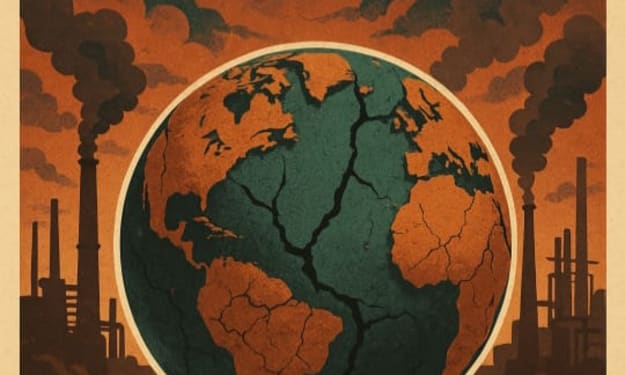
Climate Collapse is Closer Than You Think – The Planet’s Final Warning
In recent years, the phrase “climate collapse” has evolved from a distant warning into an imminent threat. The latest findings from the Intergovernmental Panel on Climate Change (IPCC), NASA, and the World Meteorological Organization (WMO) all suggest that Earth is approaching critical tipping points. These thresholds, once crossed, could trigger irreversible damage to the planet’s ecosystems and human civilization. This report explores the causes, consequences, and urgent actions needed to address the looming climate collapse.
By Mubasshir Haque about a year ago in Earth
Ten easy-care indoor plants that are ideal for novices
10 Easy-Care Indoor Plants That Are Great for Beginners Houseplants are a great way to introduce nature into your home, clean the air, and enhance your mental health. But some people fear they'll forget to water, not get enough light, or simply not have a "green thumb." Well, the good news is that there are a lot of houseplants that are extremely easy to maintain, so they're perfect for beginners.
By mukesh jaiswarabout a year ago in Earth
The Earth’s Climate: A Fragile Symphony of Life
Our Earth is not just a planet—it’s a living, delicate masterpiece. The climate, which nurtures us, is a symphony of elements that work together in harmony to sustain life. From the rhythm of rainfall to the gentle hum of the winds, the climate shapes every part of our world. But, in recent years, that harmony is faltering. The once-stable patterns we relied on are shifting, leaving us to witness the unraveling of a fragile system that has nurtured life for millennia.
By Leesh lalaabout a year ago in Earth
Trump’s Trade War with Canada Backfired on America. AI-Generated.
Trump’s Trade War with Canada Backfired on America How tariffs intended to protect U.S. industry ended up hurting American businesses and straining a key alliance By Sujon The tariffs on Canadian steel and aluminum, imposed under the pretext of national security, were intended to reignite U.S. manufacturing, curb foreign dependency, and bolster American jobs when former President Donald Trump launched a trade war with Canada in 2018. However, the legacy of that trade war tells a different story—one in which U.S. businesses absorbed higher costs, export markets shrank, and North America's tightly integrated economies were thrown into disruption. The Spark That Lit the Fire Trump's use of Section 232 of the Trade Expansion Act, which permitted tariffs on imported steel (25%) and aluminum (10%) from important allies, including Canada, was at the center of the conflict. Despite strong opposition, the administration proceeded, citing national security risks, a claim that is widely contested by policymakers and economists. Canada promptly retaliated with dollar-for-dollar countermeasures on American commodities like lawn mowers, bourbon, and orange juice. Canada is the United States' top supplier of both materials and its second-largest trading partner overall. Both nations' businesses were shaken by the tit-for-tat escalations, which were widely criticized. Collateral Damage: American Business Rather than reviving American steel production or creating a wave of new jobs, the tariffs triggered a cascade of negative effects. U.S. manufacturers, particularly those reliant on Canadian metal—such as automotive, construction, and machinery firms—faced soaring input costs. This eroded profit margins and led some companies to delay investments or downsize. “Instead of punishing foreign producers, we ended up harming ourselves,” said one executive at a U.S.-based manufacturing firm. “The increasing costs made it harder to compete abroad and prompted us to hike prices at home.” Canadian retaliation severely damaged the agricultural industry, another important component of U.S. exports. Overnight, small farms and manufacturers of certain products, such as processed foods and maple syrup, saw a decline in their northern market. A Strain on Trade Relations The freshly negotiated United States-Mexico-Canada Agreement (USMCA), which took the place of NAFTA in 2020, was weakened by the trade war. Even if the arrangement eventually proceeded, the harm to trust persisted. In order to lessen their dependency on American imports and exports, Canadian companies and leaders started looking at diversification measures after voicing worries about the unpredictable nature of U.S. trade policy. A small but important change in the dynamics of North American commerce was brought about by this strategic turn, which was intended to improve relations with European and Asian markets. Canada’s Resilient Response Ironically, the war was good for certain Canadian industries. Local demand increased for domestic manufacturers of steel and aluminum, who were protected from U.S. competition by tariffs. The public's support for Canadian-made goods increased, supporting domestic industries even more. In order to make Canadian companies more competitive internationally, the crisis also expedited government initiatives to invest in supply chain innovation and resilience. Lessons from a Misguided Strategy The foundation of Trump's trade conflict with Canada was the idea that tariffs would restore industrial power and level the playing field for American workers. However, the truth turned out to be more nuanced. In the end, the program provided little value to the industries it was intended to safeguard, harmed ties with one of America's most dependable allies, and produced economic inefficiencies. The story serves as a warning as the United States continues to negotiate international competition: trade wars, especially those involving allies, can have unforeseen and long-lasting effects. It is difficult to replace long-standing business relationships, and punishing friends frequently results in self-harm. About the Author Sujon is a journalist and policy analyst specializing in international trade and economic policy.
By Sujon Sujonabout a year ago in Earth
99.999 percent of the ocean floor is unknown to us
More than 70 percent of the world is water, the rest is land in this universe. But we do not know about most of this water. Scientists say that about 99.999 percent of the deep sea floor has not been seen by humans yet. A study on this topic was recently published in the US Science Advances peer-reviewed journal.
By tanmoy nazmulabout a year ago in Earth