Sustainability
Canada Isn’t in a Housing Slump: A Story of Stability and Growth
For years, Canada’s housing market was the subject of intense debate. Economists warned of bubbles, politicians promised reforms, and families worried about affordability. Many Canadians braced themselves for a correction—a slump that would send home values plunging and construction cranes grinding to a halt. But the slump never came. Instead, Canada’s housing story unfolded in a very different way.
By Princess Ladlyabout a year ago in Earth
Swat Flood Disaster: Lives, Livelihoods, and Markets Buried Under Mud in Pakistan’s Switzerland
After the Floods in Swat, Pakistan, Mingora Bazaar Turns into a Pile of Mud , Debris Creates a Dam Beside the Bridge "My only source of livelihood is this auto rickshaw, and right now it is buried under tons of mud. On the other hand, the destruction the flood has caused in my home is also my responsibility to fix," said Muhammad Sharif. "Sometimes I am here with my son, clearing mud to get the rickshaw out, and other times I go home to help my daughters deal with the destruction there." Muhammad Sharif is one of many victims of the devastating floods that swept through Swat’s Mingora Bazaar. Like him, many others are desperately searching for their vehicles and motorcycles trapped under mud. How Will I Pay the Rickshaw Installments? On Friday, after a cloudburst, heavy flooding swept into Mingora Bazaar, submerging homes, markets, and shops. Four days later, people are still trying to dig their belongings out from under the mud. Fifty-five-year-old Muhammad Sharif, who drives an auto rickshaw to support his four daughters and one son, said he had parked his rickshaw in a building’s basement parking the night before. But the next morning, heavy rains caused floodwaters to inundate the area. “Homes, shops, markets, even government offices — everything was filled with floodwater and tons of mud,” he said. Although Sharif managed to move his family to safety and avoided loss of life, the floods severely damaged both his home and his only source of income — the rickshaw. He explained that the rickshaw was bought on installments, and he still owes 300,000 rupees. “Even if I get it out of the mud, it will need major repairs, and I don’t know how much that will cost.” In the same parking lot, another young man named Kashif was also searching for his rickshaw buried under the mud. Unlike Sharif, he declined to speak. Nearby, a group of young men dug frantically, trying to find a motorcycle that had disappeared under the debris. One of them explained that his bike had a flat tire the day before, and instead of taking it home, he had left it there only for the flood to bury it. Who is Responsible for the Destruction in Mingora Bazaar? Swat often called the Switzerland of Pakistan now lies blanketed in mud and debris. In Mingora Bazaar, the flood wreaked havoc everywhere. Both residents and business owners suffered massive losses. Local reports suggest that more than 170 lives were lost in the flooding across Swat on Friday. Mingora Bazaar is the largest commercial hub in Malakand Division, housing the press club, police station, municipal offices, and other key institutions. According to a member of the Swat Press Club, floodwaters even entered their building, reaching as high as the ceiling. Among the hardest hit was Cheena Market, a busy area once known for a freshwater spring ("Cheena" means spring in Pashto). Over time, the spring was replaced by narrow alleys filled with shops selling clothes, cosmetics, and other goods. Veteran trader Muhammad Yousaf, who has run several shops in Cheena Market for 25 years, said: “The big shop owners suffered huge losses, but the small traders — those with just counters or stalls — lost everything, 100 percent.” He blamed poor construction for worsening the disaster. A drain (khoṛ in Pashto) runs through the market, and according to him, a bridge was built in the wrong place and in the wrong way. “When floodwater came down carrying boulders and trees, they got stuck against the bridge. The debris formed a dam, which caused the water to back up and flood the area,” Yousaf explained. Another elderly trader, Haroon Rashid, recalled how the flood nearly took his younger son’s life. “He was in the basement when the flood entered. My elder son pulled him out just in time — just a few seconds saved him.” When the Mingora floods struck, similar cloudbursts triggered floods in Buner district as well. Locals believe that the cloudbursts happened simultaneously on both sides of the mountain, sending torrents of water into Buner on one side and Swat on the other.
By Real contentabout a year ago in Earth
How Carbon Forestry Could Shape New Zealand’s Future
When people talk about climate change, they often picture solar panels, electric cars, or global climate conferences. What many don’t picture is a hillside in the Wairarapa, dotted with young pine trees quietly pulling carbon dioxide out of the atmosphere. Yet this is one of the most powerful tools New Zealand has in its fight against climate change: carbon forestry.
By Your NZ Localabout a year ago in Earth
The Mr. Challenger Challenged
BY Marc Reflects | August 2025 I have often thought of climate change as something distant, something that scientists debated in conferences or politicians argued about in parliaments. But then I met him—Mr. Challenger. His name itself sounded defiant, like someone destined to fight the odds. Yet his story revealed the opposite: the world, shaped by climate extremes, was now challenging him.
By Marc Reflects about a year ago in Earth
The Impact of the Energy Transition on Modern Societies, by Stanislav Kondrashov
The energy transition has arrived in our cities. As Stanislav Kondrashov, founder of TELF AG, has often observed, the great change of our times is also profoundly impacting people's consciousness.
By Stanislav Kondrashovabout a year ago in Earth
100% Chance of an Earthquake
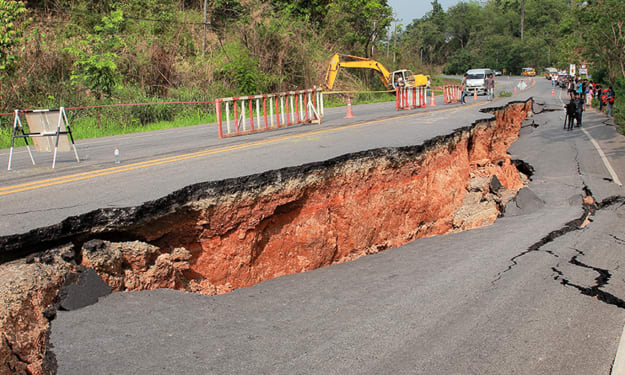
Imagine waking up and hearing a news report that begins with: “There’s a 100% chance of an earthquake today.” It sounds alarming, almost apocalyptic—something that would send people rushing to pack emergency kits, secure their homes, and perhaps even panic about what’s to come. But here’s the truth: that statement is completely accurate, and not because someone has cracked the code of earthquake prediction. Rather, it’s because earthquakes happen every single day on our planet. The only question is where and how strong.
By Fazal Ur Rahmanabout a year ago in Earth
Estimating the Amount of Usable Cable in a 5-Story Apartment Building. AI-Generated.
Wiring a multi-story apartment building for electrical, networking, and telecommunications systems is a critical aspect of modern construction. Determining the amount of usable cable required for a 5-story apartment building depends on various factors, including the building’s layout, the number of units, the types of systems being installed, and local building codes. خدمات برقکاری ساختمان This article provides a comprehensive guide to estimating the amount of cable needed for electrical, Ethernet, and coaxial systems in a 5-story apartment building, offering practical insights for developers, contractors, and homeowners.
By handy maneshonabout a year ago in Earth
The Forest Throne
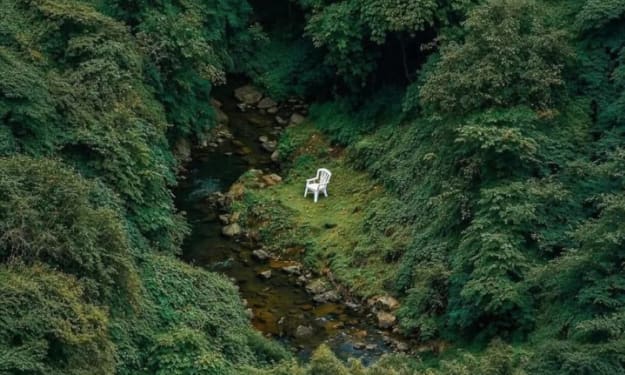
The Forest Throne How One Chair Became a Peaceful Symbol of Rest and Reflection in Nature Deep within the heart of Pineberry Forest, where the trees whisper secrets and the air carries the scent of moss and pine, there stands a single wooden chair. Weathered but sturdy, simple yet striking, the chair has no owner, no plaque, and no obvious reason for being where it is. Yet, over the years, it has quietly become a beloved part of the forest — known by locals and hikers alike as “The Forest Throne.” No one knows exactly who brought the chair there. Some say it appeared after a storm one spring, others believe an old carpenter placed it there as a quiet gift to the woods. The most popular theory is that it was carried in by an elderly woman who used to walk the trails every day with her dog. She was often seen resting on a folding stool, which she once called her “thinking seat.” When she stopped coming, some believe someone honored her memory by placing a sturdier chair in her favorite clearing. Regardless of its origin, the chair now sits peacefully on a small rise overlooking a stream. It faces west, catching the soft golden light of the setting sun through the trees. Birds often perch on its backrest, and squirrels occasionally climb its legs as if inspecting a monument. Wildflowers grow around its feet in the warmer months, and in winter, it wears a soft white coat of snow. More than just a curious object in the woods, the Forest Throne has become a gentle landmark and a destination. Hikers take breaks there, sipping water and listening to the sounds of the forest. Children sit on it like royalty, pretending to hold court with the trees. Artists sketch it, and photographers wait patiently for just the right lighting to capture its quiet charm. Some couples have even gotten engaged next to it, believing it adds a touch of natural magic to the moment. For many, the chair serves a deeper purpose. It invites people to pause — not just physically, but mentally. In a world that moves fast, where even nature walks can become goals to “complete,” the Forest Throne offers permission to stop, sit, and simply be. Local schoolteacher Maya Ellis first discovered the chair during a solo hike in early spring. “I was having a hard time,” she later shared in a community newsletter. “I’d been overwhelmed, anxious, and I wasn’t even sure why I was out there that day. But then I found the chair. I sat down, and everything just… softened. The stillness of the forest, the way the light moved through the trees — it made me breathe differently. I stayed for nearly an hour.” Since then, Maya has returned many times, sometimes with her students. They call it their “story seat,” taking turns to sit in it and tell made-up tales about forest animals and enchanted trees. She’s also helped organize a gentle path-clearing project around the area, ensuring that the chair remains accessible while keeping the surroundings wild and undisturbed. Interestingly, the chair has changed very little over the years. Though it’s been exposed to all kinds of weather, it has held up remarkably well. Some say it’s because it's made of old, seasoned oak. Others suggest it’s the forest itself that protects it — as if the chair, having become part of the ecosystem, now receives its care in return. The Forest Throne has even inspired a local movement called “Sit a While,” encouraging people to create simple resting spots in natural spaces. Wooden benches, upcycled chairs, and stone seats have begun to appear in quiet corners of parks and trails throughout the region, each one marked only by a small carved leaf symbol and the words, “Sit a While.” Despite its fame, the chair has never been vandalized. There is no graffiti, no carvings, and not even trash left nearby. People seem to instinctively respect its presence. Perhaps that’s because the Forest Throne doesn’t ask for anything — it offers. It gives rest to the weary, silence to the busy-minded, and beauty to anyone willing to see it. And so it remains, season after season — a simple chair in a quiet forest, waiting patiently for the next person who needs it. Some come with questions. Others bring sorrow. Many bring nothing at all but themselves. But all who sit in the Forest Throne leave with something: a little more peace, a little more stillness, and a renewed connection with the world around them.
By Muhammad Saad about a year ago in Earth
Buner Under Water: The Silent Tragedy of Pakistan’s Monsoon Floods
The Floods in Buner: A Tragedy in the Heart of Khyber Pakhtunkhwa Natural disasters have always tested the resilience of humanity, but when they strike remote and vulnerable areas, their impact becomes even more devastating. The recent floods in Buner District, located in the Khyber Pakhtunkhwa province of Pakistan, stand as a grim reminder of how climate change, poor infrastructure, and lack of preparedness can bring life to a standstill in a matter of hours. This article explores the causes, consequences, and lessons of the Buner floods, while also highlighting the strength and unity of its people in the face of adversity. --- Geographic and Social Background Buner is a scenic valley surrounded by mountains, rivers, and streams. Known for its lush greenery, fertile lands, and rich cultural heritage, it lies between Swat and Mardan districts. The majority of its population depends on agriculture, small-scale trade, and remittances from overseas workers. While nature has blessed Buner with beauty and resources, its geographical position also makes it highly vulnerable to seasonal floods, landslides, and heavy monsoon rains. --- The Disaster Unfolds In late July and early August, relentless monsoon rains lashed the region, causing rivers and streams to swell beyond their capacity. Within hours, flash floods swept through villages, submerging houses, washing away bridges, and destroying farmland. Roads connecting Buner with neighboring districts collapsed, cutting the area off from essential supplies and emergency aid. Reports indicate that dozens of villages were severely affected, with families forced to flee their homes in the middle of the night. Mud houses, common in rural parts of Buner, stood no chance against the raging waters. Thousands of people were displaced, seeking shelter in schools, mosques, and makeshift camps. Crops ready for harvest were drowned, livestock perished, and small businesses lost their entire inventory. --- Humanitarian Crisis The floods in Buner created not only physical destruction but also a humanitarian emergency. Clean drinking water became scarce, increasing the risk of waterborne diseases such as cholera, diarrhea, and typhoid. Health facilities, already limited in capacity, were overwhelmed by the sudden influx of patients. Pregnant women, children, and the elderly were the most vulnerable. Educational institutions, which were supposed to reopen after the summer break, were converted into relief centers. This disrupted the academic calendar of thousands of children, adding to the long-term consequences of the disaster. --- Climate Change and Structural Issues Experts argue that the Buner floods are not merely a “natural” disaster but a combination of climate change and human negligence. Pakistan is among the top ten countries most vulnerable to climate change. Rising global temperatures have intensified monsoon patterns, leading to unpredictable and extreme rainfall events. At the same time, deforestation in Buner and surrounding areas has weakened natural barriers against flooding. The lack of proper drainage systems, unchecked construction along riverbanks, and poor maintenance of protective dams and embankments worsened the situation. What could have been a manageable seasonal flood turned into a full-scale catastrophe. --- Government and Community Response The provincial government of Khyber Pakhtunkhwa, along with the federal authorities, deployed rescue teams and the Pakistan Army to assist flood victims. Helicopters were used to drop food supplies in remote areas cut off by road destruction. However, many residents complained about the delayed response and inadequate resources. In contrast, the local community showed remarkable resilience. Volunteers organized relief drives, collecting donations from within Pakistan and from overseas Pakistanis. Youth groups in Buner took the lead in distributing food, tents, and medical supplies. Social media played a key role in highlighting the plight of flood victims, pressuring authorities to act more swiftly. --- Economic and Psychological Impact The economic toll of the floods is enormous. Farmers who lost their crops face financial ruin, traders who lost their shops fear bankruptcy, and laborers find themselves without work. Many families who relied on remittances are now forced to use those funds for survival rather than savings or investment. The psychological scars are equally deep. Survivors recount the trauma of losing loved ones, watching their homes collapse, and spending nights under open skies. Children, in particular, are likely to suffer long-term emotional effects if mental health support is not provided. --- Lessons and the Way Forward The Buner floods highlight several urgent lessons for Pakistan: 1. Investment in Infrastructure: Building stronger bridges, flood-resistant housing, and proper drainage systems can save lives and property. 2. Environmental Protection: Deforestation must be stopped, and tree plantation drives should be promoted to restore natural defenses against floods. 3. Disaster Preparedness: Local communities need training in disaster management, early warning systems, and evacuation plans. 4. Health and Education Resilience: Schools and hospitals should be built with dual purposes in mind—education/healthcare and emergency shelter. 5. Global Climate Action: Pakistan, though not a major emitter, suffers the consequences of global warming. International cooperation and climate justice are essential. --- Conclusion The floods in Buner are more than a local tragedy; they are part of a broader global crisis that links climate change, human vulnerability, and poor governance. Yet, amid destruction, the resilience of the people of Buner shines through. Their courage, solidarity, and determination to rebuild offer hope that the valley will rise again from the waters. If meaningful steps are taken—both locally and globally—Buner can transform this tragedy into an opportunity for building a safer, greener, and more resilient future.
By Nimatullahabout a year ago in Earth