Sustainability
Journey of water
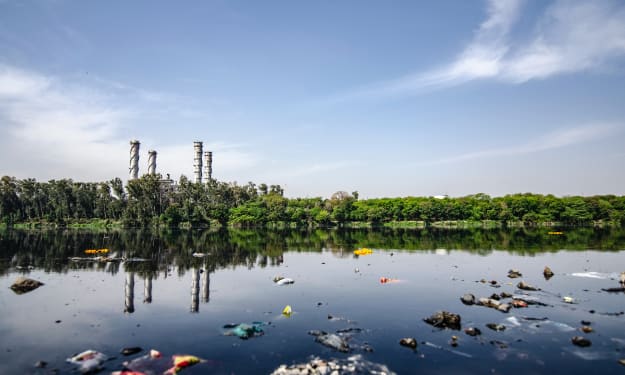
Once upon a time, in a far-off land, there lived a young girl named Anisha. She was known throughout the kingdom for her kind and gentle nature, as well as her love for the element of water. Anisha spent every free moment she had near the streams and rivers that flowed through her village, listening to the soothing sound of the water as it flowed and watching the way the sunlight danced on its surface. She would often spend entire afternoons lying on the banks of the river, letting the cool water flow over her skin and feeling the gentle currents pull at her hair. One day, while Anisha was out exploring along the river, she heard a faint cry for help. Following the sound, she came upon a young boy who had fallen in the river and was struggling to stay afloat. Without hesitation, Anisha dove into the water and pulled the boy to safety. From that day on, Anisha was known as the Water Saviour in the village. People would come to her with their problems related to water and she would solve it with her knowledge of it. As she grew older, Anisha's love for water only grew stronger. She began to study the properties of water in depth and soon became an expert in all things related to the element. Years passed, and Anisha's knowledge of water became legendary. She was called upon by rulers and kings from far and wide to solve their water-related problems. And so it was that Anisha, with her deep understanding and love for water, became a shining example of the power and beauty of nature. As Anisha's reputation as a water expert grew, she was approached by the king of the land who had a problem that no one else seemed to be able to solve. His kingdom was suffering from a severe drought, and crops were failing, rivers were drying up and people were struggling to find enough water to survive. Anisha knew that this was a problem that required her expertise. She set out to study the kingdom's water system, analyzing the rivers, streams, and underground water sources. After weeks of research, she finally discovered the cause of the drought. The kingdom had been diverting too much water from the rivers for agriculture and industrial use, leaving too little for the natural ecosystem to sustain itself. With this knowledge in hand, Anisha presented her findings to the king and proposed a solution. She suggested that the kingdom should start conserving water and also develop sustainable water management practices. She also proposed building dams and reservoirs to store water during the rainy seasons and release it during the dry seasons. The king was impressed with Anisha's proposal and immediately put her plan into action. The kingdom started conserving water and implementing sustainable water management practices. They also built dams and reservoirs to store water during the rainy seasons. As a result of Anisha's efforts, the kingdom began to thrive once again. The rivers flowed freely, the crops were bountiful, and the people were no longer suffering from a lack of water. And Anisha, who had dedicated her life to the element of water, was hailed as a hero and a savior of the kingdom. Years went by, Anisha's name was passed down from generation to generation, and stories of her deeds were told around campfires and dinner tables. Her love for water had not only saved a kingdom but had also inspired others to do the same. And so, Anisha's legacy lived on, a reminder of the power and beauty of water and the importance of preserving it for future generations.
By Mohammed hussain4 years ago in Earth
"Bamboo: The Versatile and Sustainable Solution for Contemporary Products"
Eco-friendly bamboo is quickly replacing traditional materials in the manufacture of contemporary products. Bamboo is a rapidly growing grass that can be harvested without replanting, making it a highly renewable resource. It also takes very little water and fertiliser to grow, making it a much more environmentally friendly option than many other crops.
By Sarath kumar4 years ago in Earth
Top 5 Fascinating Things Happening Underground
The formation of caves and underground caverns through erosion and other geological processes. Caves can be formed by water, ice, wind, and even volcanic activity. They offer unique environments for rare and endangered species and are also popular tourist destinations.
By Dipayan Biswas4 years ago in Earth
Waste Water
How to Properly Dispose of Wastewater Water is essential to all life on Earth. It is essential for human health, agriculture, and industry. Unfortunately, water can also be a source of pollution. Wastewater is any water that has been contaminated by human activity.
By KALITHAS KRISHNAN4 years ago in Earth
"Countdown to the Blue Comet: Understanding the Science behind the Rare Celestial Event"
I. Introduction The "blue comet" event refers to the close approach of the comet C/2021 A1 (Leonard) to Earth on February 1, 2023. This comet was discovered in January 2021 by the Mount Lemmon Survey in Arizona, USA and is expected to pass within 0.03 AU (about 4.4 million miles or 7.1 million kilometers) of Earth, making it a relatively close approach for a comet. The event is notable for the color of the comet, which is expected to have a blue-green hue due to the presence of copper in its composition. Some experts have said that it could be bright enough to be visible to the naked eye, but that is still uncertain. It is also worth noting that C/2021 A1 (Leonard) is a first time visitor to the inner solar system, so we know very little about it's orbit or composition.The aim of this blog post is to understand the science behind the rare celestial event of the blue comet C/2021 A1 (Leonard) close approach to Earth on February 1, 2023. It will explore the comet's composition, orbit, and how its close proximity to Earth will affect its appearance. It will also discuss the potential scientific significance of this event and how astronomers will study the comet during its close approach. Additionally, the post will provide information on how and where to view the comet, as well as safety precautions for viewing it.
By Gowtham Dharma4 years ago in Earth
Net Energy Metering (NEM) 3.0 versus 2.0: How it Will Impact Homeowners Who Are Interested in Solar Energy!
Net Energy Metering (NEM) is a system of metering and billing electricity used by utility companies that encourages the installation of solar energy systems. NEM 3.0 and NEM 2.0 are two versions of this system, with NEM 3.0 being the newest version. Homeowners who are considering solar energy for their homes should be aware of how the differences between NEM 3.0 and NEM 2.0 could impact their decision. In this blog post, we will explore how NEM 3.0 and NEM 2.0 differ and how it will affect homeowners who are interested in solar energy. Net Energy Metering (NEM) is an important policy for homeowners in California who are interested in solar energy. In particular, the latest version, NEM 3.0, has recently been approved and will soon replace NEM 2.0. As a result, it's important for homeowners to understand how NEM 3.0 differs from NEM 2.0 and how it will affect them if they decide to switch to solar energy. In this blog post, we will explore how NEM 3.0 and NEM 2.0 compare, and how they will impact homeowners in California who are interested in solar energy.
By Saracen Energy Solution4 years ago in Earth
The Connection Between Climate Change and Forced Migration, Particularly In Developing Countries
Climate change is one of the most pressing issues facing our planet today, and its effects are already being felt by millions of people around the world. One of the most significant consequences of climate change is forced migration, particularly in developing countries. The connection between climate change and forced migration is complex and multi-faceted, and it's essential to understand this connection if we're to address the issue effectively.
By Lawrence Luke4 years ago in Earth
The Impact of Climate Change on Mental Health and Well-being
Climate change is not just a problem for the environment, it also has a significant impact on our mental health and well-being. As temperatures rise, sea levels rise, and extreme weather events become more frequent, it can be difficult to cope with the emotional and psychological effects of these changes.
By Lawrence Luke4 years ago in Earth
Exploring the Cosmos: The Fascinating Journey of Planetary and Galactic Study
Exploration and study of other planets and galaxies in the universe have long captivated the human imagination and driven scientific inquiry. From the earliest observations of the night sky to modern space missions, the quest to understand our place in the cosmos has been a driving force in the history of humanity.
By Lakshmi Kanth4 years ago in Earth