Sustainability
50 Facts About Silicon
50 Facts about Silicon 1. Silicon is a chemical element. It has position 14 on the Periodic Table. This means it has 14 protons and electrons. It’s chemical symbol is Si, for “silicon” – one of the very obvious symbols, not a head-scratcher like Pb (lead).
By Sriram Nadarajan4 years ago in Earth
Nitrogen Facts: 26 Facts About Nitrogen
26 Facts about Nitrogen 1. It has a melting point of −209.86 °C (−345.8 °F) and a boiling point of −195.8 °C (−320.4 °F). 2. Nitrogen which is a non-metal was named nitrogen by a French Chemist Jean-Antoine-Claude Chaptal in 1790. The chemist realized that the gas was a part of a chemical compound then called niter, which we now refer to as potassium nitrate.
By Sriram Nadarajan4 years ago in Earth
Medicinal Garden Kit Review
In recent years, there has been a growing trend towards natural and alternative medicine. Many people are turning towards gardening and herbal remedies for their health and wellness needs. One such product that has gained popularity in recent years is the medicinal garden kit. These kits provide all the necessary tools and seeds to grow your own medicinal herbs and plants, and are marketed as a natural way to improve health and well-being. In this review, we will take a closer look at one such medicinal garden kit, and evaluate its effectiveness.
By Vandana Gupta4 years ago in Earth
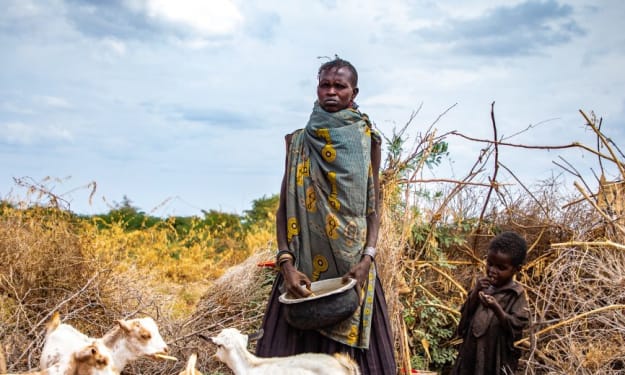
HOW CLIMATE CHANGE INCREASES HUNGER — AND WHY WE’RE ALL AT RISK? WHATS THE WAY FORWARD?
Since the early 1990s, the number of extreme weather-related disasters has doubled. Harvests have decreased, and food prices have risen as a result. The climate crisis is fueling the hunger crisis, and with our food systems more global than ever, we all stand to lose.
By Zuhaib Khan4 years ago in Earth
The Climate Crisis: How It Is Affecting Our Daily Lives and What We Can Do About It
The earth is experiencing a climate crisis that is rapidly changing our planet. Rising temperatures, extreme weather patterns, melting glaciers, and sea-level rise are just a few of the challenges we face. The effects of climate change are becoming more evident in our daily lives, from the wildfires in Australia to the hurricanes in the Caribbean. Climate change is no longer a future problem, it is a present reality. In this post, we will explore how the climate crisis is affecting our daily lives and what we can do about it. We will look at some of the most pressing issues, such as air pollution and its impact on our health, and discuss some practical steps we can take to help reduce our carbon footprint. Join us as we delve into this important topic and learn how we can all play a part in preserving our planet for future generations.
By Wilson Igbasi4 years ago in Earth
Tattoos Through Time:
Tattoos have been a part of human culture for thousands of years. From ancient Egypt to modern-day America, tattoos have held cultural significance and served as a form of self-expression. The art of tattooing has evolved over time and has been influenced by different cultures and traditions. Tattoos can symbolize anything from personal beliefs to social status, and can hold different meanings for different people. In this post, we will delve deep into the history of tattoos and explore their cultural significance throughout the ages. From the first tattoo needles to the latest tattoo trends, we will take a journey through time and discover the many ways tattoos have shaped our world. So, whether you're a tattoo enthusiast or just curious about the history and culture behind this ancient art form, sit back and enjoy the ride.
By Wilson Igbasi4 years ago in Earth
The Wonder and Diversity of Life on Planet Earth.
Planet Earth is a remarkable place, teeming with life in all its diversity. From the tiniest microbe to the largest mammal, our planet is home to a vast array of living organisms, each with its unique characteristics and adaptations.
By Arham Shahzad4 years ago in Earth
Transforming the Careless Attitude of Men towards Nature: A Call for Mindful Stewardship
Introduction: The relationship between humans and nature is a delicate balance that has existed since the dawn of civilization. Throughout history, humans have depended on nature for sustenance, shelter, and inspiration. However, as modern society has progressed, there has been an alarming trend of careless attitudes towards nature, particularly among men. This disregard for the environment has led to devastating consequences, including deforestation, pollution, climate change, and the extinction of species. In this article, we will delve into the various ways in which men have displayed a reckless attitude towards nature, examining the causes and impacts of this behavior, and proposing solutions to address the pressing environmental challenges we face today.
By Taimoor Khan4 years ago in Earth
Red Rose
Red roses are one of the most iconic and beloved flowers in the world. Known for their vibrant crimson hue and romantic symbolism, they have captured the hearts and imaginations of people for centuries. From Valentine's Day to weddings and anniversaries, red roses are a popular choice for expressing love, passion, and devotion. In this article, we'll explore the history, symbolism, and cultural significance of red roses.
By Syed Awais Shah4 years ago in Earth
Ant In The Sky
Once upon a time, in a world much different from ours, there lived a tiny ant named Andy. Andy was unlike any other ant in his colony. He was always curious and fascinated by the world beyond his little home in the ground. He spent his days exploring and observing the world around him, always eager to learn more.
By MalikSaira Maqbool4 years ago in Earth
How has the Earth's magnetic field evolved over time, and what impact does it have on life on our planet?
The Earth's magnetic field is one of the planet's most important features, and it has played a critical role in the evolution of life on our planet. The magnetic field acts as a protective shield, deflecting harmful solar radiation and preventing it from reaching the Earth's surface. But the magnetic field has not always been the same as it is today. In fact, over the course of the Earth's history, the magnetic field has undergone significant changes that have had a profound impact on our planet and its inhabitants.
By Aniket Kumar4 years ago in Earth
How has human activity affected the Earth's natural systems, such as the atmosphere, oceans, and ecosystems?
Human activity has had a significant impact on the Earth's natural systems, including the atmosphere, oceans, and ecosystems. As human populations have grown and industrialization has spread, the impact of human activity on these systems has increased. In this article, we will explore how human activity has affected these natural systems and the potential consequences of these impacts.
By Aniket Kumar4 years ago in Earth