Sustainability
Finding the Strength to Dig Herself Out and Keep Moving Forward
Once upon a time, in a vast and mysterious desert, a lone woman named Aisha was on a journey to find a rare flower that was said to have healing powers. She had been traveling for days, and as she walked, the sand beneath her feet grew softer and more unstable.
By Shaheer Hassan3 years ago in Earth
Dolphins in Popular Culture.
Dolphins are one of the most beloved and intelligent creatures on Earth, known for their playful nature, unique communication skills, and their close relationship with humans. As a result, they have been featured in popular culture in various forms, including film, literature, and art. This article will explore the representations of dolphins in these mediums and the impact they have had on popular culture. In film, dolphins have been depicted in various ways, ranging from factual documentaries to fictionalized narratives. One of the most well-known examples of a dolphin in film is Flipper, a 1963 film and subsequent television series that follows the adventures of a young boy and his pet dolphin. The character of Flipper became a cultural icon, representing the idea of a gentle and intelligent companion animal that could form a close bond with humans. Other films that have featured dolphins include the 2009 documentary The Cove, which exposes the annual dolphin hunt in Taiji, Japan, and the 2004 animated film Shark Tale, which includes a character named Lenny, a vegetarian shark who befriends a dolphin. In literature, dolphins have also been a popular subject, appearing in both fiction and non-fiction works. One of the most famous examples is the novel The Hitchhiker's Guide to the Galaxy by Douglas Adams, in which the character Arthur Dent meets a group of intelligent dolphins who have fled Earth before its destruction. The dolphins are portrayed as wise and knowledgeable beings who possess a greater understanding of the universe than humans. Other books that feature dolphins include The Island of the Blue Dolphins by Scott O'Dell, which follows the story of a young Native American girl stranded on an island with a group of dolphins, and the children's book series The Dolphin Diaries by Ben M. Baglio, which follows the adventures of a young girl and her pet dolphin as they explore the ocean. In art, dolphins have been a popular subject for centuries, appearing in various forms including paintings, sculptures, and murals. In ancient Greek and Roman art, dolphins were often depicted as companions of the sea god Poseidon (Neptune), and were seen as symbols of protection and guidance for sailors. The famous fresco in the Palace of Knossos in Crete, depicting dolphins and other marine creatures, is an example of this tradition. In modern art, dolphins have been featured in works by artists such as Damien Hirst, who created a sculpture of a dolphin in formaldehyde titled The Physical Impossibility of Death in the Mind of Someone Living, and Wyland, who is known for his large-scale murals of marine life, including dolphins. The representation of dolphins in popular culture has had a significant impact on the way people perceive and interact with these animals. They are often portrayed as intelligent, friendly creatures who are capable of forming emotional bonds with humans, which has led to increased interest in dolphin conservation and research. However, some representations of dolphins have also been criticized for perpetuating harmful stereotypes, such as the idea that dolphins are always happy and playful, which can lead to misconceptions about their natural behavior and needs. Overall, the representation of dolphins in popular culture reflects our fascination with these remarkable creatures and our desire to understand and connect with them. Whether depicted in film, literature, or art, dolphins continue to captivate and inspire us with their beauty, intelligence, and playful spirit. As we continue to learn more about these animals and their complex lives, it is important to ensure that our representations of them are accurate and respectful, and that we work to protect their habitats and well-being for future generations to enjoy
By Mr Royal Honey 3 years ago in Earth
The History of Dolphin-Human Interaction.
Dolphins have long captivated humans with their intelligence, agility, and seemingly playful nature. From ancient mythology to modern science, the history of dolphin-human interaction is rich and fascinating. In ancient Greece, dolphins were revered as sacred creatures associated with the god Apollo. It was said that Apollo turned himself into a dolphin and guided the ship of the Cretan king, Glaucus, to safety. The Greeks believed that dolphins had a special relationship with humans, and it was common for sailors to call upon them for help in times of trouble. In medieval Europe, dolphins continued to be seen as benevolent creatures. They were often depicted in art, and their images adorned everything from coins to coats of arms. The medieval belief in the healing powers of dolphin oil also led to the hunting of dolphins for their blubber, which was used to treat a variety of ailments. During the Age of Exploration in the 16th and 17th centuries, sailors encountered dolphins on their voyages to the New World. Many sailors recorded their interactions with these curious creatures, describing how they would swim alongside the ships, sometimes jumping and spinning in the air. These encounters helped to fuel the popular image of dolphins as friendly, playful animals.
By Mr Royal Honey 3 years ago in Earth
The Anatomy of Dolphins.
Dolphins are one of the most fascinating creatures that inhabit the ocean. Their streamlined bodies, sleek fins, and playful nature make them a beloved subject for marine enthusiasts and researchers alike. However, the anatomy of dolphins is not just beautiful; it is also perfectly adapted for life in the water. In this article, we will explore the unique adaptations that make dolphins such successful swimmers. Body shape and size The body shape and size of dolphins are perfectly adapted for their aquatic lifestyle. Their streamlined bodies are designed to minimize drag, making them swift and agile swimmers. The body of a dolphin is fusiform, which means that it tapers at both ends, giving it a fish-like appearance. This body shape allows dolphins to move through water with minimal resistance, reducing the energy needed to swim. Fins Dolphins have two types of fins: dorsal fins and pectoral fins. The dorsal fin is the one on the back of the dolphin and is used for stability when swimming. The pectoral fins are located on the sides of the dolphin's body and are used for steering and maneuvering. These fins are flexible, allowing the dolphin to make sharp turns and sudden movements. The pectoral fins also have bones that are similar to the human arm, making them incredibly versatile. Blowhole Dolphins breathe air through a single nostril called a blowhole, located at the top of their head. When a dolphin surfaces, it opens the blowhole and exhales, producing a spout of water and air. The blowhole then closes to prevent water from entering the dolphin's respiratory system. This adaptation allows dolphins to remain underwater for extended periods while still being able to breathe air. Teeth Dolphins have conical teeth that are perfectly adapted for their diet. They primarily eat fish and squid, and their teeth are designed to grasp and hold onto their prey. Dolphins' teeth are not used for chewing; instead, they swallow their food whole. Some species of dolphins have teeth that are adapted for specific prey. For example, the bottlenose dolphin has sharp, pointed teeth that are ideal for catching fish. Echolocation Echolocation is a biological sonar system that allows dolphins to "see" their environment using sound. When a dolphin emits a series of clicks, the sound waves bounce off objects in the environment and return to the dolphin's ears. The dolphin can then interpret the returning sound waves to create a mental image of its surroundings. This adaptation is incredibly useful for finding prey and navigating in murky water. Sensory system Dolphins have a highly developed sensory system that allows them to perceive their environment in great detail. Their eyesight is well adapted for underwater vision, and they have a unique structure called a melon that is located in their forehead. This structure is composed of fatty tissue and is used to focus and direct the clicks used in echolocation. The melon also helps to protect the dolphin's brain from the intense pressure changes that occur when diving. Thermoregulation Dolphins are warm-blooded mammals and need to regulate their body temperature in the water. They have a thick layer of blubber under their skin that acts as insulation, keeping them warm in cold water. They also have a specialized circulatory system that helps to conserve heat. When a dolphin dives, blood is redirected from the extremities to the vital organs, reducing heat loss. In conclusion, the anatomy of dolphins is a marvel of evolution, perfectly adapted for life in the water. From their streamlined bodies and flexible fins to their echolocation and sensory system, dolphins have a range of adaptations that make them incredibly successful swimmers. By understanding the unique adaptations of these magnificent creatures, we can better appreciate their beauty and the importance of protecting their natural habitats
By Mr Royal Honey 3 years ago in Earth
Dolphins: The Intelligent Marine Mammals of the Ocean.
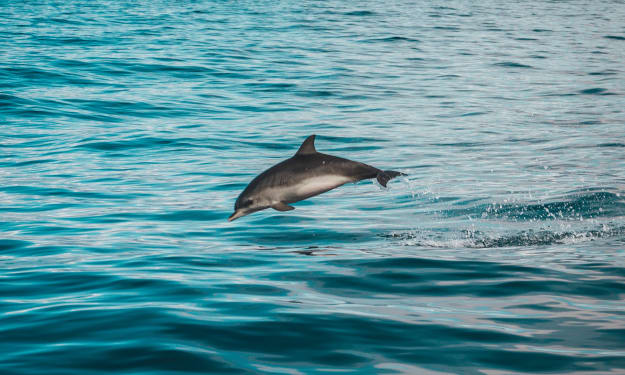
Dolphins are one of the most intelligent and fascinating marine mammals in the world. These creatures are known for their playful behavior, their agility, and their ability to communicate with each other using a complex system of clicks, whistles, and body language. Dolphins are also highly social animals that live in groups, called pods, and they have been observed exhibiting behaviors that suggest they have a deep emotional capacity. Dolphins are found in oceans all around the world, and there are almost 40 different species of dolphins. They vary in size from the tiny Maui’s dolphin, which is only about four feet long, to the larger orca, which can grow to be up to 30 feet long. The most common species of dolphin is the bottlenose dolphin, which is the type of dolphin most often seen in marine parks and aquariums. One of the most remarkable things about dolphins is their intelligence. Dolphins have brains that are larger and more complex than those of most other animals, and they are known to be highly intelligent and social creatures. Dolphins are capable of complex problem-solving, and they have been observed using tools, such as sponges, to help them catch prey. They also have an advanced system of communication that allows them to communicate with each other using a variety of sounds and body language. Dolphins are also highly social animals that live in pods. These pods can range in size from just a few dolphins to several hundred. Within these pods, dolphins form strong social bonds with each other and exhibit a range of social behaviors, such as grooming, playing, and even sharing food. Dolphins have also been observed engaging in complex play behaviors, such as playing with seaweed or blowing bubbles. One of the most fascinating aspects of dolphin behavior is their use of echolocation. Echolocation is a system that dolphins use to navigate and find food in the ocean. It works by emitting a series of clicks and then listening for the echoes that bounce back. This allows dolphins to determine the size, shape, and location of objects in the water. Scientists have found that dolphins are capable of using echolocation to create highly detailed images of their surroundings, allowing them to navigate even in murky waters.
By Mr Royal Honey 3 years ago in Earth
The Benefits of Mindfulness Meditation
Mindfulness meditation has become increasingly popular in recent years, with more and more people recognizing the benefits it can bring to their lives. From reducing stress and anxiety to improving focus and emotional regulation, mindfulness meditation has been shown to have a wide range of positive effects.
By Jaga Vikash3 years ago in Earth
Which Type of Energy Production is Actually Better for the Planet?
As the world's population continues to grow and technological advancements bring about increased demand for energy, the debate over the best sources of energy has become more critical than ever. With the looming threat of climate change and the need for sustainable and reliable energy sources, it's important to understand the advantages and disadvantages of various energy sources.
By Olivia L. Dobbs3 years ago in Earth
The Colosseum and 7 Other Landmarks are in Danger of Vanishing
Find out what is threatening to happen to the famous Colosseum and seven other disappearing landmarks around the world. Find out what can be done to protect these priceless remnants of our history and culture, as well as the dangers they face. Continue reading to learn how you can prevent these priceless items from being lost forever.
By Althea March3 years ago in Earth
What Are Whales? Understanding the Biology of These Giant Mammals.
les are a diverse group of marine mammals that are found in all of the world's oceans. These majestic creatures are known for heir impressive size, ranging from the small dwarf sperm whale, which measures about 9 feet long, to the massive blue whale, which can grow up to 100 feet long and weigh as much as 200 tons. Whales are members of the order Cetacea, which also includes dolphins and porpoises. Cetaceans are believed to have evolved from terrestrial mammals that returned to the sea around 50 million years ago. Over time, they developed a range of adaptations that allowed them to thrive in an aquatic environment, including streamlined bodies, flippers for steering and propulsion, and a blowhole for breathing. One of the most striking adaptations of whales is their ability to dive to great depths for extended periods. Many whale species can stay underwater for up to an hour and dive to depths of over 1000 feet. To achieve this, they have developed a number of specialized physiological adaptations, including the ability to store large amounts of oxygen in their muscles and blood, and the ability to slow down their metabolism to conserve energy while underwater. There are two main groups of whales: baleen whales and toothed whales. Baleen whales are so named because they have a comb-like structure called baleen in their mouths that they use to filter small fish and other planktonic creatures from the water. These whales are often large and slow-moving, and include species such as the humpback, gray, and blue whale. Toothed whales, on the other hand, have teeth and are generally more agile and faster-moving than baleen whales. They include species such as the killer whale, sperm whale, and dolphin. Toothed whales hunt a variety of prey, including fish, squid, and other marine mammals. One of the most iconic species of whale is the humpback whale. These whales are known for their acrobatic displays, including breaching (jumping out of the water), tail-slapping, and fin-slapping. They are also famous for their haunting songs, which are complex patterns of moans, cries, and whistles that can last up to 30 minutes. Scientists believe that these songs are used by males to attract females during the mating season. Another well-known species of whale is the sperm whale. These whales are the largest of the toothed whales, and can grow up to 60 feet long. They are known for their distinctive, box-shaped heads and their ability to dive to great depths in search of squid, their primary food source. Sperm whales are also famous for their role in the novel Moby-Dick, in which the protagonist, Captain Ahab, becomes obsessed with hunting down a giant sperm whale. Despite their impressive size and intelligence, many whale species are threatened by human activities such as hunting, fishing, and pollution. In the past, whales were hunted for their blubber, which was used to make candles, soap, and other products. Commercial whaling was banned by the International Whaling Commission in 1986, but some countries, such as Japan and Norway, still engage in whaling for scientific or cultural reasons. Whales are also threatened by bycatch, which occurs when they become trapped in fishing nets and drown. Noise pollution from shipping and naval activities can also interfere with their ability to communicate and navigate, and pollution from plastics and other waste products can harm their health and disrupt their food supply. Despite these threats, there are a number of conservation efforts underway to protect whale populations. These include the establishment of marine protected areas, restrictions on whaling and fishing practices, and efforts to reduce pollution and noise in the oceans. In conclusion, whales are fascinating and unique creatures that have captured
By Mr Royal Honey 3 years ago in Earth