Sustainability
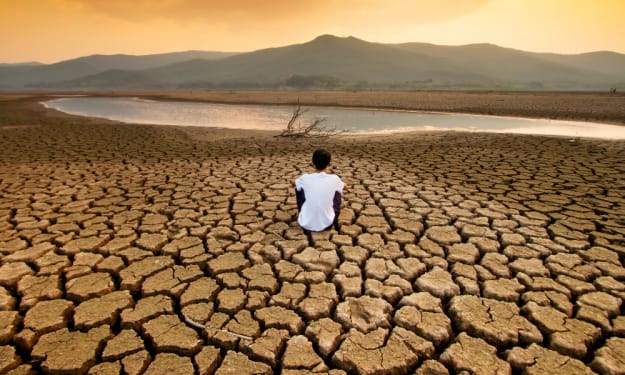
EMERGENCY: Global Temperatures Set to SKYROCKET!
Ever wondered what would happen if the Earth's climate took a catastrophic turn? Brace yourself, because the answer is terrifying. In a startling revelation that sends shivers down our spines, the World Meteorological Organization has released its latest findings, predicting an unprecedented surge in global temperatures.
By Iman Kamran3 years ago in Earth
United States
The United States of America, often referred to as the United States or simply the U.S., is a country located in North America. It is composed of 50 states, a federal district (Washington, D.C.), five major self-governing territories, and various possessions. The United States is the world's third or fourth largest country by total area, depending on the source of the measurement. The United States has a diverse population of over 330 million people, with a variety of ethnic, cultural, and religious backgrounds. English is the most widely spoken language, but there is also a significant number of Spanish speakers due to historical ties with Latin America. The U.S. is a federal republic with a representative democracy. It operates under a system of government known as a constitutional republic, with power divided between the federal government and the individual states. The country's political system is based on a constitution, which was adopted in 1787 and has been amended multiple times since then. The United States is known for its economic power and technological advancements. It has one of the largest and most technologically advanced economies in the world, with a diverse range of industries including finance, manufacturing, technology, entertainment, and healthcare. The U.S. dollar is the country's currency and is widely used as a global reserve currency. The history of the United States is marked by significant events such as the American Revolutionary War, the Civil War, and the Civil Rights Movement. The country has played a major role in world affairs, and its foreign policy has had a significant impact on global politics. The United States is also known for its cultural contributions, including literature, music, film, and sports. It is home to many world-renowned universities, museums, and landmarks, such as the Statue of Liberty, the Grand Canyon, and the White House. The concept of equality in the United States has been a central value since its founding, but the country has faced ongoing challenges in achieving full equality for all of its citizens. Here are some key aspects related to equality in the United States: Racial Equality The United States has a complex history of racial inequality, including slavery, segregation, and systemic discrimination against African Americans and other minority groups. The Civil Rights Movement of the 1950s and 1960s led to significant legal advancements in desegregation, voting rights, and equal protection under the law. However, racial disparities in areas such as income, education, criminal justice, and healthcare continue to persist and are the subject of ongoing discussions and efforts for reform. Gender Equality The United States has made significant progress in advancing gender equality over the years. Women have gained the right to vote (19th Amendment in 1920) and have made strides in pursuing careers, holding political office, and accessing education. However, challenges such as pay inequity, gender-based violence, and underrepresentation in certain fields and leadership positions still exist. LGBTQ+ Equality LGBTQ+ rights have experienced significant progress in recent decades. The U.S. Supreme Court ruling in 2015 legalized same-sex marriage nationwide, and anti-discrimination protections have been expanded in some states. However, LGBTQ+ individuals still face challenges, including discrimination, bullying, and health disparities, and there are ongoing debates regarding transgender rights and inclusion. Socioeconomic Equality The United States has a significant wealth gap and income inequality. There are disparities in access to education, healthcare, and economic opportunities. Efforts to address socioeconomic inequality include social safety nets, progressive taxation, and initiatives aimed at reducing poverty and promoting upward mobility. Disability Rights The U.S. has made strides in promoting accessibility and equal rights for individuals with disabilities. The Americans with Disabilities Act (ADA) was passed in 1990 to protect disabled individuals from discrimination and ensure accessibility in various domains, including employment, public facilities, and transportation. It is important to note that the level of equality and the challenges faced in achieving it can vary across different regions and communities within the United States. Public opinion and policies regarding equality continue to evolve, and ongoing social and political movements shape the discourse and actions surrounding this issue. The national anthem of the United States is "The Star-Spangled Banner." The lyrics were written by Francis Scott Key, and the melody is derived from a British song called "To Anacreon in Heaven." "The Star-Spangled Banner" was officially recognized as the national anthem by a congressional resolution on March 3, 1931. The anthem is often performed at important national events, including sporting events, patriotic ceremonies, and official government functions. It is known for its difficult vocal range and powerful lyrics, which depict the defense of Fort McHenry in Baltimore during the War of 1812. This is the lyrics to the national anthem of the United States... O say can you see, by the dawn's early light, What so proudly we hailed at the twilight's last gleaming, Whose broad stripes and bright stars through the perilous fight, O'er the ramparts we watched, were so gallantly streaming? And the rocket's red glare, the bombs bursting in air, Gave proof through the night that our flag was still there; O say does that star-spangled banner yet wave O'er the land of the free and the home of the brave? ✍️✍️✍️ In the land of liberty, the United States, Where dreams take flight and hope resonates, A tapestry of cultures, a melting pot, A nation built on ideals, never forgot. From the shores of the Atlantic to the Pacific's might, Stretch vast landscapes, a breathtaking sight, Majestic mountains and rolling plains, Endless forests and golden grains. In the cities that never sleep, bright lights gleam, Where ambitions soar and ideas teem, From New York's skyline to LA's glitz, A spirit of innovation never quits. Through history's pages, the United States strides, From revolution's fire, freedom it abides, Founding fathers with a vision bold, Crafted a nation where truth would unfold. Through struggles faced, united they stood, Fighting for justice, seeking the greater good, From civil rights battles to wars fought afar, The spirit of resilience, a guiding star. From sea to shining sea, the nation unites, People from all walks of life, their voices ignite, A chorus of diversity, woven in its core, Celebrating differences, forevermore. Oh, United States, a beacon of might, Where dreams take flight, day or night, May justice and equality forever prevail, As this great nation's story continues to unveil.
By Novel paradise3 years ago in Earth
The Multifaceted Nature of Happiness: Beyond Face Expressions
Introduction: Happiness is a fundamental human emotion that brings joy, contentment, and a sense of well-being. Traditionally, happiness has been associated with facial expressions, as a smile is often considered the universal symbol of happiness. However, it is crucial to acknowledge that happiness extends far beyond mere facial expressions. In this article, we explore the multifaceted nature of happiness and delve into the various dimensions that contribute to our overall sense of well-being.
By Abdul Salam3 years ago in Earth
Unleashing the Power of Science and Innovation in the Conservation of Plants and Animals
Introduction The conservation of plants and animals is a critical endeavor that aims to safeguard the rich biodiversity of our planet. In recent years, the field of conservation has experienced a transformative shift with the emergence of scientific advancements and innovative approaches. These breakthroughs are revolutionizing our understanding of species and reshaping the fate of endangered plants and animals. In this article, we will explore the powerful role of science and innovation in the conservation of plants and animals. From cutting-edge technologies to groundbreaking research, these advancements are unlocking the secrets that will guide us towards a sustainable future.
By Gaurav Mehra3 years ago in Earth
11 Fascinating Pigeon Facts: Unveiling the Surprising Secrets of These Urban Birds
11 Fascinating Pigeon Facts: Unveiling the Surprising Secrets of These Urban Birds Pigeons are often dismissed as ordinary urban birds, seen bustling around city streets and parks. However, beneath their unassuming appearance lies a wealth of intriguing facts and behaviors. From their remarkable navigation skills to their historical significance, pigeons have much more to offer than meets the eye. In this article, we uncover 11 fascinating pigeon facts that will challenge your perceptions and leave you with a newfound appreciation for these feathered city dwellers.
By News Bucks3 years ago in Earth
Why Climate Change Denialism is Dangerous and How to Combat It
Climate change is a global crisis with far-reaching implications for our planet and future generations. However, despite overwhelming scientific consensus on the reality and severity of climate change, there remains a persistent phenomenon of climate change denialism. Climate change denialism is the rejection, dismissal, or distortion of scientific evidence and consensus on climate change, often fueled by ideological, political, or economic motivations. In this article, we will explore why climate change denialism is dangerous and discuss strategies to combat it effectively.
By Gokhan Polard3 years ago in Earth
The Connection Between Environmental Degradation and Income Inequality
Environmental degradation and income inequality are two pressing global challenges that are intricately connected. While environmental degradation refers to the deterioration of ecosystems and the natural environment, income inequality refers to the unequal distribution of wealth and resources among individuals or groups within a society. This article explores the complex relationship between environmental degradation and income inequality, highlighting the ways in which they influence and reinforce each other.
By Gokhan Polard3 years ago in Earth
How Traditional Ecological Knowledge Can Inform Sustainable Resource Management?
Traditional Ecological Knowledge (TEK) is the accumulated knowledge, practices, and beliefs developed by indigenous and local communities over generations through their interactions with the natural environment. This knowledge system is deeply rooted in cultural traditions and reflects a profound understanding of ecosystems, biodiversity, and the sustainable use of natural resources. In the face of pressing environmental challenges, incorporating TEK into resource management strategies offers valuable insights and pathways for achieving sustainable and equitable outcomes. In this article, we will explore the significance of TEK and how it can inform and enhance sustainable resource management efforts.
By Gokhan Polard3 years ago in Earth
8 Unique Spots to Add to Your Summer Bucket List
8 Unique Spots to Add to Your Summer Bucket List Summer is a season of exploration and adventure, and what better way to make the most of it than by discovering unique destinations? If you're seeking inspiration for your summer bucket list, look no further. In this article, we'll take you on a virtual journey to 10 extraordinary spots around the world that offer unforgettable experiences and memories.
By News Bucks3 years ago in Earth