Sustainability
The Golden Age of Renewable Energy: Stanislav Kondrashov Presents a Roadmap for a Diversified Energy Future
In a newly released report titled “The Golden Age of Renewable Energy,” analyst and entrepreneur Stanislav Kondrashov examines the critical role multiple renewable energy technologies are playing in the global transition from fossil fuels to sustainable alternatives. The publication comes at a time of heightened global focus on energy strategy, climate objectives, and infrastructure resilience.
By Stanislav Kondrashov11 months ago in Earth
Wings of Patience
Wings of Patience 🌤️ The Story of a Bird Who Waited for the Sky to Clear High above a peaceful green valley, on the branch of an old fig tree, lived a small yellow bird named Noor. Her feathers glowed in the sunlight like drops of gold, and her song filled the valley every morning — soft, pure, and full of peace.
By Wings of Time 11 months ago in Earth
The Lost Nest
The Lost Nest On the edge of a quiet forest stood an old tree — tall, green, and full of life. In one of its strong branches lived a small bird named Laila. She was a tiny, cheerful bird with bright brown feathers and a soft white chest. Her nest was simple but perfect — made of twigs, soft leaves, and a few bits of grass she had carefully collected over many days.
By Wings of Time 11 months ago in Earth
"Guided by the Grid"
Guided by the Grid How Google Maps Helped Me Navigate Life’s Twists and Turns—One Route at a Time I used to believe that getting lost was a part of life. In fact, I was so used to it that I came to expect it—both on the road and in my personal journey. I’ve always been the kind of person who takes the scenic route, not because I want to, but because I somehow miss the turn. And in a way, that summed up how I felt in life: constantly off-track, trying to reorient myself. Then came a moment that changed how I looked at both travel and direction. It was a rainy Thursday afternoon. I had just moved to a new city for a job I wasn’t sure I wanted, in a field I wasn’t sure I belonged in. My sense of direction—both figuratively and literally—was at its lowest point. That day, I had an important meeting with a client across town. I had done my best to memorize the directions like I always had before, writing down landmarks and street names. But as fate would have it, construction blocked the main route, and I quickly found myself lost in a maze of one-way streets and unfamiliar turns. Panic set in. That’s when I finally did something I rarely trusted before: I opened Google Maps. In just seconds, the screen lit up with a blue dot—me—and a highlighted path to where I needed to go. I followed the voice prompts like breadcrumbs in a forest. "Turn right in 300 meters… Turn left onto Pine Street…" The voice was calm, even when I wasn’t. I made a wrong turn once or twice, but instead of scolding me, it recalculated. It didn’t get upset. It just gave me another path. Somewhere between recalculations, something clicked in my mind. Here I was, in an unfamiliar place, without a plan, with deadlines pressing—and yet, there was a system guiding me. A real-time compass that didn’t judge how I got off track, but simply helped me find my way forward. I made it to the meeting on time. But more importantly, I realized something vital: I didn’t have to have everything figured out. Just like the app, life has alternate routes. Detours aren’t failures—they’re just different ways of getting there. From that day on, I started relying on Google Maps more—but not just for navigation. I began applying the same mindset to my life. When things didn’t go according to plan, I stopped panicking. I learned to "recalculate." I once thought technology was cold and impersonal, but in a strange way, Google Maps became a quiet mentor. It taught me that direction isn't about never being lost—it's about having the tools to find your way again. It helped me explore new parts of the city I now call home. I found cozy cafés hidden in backstreets, parks I never knew existed, and shortcuts that saved me hours. I even discovered new hobbies—hiking trails, art spaces, food markets—all through the power of a digital map that kept showing me the way. More than that, it reminded me that movement—forward, backward, sideways—is still progress. That a delay isn’t the end of the journey. That you can always reroute. In many ways, that little blue dot became a symbol for me. Not because it always knew where I was going, but because it showed me where I was—and that was enough to begin again. So now, when friends say they’re feeling lost, I tell them my story. I tell them about that rainy Thursday, and how something as simple as Google Maps helped me find not just a building, but a bit of peace. A bit of control. And I remind them that the road doesn’t have to be straight, or smooth, or even visible. As long as you keep going—and have a guide you trust—you’ll get there. Eventually. Sometimes, life just needs a little zoom-out, a clear route, and a calm voice saying: “Recalculating…”
By Muhammad Saad 11 months ago in Earth
Policy Directions for Tyre Recycling in Europe
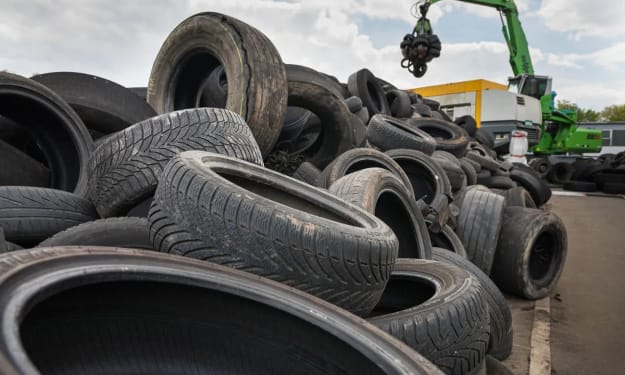
The management of end-of-life tyres (ELTs) in Europe has evolved into a sophisticated regulatory framework aimed at resource recovery, environmental protection, and circular economy advancement. Over the past decade, the European Union (EU) has shifted its policy orientation from disposal and incineration toward material and energy recovery, encouraging sustainable methods such as pyrolysis of tyre. This transformation reflects the EU’s broader ambitions under the Green Deal and the Circular Economy Action Plan.
By Wayne Shen11 months ago in Earth
Green Economy and Energy Transition: Differences and Similarities, by Stanislav Kondrashov
In this era of major energy transformations, we often hear about two concepts that are somehow interconnected and closely interdependent: the green economy and the energy transition. Stanislav Kondrashov, founder of TELF AG, has often spoken about these topics, emphasizing the fact that these are two absolutely crucial dynamics for the planet's economic and energy future.
By Stanislav Kondrashov11 months ago in Earth
The End of the Earth – A Glimpse Into Our Future
It’s hard to imagine a world without the Earth we know today. The blue oceans, the green forests, the soft winds, and the warmth of sunlight have always been part of our story. But what if one day, all of this began to fade? What if the Earth slowly reached its end—not through a sudden explosion or asteroid impact—but through a quiet, painful decline? This isn’t a story about science fiction. It’s a reflection on what might really happen if we keep ignoring the signs around us. The Beginning of the End Scientists believe the Earth still has billions of years before the sun grows so large that it swallows our planet. But our real danger isn’t that far in the future. It’s happening now—in rising temperatures, melting ice, dying forests, and polluted air. Imagine a day when stepping outside feels like walking into an oven. Cities turn into deserts. Rivers dry up. The ocean, once full of life, becomes a graveyard of plastic and dead coral. People don’t notice the change all at once—it creeps in slowly, year by year. The Silent Warning The first to feel the Earth’s ending would not be us sitting in cities. It would be the small creatures—the bees that vanish, the fish that die in warm water, the trees that fail to bloom. These quiet deaths are nature’s warnings. And yet, we continue our lives, scrolling through screens, buying more, wasting more, and thinking someone else will fix it. But the truth is, no one else can. The Earth doesn’t belong to governments or billionaires—it belongs to all of us. --- The Human Struggle As the climate worsens, humans will fight over what’s left—food, water, and safe places to live. Imagine countries closing borders, not because of war, but because their land can no longer feed new people. Millions might flee from floods or heatwaves, searching for a home that no longer exists. Technology may try to save us—machines that clean the air or turn seawater into drinking water—but they’ll only buy us time. No machine can replace the forests that breathe for us or the oceans that balance our world. --- The Emotional Side of the End The end of the Earth isn’t just about destruction. It’s about loss. The loss of simple joys—children playing in the rain, farmers planting crops in fertile soil, travelers watching sunsets over clean beaches. These are the memories that will fade when nature disappears. It’s also about guilt. We’ll ask ourselves: Could we have done more? The answer will hurt because, deep down, we’ll know we could have. We’ll remember how we wasted time arguing about money and politics while the planet quietly begged for help. A Glimmer of Hope But even at the edge of the Earth’s end, hope might survive. Humans are capable of great change when we finally understand what’s at stake. Communities could come together to rebuild forests, clean oceans, and choose renewable energy over comfort. Imagine a world where people plant trees instead of building walls. Where countries work together, not for power, but for survival. Where every child grows up knowing that saving the planet is not just science—it’s love. --- The Choice We Still Have The end of the Earth is not a fixed destiny. It’s a warning—a mirror showing us what could happen if we don’t change. The good news is that it’s not too late. Every small action matters. Turning off unnecessary lights, reducing waste, supporting clean energy, and teaching others to care. These aren’t grand gestures, but together, they shape the future. The Earth doesn’t need saving—it needs understanding. It needs people to remember that it’s alive, that it breathes, and that it feels every wound we cause.
By kashif khan11 months ago in Earth
Quiet Power, Long Endurance
You don’t have to pick sides between solar panels, home batteries, and generators. The most resilient—and often the most efficient—backup plan blends all three. Solar lowers bills and recharges batteries on good days. Batteries keep things silent during short outages and shave peak rates. A generator steps in for long events or cloudy stretches. Together, they turn your home into a calm island during storms without running an engine any longer than necessary.
By The Weekend Project11 months ago in Earth
Recycling Electronic Equipment
In our rapidly evolving digital age, electronic devices are everywhere — in homes, offices, factories, and schools. Every year, entire generations of smartphones, tablets, computers, and industrial systems become obsolete as technology marches forward. The result is a staggering accumulation of electronic waste, or “e-waste,” that poses serious environmental, health, and resource risks.
By Mahgol Nikpayam11 months ago in Earth
Lower Bills, Smaller Footprint
Sustainability doesn’t have to mean tearing your house apart or buying the newest gadget. In Philadelphia’s rowhomes and small commercial spaces, the biggest wins often come from simple, measurable upgrades that make the building cooperate with your equipment. Done right, you’ll feel quieter comfort, see steadier utility bills, and shrink your footprint—all without turning your life upside down.
By The Weekend Project11 months ago in Earth
Heat Pumps Without Regrets
“Go electric” gets loud online, but comfort and costs are local. In Lee’s Summit, you need steady heat through damp cold snaps, real cooling in sticky summers, and bills that don’t swing like the weather. Heat pumps can deliver all three—if the plan fits the house. The secret isn’t a brand; it’s right‑sizing, clean airflow, and a backup strategy that avoids overbuilding.
By The Weekend Project11 months ago in Earth
Warmth Without Waste
If you’ve ever stood in a Vancouver living room on a rainy evening, wrapped in a blanket despite a modest thermostat setting, you’ve felt our city’s signature chill. It’s not the coldest winter on the map, but it’s one of the dampest—and that moisture makes homes feel cooler and systems work harder. In that kind of climate, reliable heat isn’t just about comfort; it’s about sustainability and costs that don’t spike every time a front rolls through. This guide offers a practical look at how to maintain your home or storefront’s warmth without wasting energy, when to repair versus replace, and what to expect from a proper upgrade, ensuring your space feels comfortable on even the wettest days.
By The Weekend Project11 months ago in Earth