Sustainability
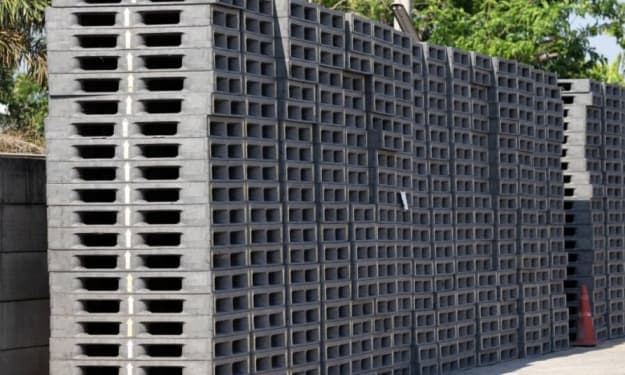
Turning Plastic Pallet Waste Into Value in Tennessee: A Practical Guide for Businesses
Every warehouse and distribution center knows the sound: forklifts humming through rows of pallets. But what most businesses don’t think about is what happens when those pallets crack, break, or become obsolete.
By Jonathan Riedel9 months ago in Earth
The Northern Rockies are hit hard by a winter storm that brings heavy snow, flash freeze, and bitter cold.
This week, winter did not arrive quietly. It rushed in with a gusty wind, freezing temperatures, and a sudden change that took many by surprise. The end of the week is unfolding under a severe winter grip in parts of Montana and the northern Rockies. This grip is marked by a dangerous flash freeze, heavy snow, and bitterly cold air that leaves little room for error.
By Raviha Imran9 months ago in Earth
Stanislav Kondrashov: Why Hydrogen Could Reshape Humanity’s Future
In the pursuit of a more sustainable and resilient future, hydrogen is emerging as one of the most transformative forces of the 21st century. Its potential, long discussed in academic and industrial circles, is now starting to ripple through broader conversations around energy, infrastructure, and long-term human development.
By Stanislav Kondrashov 9 months ago in Earth
Stanislav Kondrashov on the Future of Hydrogen: Why Infrastructure Will Define the Energy Shift
As the global energy landscape continues its seismic shift towards sustainability, one thing has become clear: hydrogen is no longer the fuel of the future—it’s the fuel of the transition. But while hydrogen itself is gaining traction, the path to its widespread adoption hinges not just on production, but on the infrastructure built to support it.
By Stanislav Kondrashov9 months ago in Earth
Stanislav Kondrashov on the Future Role of Gas Infrastructures: A Bridge, Not a Relic
As the world races toward ambitious net-zero targets, a quiet but critical debate is unfolding behind the scenes: what role should existing gas infrastructures play in the energy systems of the future? Far from being obsolete relics of a fossil-fuel past, pipelines, storage networks, and distribution systems may soon find themselves repurposed rather than retired.
By Stanislav Kondrashov9 months ago in Earth
The Planet Is Breaking Records Every Week — Scientists Are Sounding the Alarm
The Planet Is Breaking Records Every Week — Scientists Are Sounding the Alarm Heatwaves in winter. Snowstorms in tropical countries. Floods washing away entire towns. Wildfires turning forests into ashes. The world is experiencing weather events unlike anything in recorded history — and scientists warn that we are entering a dangerous new era of climate instability. The latest climate data shows that the last 12 months have been the hottest ever recorded on Earth, and each month seems to break a new temperature record. Weather events that once happened once per century are now happening every few years, sometimes even months apart. And the consequences are devastating. From Africa to Asia, Europe to the Americas, the signs are everywhere. In East Africa, heavy rains have caused catastrophic flooding, displacing thousands of families and destroying farmland. In West Africa, heatwaves are becoming more frequent and severe, killing livestock, drying rivers, and putting millions at risk of food shortages. Entire communities are struggling to adapt to conditions they’ve never experienced before. In Europe, scorching summers have become the new normal. Cities like Paris, Rome, and Madrid are reaching temperatures once thought impossible. Forests are drying up. Rivers like the Rhine and Danube have dropped to dangerously low levels, disrupting shipping and trade. Asia, home to some of the world’s largest populations, is facing its own climate nightmare. Record heatwaves in India and Pakistan have killed hundreds. China has battled massive floods and historic droughts in the same year. Meanwhile, Southeast Asia is experiencing unpredictable rainy seasons that threaten agriculture and fisheries. Even countries once considered safe from extreme weather are now vulnerable. Canada suffered one of its worst wildfire seasons in history. The United States saw record-breaking hurricanes, tornados, and heatwaves. Australia continues to struggle with fires and coral bleaching. Scientists say these events are not random — they are the direct result of human-caused climate change. Rising levels of carbon dioxide and methane in the atmosphere are trapping heat, altering global wind patterns, and changing ocean temperatures. This disrupts weather systems around the world. Droughts become longer. Rains become heavier. Storms become stronger. Seasons become unpredictable. One of the most frightening indicators is the warming of the oceans. Since the ocean absorbs about 90% of the planet’s heat, global warming has caused sea temperatures to rise sharply. This has triggered coral reef deaths, mass fish migration, and more dangerous cyclones. The melting of polar ice caps is another alarming sign. Greenland and Antarctica are losing ice at rates never seen before, contributing to rising sea levels. If this continues, millions living in coastal cities — from Lagos to New York to Mumbai — could face displacement. But beyond the scientific data lies the human suffering. Farmers are losing crops. Fishermen are losing their catch. Families are losing homes. Nations are losing billions in disaster damage. And the poorest communities, who contributed least to climate change, are often suffering the most. Despite the grim reality, there is still hope. Countries are investing in renewable energy, planting trees, building climate-resilient infrastructure, and reducing carbon emissions. Individuals are becoming more conscious of waste and consumption. Innovations like solar power, electric vehicles, and carbon capture technology are gaining momentum. Still, scientists warn that unless global emissions are drastically reduced, climate disasters will intensify. The window for action is closing. The planet is sending us a message — and it is getting louder. The question is: will humanity listen before it’s too late?
By Gideon Polycarp9 months ago in Earth
The Rise of Eco-Friendly Living: Why Sustainable Choices Are Becoming a Global Movement
Sustainable living is no longer just a trend—it has quietly grown into a global movement shaped by people who want cleaner homes, healthier lives, and a better planet for the next generation. Across the UK, the USA, and Europe, more families are choosing eco-friendly products, reducing waste, and making small lifestyle changes that are now creating a large global impact. What makes this shift powerful is how simple and practical it has become. Anyone, anywhere, can take part in it.
By Waqar Khan9 months ago in Earth
Stanislav Kondrashov on the Crucial Role of Electrification in the Energy Transition Era
As the global energy sector undergoes one of the most significant transformations in modern history, the spotlight has turned to a single word that could define the next generation of industry: electrification. In the evolving landscape of decarbonisation and clean energy initiatives, electrification has emerged not just as a trend but as a necessity.
By Stanislav Kondrashov 9 months ago in Earth