Sustainability
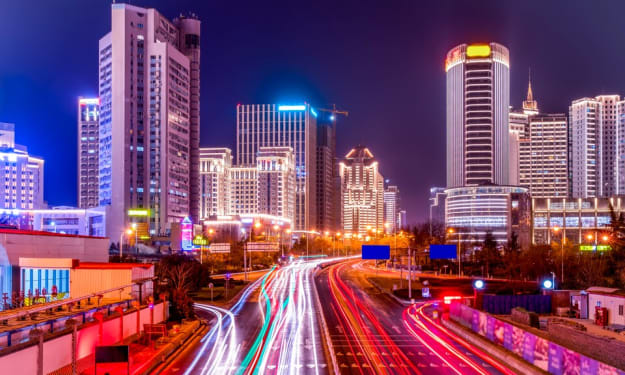
NEOM - THE LINE. Content Warning.
NEOM, a pivotal megaproject situated in Saudi Arabia, remains as a demonstration of the realm's desire to make a genuinely visionary city representing things to come. Arranged in the northwest corner of the country along the Red Ocean coast, NEOM is ready to turn into a worldwide center for development, supportability, and financial thriving. Imagined as a model for metropolitan turn of events and innovative headway, NEOM is set to reclassify how urban communities are planned and fabricated, making it a task of colossal interest and interest around the world.
By Michael Rama3 years ago in Earth
The Moringa Tree
The enigmatic Moringa, also known as the "wonder tree," is an ancient botanical treasure steeped in the history of Africa. This remarkable tree, with its elongated, drumstick-like pods, holds an impressive lineage of use in the Indian subcontinent, but it has found its true essence in the diverse landscapes of Africa, where it has been cultivated and cherished for over two millennia.
By Michael Rama3 years ago in Earth
New innovations in sustainable seafood methods
Sustainable seafood refers to seafood that is harvested or farmed in a manner that minimizes negative environmental impacts by stakeholders such as fresh tuna suppliers, supports the long-term health and productivity of fish populations and ecosystems, and promotes responsible fishing practices by reputed fish processing companies and any seafood export company. It encompasses various principles and practices aimed at maintaining the ecological balance of marine environments, preserving biodiversity, and ensuring the availability of such resources for present and future generations.
By Anna Paquin3 years ago in Earth
Doomsday
This article challenges concerns about overpopulation and resource scarcity by proposing the concept of "super abundance." There are currently 8 billion people living on the planet. Questions about whether there is enough room for everyone and concerns about running out of natural resources are not new; they have been raised by doomsayers for at least 200 years. In 1798, English economist Thomas Malthus wrote his famous essay on the principle of population. He argued that while population grew exponentially, resources needed to feed that population grew at a linear rate, leading to potential starvation. However, Malthus' predictions proved to be far from accurate. As the population grew, so did food production and overall prosperity. A comparison of a typical American blue-collar worker's life over a century, using time prices, reveals significant improvements. Between 1900 and 2018, the time required for a blue-collar worker to earn enough money to buy a pound of pork fell by 98 percent, while pounds of rice and coffee saw respective decreases of 97 percent and 94 percent in the time needed to afford them. Though commodities like rubber, aluminum, and cotton are not edible, they are valuable inputs in production processes that influence the prices of goods and services, thus contributing to an overall improved standard of living. Over the same period, prices for these commodities fell by 99 percent, 98 percent, and 96 percent. Despite a significant increase in the United States' population from 76 million to 328 million, famines have largely disappeared outside of war zones. Instead, obesity has become a problem in much of the world today. This counter-intuitive relationship between population growth and abundance indicates that as the population increases, so does overall abundance relative to previous generations. We currently inhabit a world of "super abundance," a term coined by Gail Pully, my colleague and co-author of our book. The key to this super abundance lies in knowledge. As brilliant economist Thomas Sowell explains, the difference in the standard of living between the caveman and us is not due to natural resources but rather the accumulation of knowledge. We possess a vast amount of knowledge, which allows us to utilize the same natural resources available during the time of the caveman in ways that were previously unimaginable. Consider the transformative potential of a grain of sand. While it has existed for billions of years, over four and a half thousand years ago, someone discovered that heating sand to a high temperature could turn it into glass beads, which later evolved into glass jars and window panes. Each step of discovery increased the value derived from a grain of sand. Today, we use glass in fiber optic cables and computer microchips, significantly boosting our productivity and prosperity compared to our ancestors. Counting the quantity of known raw materials, as Malthus and others have done, may appear logical, but it overlooks a critical element: knowledge. New knowledge arises from the human mind, which is capable of intelligent and potentially world-changing thought. Therefore, the real determinant of economic growth is not the finite number of atoms on the planet, but rather the human ability to combine and recombine these atoms in increasingly valuable ways. This concept empowers us to declare that economic growth depends less on limited resources and more on limitless knowledge, as aptly put by Nobel Prize-winning economist Paul Romer: "New ideas do not add up; they multiply." We can aptly liken our world to a closed system, much like a piano with its limited number of keys. Yet, just as pianists can play an infinite number of melodies on these keys, our planet's fixed atoms offer an infinite number of possible combinations. What truly matters, therefore, is not the physical limits of our planet, but the ingenuity of human beings and their freedom to experiment and reimagine resource utilization. As long as we embrace two key components - people and freedom - we can continue to thrive in a world of super abundance. The more people our planet supports, and the greater the freedom they enjoy, the higher the likelihood of generating new and useful ideas to address our challenges, regardless of their nature. So, do you still believe there are too many people, or perhaps not enough?
By Olusola Bodunrin3 years ago in Earth
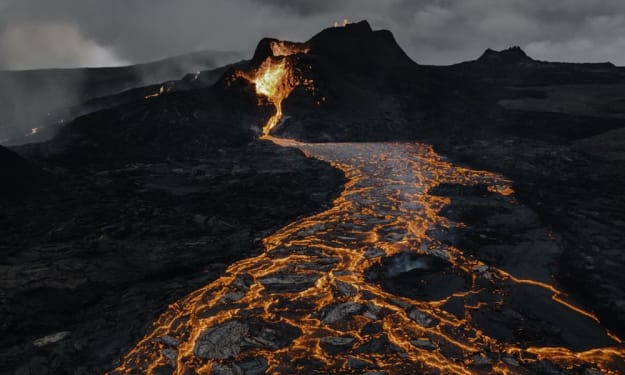
The Resilience of Life: Surviving Ancient Super Volcanoes. Content Warning.
Introduction: Millions of years ago, the American landscape bore witness to an extraordinary geological phenomenon - the "ignimbrite flare-up," a series of super volcanic eruptions that shaped the course of history. These catastrophic events unleashed unimaginable power, dwarfing even the colossal eruption of Yellowstone. Surprisingly, these massive eruptions occurred relatively frequently, approximately every 10,000 years, engulfing North America in a thick layer of ash. However, life endured and thrived, leaving behind a remarkable fossil record. In this blog, we will delve into the astonishing resilience of ancient creatures and plants, exploring how they not only survived but also bounced back to shape the present-day world.
By Rohit Singh3 years ago in Earth
Miami Unveiled: Your Ultimate Guidance to the City’s hidden beauty gems and Must-See Attractions
Miami Unveiled: Your Ultimate Guidance to the City’s hidden beauty gems and Must-See Attractions Welcome to the enchanting city of Miami, a captivating destination that offers a unique blend of stunning natural beauty, vibrant cultural experiences, and vibrant nightlife. where sun-kissed beaches, art-deco architecture, and sizzling nightlife await. While Miami's glitzy reputation is well-known, it is the local knowledge that unlocks the city's true essence. Miami has something special in store for you. In this ultimate guide, we will unveil the hidden gems and must-see attractions that make Miami a truly unforgettable place to visit. So pack your bags and get ready to embark on a journey through the heart and soul of Miami.
By Aqeel Saddiquue3 years ago in Earth
The Climate Dictionary: An everyday guide to climate change
Weather vs. Climate Weather refers to atmospheric conditions at a particular time in a particular location, including temperature, humidity, precipitation, cloudiness, wind, and visibility. Weather conditions do not happen in isolation, they have a ripple effect. The weather in one region will eventually affect the weather hundreds or thousands of kilometers away.
By kathy rich3 years ago in Earth
What does transparency mean when it comes to climate change?
What does transparency mean when it comes to climate change? In the context of climate change, transparency refers to the reliable measurement, accessible reporting, and expert review of the progress made by countries towards achieving their national climate goals and pledges.
By kathy rich3 years ago in Earth