Sustainability
From Rejection to Redemption
James Thompson stood at the entrance to the tall glass building. Firmly holding on to his department His heart was pounding with a mix of anticipation and stress. This was the day he had been mulling over for months—the day he would present his dream project to a panel of investors. He spent many years pouring his soul into it. Polished every detail Sacrificing countless weekends and sleep. Today felt like the culmination of everything.
By Raja Sumaria Khan2 years ago in Earth
As The World Burn
Cassandra, daughter of the King and Queen of Troy, knew that if her brother Paris went to Sparta and came back with Queen Helen, the destruction of Troy would follow. Cassandra had the gift of prophecy bestowed upon her by Apollo, but because she refused to give herself to the god, he added this curse: No one would believe her. Thousands of years separate us from this story. But dire prophecy, deeply rooted in truth, is staring us in the face. Like the ancient Trojans, we refuse to take action. The arrival of New York Climate Week that coincides each year with the gathering of global leaders for the UN General Assembly meetings must inspire us to do just that. Until recently, a stable climate persisted through the past ten thousand years of Earth’s history, enabling human economies and the civilizations that depend on them to flourish and grow. The integrity of nature, in all its complexity, provided this “Goldilocks” period – nestled comfortably between too cold and too hot — for humanity to thrive. But in recent decades, we’ve eroded nature’s integrity and exceeded its capacity to absorb the ever-increasing stresses we’ve thrown at it. Years ago, climate scientists saw the approach of the days of reckoning we are living through. They warned us—in thousands of pages of peer-reviewed publications, in tomes of assessment reports produced over 35 years by the venerable International Panel on Climate Change, in an infinity of PowerPoint presentations, and even at the movies. We know that nature regulates the earth’s climate through the powerful buffering effects of the world’s oceans and forests that absorb heat, dampen what would otherwise be unlivable temperature extremes and regulate the movement of water around the planet. Nature’s biogeochemical processes also maintain the balance and flux of carbon dioxide between the atmosphere and terrestrial and marine ecosystems. Carbon dioxide is the main “greenhouse gas” that locks in heat from the rays of the sun and keeps the Earth’s surface warm. The integrity of terrestrial and marine ecosystems had kept the balance of carbon dioxide in the atmosphere fairly constant for millenia, but that balance depended on keeping enormous reservoirs of fossilized carbon inert and buried beneath the Earth’s surface. Those deposits of coal, oil and gas formed from the biological residue of ancient ecosystems subjected to millions of years of pressure within the earth’s interior. At the beginning of the Industrial Revolution, we didn’t know that burning billions of tons of fossil fuels would wreak havoc on the climate we depend on. But we’ve known for decades, even as fossil fuel companies conspired to bury the truth. Late in the war, when Odysseus conceived the ruse of gifting to Troy a giant wooden horse, filled with the invading armies’ deadliest soldiers, Cassandra knew it was a trick to get the Trojans to bring the enemy inside the city gates. She shouted the truth at the top of her lungs, lit a torch and ran toward that wooden beast to burn it to the ground and incinerate the enemy within. But the people of Troy held her back. They loved that horse. And they knew Cassandra was out of her mind. Until that night, when the finest warriors ancient Greece could muster stealthily emerged from the hollow belly of the horse and destroyed their city. Like the ancient Trojans, we’re in denial. And like Cassandra, today’s climate scientists are tolerated but the urgency of their facts and fears is ultimately dismissed. The question at hand is whether, unlike the Trojans, we have the wherewithal to change our fate. The odds are not in our favor. Time is short. Because we’ve waited so long to act decisively, we now have just a few years left before we’re fully committed to a future hotter than any that has existed on earth since humanity emerged. What is to be done? The answers are not particularly complex. But their implications are manifold. First, we must rapidly reduce greenhouse gas emissions from every economic sector. Among others, the United Kingdom, Norway, and Costa Rica, have shown how to do this in the power, transport, and land-use sectors, respectively. The rest of the world must follow suit. Second, we must protect and strengthen the integrity of nature, which regulates the climate and reduces the impacts of the unnatural disasters we’ve wrought in the form of unprecedented heat waves, wildfires, and more powerful storm systems. Investing in nature and its stewards must move from the margins to the mainstream of our financial systems. Third, we must accelerate the removal of excess carbon dioxide from the atmosphere, through every sensible means available, from proven biological sequestration above- and below-ground in diverse forest and agricultural systems, to technological solutions that must still be proven effective and safe at scale. And fourth, we must adapt to the climate conditions on our already warmer planet, because we’ve taken too long to accept the facts that climate scientists have been shouting at us for decades. We can sympathize with the Trojans for ignoring Cassandra at their peril. After all, she was cursed by a god. As world leaders gather once again in New York City to address the climate crisis, what excuse do we have for following in their footsteps?
By Uzma Halepoto 2 years ago in Earth
Escape The Ordinary
We all living on a world, a planet named Earth, which is the smallest planet which revolve around the Sun, a star of our solar system. Which is a part of Milky way galaxy which has a black hole at its center the milky way galaxy is a part of a clusters and which is a part of local group and the universe is very huge compared to us. But all these can be created and destroyed but our soul is invincibility.
By Bharani Kumar2 years ago in Earth
Australia on the Brink of a Mega Drought: What It Means for the Future
Australia may soon face an unprecedented mega drought—not just a few dry seasons, but potentially two decades with little to no rain. This alarming forecast not only threatens the continent but could also have far-reaching consequences worldwide, impacting food supplies and energy prices across the globe.
By Nicoline Beukes2 years ago in Earth
Wake Up to a Greener Brew: The Sustainability Revolution in Coffee Production!
However, as consumers become increasingly aware of the environmental impact of their choices, the coffee industry is undergoing a significant transformation towards sustainability. The sustainability revolution in coffee production is not only reshaping how coffee is grown, processed, and consumed but also enhancing the quality and flavor of our beloved brew.
By Berfin Orhon2 years ago in Earth
Save Money While Saving the Planet
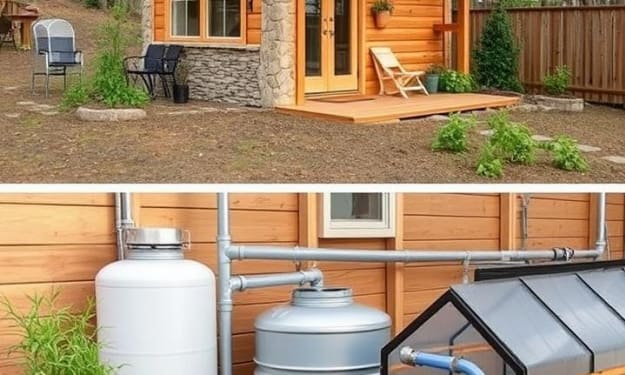
Welcome to the world of eco-friendly homes, where saving money and saving the planet go hand in hand. As more people become aware of the impact of their lifestyle choices on the environment, eco-conscious architecture trends are on the rise. These homes are designed with sustainability in mind.
By Yellow Woodpecker2 years ago in Earth
Exploring Nature and Cultural Differences in Africa:
Africa, a continent rich in biodiversity and cultural diversity, offers an unparalleled perspective on the interconnectedness of nature and human life. From vast deserts to lush rainforests, from ancient traditions to modern practices, Africa serves as a living testament to the delicate balance between people and the environment. This article explores the complex relationship between nature and cultural differences across Africa, illustrating how they shape and influence each other.
By Njabulo Magoswana2 years ago in Earth
Life in Five-Minute Fixes
Since she could remember, Nina had ever only experienced mornings as a fracas — an mad dash from the instant her lids separated. Her alarm would ring so loudly and abruptly that it would scare her awake before she slammed shut the noise with an angrily swiped hand. She had all the times hit snooze, just to steal a few more minutes of sleep time — it had never worked. Too late she discovered that her body lay a bit more soundly than she imagined, and by the time she wrenched herself from bed, there was no shaking groggily through the morning routine on auto-pilot. She was rushing every step of the way, counting in her head how many things she must do before heading out the door.
By Raja Sumaria Khan2 years ago in Earth
The Sad Side of The Nature
Wren Nest Learning about nature is not always a happy experience. To learn how nature works it is necessary to know it is a balance and there is death as well as life. Nature always finds a way to maintain this balance, although it might not be in a way we would like. My daughter in law called crying about her bird house that was knocked over by the wind during a storm. The baby birds that it was housing had perished. I recently witnessed a baby wren die in my driveway after what I assume was from flying into something and sustaining an injury that it was not able to recover from. It was so heartbreaking. But in the same week I witnessed the wonder of 2 young hawks flying from their nest, found baby praying mantises while I was mulching, and watched countless other miracles of nature. I believe these negative aspects of nature make the positives even more wondrous. For each example of sad nature experiences I can think of at least two happy ones. It can be very challenging to refrain from interfering with natures process when we sense it will have a negative outcome. Sometimes assistance can offset some of the human interference already in place such as helping a turtle that is on the side of the road. Other times our “helping out” can have consequences we can’t imagine. An example of this is stopping a predator from catching it’s prey. It may be difficult and go against our instincts to help a creature in need, but realize that the predator has it’s place in nature as well and keeping it from catching it’s prey could result in starvation. Without predators, the prey species would become overpopulated. This would result in devastation of food sources and starvation of the prey species. This is just a very small part of natures process but I hope it helps to paint the bigger picture. Nature is a delicate balance that when interfered with can have consequences that are not intended. This being said, some simple acts can be helpful in overcoming other forms of human interference. It is important to be aware of this when becoming involved with or enjoying nature. In my experience the happy outweighs the sad and I hope when you become more aware of nature you will see this as well.
By Uzma Halepoto 2 years ago in Earth
How Recycled Polyester Staple Fiber is Transforming the Fashion Industry
The fashion industry being highly creative and innovative has always been under the scanner for causing damage to the environment. Lastly, in a decade, with consumer, designer, and brand awareness regarding sustainability, it has birthed new materials and a new set of practices which can help mitigate the carbon footprint of the fashion industry. These include innovations like Recycled Polyester Staple Fiber, which not only reduces waste but changes the entire game of fashion productions and consumption altogether.
By Rakshitam Ecofibre2 years ago in Earth