Sustainability
Convention on Biological Diversity: Kunming-Montreal Agreement's Impact on Global Biodiversity . Content Warning. AI-Generated.
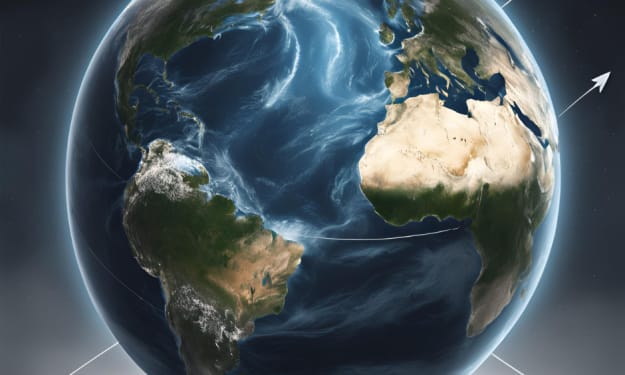
Convention on Biological Diversity: Kunming-Montreal Agreement's Impact on Global Biodiversity One million species are projected to become extinct within decades, marking a terrible crisis in Earth's biodiversity. This startling fact has compelled 196 nations to come together for the Convention on Biological Diversity, establishing the most comprehensive framework for protecting global ecosystems and wildlife. The new agreement represents the biggest international effort since the Paris Climate Accord to protect nature.
By Rajeev kumar jha2 years ago in Earth
The Enchanting Diversity of Russia's Landscape
The Vast Land of Russia: A Nation of Strength, Diversity, and Rich History Russia, the largest country in the world, is a land of immense cultural heritage, diverse landscapes, and unparalleled global influence. Spanning 11 time zones and covering more than 17 million square kilometres, Russia's vastness and complexity make it one of the most fascinating nations on the planet. In 2024, the country continues to play a significant role in geopolitics, science, culture, and economics, standing as a global powerhouse with deep historical roots. Geography: A Land of Extremes Russia’s geography is as vast as its influence. It stretches across Eastern Europe and northern Asia, bordered by 14 countries and the Arctic and Pacific Oceans. This geographical expanse gives Russia an unparalleled diversity of terrains, from the icy tundra of Siberia to the rolling plains of the steppes and the majestic peaks of the Ural Mountains. The country boasts the world’s largest forest reserve, immense oil and gas fields, and the iconic Lake Baikal, the deepest freshwater lake on Earth. These natural wonders not only define the nation’s physical identity but also shape its cultural and economic character. History: From Empires to Modern Influence Russia's history is a journey through empires, revolutions, and resilience. The rise of the Russian Empire in the 18th century under Peter the Great and Catherine the Great marked an era of territorial expansion and cultural enrichment. The Bolshevik Revolution in 1917 led to the establishment of the Soviet Union, which became a global superpower during the Cold War. Despite the collapse of the Soviet Union in 1991, Russia re-emerged as a strong independent state, retaining its influence on the global stage. In 2024, Russia continues to draw from its historical experiences, balancing traditional values with the demands of a rapidly modernising world. The Kremlin remains a symbol of political power, while cities like Moscow and Saint Petersburg embody the fusion of historical grandeur and contemporary innovation. Natural Resources: The Backbone of the Economy Russia is a treasure trove of natural resources, which form the backbone of its economy. The country is the world’s largest exporter of natural gas and the second-largest exporter of oil. Its mineral wealth includes diamonds, gold, and rare earth metals, making it a critical player in global resource markets. In addition to fossil fuels, Russia has vast reserves of timber and arable land, enabling it to dominate agricultural exports, particularly in wheat and sunflower oil. In recent years, the government has sought to diversify the economy by investing in renewable energy and technology, showcasing its potential to adapt and evolve. Culture: A Rich Tapestry of Arts and Traditions Russian culture is a blend of tradition and modernity. Renowned for its contributions to literature, music, and art, Russia has given the world icons like Leo Tolstoy, Fyodor Dostoevsky, Pyotr Tchaikovsky, and Wassily Kandinsky. The Bolshoi and Mariinsky Theatres remain world-famous for their ballet and opera performances. Cultural traditions such as matryoshka dolls, traditional folk dances, and hearty Russian cuisine continue to thrive alongside modern trends. In 2024, Russia's cultural landscape reflects the nation’s desire to preserve its heritage while embracing innovation. Technological Advancements and Space Exploration Russia’s contributions to science and technology are significant, particularly in space exploration. The launch of Sputnik in 1957 and Yuri Gagarin’s journey as the first human in space in 1961 are milestones that cemented Russia’s legacy in the space race. Today, Russia’s space agency, Roscosmos, remains a key player in global space exploration, collaborating with international partners on ambitious missions. In the fields of artificial intelligence, robotics, and nuclear technology, Russia continues to demonstrate its prowess. The country is leveraging these advancements to maintain its competitive edge on the global stage. Geopolitical Influence Russia's geopolitical influence is undeniable. As a permanent member of the United Nations Security Council, it plays a pivotal role in global decision-making. Its strategic partnerships with countries in Asia, Africa, and the Middle East showcase its ability to shape international relations. However, Russia's foreign policy is often marked by controversy, particularly regarding its role in regional conflicts and its relationships with Western powers. In 2024, the nation continues to navigate complex diplomatic challenges while asserting its sovereignty and national interests. Challenges and Opportunities Like any great nation, Russia faces its share of challenges. Economic sanctions, demographic shifts, and environmental concerns pose significant hurdles. However, the country’s resilience and resourcefulness provide opportunities for growth and transformation. Russia's commitment to technological innovation, sustainable energy, and infrastructure development highlights its ability to adapt to changing global dynamics. Initiatives such as the Arctic exploration and the development of the Northern Sea Route demonstrate its ambition to capitalise on its geographical advantages. Conclusion: A Nation of Endless Possibilities Russia’s unique combination of history, geography, culture, and resources makes it one of the most fascinating countries in the world. Its ability to balance tradition with modernity, coupled with its immense potential for innovation, ensures that Russia will remain a key player on the global stage. In 2024, Russia continues to captivate the world with its vast landscapes, rich heritage, and unyielding spirit. As it forges ahead into the future, the nation stands as a testament to the power of resilience, diversity, and ambition.
By Say the truth 2 years ago in Earth
The Road to Sustainability
When I first started in the asphalt business, sustainability wasn’t exactly a buzzword. Back then, the focus was on getting the job done quickly and efficiently. But over the years, I’ve come to realize just how much of a difference we can make in our industry by rethinking how we approach materials and processes. One of the biggest game-changers? Reclaimed asphalt pavement, or RAP.
By Raymond Wolk2 years ago in Earth
Is a Supervolcano really coming to destroy our beloved Earth?. AI-Generated.
Yellowstone National Park is a marvel of nature, celebrated for its majestic landscapes, geysers, and hot springs. However, beneath this serene exterior lies one of Earth’s most powerful natural features—a supervolcano. Here’s everything you need to know about this incredible geological phenomenon, its potential risks, and why scientists aren’t sounding the alarm just yet.
By Kehinde Adesina2 years ago in Earth
How Groundwater Extraction is Shifting Earth's Axis: A New Wake-Up Call for Sustainability
The Earth's rotation and axis are essential to life; any change would alter climate patterns, navigation aids, and many other features of our daily lives. Processes such as melting glaciers or tectonic activity were well known to influence these dynamics, but there was a surprising human mechanism: the removal of groundwater. A study recently published disclosed that huge quantities of groundwater are removed for human use, shifting Earth's axis measurably. This finding emphasizes the importance of human activities in planetary systems in relevance to long-range implications.
By Engle (Asmina)2 years ago in Earth
Mind-Body Exercises: Orchestrating Wellness Through Music and Development.
What Are Mind-Body Workouts? Mind-body exercises stress the solidarity of physical and mental commitment. Dissimilar to customary wellness schedules focusing on actual outcomes, these projects intend to achieve an agreeable harmony between development and mental concentration. Dance-based workout regimes like barre and musical streams are perfect representations.
By Shahanaz Akther2 years ago in Earth
WATER SCARCITY AND HUMAN SURVIVAL
Water Scarcity and Human Survival: A Growing Crisis Water is essential for life. It sustains our health, supports agriculture, drives industries, and enables ecosystems to thrive. However, the availability of fresh water is rapidly diminishing, and this growing scarcity presents a serious challenge to human survival. Water scarcity is already affecting millions of people worldwide, and without significant action to manage this precious resource, it threatens to exacerbate existing inequalities and drive social, economic, and environmental instability.
By Badhan Sen2 years ago in Earth
THE WICKED PRESIDENT
In a land rich with beauty, where the sun kissed the earth and the rivers danced through the valleys, there was a nation once filled with hope. This was the land of Utembo—a country that had known peace, prosperity, and unity. But that was before President Kofi Akwesi took the throne. President Akwesi had been chosen by the people, a figure of strength, intelligence, and promise. He had once been a man of the people, a leader who spoke passionately about fairness and justice. But soon after assuming power, his true nature began to emerge.
By Momoh Godfrey2 years ago in Earth
SUSTAINABLE LIVING PRACTICES
Sustainable living is a lifestyle that focuses on reducing one's carbon footprint and promoting environmental health by adopting practices that conserve natural resources, reduce waste, and lower harmful emissions. In the face of climate change, resource depletion, and pollution, sustainable living is more crucial than ever. The goal of sustainable living is to create a balanced life that supports both the planet and its inhabitants for generations to come. This article delves into the key sustainable living practices that individuals can adopt to make a positive impact on the environment.
By Badhan Sen2 years ago in Earth
ENVIRONMENTAL ETHICS
Environmental ethics is a branch of philosophy that examines the moral relationship between humans and the natural world. It explores how we should treat the environment, the value we assign to nature, and the responsibilities we hold toward future generations. As the planet faces unprecedented environmental challenges, including climate change, biodiversity loss, and pollution, environmental ethics provides a framework for evaluating our actions and fostering a sustainable relationship with the earth.
By Badhan Sen2 years ago in Earth
The Fascinating World of Bioluminescence
Bioluminescence, the production and emission of light by living organisms, is one of nature’s most captivating phenomena. While many are familiar with the glowing of fireflies on warm summer nights or the shimmering of plankton in the ocean, the world of bioluminescence is far more diverse and widespread than most people realize. From glowing mushrooms in forests to deep-sea creatures that light up the dark depths of the ocean, bioluminescence is a truly mesmerizing natural phenomenon.
By dokis sris2 years ago in Earth