Sustainability
Scientists May Have Just Found the Best Way to Detect Life on Mars
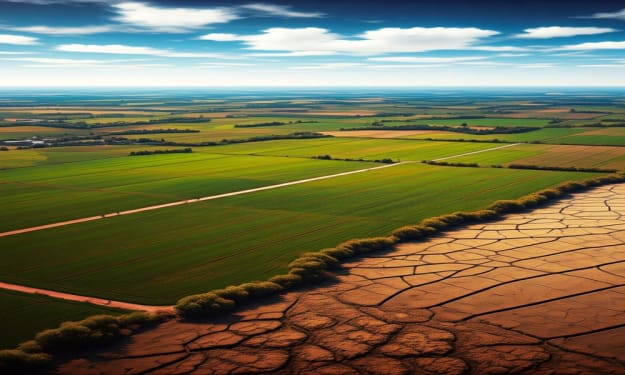
Scientists May Have Just Found the Best Way to Detect Life on Mars. For decades scientists have been searching for signs of life on Mars and a recent breakthrough may have just provided a powerful new method to detect ancient microbial life. A recent study suggests that microbial fossils could be preserved within sulfate minerals like gypsum which are abundant on the Martian surface. If confirmed this discovery could revolutionize how space agencies approach the search for extraterrestrial life. Mars has long been considered one of the most promising places in our solar system to search for past life. Billions of years ago Mars had a warmer wetter climate complete with rivers lakes and possibly even oceans. This means the planet may have had the right conditions to support microbial life. However over time the Martian climate changed dramatically turning it into the cold dry desert world we see today. Despite these harsh conditions scientists believe that remnants of ancient microbial life could still be found hidden within the planet’s rocks and minerals. The challenge has always been how to detect these potential biosignatures effectively. That’s where the recent study comes in suggesting that sulfate minerals could be the key to solving this puzzle. Sulfate minerals like gypsum and epsomite form in environments where water evaporates leaving behind mineral deposits. On Earth these minerals have been known to trap and preserve microbial life for millions of years. This process is similar to how fossils form in sedimentary rock but in this case microbes get trapped inside crystal structures protecting them from environmental damage. Mars has vast deposits of sulfate minerals especially in regions like Gale Crater where NASA’s Curiosity rover is currently exploring. These sulfate rich areas are thought to have formed when ancient Martian lakes and rivers dried up. If microbial life once existed in these water bodies their remains could be locked inside these minerals.
By Adnan Rasheed2 years ago in Earth
"Creativity vs. AI: Who Will Win the Battle for Artistic Control?"
AI-Generated Content and Its Impact on the Creative IndustryIntroductionArtificial intelligence (AI) is rapidly transforming various industries, and one of the most significant areas of impact is content creation. AI-powered tools are now capable of generating text, images, music, and even videos, changing the way content is produced and consumed. From AI-written articles to AI-generated art, the creative industry is undergoing a revolution. However, this shift raises important questions about originality, ethics, and the future of human creativity.In this article, we will explore how AI is being used in content creation, its advantages, challenges, and what the future holds for AI in the creative industry.How AI is Creating ContentAI-generated content is not limited to text. Advanced AI models are now capable of producing a wide range of creative outputs, including:1. AI-Generated WritingTools like ChatGPT, Jasper, and Copy.ai can generate high-quality written content, including blog posts, news articles, product descriptions, and even creative writing like poetry and fiction. These AI models analyze large amounts of data and use machine learning to generate text that mimics human writing.2. AI-Generated ArtPlatforms like Midjourney, DALL·E, and Stable Diffusion allow users to create digital artwork by simply providing text prompts. AI interprets these prompts and generates unique images that resemble the styles of famous artists or entirely new creations.3. AI-Generated MusicMusic-generating AI tools like AIVA and OpenAI’s Jukebox can compose original music across various genres. These tools analyze patterns in existing music and use algorithms to generate new compositions, often indistinguishable from human-created works.4. AI in Video ProductionAI-powered video editing and animation tools like Runway ML and DeepBrain AI can assist in video production by automatically generating scenes, animations, and even realistic-looking deepfake videos.The Pros of AI-Generated ContentThe adoption of AI in content creation comes with several advantages, making it an attractive option for businesses and creators:1. Speed and EfficiencyAI can generate content in a fraction of the time it takes a human. Blog posts, articles, and social media captions can be created almost instantly, making content production faster than ever.2. Cost-EffectivenessBusinesses can save money by using AI tools instead of hiring multiple content creators. AI-generated content reduces labor costs while maintaining a high level of quality.3. Accessibility for Non-ExpertsAI tools allow individuals with little or no expertise in writing, design, or music production to create professional-quality content. This democratization of creativity makes it easier for anyone to produce and share content online.4. PersonalizationAI can analyze user data and preferences to generate personalized content. For example, AI-driven recommendation engines tailor music, movies, and articles based on individual user behavior.The Challenges and ControversiesDespite its benefits, AI-generated content also presents significant challenges and ethical concerns:1. Ethical Concerns: Copyright and OriginalityOne of the biggest issues surrounding AI-generated content is copyright. Since AI models are trained on existing works, questions arise about whether AI-generated content is truly original or if it is derived from existing copyrighted material.2. Impact on Human Creators and Job SecurityMany artists, writers, and musicians fear that AI-generated content could replace human jobs. If businesses rely solely on AI for content creation, it could reduce job opportunities for human creators.3. The Risk of Misinformation and Deep fakes AI-generated content can be used to spread misinformation an crate deep fake videos that appear convincingly real. This poses serious risks in politics, media, and cybersecurity.The Future of AI in Creativity The future of AI in content creation is still unfolding. While AI has the potential to revolutionize the creative industry, it is unlikely to completely replace human creativity. Instead, AI is more likely to become a tool that enhances human creativity rather than replacing it entirely.1. Collaboration Between AI and Human CreatorsMany believe that the best use of AI in creativity is as a collaborative tool. Artists and writers can use AI to generate ideas, improve efficiency, and automate repetitive tasks while still bringing their unique human touch to the final product.2. The Role of Regulations and Ethical Guidelines As AI-generated content becomes more widespread, there is a growing need for regulations to address copyright, ethical concerns, and misinformation. Clear guidelines will help ensure that AI-generated content is used responsibly.3. Will AI Replace Human Creativity or Enhance It?While AI can generate impressive content, human creativity involves emotions, experiences, and unique perspectives that AI cannot replicate. The future may see AI acting as an assistant to human creators rather than a replacement.ConclusionAI-generated content is transforming the creative industry, offering new opportunities and efficiencies while also raising ethical and professional challenges. From AI-written articles to AI-generated music and art, the technology is evolving rapidly.However, rather than fearing AI, creators can embrace it as a tool to enhance their work. By finding a balance between automation and human artistry, we can harness the power of AI to drive creativity forward while preserving the essence of human expression. The future of content creation lies in collaboration between humans and AI, creating a world where technology and creativity coexist harmoniously.
By SINDHI AHMED2 years ago in Earth
Milky way galaxy
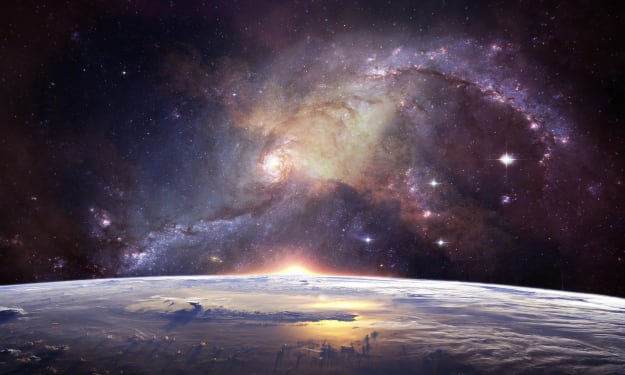
**The Milky Way Galaxy: Our Cosmic Home** The Milky Way Galaxy is a vast, swirling collection of stars, planets, gas, dust, and dark matter that serves as our cosmic home. Spanning approximately 100,000 light-years in diameter, it is a barred spiral galaxy, characterized by its distinctive spiral arms that radiate from a central bar-shaped structure. The Milky Way is just one of billions of galaxies in the observable universe, yet it holds a special place in our understanding of the cosmos, as it is the galaxy in which our solar system resides.
By Taiyab Ahmed2 years ago in Earth
SpaceX Starship rocket destroyed after 8th test
SpaceX Starship rocket destroyed after 8th test flight, debris bursts over sky SpaceX's eighth flight test of its Starship spacecraft concluded with a 'rapid unplanned disassembly,' the same terminology Elon Musk's business used when Starships January mission exploded in the sky.
By Havana Music2 years ago in Earth