Sustainability
A Child's Journey Through Trauma in Gaza
Shama Tubaili's Heartbreaking Struggle: A Child's Journey Through Trauma in Gaza Shama Tubaili stood in front of the mirror, trying to comb her hair, but she began to cry. With her hand on her head, she spoke to CNN, saying, "I don’t have any hair to brush. That’s why I am so sad. I look at myself in the mirror because I want to comb my hair again. I really want to comb my hair again."
By Omur Faruqueabout a year ago in Earth
How to Care your plants in Rainy Season?
How to Care your plants in Rainy Season? You need to put some extra care while doing gardening in a rainy season because its challenging due to the extra moist atmosphere around your plants. You have to fill the pots of your indoor and outdoor plants completely and you can split the filling into two parts, one part can contain cow dung and another part can have other soil and compost.
By Iqra Aslamabout a year ago in Earth
The Dangerous ocean,full story.
Ocean The Secret Under the Waves is the title. Maya had always felt a pull toward the ocean. Growing up in a small coastal town, the sea was her backyard and her best friend. Maya spent her afternoons collecting shells, chasing crabs, and talking to the waves as if they could hear her while the other kids played in parks or watched cartoons. Amma, Amma's grandmother, used to say that the ocean had a soul. “If you listen closely,” she would whisper, “it’ll speak to you. It conceals tales that no book can reveal. Maya never forgot those words. Years passed, and Maya’s connection with the sea only deepened. She studied marine biology, fascinated by coral reefs, mysterious sea creatures, and the delicate balance of underwater life. After graduation, she returned home and took a job with a local conservation group. Their mission was to protect a nearby coral reef, one that had begun to suffer from pollution and illegal fishing. Maya went alone in a small boat one morning to check on the reef after a storm had swept through the night. The sea was calm now, the sky a soft blue, and the air smelled of salt and possibility. She was greeted by peaceful silence, the kind that only exists below the surface, as she dove into the water with her gear. She swam deeper, passing familiar coral formations and colorful fish schools. But a shimmer coming from below caught her eye. She pushed past layers of seaweed and rock to reach a hidden cave, following the flicker in curiosity. She had never seen it before. Heart pounding with a mix of fear and wonder, Maya swam inside. Light from the surface danced on the cave walls, revealing ancient carvings — symbols of fish, waves, and stars. In the center of the cave was a massive stone covered in glowing algae, and on it lay a small conch shell, polished and gleaming. Maya reached for the shell, and the moment her fingers touched it, the water around her vibrated softly. It wasn’t threatening — it felt… alive. As she held the shell close to her ear, just as Amma had taught her as a child, she heard more than just the usual ocean sound. She heard a voice. In feelings, not words: sadness, longing, and a cry for help. Images filled her mind: the dying reef, turtles tangled in nets, coral turning ghost-white. Just as Amma had said, the ocean was speaking. Maya emerged with a shell in her hand, determined despite her shock. She was aware of her obligation. From that day, Maya became a force of nature herself. She set up a campaign to raise awareness, recruited volunteers, and collaborated with the fishermen in the area to develop sustainable methods. She showed children how to respect the sea, to see it not as something to be used, but as something to be loved. Word of her work spread, and soon marine biologists, divers, and even tourists came to learn from her and help. The color of the corals returned, fish returned in large numbers, and sea turtles once more found safe passages through the water as the reef began to heal over time. Maya often returned to the cave, placing the shell gently on the stone and listening. With each visit, the ocean’s message grew warmer, filled with gratitude. She knew she had become its voice — the bridge between the land and the deep. Years later, children would ask her if the ocean really spoke to her. Maya would smile and say, “It speaks to everyone. You just have to listen with more than your ears.” And as the waves crashed gently onto the shore, it was easy to believe the ocean had a soul — and that Maya had become its guardian.
By Al-amin Hossain about a year ago in Earth
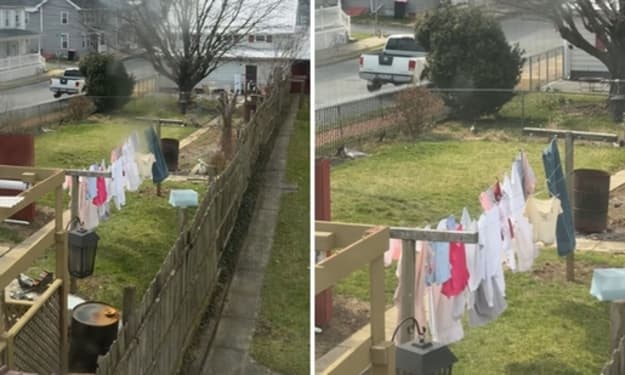
Not India, This Is the USA”: Viral Clothesline Video Sparks Unexpected Culture Clash
‘Not India, this is USA’: Viral Video of Clothes Drying in Backyard Triggers Heated Discussion, Backlash In the age of social media, even the most mundane aspects of daily life can spark viral debates — and the latest example is a video that has divided the internet over something as simple as drying clothes in the backyard.
By Sultan Khanabout a year ago in Earth
Hybrid Power Systems Market will grow at highest pace owing to increasing focus on renewable energy adoption
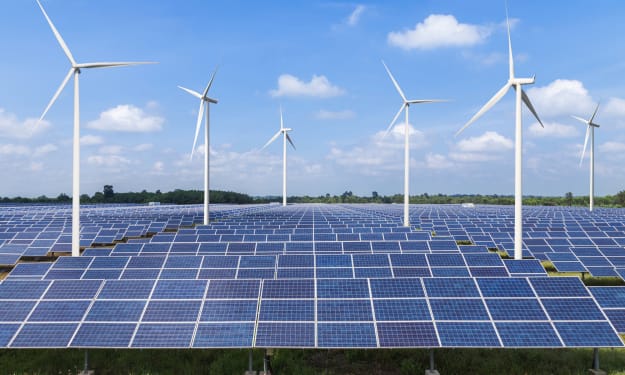
The hybrid power system market comprises systems consisting of two or more electricity generators that operate simultaneously to provide power. Hybrid power systems make use of both renewable energy sources such as solar and wind power along with backup generators that run on diesel, natural gas or other fuels. These systems enable continuous power supply by leveraging complementary power sources and storage capabilities. Hybrid Power Systems cater to off-grid and weak-grid consumers in remote areas and are also widely deployed as decentralized power solutions in developing nations where conventional power infrastructure is underdeveloped. They help avoid dependency on a single source of energy and minimize carbon footprints by optimizing the use of renewable resources. The key components of these systems include photovoltaic panels, wind turbines, battery banks and backup generators.
By carollakraabout a year ago in Earth
Microscopic Transformations in Biomass Pyrolysis
Biomass pyrolysis, a thermochemical process involving the decomposition of organic materials in the absence of oxygen, induces profound material changes on a microscopic scale. The process is essential for producing biofuels, biochar, and other valuable by-products. Understanding the microscopic transformations that occur during biomass pyrolysis is critical for optimizing the efficiency and yield of these processes. The molecular and structural alterations during pyrolysis not only influence the characteristics of the final products but also have a direct impact on the environmental footprint and economic feasibility of biomass conversion technologies.
By Wayne Shenabout a year ago in Earth
From Sunrise to Status Updates: Life Through the Facebook Lens
In today’s digitally driven world, Facebook has grown beyond being just a platform for sharing photos or chatting with friends—it has become a significant part of our daily lives. For many, scrolling through Facebook is as routine as brushing their teeth in the morning or grabbing a cup of coffee. While it began as a simple social networking site, Facebook now plays a complex role in shaping our habits, social interactions, emotions, and even how we perceive the world around us.
By Asif Nawazabout a year ago in Earth
All About the World's Largest Coral Reef
All About the World’s Largest Coral Reef: The Great Barrier Reef The world's largest coral reef is the **Great Barrier Reef**, a natural wonder so vast it can be seen from outer space. Located in the Coral Sea off the coast of Queensland, Australia, this underwater paradise is one of the most diverse and complex ecosystems on the planet. It holds immense ecological, economic, and cultural value, and has become a symbol of both nature's beauty and fragility. ## Geography and Size The Great Barrier Reef stretches over **2,300 kilometers (1,400 miles)** along the northeastern coast of Australia. It covers approximately 344,400 square kilometers (133,000 square miles) and is made up of more than 2,900 distinct reefs and 900 islands. To put this into perspective, it is about half the size of Texas and larger than Italy as a whole. It is the "largest coral reef system in the world" due to its enormous size, and it is one of the "Seven Natural Wonders of the World." The Great Barrier Reef Marine Park, which was established in 1975 to help safeguard the ecosystem from human influence, encompasses the reef. ## Biodiversity: A Living Work of Art The Great Barrier Reef, also known as the "rainforest of the sea," is one of the richest ecosystems in the world. ** It supports an extraordinary variety of marine life: - **Over 1,500 species of fish** - **400 species of coral** - **134 species of sharks and rays** - There are thirty species of marine mammals, including dolphins and dugongs. - **6 species of sea turtles** - More than 200 different kinds of birds The reef is also home to thousands of species of mollusks, sea snakes, sponges, and microscopic plankton. Many of these organisms have yet to be fully studied or even discovered. ## Formation and Structure Coral reefs are built by tiny marine animals called **coral polyps**. These polyps secrete calcium carbonate, forming a hard skeleton that becomes the foundation of the reef. Over millions of years, layers upon layers of coral build up, creating massive structures. The Great Barrier Reef began forming around **20 million years ago**, but its current structure is estimated to be about **6,000 to 8,000 years old**, shaped by changing sea levels and climate conditions over time. ## Importance of the Reef ### Environmental Importance The reef plays a crucial role in maintaining the health of the ocean. It provides habitat and food for countless marine species, contributes to carbon and nitrogen cycling, and helps protect coastal areas from erosion by acting as a natural barrier against storms and waves. ### Economic Value Tourism to the Great Barrier Reef generates **billions of dollars** each year for the Australian economy. Millions of people visit each year for marine tours, snorkeling, and scuba diving. Additionally, the reef supports commercial fishing industries and provides job opportunities for thousands of people. ### Cultural Significance The Great Barrier Reef holds deep cultural and spiritual significance for the **Aboriginal and Torres Strait Islander peoples**, who have lived in the region for tens of thousands of years. These Indigenous communities continue to play a crucial role in the reef's stewardship and maintain a strong connection to it. ## Riparian Dangers Despite its beauty and importance, the Great Barrier Reef is under serious threat from a combination of natural and human-induced factors: 1. **Climate Change**: Rising sea temperatures have led to widespread **coral bleaching**, where corals expel the algae that live in their tissues and provide them with color and nutrients. In 2016, 2017, and 2020, severe bleaching events destroyed a significant portion of the reef. 2. **Pollution**: Runoff from agriculture carries pesticides, fertilizers, and sediments into the ocean, which harms coral health and disrupts the balance of the ecosystem. 3. **Crown-of-Thorns Starfish**: These predators that eat coral have had population explosions that have destroyed substantial portions of the reef. 4. **Overfishing**: Unsustainable fishing practices deplete key species and disturb the delicate ecological balance. 5. **Coastal Development**: Infrastructure projects and dredging can damage marine habitats and increase pollution. ## Conservation Initiatives Diverse conservation efforts have been carried out in response to these threats: - **Great Barrier Reef Marine Park Authority (GBRMPA)**: Oversees the management and protection of the reef, enforcing zoning laws and regulations. - **Reef 2050 Plan**: A long-term sustainability strategy developed by the Australian and Queensland governments. - **Coral Restoration Projects**: To rebuild damaged areas, scientists are experimenting with coral farming and transplanting methods. - **Climate Action**: Global efforts to reduce greenhouse gas emissions are vital to the reef’s long-term survival. Additionally, many non-governmental organizations, Indigenous groups, researchers, and local communities are involved in reef monitoring, education, and protection. ## A Natural Treasure Worth Protecting The Great Barrier Reef is more than just a stunning natural site — it is a vital part of the planet’s ecological web, a source of livelihoods and inspiration, and a testament to the wonders of marine biodiversity. There is still hope despite the significant difficulties it faces. We have the power to work toward the goal of securing the long-term preservation of this global treasure through collective action.
By Al Amin Islam about a year ago in Earth
When Earth Was No More
Title: When Earth Was No More When the sky turned crimson and the oceans began to boil, humanity realized they had pushed Earth beyond its breaking point. Centuries of pollution, wars, and unrelenting industrialization had finally caught up. The planet that once flourished with life was now a dying shell. The air grew toxic, food became scarce, and nature once abundant and vibrant—faded into memory.
By Author kelechiabout a year ago in Earth
Global Warming: Causes, Effects, and Solutions to Save Our Planet.
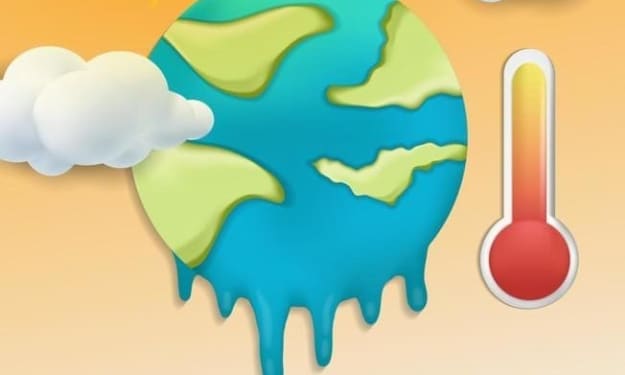
Global warming is no longer a teleological mystery—it’s a vital reality that affects our climate, weather patterns, and ecosystems right now. As the Earth’s average temperature rises, the balance of nature is being distorted in an unprecedented way – and we urgently need to learn more about it, to understand the consequences, and to put some practical measures in place.
By Muhammad Hidayatullahabout a year ago in Earth
Future Perspective on Working Offshore in the Next Five Years
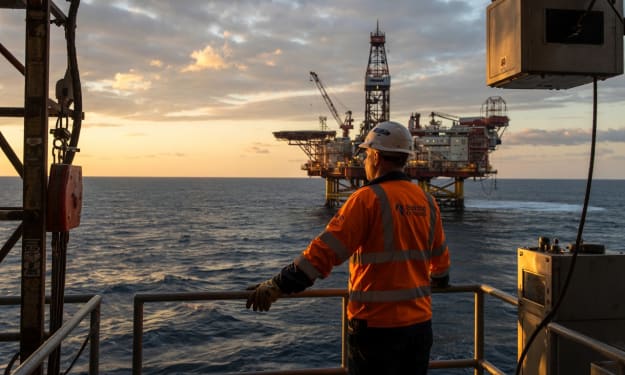
The offshore energy sector is at a pivotal moment, with projections indicating significant growth and transformation by 2030, particularly in the context of the global energy transition. This report synthesizes current trends, projections, and challenges to provide a comprehensive outlook for working offshore over the next five years, from April 2025 to April 2030. The analysis focuses on job opportunities, sector shifts, policy implications, and workforce transition, drawing on authoritative sources such as Offshore Energies UK (OEUK), Robert Gordon University (RGU), and the International Energy Agency (IEA).
By The INFORMERabout a year ago in Earth