short story
Langtang Gosaikunda Trek: Sacred Lakes and Himalayan Valleys
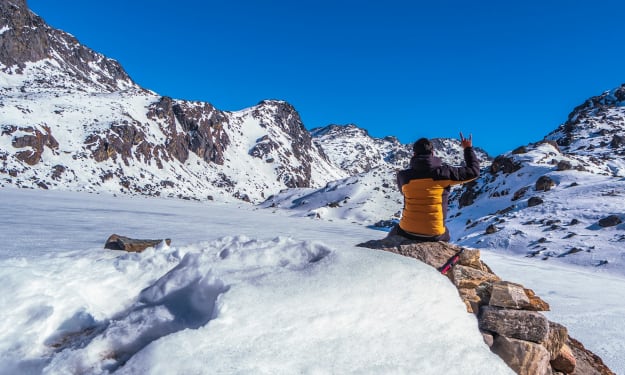
The Langtang Gosaikunda Trek is a stunning blend of high alpine landscapes, sacred lakes, and traditional mountain villages, all within easy reach of Kathmandu. This journey takes you through the heart of the Langtang Valley, across high ridges, and up to the holy lakes of Gosaikunda, offering a trekking experience that combines nature, culture, and spiritual energy.
By Oliver Backmanabout a year ago in Earth
Strategy Adds $1.4B in Bitcoin, Nears Limit of Equity Offering Program
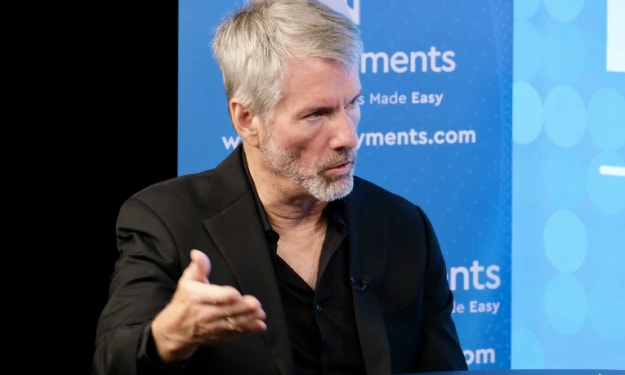
Strategy Adds $1.4 Billion in Bitcoin, Nears Limit of Equity Offering Program In a bold and closely watched move, software firm and prominent Bitcoin advocate MicroStrategy has added another $1.4 billion worth of Bitcoin to its already massive digital asset holdings. The purchase raises the total amount invested in Bitcoin by the company to new highs, just shy of the program's current limit. The latest acquisition underscores MicroStrategy’s unwavering commitment to Bitcoin as a primary treasury asset and signals continued institutional interest in the world’s largest cryptocurrency despite market volatility.
By GLOBAL NEWSabout a year ago in Earth
Scientists Release an Unprecedented Photo Capturing the Birth of the Universe
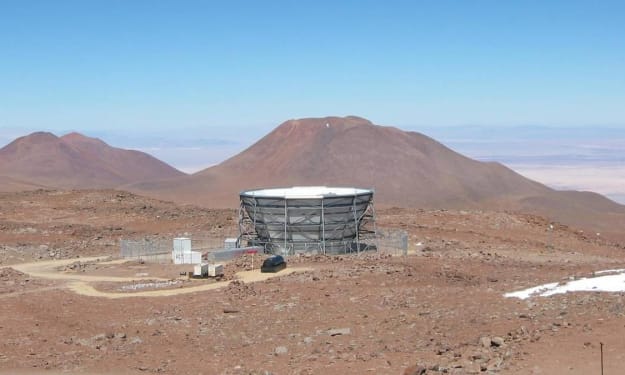
Scientists Release an Unprecedented Photo Capturing the Birth of the Universe In a groundbreaking achievement that has captivated the scientific community and the public alike a team of astrophysicists has released what they are calling the most detailed and unprecedented photo capturing the birth of the universe. This image compiled from years of data collected by the James Webb Space Telescope (JWST) and other advanced observatories offers a glimpse into the earliest moments after the Big Bang more than 13.8 billion years ago.
By Adnan Rasheedabout a year ago in Earth
Canada Election Results LIVE:
Canada Election Results 2025 LIVE Updates: Prime Minister Mark Carney-led Liberal party won Canada's election on Monday, according to local media projections. The public broadcaster CBC and CTV News both projected the Liberals would form Canada's next government, but it was not yet clear if they would hold a majority in parliament. Liberals got a fourth consecutive term--a rarity in Canadian politics-- after Carney convinced voters that his experience managing economic crises prepared him to confront US President Donald Trump.
By Anik Saha (Anu)about a year ago in Earth
Canada Conservative Leader Poilievre Loses His Own Seat in Election, CBC Projects
Pierre Poilievre Loses Seat in Stunning Canadian Election Upset as Liberals Return to Power In a dramatic and unexpected political turn, Conservative Party leader Pierre Poilievre lost his seat in the Carleton riding during Canada’s 2025 federal election, according to projections by CBC News. Poilievre, who had held the seat since 2004 and was widely considered the frontrunner to become Canada’s next prime minister, suffered a personal and political defeat that sent shockwaves through the nation. The defeat was a part of a larger Liberal revival led by newly elected leader Mark Carney, who led his party back to power with a minority government. The Liberals secured 168 seats in the House of Commons—just four shy of a majority—after months of polling that suggested a likely Conservative victory. The unanticipated defeat of Poilievre in his home riding of Carleton, Ontario, was illustrative of a shifting political tide in the country, largely driven by voter concerns regarding economic stability, foreign policy, and a growing dissatisfaction with the populist tone that had become the Conservative campaign's defining characteristic. A Crushing Blow to the Conservatives
By GLOBAL NEWSabout a year ago in Earth
US administration reverses course; moves to restore cancelled student visas
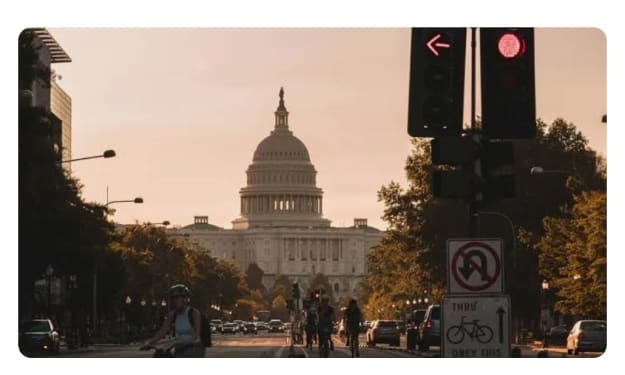
The US government is reversing course and attempting to reinstate cancelled student visas. To the best of my knowledge, the administration of the United States has not made any recent announcements regarding a widespread cancellation of student visas. However, visa policies can change, so it's important to check official sources like the United States for the most recent information. Department of State (DOS) or U.S. Citizenship and Immigration Services (USCIS).
By Md.Abdur Roufabout a year ago in Earth
When Space Becomes a Playground: Why Katy Perry’s Rocket Ride Feels Out of Touch
In a world teetering on environmental crisis, economic instability, and widening social divides, the sight of celebrities floating weightless in space has become more than just a surreal image — it's a symbol of the times. When Katy Perry and Lauren Sánchez were recently announced as passengers on a Blue Origin rocket, headlines exploded with enthusiasm. But for many, the spectacle felt hollow. Is space now just another stage for the ultra-wealthy to perform on? Here’s how everyday people are reacting — and questioning — what space tourism really means for the rest of us. --- “They weren’t astronauts — they were guests.” — Dan Stacey, London Let’s be real — calling Katy Perry and Lauren Sánchez the "crew" of Blue Origin feels like a bit of a joke. It’s like saying I’m part of the flight crew just because I took a seat on a plane from Marrakech to London. These weren’t trained astronauts conducting scientific research or repairing satellites. They were guests, dressed up for a flashy joyride. It’s hard to see the point beyond the Instagrammable moments and clickbait headlines. There’s something bizarre about space becoming another luxury destination — like the Maldives, only with less air and more PR. --- “In a world facing climate breakdown, it feels tone-deaf.” — Chris Burr, Stoford, Somerset I don’t mind Jeff Bezos treating his fiancée to something memorable, even if it’s a rocket ride. Love is personal, and who are we to judge? But when I think about the environmental cost of these trips, it’s hard not to feel uneasy. Rockets burn an immense amount of fuel, releasing carbon and particulates into the upper atmosphere — where the damage is even more long-lasting. All for what? A few minutes of zero-gravity selfies? In an age where we’re being urged to recycle, drive less, and turn off our lights, billionaires are blasting off for kicks. It feels careless — and painfully out of touch. --- “Space tourism isn’t about adventure anymore — it’s about flexing privilege.” — Toby Wood, Peterborough We’ve entered a strange new era. The rich used to show off with luxury yachts or designer handbags. Now, they launch into space. Watching celebrities casually board spaceflights while people around the world are struggling to pay rent or afford groceries is unsettling. It’s not about innovation anymore — it's about exclusivity. Space used to symbolize the future of humanity. Now it’s just another selfie backdrop for the elite. What message does that send to the rest of us? --- “Not everyone wants to live through a screen.” — Max Tannahill, Wivenhoe, Essex It’s not just space that feels taken over by tech-for-tech’s-sake. I flew recently and was surprised to learn I couldn’t get a paper boarding pass. Everything was mobile-only. But what if you don’t have a smartphone — or just don’t want to depend on one? Older folks, people who don’t trust tech, or those who simply prefer human interaction — where do they fit into this hyper-digital world? Even poet John Cooper Clarke, who tours globally, doesn’t carry a mobile. Why should we be forced to live through screens just to participate in basic travel? --- “Simple kindness matters.” — Name withheld I was recently in the hospital receiving immunotherapy treatment. A difficult, emotional time — as anyone who's been through it can understand. The peace of the ward was suddenly shattered by a fellow patient taking a loud video call. No warning, no headphones — just voices echoing off the sterile walls. It might seem small, but when you're vulnerable, little things feel enormous. It reminded me how much we’ve lost in terms of basic kindness and awareness. We’re so absorbed in our personal digital bubbles, we forget we’re still sharing space with others — on Earth or beyond it. --- Final Thoughts Katy Perry’s rocket ride might be trending today, but it’s reflective of deeper issues in our culture — where wealth, technology, and spectacle are increasingly disconnected from reality. While the stars float above Earth for a few minutes, the rest of us are left with questions: Who is space really for? And are we losing sight of what truly matters down here?
By Zoey Laneioabout a year ago in Earth
We Did 4 Tesla Valuations. They All Show It's Highly Overvalued.
Introduction Setting aside Elon Musk’s character, for quite some time now critics have come out and stated that Tesla’s stock price is extremely overvalued. Others in defense argue that it is a fair price and even stand firm with bullish positions on Tesla, claiming it still to be the most innovative EV car company across the globe.
By Trade in Motionsabout a year ago in Earth
Astronomers Find Earth-like Exoplanets Pervasive Across the Universe: Study
Astronomers Find Earth-like Exoplanets Pervasive Across the Universe: Study In a revolutionary new research study, astronomers announced that Earth-like planets could be much more widespread throughout the universe than was previously believed. The achievement, made through the design of space telescopes, computer processing, and global cooperation, is that the requirements of life as we know it could be ubiquitous in the universe. The research not only gives new hope to the search for extraterrestrial life but it also increases our understanding of the origin and evolution of planets. The Breakthrough Discoveries The research, conducted by an international team of scientists based on observations from NASA's Kepler Space Telescope, the European Space Agency's Gaia observatory, and several ground-based telescopes, searched through thousands of distant stars. They were particularly drawn to sun-like stars — stars roughly the same size, age, and temperature as the Sun — and searched for planets that circle them in the "habitable zone," the region around a star where temperatures may allow liquid water to occur on a planet's surface. What the scientists found was amazing: Earth-sized planets in the habitable zones of stars similar to the Sun are not rare. In fact, the study estimates the number to be that for each five stars similar to the Sun in the Milky Way galaxy, there would likely be at least one Earth-sized planet in its habitable zone. What this discovery means is that there could be billions of potentially habitable worlds in our own galaxy alone. How the Study Was Done The scientists used a technique referred to as the "transit method," wherein starlight is minimally reduced as a planet moves in front of a star. Though Kepler had previously found thousands of exoplanet candidates, the true nature and number of Earth-like planets needed to be explored carefully and adjusted for observational bias. The researchers combined Kepler's transit information with Gaia's precise star sizes and distances. They were thus able to make better estimates of the planet size and orbit of the stars. They then applied elaborate computer simulations to estimate the number of Earth-like planets that must be there, even in the stars Kepler had not observed directly. A Universe Full of Possible Life The implications of this research are vast. The researchers debated for decades about how many Earth-like planets there were. If Earth-like planets are few, then life could be few too. But if they are plentiful, then the chances are better that life has existed elsewhere. "Earth-like planets are not the exception, but the rule," according to Dr. Elena Martínez, lead author and astrophysicist at the University of Cambridge. "This really boosts the possibility that there are other Earths out there, perhaps even inhabited." While the study doesn't establish extraterrestrial life, it does present a compelling case that the conditions needed could be common. It does present new targets for later missions to search for biosignatures — signs of life in the presence of atmospheric oxygen, methane, or other chemical imbalances that could indicate biological processes. Future Missions and the Search for Life This result comes at a propitious moment. A series of new-generation telescopes, including the NASA James Webb Space Telescope (JWST), the European Extremely Large Telescope (ELT), and the soon-to-be-launched Nancy Grace Roman Space Telescope, have the capability of probing the atmospheres of exoplanets to unprecedented sensitivity. JWST, which was launched late in 2021, has already begun characterizing the atmospheres of some of the exoplanets nearer to Earth. The subsequent missions can then focus on the new Earth-like candidates specifically, analyzing their atmospheres for indications of life or habitability. Besides, real space missions such as PLATO (Planetary Transits and Oscillations of stars), scheduled to be launched by the European Space Agency in the later part of this decade, are precisely aimed at detecting and observing Earth-like planets orbiting nearby stars. Challenges Ahead In spite of all the excitement, scientists point out that there are still many hurdles to cross. Having a planet in the habitable zone does not necessarily mean the planet is habitable. Other factors — atmospheric composition, magnetic fields, geology, and water — come into play and are needed in order to have life. In addition, it is virtually impossible to diagnose these conditions from light-years away. Even with our best telescopes, to study the atmosphere of a tiny rocky planet around a bright star is to see a firefly next to a lighthouse from thousands of miles away. There is also the issue of time. Planets can only spend a portion of their lifetimes in the habitable zone, depending on the evolution of their stars. Life may need not only the right conditions but also stability for billions of years, as on Earth. Philosophical and Cultural Impact Beyond the scientific implications, the notion that Earth-like planets are the norm has philosophical and cultural significance. For millennia, humans have wondered if we are alone in the universe. These findings suggest that life-sustaining planets could be the norm instead of the exception. "This find makes us reconsider our place in the universe," said Dr. Raj Patel, co-author of the Max Planck Institute for Astronomy. "We might be one of a number of civilizations spread around the stars, or life might have developed in ways we can't even start to think about." Such a view stimulates not only scientific curiosity but also inspires art, literature, and a sense of wonder and humility in our place in the universe. Conclusion The realization that Earth-like planets are abundant in the universe is a milestone in human endeavors to understand our universe. While the search for definitive proof of life continues, the knowledge that there are likely to be billions of potential worlds that can harbor life gives renewed vigor and a sense of urgency to the search. Future missions and telescope surveys will surely be a consequence of this research and bring us closer to a solution to one of humanity's most basic questions: Are we alone? And as we look further into the universe, the answer might someday arrive — on the dim ray of a far-off, life-carrying planet circling a far-off sun.
By Kuntal Kundu about a year ago in Earth
Echoes of Earth: A Tale of Survival and Renewal?. Content Warning. AI-Generated.
The last days of Earth had come. It wasn't a singular event or cataclysmic disaster that marked the end. No, it had been a slow, painful unraveling. Climate change, war, and humanity’s reckless disregard for the environment had slowly transformed Earth into something unrecognizable. Cities lay in ruins, ecosystems collapsed, and vast stretches of barren land were all that remained of once-thriving forests. The sky, once a brilliant blue, was now a permanent shade of dull gray, the sun hidden behind a cloud of pollutants. Yet, amidst the devastation, there was a whisper of hope. Lena stood on the cracked earth, staring out at the horizon where the ruins of a city met the distant line of mountains. Her boots crunched against the dry soil as she adjusted her pack. She wasn’t sure why she kept going, why she refused to simply give up like so many others. Perhaps it was the memory of her father’s voice, urging her to keep fighting, to believe in a future. Perhaps it was the rare glimpses of green she’d seen, a small sapling growing amidst the ruins, a butterfly fluttering across a dead landscape. No matter how small, she believed there was still a chance for Earth. And she would be there to witness it. The journey had been long, and each day felt heavier than the last. Lena had heard rumors of a sanctuary—a place untouched by the devastation, hidden deep in the mountains. It was said to be a paradise, where the air was clean, the land fertile, and nature was slowly reclaiming what had been lost. It sounded like a dream, but she had to see it for herself. As she trudged forward, the wind carried with it the scent of ash and dust. She wiped a layer of grime from her face, her hands sore from the rough terrain. Her mind wandered back to when things had been better. Her father, a scientist, had tried to warn the world about the dangers of unchecked progress. He had fought against the corporate giants, against the political forces that denied the mounting evidence of environmental collapse. But they had ignored him, dismissed him as a fringe thinker. It wasn’t until the oceans rose and the wildfires raged that people began to listen. By then, it was too late. Lena remembered her father’s final words to her before he vanished. “Survival is not just about living through the storm,” he had said. “It’s about finding the new dawn, the new hope. We have the power to heal, if we choose to.” His words had stayed with her, a constant reminder that despite the horrors she had witnessed, there was still a glimmer of possibility. As the sun dipped below the horizon, casting an eerie orange glow over the desolate landscape, Lena found shelter for the night in the hollow of an ancient tree. The world was silent, save for the occasional howl of the wind. She had no firewood, no food, but she was used to hunger now. Her body had learned to survive on scraps, to make do with the smallest amount of sustenance. The night passed slowly, but when the first rays of dawn broke through the clouds, something remarkable happened. The air, which had once been thick with toxins, seemed a little clearer. The ground, though cracked, appeared to have a faint glow. The silence was no longer oppressive; there was a subtle hum, a kind of pulse beneath her feet. Lena rose, packing her things and preparing for the next leg of her journey. The sanctuary wasn’t far now, or so the map had said. She pushed herself onward, her legs aching with every step. As she climbed the rocky path, the landscape began to change. What had been a barren wasteland was now dotted with patches of green. Small plants, flowers, and even trees were beginning to sprout where the earth had once been poisoned. It was a quiet miracle, a sign that nature was fighting back. By the time she reached the summit, the landscape before her was nothing short of breathtaking. The sanctuary lay in a valley, a hidden gem nestled between towering peaks. Water cascaded from a crystal-clear stream, and the trees stood tall and proud, their leaves shimmering with life. Birds sang in the distance, and animals—deer, rabbits, foxes—moved gracefully through the underbrush. The air was crisp and fresh, as though it had never been tainted by the pollution of the world outside. Lena fell to her knees, overwhelmed with emotion. She had found it—the place her father had spoken of, the haven that seemed to exist only in the most distant corners of her hope. But what did it mean? Was this the last bastion of life on Earth, a place to preserve what was left of nature, or was it something more? She didn’t have the answer. But as she stood there, watching the sun rise over the sanctuary, a sense of peace washed over her. The Earth was healing, slowly but surely. It wasn’t too late. The new dawn her father had spoken of was here, not just in the sanctuary, but in the hearts of those who still believed in the power of renewal. Lena looked around, taking in the beauty of the world that still had the potential to thrive. She realized that the journey wasn’t just about survival—it was about restoring balance, about giving Earth the chance to heal and flourish again. She would fight for this future, for this new beginning. The echoes of Earth’s past still lingered in the winds, but they were no longer a mournful cry. They were a reminder—a call to action. Earth was not lost, not yet. And as long as there were people like Lena, willing to believe in the possibility of renewal, the world would rise again. --- The story of Lena, alone on her journey to find hope amidst a dying world, is one of resilience and the unbreakable spirit of survival. It is a tale of transformation, not just of the planet, but of humanity’s ability to change, to adapt, and to begin again.
By Sami Ullahabout a year ago in Earth