short story
Nature's Healing Power: The Importance of Connecting with the Natural World
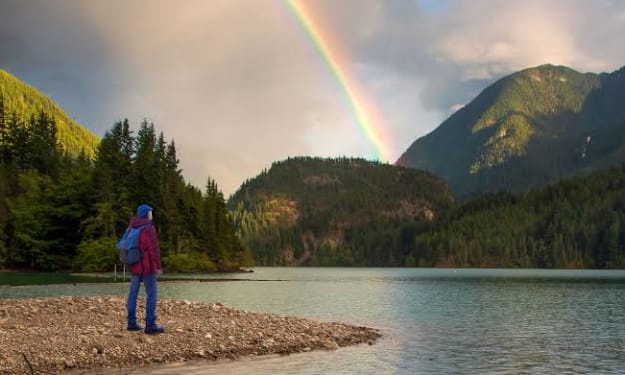
Karl was an energetic and curious boy, always eager to explore and learn new things. One day, his parents suggested that they go on a hike in the nearby woods to appreciate the beauty of nature. Karl was thrilled at the idea and couldn't wait to get started. As they walked through the dense forest, Karl marveled at the tall trees that seemed to stretch up to the sky. He noticed how the leaves rustled softly in the breeze, and how the sunlight filtered through the branches, casting a warm glow on the forest floor. As they hiked deeper into the woods, Karl's senses were heightened. He could hear the chirping of birds and the rustling of small animals in the underbrush. He could smell the sweet fragrance of wildflowers and the earthy scent of the forest floor. He felt a sense of peace and calm wash over him, as if the world outside the woods had melted away. Karl's parents encouraged him to take his time and explore, pointing out different plants and animals along the way. They showed him how to identify different types of trees by their leaves and bark, and taught him about the different roles that each plant and animal played in the ecosystem. As they walked, Karl began to understand the importance of preserving and protecting the natural world. He realized that everything in the forest was connected, and that if one part of the ecosystem was damaged, it could have a ripple effect on the rest of the environment. Inspired by his experience in the woods, Karl decided to try his hand at gardening at home. He learned how to plant and care for different types of vegetables and flowers, and was thrilled to see them grow and thrive. Gardening not only allowed him to connect with nature in a more hands-on way, but it also taught him about the importance of sustainability and conservation. Karl also enjoyed birdwatching, another activity that allowed him to spend time in nature and appreciate the beauty of the natural world. He learned about different species of birds and their habitats, and was amazed by the intricate patterns and colors of their feathers. Overall, Karl's adventures in nature had a profound impact on him. He came to understand the importance of preserving and protecting the environment, and he learned to appreciate the beauty and complexity of the natural world. And he knew that there was always more to explore and discover, no matter how much he learned. As Karl grew older, he continued to spend as much time as possible in nature, exploring the woods and gardens near his home. He became an avid hiker and birdwatcher, and even started a small nature club at school to share his love of the outdoors with his classmates. Karl's parents were proud of their son's passion for the environment, and they encouraged him to pursue his interests. They often went on nature hikes and camping trips with him, and taught him about the importance of conservation and sustainability. Karl's love of nature also inspired him to get involved in environmental activism. He joined local conservation groups and participated in beach cleanups and tree planting events. He also educated his friends and community about the importance of protecting the environment and preserving natural habitats. As he grew older, Karl decided to study environmental science in college. He was determined to make a positive impact on the world and protect the natural beauty that he had come to love. After college, Karl landed a job at a conservation organization, where he worked to protect and restore natural habitats for endangered species. He was thrilled to be able to use his knowledge and skills to make a difference in the world. As Karl looked back on his journey, he was grateful for the time he had spent in nature as a child. It had opened his eyes to the wonders of the natural world and taught him the importance of preserving and protecting the environment. And as he continued to work towards a more sustainable and healthy planet, Karl knew that he would always have a deep love and appreciation for nature, and he hoped that others would join him in his efforts to preserve and protect the world's precious resources for future generations.
By Jomarie Omandam4 years ago in Earth
God gave him only a paintbrush
Since childhood, he has not left a good impression on his relatives and friends: naughty, active, not likeable. And he made a mess of scribbling with pencils or watercolours on the walls and furniture, whether in his own home or that of relatives.
By Corinne C Baker4 years ago in Earth
Inspiring positive energy inspirational story
Wait for the champagn Perhaps her childhood home should have been a turbulent carriage, not a warm shelter. Her mother had been married four times, mostly through bad luck, and she didn't know who her father was until she was 15, so her stepfather always told her that she was either a sharp employee who was constantly unemployed or a compulsive gambler. As a result of her mother's marriage, she has moved more than 30 times, she tired of this kind of life, once from the dream more than once cry up, because, she has a beautiful girl child fatal congenital defect, she is a "cross-eyed"!
By Corinne C Baker4 years ago in Earth
The Death of Lenny Lance on Christmas Day
It was a cold and snowy Christmas Day in the small town of Mapleville when the news of Lenny Lance's death spread like wildfire. Lenny, a beloved member of the community, had passed away unexpectedly in his sleep at the age of 47.
By indika sampath4 years ago in Earth
National Farmers Day
National Farmers Day, also known as "Kisan Diwas," is celebrated every year on December 23rd in India to honor and recognize the contributions of farmers to the country. The day is celebrated with various events and activities, including the distribution of awards and recognition to farmers for their hard work and dedication.
By Praveen Kumar4 years ago in Earth
world the best10 amazing places
The Grand CanyonThe Grand Canyon is a natural wonder located in the state of Arizona in the United States. It is a vast, steep-sided canyon that was carved over millions of years by the Colorado River. The canyon is about 277 miles long, up to 18 miles wide, and over a mile deep in some places. It is a popular destination for tourists, who come to see the stunning views from the rim, hike in the canyon, or take a boat trip down the Colorado River. The Grand Canyon is home to a wide variety of plant and animal life, and is a UNESCO World Heritage Site. It is one of the most iconic and awe-inspiring natural wonders in the world.The Great Barrier Reef The Great Barrier Reef is the world's largest coral reef system and is located in the Coral Sea, off the coast of northeastern Australia. It is home to a wide variety of marine life, including fish, turtles, dolphins, whales, and over 600 species of coral. The reef is a popular destination for snorkeling and diving, and is also home to several resorts and tour operators that offer a variety of activities such as boat trips, guided snorkeling and diving tours, and glass-bottom boat tours. The Great Barrier Reef is home to some of the most diverse and beautiful marine ecosystems on Earth, and it is considered one of the seven natural wonders of the world. However, the reef is facing significant threats from climate change and other environmental factors, which have led to coral bleaching and other damage. Efforts are underway to protect and preserve the reef for future generations.The Taj Mahal The Taj Mahal is a white marble mausoleum located in Agra, India. It is considered one of the most beautiful buildings in the world and is a symbol of love. The Taj Mahal was built by the Mughal Emperor Shah Jahan in memory of his favorite wife, Mumtaz Mahal, who died during childbirth. Construction of the Taj Mahal began in 1632 and was completed in 1653. It is an example of Mughal architecture, a style that combines elements of Persian, Indian, and Islamic design. The Taj Mahal is a UNESCO World Heritage Site and is visited by millions of tourists each year. It is known for its intricate carvings, beautiful gardens, and stunning views of the Yamuna River. It is considered one of the greatest examples of Mughal architecture and is often referred to as the "Jewel of Muslim Art in India."The Pyramids of Giza
By indika sampath4 years ago in Earth
10 Driest Places on Earth
10 Driest Places on Earth The fact that 71% of the Earth is made up of water is fantastic because it is essential for our survival. However, some regions fall under the category of hyper-arid deserts since they often receive less than 0.09 inches (2 millimeters) of precipitation annually. Even worse, some regions endure for years without receiving any rain, rendering them essentially uninhabitable. Amazingly, deserts cover 35% of the planet's surface, making them larger than you may imagine. Let's look at 10 of the driest locations on the planet.
By Paul Smith4 years ago in Earth
10 Amazing Archaeological Discoveries Revealed in 2022
10 Amazing Archaeological Discoveries Revealed in 2022 The wreck of Sir Ernest Shackleton's ship, which was lost for more than a century in Antarctic waters, the remnants of woolly rhinoceros that formerly roamed southern England, and eight mummified infants who were likely victims of human sacrifice. These are just a few of the incredible discoveries made by researchers in the previous 12 months. Continue reading for fascinating details about the year's worth of archaeological activity.
By Paul Smith4 years ago in Earth
10 Strangest Defense Mechanisms In Nature
10. Flying Fish Click Here for your $750 PayPal Gift Card!! Although many organisms possess the ability to fly, fish are typically not thought to possess this trait. Fish that can fly can leap out of the water and travel great distances by flying or gliding. This is a defensive strategy to get away from predators. The flying fish's body is streamlined and torpedo-shaped, which aids in its ability to gather enough energy to break through the water's surface. The fish can swim as fast as 37 miles per hour (60 kilometers per hour) in order to escape the sea. The pectoral fins of fish have evolved into sizable wings that enable flight. When it emerges from the water, it can soar up to 656 feet (200 meters),using the fin on its tail as a kind of propeller. A flying fish was seen gliding for a record-breaking 45 seconds in 2008 in Japan.
By Ahmed Noer4 years ago in Earth
Geography of Kashmir
Kashmir (IPA: [kaʃmiːr]) is the northernmost geographical region of the Indian subcontinent. Until the mid-19th century, the term "Kashmir" denoted only the Kashmir Valley between the Great Himalayas and the Pir Panjal Range. Today, the term encompasses a larger area that includes the Indian-administered territories of Jammu and Kashmir and Ladakh, the Pakistani-administered territories of Azad Kashmir and Gilgit-Baltistan, and the Chinese-administered territories of Aksai Chin and the Trans-Karakoram Tract.[1][2][3]
By Mohammad irtiza4 years ago in Earth