short story
Morning Time: The Importance of Setting a Positive Tone for the Day
Mornings can be hectic and chaotic, especially for families with young children. But despite the rush to get out the door on time, it's important to take a few minutes to set a positive tone for the day. A good morning routine can help you feel more focused, energized, and ready to tackle whatever the day has in store.
By pravinkumar sathliya4 years ago in Earth
Journey of water
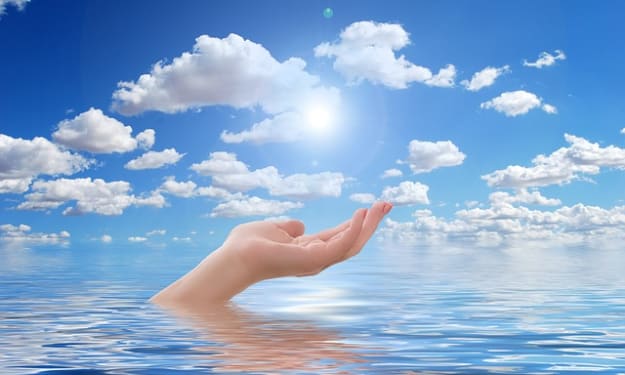
Once upon a time, in a far-off land, there lived a young girl named Anisha. She was known throughout the kingdom for her kind and gentle nature, as well as her love for the element of water. Anisha spent every free moment she had near the streams and rivers that flowed through her village, listening to the soothing sound of the water as it flowed and watching the way the sunlight danced on its surface. She would often spend entire afternoons lying on the banks of the river, letting the cool water flow over her skin and feeling the gentle currents pull at her hair. One day, while Anisha was out exploring along the river, she heard a faint cry for help. Following the sound, she came upon a young boy who had fallen in the river and was struggling to stay afloat. Without hesitation, Anisha dove into the water and pulled the boy to safety. From that day on, Anisha was known as the Water Saviour in the village. People would come to her with their problems related to water and she would solve it with her knowledge of it. As she grew older, Anisha's love for water only grew stronger. She began to study the properties of water in depth and soon became an expert in all things related to the element. Years passed, and Anisha's knowledge of water became legendary. She was called upon by rulers and kings from far and wide to solve their water-related problems. And so it was that Anisha, with her deep understanding and love for water, became a shining example of the power and beauty of nature. As Anisha's reputation as a water expert grew, she was approached by the king of the land who had a problem that no one else seemed to be able to solve. His kingdom was suffering from a severe drought, and crops were failing, rivers were drying up and people were struggling to find enough water to survive. Anisha knew that this was a problem that required her expertise. She set out to study the kingdom's water system, analyzing the rivers, streams, and underground water sources. After weeks of research, she finally discovered the cause of the drought. The kingdom had been diverting too much water from the rivers for agriculture and industrial use, leaving too little for the natural ecosystem to sustain itself. With this knowledge in hand, Anisha presented her findings to the king and proposed a solution. She suggested that the kingdom should start conserving water and also develop sustainable water management practices. She also proposed building dams and reservoirs to store water during the rainy seasons and release it during the dry seasons. The king was impressed with Anisha's proposal and immediately put her plan into action. The kingdom started conserving water and implementing sustainable water management practices. They also built dams and reservoirs to store water during the rainy seasons. As a result of Anisha's efforts, the kingdom began to thrive once again. The rivers flowed freely, the crops were bountiful, and the people were no longer suffering from a lack of water. And Anisha, who had dedicated her life to the element of water, was hailed as a hero and a savior of the kingdom. Years went by, Anisha's name was passed down from generation to generation, and stories of her deeds were told around campfires and dinner tables. Her love for water had not only saved a kingdom but had also inspired others to do the same. And so, Anisha's legacy lived on, a reminder of the power and beauty of water and the importance of preserving it for future generations.
By Mohammed hussain4 years ago in Earth
Waste Water
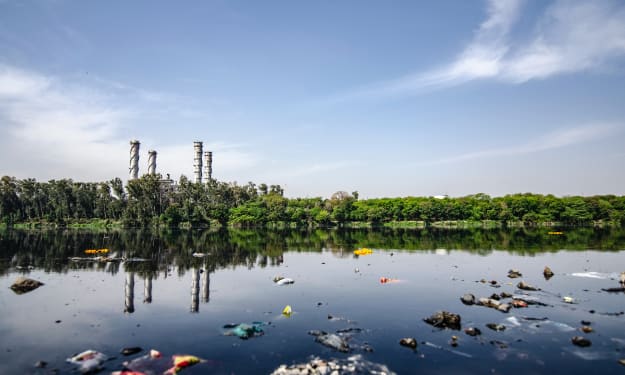
How to Properly Dispose of Wastewater Water is essential to all life on Earth. It is essential for human health, agriculture, and industry. Unfortunately, water can also be a source of pollution. Wastewater is any water that has been contaminated by human activity.
By KALITHAS KRISHNAN4 years ago in Earth
Hell hath no fury…
"Hell Hath No Furry: The Misunderstood Subculture of Furry Fandom Furry fandom, also known as fursona culture, is a subculture made up of people who have an interest in anthropomorphic animals, often represented as characters with human-like personalities and characteristics. These characters, known as fursonas, are used by members of the furry community as a form of self-expression and identity.
By Naveed Jamal4 years ago in Earth
"Countdown to the Blue Comet: Understanding the Science behind the Rare Celestial Event"
I. Introduction The "blue comet" event refers to the close approach of the comet C/2021 A1 (Leonard) to Earth on February 1, 2023. This comet was discovered in January 2021 by the Mount Lemmon Survey in Arizona, USA and is expected to pass within 0.03 AU (about 4.4 million miles or 7.1 million kilometers) of Earth, making it a relatively close approach for a comet. The event is notable for the color of the comet, which is expected to have a blue-green hue due to the presence of copper in its composition. Some experts have said that it could be bright enough to be visible to the naked eye, but that is still uncertain. It is also worth noting that C/2021 A1 (Leonard) is a first time visitor to the inner solar system, so we know very little about it's orbit or composition.The aim of this blog post is to understand the science behind the rare celestial event of the blue comet C/2021 A1 (Leonard) close approach to Earth on February 1, 2023. It will explore the comet's composition, orbit, and how its close proximity to Earth will affect its appearance. It will also discuss the potential scientific significance of this event and how astronomers will study the comet during its close approach. Additionally, the post will provide information on how and where to view the comet, as well as safety precautions for viewing it.
By Gowtham Dharma4 years ago in Earth
Divided by Time, Connected by Space
The night sparkles brightly with stars, glittering in the sky the way sunlight dances on a lake. There in the heavens, is a new light – the colour of grass and leaves and life. Standing tall amongst the swaying grass, a group of people gaze at the comet – though they don’t yet know that’s what it is. To them it is a thing of magic, and of power. Breath-taking in its beauty, the green comet moves across the heavens and vanishes from the sky within the span of a lunar cycle. It is never seen again.
By Ash Taylor4 years ago in Earth
Save water
Introduction: Water is a precious resource that is essential for human survival, yet it is often taken for granted. The reality is that water scarcity is a growing problem around the world, and it is essential that we take steps to conserve and protect this vital resource. In this article, we will discuss various ways to save water, from simple changes in our daily habits to more significant investments in new technologies and infrastructure.
By @Sakthivel4 years ago in Earth
The Impact of Climate Change on Mental Health and Well-being
Climate change is not just a problem for the environment, it also has a significant impact on our mental health and well-being. As temperatures rise, sea levels rise, and extreme weather events become more frequent, it can be difficult to cope with the emotional and psychological effects of these changes.
By Lawrence Luke4 years ago in Earth
China plays down Covid outbreak with holiday rush at full tilt
China is currently facing a new outbreak of COVID-19, but the government is playing it down and encouraging citizens to continue with their holiday plans. Despite rising cases in some areas, many Chinese citizens are still traveling and celebrating the Lunar New Year, the country's most important holiday.
By Naveed Jamal4 years ago in Earth
A fiction story about an unlikely pair that meets on a tropical island
Once upon a time, on a small tropical island, there was a young woman named Samantha. She was a successful businesswoman from the city, who had come to the island to escape the stress of her daily life and to find some much-needed rest and relaxation. She had always dreamed of visiting a tropical island, with its lush jungles, crystal-clear waters, and diverse wildlife.
By Financial Independents4 years ago in Earth
Mysteries of solar system
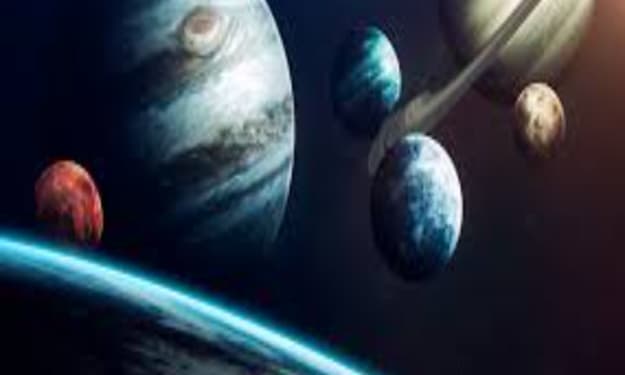
I. Introduction The solar system is a collection of celestial bodies that orbit around a central star, the Sun. These bodies include planets, dwarf planets, moons, asteroids, comets, and meteoroids. The solar system is located in the Milky Way galaxy and is estimated to be around 4.6 billion years old. II. The Sun The sun is the central and most massive object in the solar system. It is a medium-sized star and is classified as a G-type main-sequence star. The sun is primarily composed of hydrogen and helium and has a surface temperature of around 5,500 degrees Celsius. It is the source of light and heat for the solar system and its gravity is responsible for keeping the planets in their orbits. III. The Planets The solar system is home to eight known planets, which are divided into two groups: inner planets and outer planets. Inner planets: Mercury: The smallest and closest planet to the sun. It has a rocky surface and a thin atmosphere. Venus: The second planet from the sun. It has a thick atmosphere that causes a greenhouse effect, making it the hottest planet in the solar system. Earth: The third planet from the sun and the only known planet to have liquid water on its surface. It has a diverse range of landscapes and a relatively stable climate. Mars: The fourth planet from the sun. It has a rocky surface with mountains, valleys, and volcanoes. It also has a thin atmosphere and polar ice caps. Outer planets: Jupiter: The largest planet in the solar system. It has a massive atmosphere with raging storms, including the Great Red Spot. Saturn: The second-largest planet in the solar system. It is famous for its rings, which are made up of ice and rock particles. Uranus: The seventh planet from the sun. It has a unique rotation axis that causes it to rotate on its side. Neptune: The eighth planet from the sun. It has a similar composition to Uranus and has the strongest winds in the solar system. In terms of size, Jupiter is the largest planet in the solar system and Mercury is the smallest. In terms of composition, the inner planets are primarily composed of rock and metal, while the outer planets are primarily composed of gas and ice. In terms of atmosphere, Venus has the thickest atmosphere, while Mercury has the thinnest. IV. The Dwarf Planets The solar system also includes several dwarf planets, which are smaller than the eight recognized planets but still large enough to be rounded by their own gravity. These include: Ceres: The largest asteroid in the asteroid belt and the first dwarf planet to be discovered. Pluto: The first dwarf planet to be discovered in the Kuiper Belt. Haumea: A dwarf planet located in the Kuiper Belt. Makemake: A dwarf planet located in the Kuiper Belt. Eris: A dwarf planet located in the scattered disc beyond the Kuiper Belt. Compared to the larger planets, dwarf planets are smaller, have less massive atmospheres, and have a more irregular shape. V. The Moon and Other Satellites The solar system also includes many moons and other satellites that orbit around the planets. The most well-known is Earth's Moon, which is the fifth-largest moon in the solar system and the only one known to have a stable atmosphere. Other notable moons include Jupiter's four largest moons (Io, Europa, Ganymede, and Callisto), which are known as the Galilean moons, and Saturn's
By Giridharan4 years ago in Earth