short story
"When Play Turned to Pain"
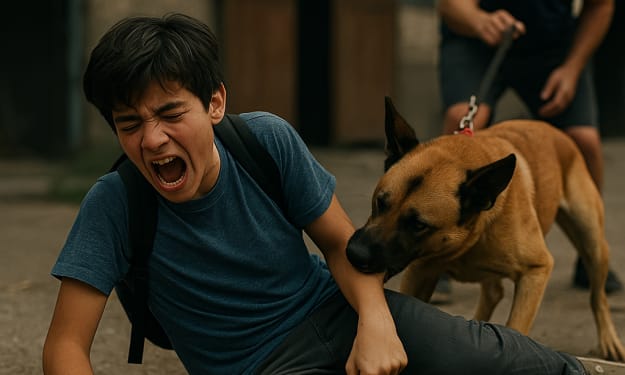
This is a story from a long time ago—one that I still remember vividly, like a scar etched into memory. I was just 14 years old, returning home from my tuition class one late afternoon. The sun was still up, the streets were buzzing with life, and my bag felt a little heavier than usual. As I made my way down the familiar lane toward home, I ran into a few of my friends. “Come to the factory when you’re done!” one of them called out cheerfully. Back then, it was almost a tradition for us. Every day after school or tuition, we’d gather at an old, abandoned factory near our neighborhood. It had become our unofficial playground—a place full of broken machinery, echoing walls, and space to run around. It wasn’t the safest place, but it was ours. After reaching home and quickly dropping my bag, I grabbed a snack and rushed out. Within minutes, I was at the factory. My friends were already there, scattered across the open yard. Some were climbing rusted pipes, others laughing near the entrance. Everything seemed normal—until I noticed a dog near the gate. It was a large, muscular dog—tied to a heavy stick by its owner. The man was struggling to keep it calm. The dog looked strong, alert, and restless. I slowed down as I passed, uneasy but not alarmed. Then, suddenly, it happened. One of the boys—one known for his mischief—picked up a small stone and, without warning, hurled it toward the dog. It hit the dog square on the back. The animal let out a loud, sharp bark and began thrashing wildly. In its panic, the rope twisted around its owner’s feet. The man lost balance and fell hard to the ground. Anger flared in his eyes. Frustrated and embarrassed, he made a terrible decision—he let go of the rope. And just like that, the dog was free. The dog charged straight toward the group. Chaos exploded. Kids screamed and scattered in all directions. Some climbed onto machinery, others hid behind walls. I turned and bolted toward the gate, my heart pounding like a drum inside my chest. I thought I had made it. I thought I was safe. But I was wrong. Just as I reached the exit, something yanked me back. I stumbled and fell to the ground, confused for a split second—until I felt it. The dog’s teeth had sunk into my leg. Pain surged through me like lightning. I cried out, tried to shake it off, and instinctively punched the dog in the nose. It released me, just for a moment. I scrambled to my feet and ran again. But it wasn’t over. The dog lunged once more and caught me again. This time, I didn’t have the strength to fight. I thought I was done for—until the owner finally reached us. He grabbed the dog and pulled it away from me, cursing under his breath. I was in agony, my leg bleeding and shaking. One of my closest friends helped me to my feet and walked me out of the factory. I was crying by then—not just from pain, but from fear, shock, and confusion. When I reached home, my parents were horrified. My pant leg was torn, and blood had soaked through. Without wasting a second, they rushed me to the hospital. The doctor took one look and said I needed urgent treatment. The diagnosis was serious: I needed 12 anti-rabies injections—two every day for nearly a week. I was terrified. At that age, the thought of even one injection was unbearable, let alone twelve. The next few days were painful—physically and emotionally. My leg was swollen, sore, and covered in bandages. Every morning, I’d visit the doctor with my parents, get the injections, and return home to rest. Slowly, my wound began to heal. By the end of the month, I was back to walking properly. But just when I thought the chapter was closed, something unexpected happened. The same boy who had thrown the stone at the dog—the one who started it all—was bitten too. Weeks later, the dog got loose again. This time, it didn’t spare the real culprit. The bite was much worse than mine. A piece of his leg was torn off, and he had to stay home for a long time to recover. Justice, it seemed, had come full circle. Moral:
By Muhammad Hussainabout a year ago in Earth
HAWAII STRUCK BY TSUNAMI
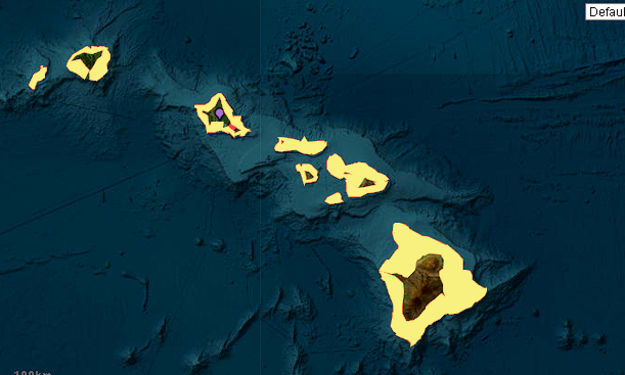
Hawaii Braces for Tsunami Threat Following Great 8.8 Russian Quake Hawaii was put in Tsunami Warning on 29th July 2025, when a monstrous 8.8-magnitude rumble occurred near the Russian coast of the Kamchatka Peninsula. The 8.8-magnitude tremor that shook offshore in a seismically active region of the Pacific Ocean produced waves that passed through the sea's basin, forcing Hawaii to put its entire response for emergencies on high.
By Jayden Huaabout a year ago in Earth
Free Free palsteen
Imagine a land where every stone tells a tale, and every alley whispers the struggle of generations. The ongoing conflict between Israel and Palestine isn't just about a piece of land; it's a battle over identity, history, and survival. At its heart often lies the Gaza Strip, a densely populated area where hope and despair breathe side by side. Have you ever wondered about the human cost of a conflict so deeply etched into the fabric of a region, where the echoes of ancient struggles resonate in modern headlines, shaping lives and destinies? This isn't just a political dispute; it's a profound human drama unfolding before our eyes.
By Reality Brooabout a year ago in Earth
Clean Energy Solutions for the Future. AI-Generated.
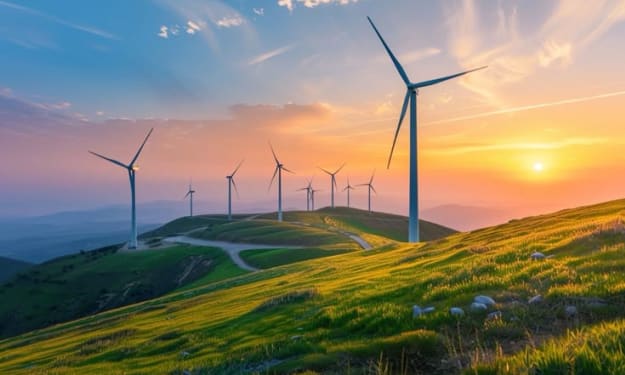
Introduction: A Turning Point for the Planet As the effects of climate change become impossible to ignore—rising sea levels, melting glaciers, and increasingly extreme weather—we're facing a crucial question: how do we power our future without harming the planet? The answer lies in clean energy solutions. But clean energy isn't just about solar panels on rooftops or wind turbines on hills. It's a mindset shift—an invitation to rethink how we live, consume, and preserve our environment. Why Clean Energy Matters Let’s be honest. Fossil fuels like coal, oil, and natural gas have powered the world for over a century. But they come with a heavy cost—air pollution, global warming, and environmental degradation. Every time we burn a liter of petrol or flick on a light powered by a coal plant, we contribute to carbon emissions. Clean energy, on the other hand, is generated from natural, renewable sources—like sunlight, wind, water, and even the Earth’s heat. These sources don’t run out, and more importantly, they don’t pollute. Solar Power: Turning Sunshine into Strength One summer, I helped my uncle install solar panels on his small farm. At first, it seemed like an expensive step, but over the months, the panels generated more power than expected. Not only did his electricity bill shrink, but he even sold excess power back to the grid. This is the beauty of solar power: it’s accessible. From rural farms in Africa to skyscrapers in Europe, solar panels are transforming how we power homes and businesses. Plus, with advances in solar storage (like lithium-ion batteries), we can now store sunlight for nighttime use—solving one of solar’s biggest limitations. Wind Energy: Harnessing Nature’s Breath There’s something poetic about wind turbines—those towering giants turning silently against the sky. They harness a force of nature that’s always been around, but only recently have we begun to capture its power effectively. Countries like Denmark and the Netherlands already generate a significant portion of their electricity from wind. Even in the U.S., wide-open plains in Texas and Oklahoma have become wind-energy hotspots. And unlike coal plants, wind farms don’t release any pollutants. Their biggest challenge? Intermittency—what happens when the wind doesn’t blow. But new smart grids and energy storage solutions are helping smooth out these bumps. Hydropower: The Power of Flowing Water Hydropower is one of the oldest forms of clean energy. It uses dams or flowing rivers to spin turbines and generate electricity. While massive projects like China’s Three Gorges Dam can be controversial due to environmental impacts, small-scale hydro systems are gaining popularity. In fact, in many mountain communities, mini-hydro plants power entire villages. It’s quiet, steady, and efficient—especially in regions with consistent rainfall or snowmelt. Emerging Technologies: The Future Is Bright Beyond solar, wind, and hydro, there’s a whole new generation of clean energy tech on the rise: Geothermal taps into Earth’s internal heat—great for countries with volcanic activity like Iceland. Green hydrogen is produced from water using renewable electricity and could fuel vehicles or power plants. Wave and tidal energy are in early stages, but imagine powering cities using the ocean’s rhythm. These aren’t science fiction—they’re already being tested and deployed in real-world projects. Energy Storage: The Silent Hero One of the key challenges in clean energy is consistency. The sun doesn’t shine at night. The wind doesn’t always blow. So how do we keep the lights on? This is where energy storage comes in. Think giant batteries, pumped water storage, or even gravity-based systems. These innovations help store excess energy and release it when needed, ensuring round-the-clock power from clean sources. What We Can Do: Small Steps, Big Impact Switching to clean energy isn’t just the government’s or big corporations’ job. We all play a part. Start by checking your local power provider—do they offer a green energy option? Use energy-efficient appliances, unplug devices when not in use, and support policies that promote clean energy investment. Even growing your own vegetables or supporting local farmers reduces the energy used in food transportation. I still remember my joy when I harvested my first tomatoes—fresh, juicy, and grown without any fossil-fueled supply chain. The Road Ahead The transition to clean energy won't happen overnight. It’s a journey that requires innovation, investment, and most importantly, cooperation. But every wind turbine installed, every solar panel mounted, and every person who chooses clean energy over pollution brings us closer to a sustainable world. The future is in our hands—and with clean energy, it can be a brighter one.
By Sherooz khanabout a year ago in Earth
Earth Is Starting to Spin Faster.
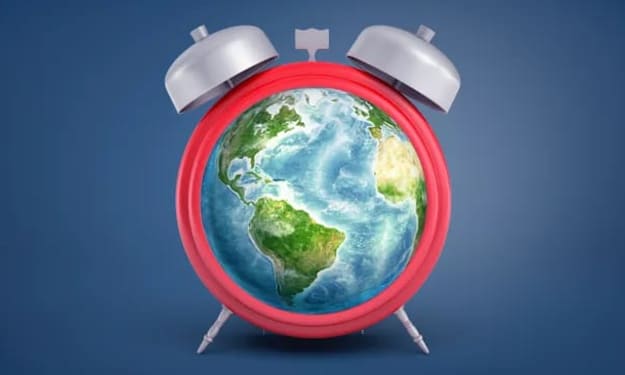
In recent years, scientists have noticed a strange and surprising trend: the Earth is starting to spin faster. This might sound like science fiction, but it’s a real phenomenon backed by highly precise atomic clock measurements and satellite data. The consequences of this increased spin are subtle but potentially far-reaching — enough that scientists around the world are considering taking a step never before attempted: subtracting a second from the global time system. Known as a “negative leap second,” this would be an unprecedented move in the history of timekeeping.
By USA daily update about a year ago in Earth
The Calico
The calico’s words didn’t cycle between requests for food or pats as I expected. She knew things, not about the world out there, which she saw very little of, but about her domain; the space between the walls of what she labelled her prison, and the people inside them, whom she observed like an anthropologist. You’re not our slave, or a prisoner, or a piece of furniture, I reassured her, you’re a part of the family, and the closest thing to a daughter. All relationships are transactional. You’re warm and fed, and you make my heart beat slow down like that of a deep-sea diver.
By Orson Dijleabout a year ago in Earth