short story
“The District of Columbia: Where American History Comes Alive”
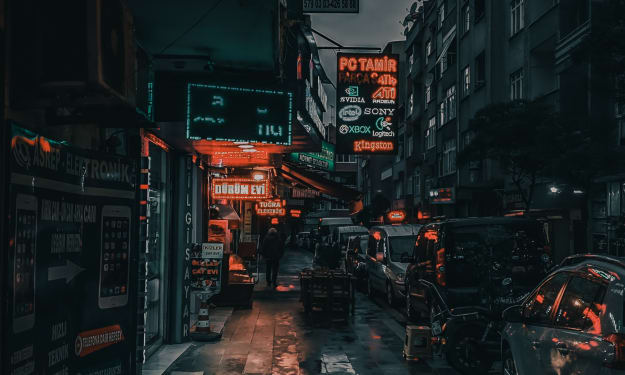
The District of Columbia, usually referred to as Washington D.C., serves as the nation's capital. It is situated along the Potomac River on the East Coast of the United States, and it shares a border with Maryland and Virginia. The District of Columbia is distinctive in many aspects, including its history, architecture, and function as the federal government's seat. As the United States' long-term capital, the District of Columbia was created in 1790 as a federal district. Maryland and Virginia donated the land for the region, which bears Christopher Columbus' name. The city of Washington was created by American architect and urban planner Pierre Charles L'Enfant, who was born in France, and was erected on the banks of the Potomac River. Wide avenues, parks, and open areas were all part of L'Enfant's vision for the city, which also featured notable government structures like the Capitol and the White House. The architecture of the District of Columbia is one of its most distinguishing aspects. The White House, the Capitol Building, and the Supreme Court are among the city's numerous notable structures. These structures, like many others in the city, were constructed in the late 18th and early 19th century in the neoclassical style. The neoclassical style was designed to reflect the grandeur of ancient Greece and Rome through the use of classical components such as columns, pediments, and domes.
By sherry tiger3 years ago in Earth
Solving the mystery of a "strange thing" happening in the sun's atmosphere!
New observations from the European Space Agency's (ESA) Solar Orbiter reveal that the constant reconnection of small magnetic field lines may be at least part of the reason why some parts of the Sun are warmer than others.
By News Correct3 years ago in Earth
"The Art of Embracing Uncertainty: Navigating Life's Challenges with Courage and Resilience"
Sustainable Living: Simple Changes You Can Make to Help the Environment ====> Click Here To More Information For How to Cultivate a Mindset of Possibility and Find Growth in the Unknown <====
By Kailash Sarthi3 years ago in Earth
"SPRING"
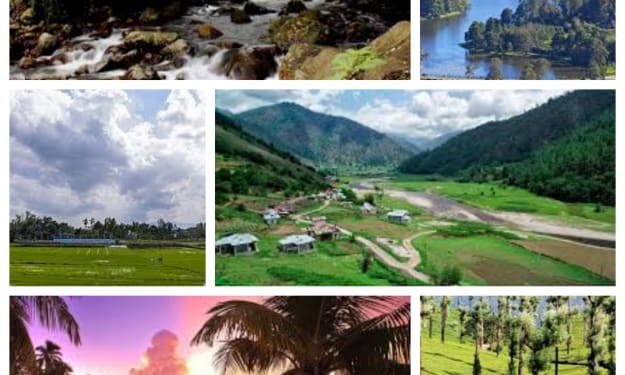
Spring is one of the four seasons that occurs between winter and summer. It is a time when the weather begins to warm up after the cold of winter, and the days start to become longer. In the Northern Hemisphere, spring usually begins in March and lasts until June, while in the Southern Hemisphere, it usually begins in September and lasts until December.
By A THENDRAL VAIRAVAN3 years ago in Earth
Are Aliens Real?
The question of whether or not aliens exist has been a topic of fascination for generations. It is a question that has captivated the imaginations of people all around the world. While there is no definitive answer to this question, the possibility of extraterrestrial life has been a subject of scientific inquiry for many years.
By Imeth Githsara3 years ago in Earth
Climate Change and Global Food Security: Strategies for Adaptation and Mitigation
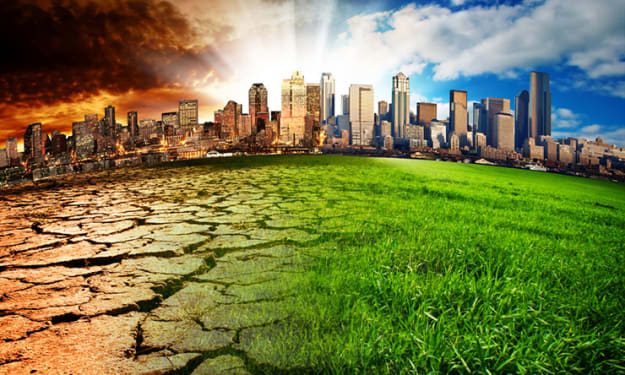
Climate change is having a significant impact on global food security, and the situation is only expected to worsen in the coming years. The changing climate is affecting food production and distribution systems, as well as the nutritional quality of crops and livestock. The implications of these changes are far-reaching, affecting everything from human health and well-being to global economic stability. In this article, we will explore the effects of climate change on global food security and discuss strategies for adaptation and mitigation.
By Rahul Saini3 years ago in Earth
Celebrating Earth Day: Why We Need to Protect Our Planet
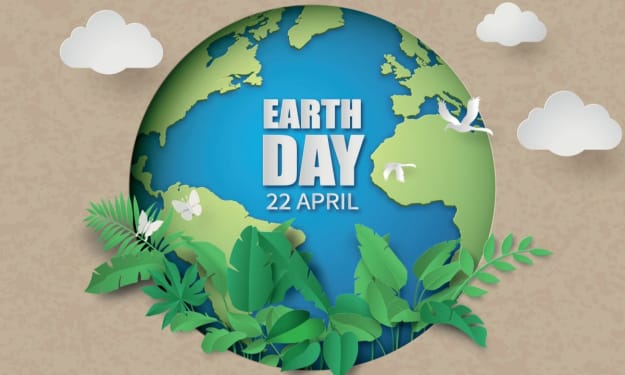
Every year on April 22, people around the world celebrate Earth Day, a day dedicated to raising awareness about environmental issues and promoting sustainability. The first Earth Day was held in 1970, and since then, it has become a global movement, with millions of people coming together to advocate for a healthier, more sustainable planet.
By Rahul Saini3 years ago in Earth