short story
Medicinal Garden Kit
I am a mother, an herbalist, a survival skills instructor, and a biologist. I graduated with a degree in Biology from McGill University and further developed my herbal skills in the desert of Kalahari. I lived there for years with one of the oldest cultures on Earth, the San Bushmen. Many San still live off what the land provides in terms of food and medicine, and many of them live well to a ripe old age without ever taking pills or seeing the inside of a hospital.
By Muhammed Bilal Khan3 years ago in Earth
American National Security Has an Economic Blindspot
In the bustling city of Bellington, a tight-knit community of small business owners and entrepreneurs worked tirelessly to keep their dreams alive. Among them was Sarah, a young and ambitious woman who had started her bakery, "Sarah's Sweet Delights," with unwavering passion and dedication.
By Aliyu iyal3 years ago in Earth
Dragon Fruit. Content Warning.
In recent times, an enchanting fruit has captured the culinary world's attention with its uniqueness and health benefits. The Dragon Fruit, hailed for its vibrant colors, exquisite taste, and nutritional value, has become a sensation in the Northeast and beyond. Let's embark on a captivating journey into the world of this extraordinary fruit, exploring its origins, diverse varieties, culinary applications, and its ever-increasing popularity in the Northeastern regions.
By Michael Rama3 years ago in Earth
Exploring the Enchanting Beauty of Bali, Indonesia
Bali, an Indonesian island paradise, is renowned for its natural beauty, vibrant culture, and exotic allure. Located in the Indian Ocean, this tropical gem has captivated travelers from all corners of the globe. With its picturesque landscapes, pristine beaches, spiritual temples, and warm hospitality, Bali offers a unique and unforgettable experience. In this article, we will delve into the various facets of Bali's beauty, showcasing why it remains a top destination for discerning travelers.
By Carles Effendi3 years ago in Earth
Study of Video Games Shows What People Do If The World Ends
Few things are as challenging as studying the end of the world and how people will behave in its aftermath. You probably won't get a true impression if you attempt when the world isn't actually ending because the world isn't really ending.
By Francis Dami3 years ago in Earth
Which winter resorts are worth visiting in Bulgaria
Which winter resorts are worth visiting in Bulgaria? There are several wonderful winter resorts in Bulgaria that are worth visiting if you are a fan of skiing and snowboarding or just want to enjoy the winter beauty of the mountains.
By Iva Milanova3 years ago in Earth
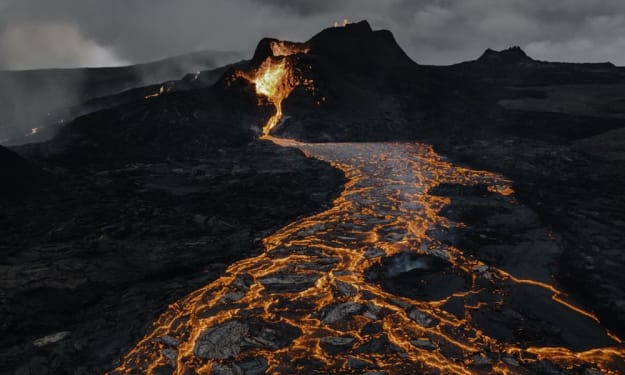
The Resilience of Life: Surviving Ancient Super Volcanoes. Content Warning.
Introduction: Millions of years ago, the American landscape bore witness to an extraordinary geological phenomenon - the "ignimbrite flare-up," a series of super volcanic eruptions that shaped the course of history. These catastrophic events unleashed unimaginable power, dwarfing even the colossal eruption of Yellowstone. Surprisingly, these massive eruptions occurred relatively frequently, approximately every 10,000 years, engulfing North America in a thick layer of ash. However, life endured and thrived, leaving behind a remarkable fossil record. In this blog, we will delve into the astonishing resilience of ancient creatures and plants, exploring how they not only survived but also bounced back to shape the present-day world.
By Rohit Singh3 years ago in Earth
The Mysterious Decline of Nautiloids: Unravelling the Impact of Pinnipeds
Over the vast expanse of Earth's history, the oceans have been witness to a mesmerising dance of life – the emergence, flourishing, and eventual disappearance of diverse animal groups. Among these ancient survivors, one group has defied the test of time: the nautiloids. These enigmatic cephalopods have graced the oceans for nearly 500 million years, making them one of the oldest continually existing animal lineages on our planet. However, their journey has not been without challenges, and around 30 million years ago, a series of mysterious events occurred, forever altering their fate.
By Rohit Singh3 years ago in Earth
The Resilient Dodo: Unravelling the True Story of Extinction and the Hope for De-Extinction
Introduction: The dodo, a plump flightless bird once native to the island of Mauritius in the Indian Ocean, has captivated the world for centuries. Often portrayed as a simpleton and a symbol of extinction, recent discoveries have challenged these misconceptions and painted a different picture of this enigmatic creature. In this blog, we will explore the fascinating history of the dodo, from its unique adaptations to its eventual demise, and the ongoing quest for de-extinction.
By Rohit Singh3 years ago in Earth
How Whole Genome Duplication Saved Plants from Extinction
Introduction The prehistoric world was a place of immense natural beauty and ferocious creatures. However, the reign of the dinosaurs came to a catastrophic end some 66 million years ago, as a massive asteroid collided with the Earth, causing a devastating mass extinction. Amidst the chaos, plants faced a daunting challenge – 60% of all plant species went extinct. Yet, amidst the darkness and dust, some plant ancestors managed to survive, and their secret to survival lies in a fascinating evolutionary phenomenon called Whole Genome Duplication (WGD). This accidental doubling of their DNA bestowed upon them the genetic flexibility and adaptability needed to thrive in extreme environmental conditions. Today, angiosperms, or flowering plants, owe much of their evolutionary success to this ancient event. In this blog, we will embark on a journey to explore the remarkable world of WGD and its pivotal role in shaping the course of plant evolution.
By Rohit Singh3 years ago in Earth
The Fascinating Tale of Yi qi and the Evolution of Membraned Wings
Subtitle 1: Unearthing the Discovery of Yi qi In 2007, a farmer in northeastern China stumbled upon an extraordinary fossil in a quarry just outside his village. The fossil, initially believed to be that of a small dinosaur, turned out to be something much more remarkable. Purchased by a museum, this unique find was later revealed to be Yi qi, a pigeon-sized, feathered creature from the Late Jurassic Period, approximately 159 million years ago. What made Yi qi truly exceptional was its bat-like membraned wings, a feature never before seen in any ancient bird relative or dinosaur. This discovery shed new light on the origin of birds and challenged our understanding of evolutionary flight.
By Rohit Singh3 years ago in Earth