short story
Our Native American Brothers and Sisters
The era of Native American boarding schools represents a dark period in American history, characterized by the policy of assimilation. The goal was to eradicate all aspects of native culture. The infamous motto was to 'kill the Indian and save the man'. Native children made desperate attempts to flee from these institutions, often left confused about their own identities. They were forced to conform to Anglo standards (British led) and others coming from Mainland Europe, with their hair long dark cut especially the young females which goes against their native customs and beliefs, and traditional clothing such as animal skin, fiber, and woven cotton was replaced by unknown European military-style uniforms. The impact of European explorers on Native American life was profound, ill, and unwelcome by far and large, leading to a shift in governance and cultural practices which were vanishing by every passing week. Richard Henry Pratt's assimilation ideology paved the way for the establishment of harsh Indian boarding schools, such as Carlisle in Pennsylvania, Haskell in Kansas, and Sherman in California.
By Isaac Ekow Anyidoho2 years ago in Earth
Stranded in the storm
## Stranded in the Storm: The Emotional Impact of Hurricane Beryl on the Indian Cricket Team In early July 2024, as the Indian cricket team was gearing up for an anticipated series in the West Indies, nature had other plans. Hurricane Beryl, a rapidly intensifying storm, was on a collision course with the Caribbean. What was supposed to be a routine tour turned into an emotional odyssey that tested the resilience and fortitude of the players and staff. ### The Calm Before the Storm The Indian team had arrived in Barbados amid excitement and high expectations. The picturesque island, known for its vibrant culture and stunning beaches, was the perfect setting for both cricket and relaxation. Players were looking forward to both the matches and exploring the local attractions during their downtime. Captain Rohit Sharma had just wrapped up a strategy session with his teammates, and the mood was light-hearted. Sanjana Ganesan, a well-known sports presenter and the wife of star bowler Jasprit Bumrah, was also there, documenting the journey for fans back home. Little did they know that their plans were about to be drastically altered. ### The Warning News of Hurricane Beryl’s formation reached the team just as they were settling into their hotel. Initially, there was a sense of disbelief. Hurricanes were not uncommon in the Caribbean, but the intensity and rapid escalation of Beryl were alarming. Local authorities issued warnings, advising everyone to take immediate precautions. As the gravity of the situation set in, the hotel management and local authorities sprang into action, ensuring that all guests, including the Indian cricket team, were informed and prepared. The hotel became a temporary fortress, with windows boarded up and emergency supplies stocked. ### The Waiting Game The hours leading up to Beryl’s landfall were filled with anxiety and tension. The team was confined to the hotel, their routines disrupted and minds preoccupied with thoughts of safety. Sanjana captured a poignant moment that resonated deeply: a photo of Jasprit Bumrah looking out of the window, the storm clouds gathering ominously outside. His usually calm demeanor was replaced with a look of uncertainty and worry, a sentiment shared by his teammates. The players, accustomed to dealing with pressure on the field, now faced a different kind of stress. Concerns about their families back home, the potential destruction of the storm, and the uncertainty of when they could resume their tour weighed heavily on their minds. The camaraderie that defines the spirit of cricket extended beyond the field as players and staff supported each other, sharing stories, cracking jokes, and trying to keep spirits high. ### The Storm Hits When Beryl finally made landfall, it brought with it torrential rains, howling winds, and a sense of dread. The hotel shook with the force of the storm, and the players, huddled in their rooms, could hear the relentless battering outside. Despite the fear, they found strength in unity. They checked on each other constantly, ensuring everyone was safe and managing to stay calm amid the chaos. Sanjana continued to document the experience, sharing updates on social media to keep fans informed. Her posts became a lifeline for supporters worldwide, who anxiously awaited news. Messages of support and prayers flooded in, providing a much-needed morale boost for the team. ### A Night of Reflection As the storm raged on, the team found themselves in a rare moment of vulnerability. Conversations that night were deeply personal. Virat Kohli, known for his fierce determination, spoke about his daughter and the fear of not being there for his family. Rohit Sharma shared stories of past adversities, drawing parallels to the current situation. The shared experience brought the team closer, forging bonds that would last a lifetime. ### The Morning After When the storm finally subsided, the island of Barbados bore the scars of Beryl’s wrath. Trees were uprooted, buildings damaged, and streets flooded. The hotel had managed to withstand the worst of it, but the devastation outside was a stark reminder of nature’s uncontrollable power. The team ventured out cautiously, witnessing the destruction firsthand. The sight of locals beginning the arduous task of cleanup and recovery was both heart-wrenching and inspiring. Despite their own ordeal, the players felt a deep sense of gratitude for their safety and a renewed respect for the resilience of the human spirit. ### Community and Compassion The local community in Barbados played a crucial role in the aftermath of the hurricane. Offers of assistance and hospitality poured in, and the Indian team was deeply moved by the generosity and kindness they encountered. The team members, in turn, did what they could to help, whether it was providing food, sharing supplies, or simply offering words of encouragement. Sanjana’s updates continued, now focusing on the efforts to rebuild and the stories of hope and solidarity that emerged from the wreckage. Her posts highlighted the spirit of compassion and unity, resonating with fans and followers worldwide. ### A New Perspective As the Indian cricket team eventually resumed their tour, the experience of Hurricane Beryl left an indelible mark on their hearts and minds. The storm had been a powerful reminder of the fragility of life and the importance of solidarity in the face of adversity. The players returned to the field with a renewed sense of purpose. Their encounters with the people of Barbados, their shared moments of fear and hope, and their reflections during the storm had transformed them. Cricket, once again, became a unifying force, a way to bring joy and normalcy back to their lives and to the lives of those affected by the hurricane. ### Gratitude and Moving Forward In the months that followed, the team continued to support relief efforts in the Caribbean, raising funds and awareness for the ongoing recovery process. Their bond with the people of Barbados remained strong, a testament to the connections forged in times of crisis. Sanjana’s documentation of the experience was compiled into a heartfelt memoir, capturing the emotional journey of the team and the resilience of the Barbadian community. It served as a reminder of the strength found in unity and the enduring power of the human spirit. Hurricane Beryl had tested the Indian cricket team in ways they had never imagined. It brought them face to face with their vulnerabilities, but also with their capacity for compassion and resilience. The storm’s impact was not just physical but emotional, shaping their perspectives and strengthening their resolve. As they moved forward, the memories of those days in Barbados remained a source of inspiration. The experience had shown them that even in the darkest of times, there is light to be found in the kindness of strangers, the support of friends, and the unbreakable spirit of a community united in hope.
By Drake molb2 years ago in Earth
The Lost Ancient Red-Paint People
The search for the secrets of the vanished red-paint civilization continues. Unearthing clues in Maine and Labrador sheds light on ancient societies in North America. The ancient culture near the Arctic Circle challenges preconceived notions about Native American history. Speculations by antiquarians on the origins of ancient stone ruins and mounds in America led to theories of a lost civilization. Historian Hamlin proposed that these ruins could have been constructed by Europeans before Columbus, potentially the Lost Colony of the Vikings. In the 19th century, antiquarians developed theories about an advanced civilization in America based on the sophisticated mound builders. Moorhead's discoveries and hypotheses significantly influenced the understanding of the red-paint people. Despite the absence of skeletal evidence, Moorhead's findings contributed to the acknowledgment of a highly developed culture. His prediction of long-distance trade was eventually validated with the uncovering of the stone source in Rama Bay. The rediscovery of artifacts belonging to the Red Paint People in Maine, particularly at the Nevin site in Blue Hill Bay, showcased bone artifacts embellished with intricate geometric patterns.
By Isaac Ekow Anyidoho2 years ago in Earth
What will happen in the future?
Climate Change: One of the most pressing issues is climate change. If current trends continue, Earth's temperature will likely rise significantly, leading to more frequent and intense heatwaves, storms, and sea-level rise. Mitigation efforts such as reducing greenhouse gas emissions and adopting renewable energy sources are crucial to minimizing these impacts.
By Obaid Hikmat2 years ago in Earth
Weather's condition
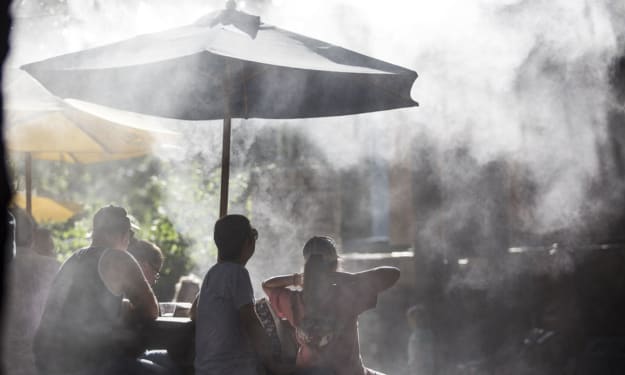
### Enduring the Heat: Houston's Summer Struggle In the heart of Houston, the summer of 2024 arrived with a vengeance. The city was already bracing for the season's notorious heat, but nothing could have prepared its residents for the intensity that came with it this year. The relentless sun seemed to hang perpetually at its zenith, casting an oppressive heat that gripped the city in a relentless embrace. Maria Hernandez felt the weight of the heat every morning as she stepped out of her modest home in the East End. A single mother of two, Maria worked two jobs to make ends meet—one as a cashier at a local grocery store and the other as a cleaner at a downtown office building. Each day began with the same ritual: checking on her children, ensuring they were hydrated and ready for the day ahead, before embarking on her exhausting commute. The air was thick with humidity, making it hard to breathe. Maria could feel the heat rising from the pavement through the soles of her worn-out shoes as she walked to the bus stop. The bus ride was no better; the old vehicle’s air conditioning struggled to combat the searing temperatures, leaving passengers drenched in sweat and silently yearning for relief. At the grocery store, the air conditioning was a saving grace, though it barely kept the stifling heat at bay. Maria's colleagues were all in the same boat—exhausted, drained, and constantly seeking moments of respite in the walk-in freezers. Customers, too, were visibly affected, their tempers flaring over minor inconveniences as the oppressive heat took its toll on everyone's patience. After her shift ended, Maria had a brief window of time to check on her children before heading to her second job. The kids, Jorge and Elena, were resilient but clearly struggling. The family’s small window unit air conditioner was a lifeline, but it couldn't cool their tiny apartment sufficiently. They spent much of the day in the shaded courtyard of their apartment complex, where a makeshift sprinkler provided a bit of relief. The journey downtown was a daily ordeal. Houston’s public transportation system was stretched to its limits, and the heat exacerbated the usual delays and breakdowns. Maria often found herself standing in sweltering bus shelters, the shade offering little comfort against the relentless sun. When she finally arrived at the office building, the air conditioning inside was a stark contrast to the scorching streets outside, and Maria cherished those hours of relative cool. Yet, even in this challenging environment, Maria and her children found moments of joy and community. Their neighbors, also grappling with the heat, came together to share resources and support one another. Community centers opened their doors as cooling shelters, offering water and a respite from the heat. Maria would often take her children there after work, where they met other families and found solace in the shared struggle. Despite the hardship, the summer brought out the best in Houston’s residents. Volunteers distributed bottled water to the homeless and checked on the elderly who were particularly vulnerable to the extreme temperatures. Local businesses set up misting stations and offered free water to passersby. The city’s resilience and sense of community shone through the haze of heat and humidity. One evening, as Maria sat with her children in the cooling center, she reflected on their summer struggle. Jorge and Elena were playing with new friends, their laughter a comforting sound amidst the hum of the air conditioning. Maria knew that while the heat was an overwhelming force, it was their community’s strength and solidarity that would carry them through. She thought about her neighbors—Ms. Johnson, who always had a kind word and a glass of lemonade ready; Mr. Lee, who rigged up a makeshift shade structure in the courtyard for the children to play under; and all the volunteers who tirelessly worked to ensure everyone had what they needed. These small acts of kindness were lifelines in the scorching summer, weaving a tapestry of resilience and hope. As the sun set on another blistering day, Maria felt a sense of gratitude. The heat was unyielding, but so was the spirit of Houston. Together, they would endure, adapt, and find ways to thrive. The struggle against the summer’s oppressive heat was not just about survival—it was a testament to the strength of their community and the bonds that held them together. In the face of such extreme weather, Maria realized that it was the people who made Houston home. Their collective efforts, their unwavering support for one another, and their shared experiences of hardship and joy were what truly defined the city. And as long as they had each other, no amount of heat could break their spirit.
By Drake molb2 years ago in Earth
How Reversing Earth's Rotation Would Change Our Planet. AI-Generated.
Stand on the equator, and you will be moving at 1,670 kilometers per hour, quicker than the speed of sound. That's how rapidly Earth rotates on its axis from west to east, and this rotation is largely responsible for the distribution of every desert, forest, and swamp on the planet.
By Abida Awais2 years ago in Earth
From a jobber to talk of Wrestling
Every Upper management person that I have worked with has said this to my face "No one is going to cheer for a man named Mustafa Ali". This was the Epic line Mustafa Ali said after his first match as a free agent. Ali was released from WWE in September 2023. His time in WWE was quite miserable.
By Literary fusion2 years ago in Earth
How to grill hot dogs: A guide on cook time for your next BBQ
Hot dogs are a staple throughout the year, but during the summer, they really get their spot in the limelight. "Hot dog season" spans from Memorial Day to Labor Day. An average of 38% of total annual hot dog sales take place in that time frame, according to the National Hot Dog and Sausage Council. A majority of annual sales (around 10%) occur in July, giving it the title of "National Hot Dog Month," the National Hot Dog and Sausage Council reports. On the Fourth of July alone, around 150 million hot dogs will be eaten. So, in preparation for your next cookout, here's a guide on grill time for hot dogs. How long to grill hot dogs Grilled hot dogs must reach an internal temperature of 160 degrees Fahrenheit, according to Kingsford, a charcoal brand under The Clorox Company. Cook time ranges from five to seven minutes, depending on the hot dog's size. Coleman Natural Foods recommends grilling all-beef hot dogs at a low-medium heat, between 250 degrees and 325 degrees Fahrenheit. A cooked hot dog will be golden-brown. When prepping your grill, never leave uncooked hot dogs out for more than two hours, the Department of Agriculture recommends. If the outside temperature is above 90 degrees Fahrenheit, do not leave them for more than one hour. Is a hot dog a sandwich? Time to squash the beef, a hot dog is not a sandwich. The National Hot Dog and Sausage Council declared the frankfurter to be in "a category unto its own." "Perhaps at one time its importance could be limited by forcing it into a larger sandwich category (no disrespect to Reubens and others), but that time has passed," said National Hot Dog and Sausage Council president Janet Riley in 2015. What are hot dogs made of? Hot dogs are composed of meat, such as beef, pork or poultry, (such as turkey or chicken), according to the Department of Agriculture. In most cases, the meat includes trimmings. Trimmings are "those little bits and pieces that are accumulated" from cut meat, Davey Griffin, professor and meat specialist for the Texas A&M AgriLife Extension Service, previously told USA TODAY. "It's the same thing we would use for ground beef or ground pork, it is just chopped to a much finer texture," he explained. The USDA outlines that hot dogs may contain no less than 15% of "one or more kinds of raw skeletal muscle meat with raw meat byproducts." Hot dogs will not contain bone fragments from the separation process. The machinery cannot crush or grind the bones; they must be removed basically intact, the USDA reports. A hot dog may not contain more than 30% fat or no more than 10% water, or a combination of 40% fat and added water, according to the Department of Agriculture. Just Curious for more? We've got you covered USA TODAY is exploring the questions you and others ask every day. From "How long to boil corn on the cob?" to "When was the Declaration of Independence signed?" to "Does sunscreen expire?" − we're striving to find answers to the most common questions you ask every day. Head to our Just Curious section to see what else we can answer
By bảo nguyễn2 years ago in Earth