short story
A Himalayan Adventure . AI-Generated.
### A Himalayan Adventure **It was early morning** when Sam and his family started their hike in the Himalayas. The sun was just rising, making the snow on the mountains shine brightly. Sam, a ten-year-old boy who loved adventures, was very excited. He had heard many stories about the Himalayas and couldn’t wait to see them. The path they walked on was narrow and twisted through the trees. They crossed small, clear streams and listened to birds singing. Sometimes, they saw deer or rabbits running through the forest. Sam’s father, Mr. Singh, was a good hiker and led the way. His mother, Mrs. Singh, walked beside him, carrying snacks and water in her backpack. **As they climbed higher,** the air became cooler and fresher. Sam loved breathing in the crisp mountain air. He ran ahead, jumping over rocks and looking at everything. “Stay close, Sam!” his mother called. Sam nodded, full of excitement. They stopped for a break by a beautiful waterfall. The water fell down the rocks, making a calming sound. Sam’s mother gave him a sandwich, and they all sat down to eat. “This is amazing,” Sam said, his mouth full. “I can’t believe we’re here!” They sat by the waterfall for a while, enjoying the peaceful sound of the water and the beauty of their surroundings. Sam’s father told him about the different kinds of plants and animals that lived in the Himalayas. Sam listened intently, his eyes wide with wonder. **After their break,** they continued climbing. The path got steeper, and they had to be careful with each step. The view around them was breathtaking. Tall pine trees stood above them, and in the distance, they could see the snowy peaks of the Himalayas shining in the sun. Suddenly, they heard a noise in the bushes nearby. Sam’s father raised his hand, telling them to stop. They watched quietly and saw a small, brown bear cub come out of the bushes. The cub looked at them curiously, then ran back into the forest. Sam’s eyes were wide with amazement. “Did you see that?” he whispered excitedly. His parents nodded and smiled, sharing his excitement. They continued hiking until they reached a high, open area with a great view of the mountains. They could see the snowy peaks and deep valleys below. Sam felt like he was on top of the world. They sat down to rest and enjoy the view. Sam’s mother took out her camera and took pictures of the stunning scenery and their happy faces. As they rested, Sam’s father told him stories about the Himalayas. He spoke of brave explorers who had climbed the highest peaks and of the local people who lived in the mountains. Sam listened, fascinated by the tales of adventure and bravery. **As the sun began to set,** they started their journey back down. The sky turned orange and pink, and the mountains looked even more beautiful. Sam felt tired but happy. He held his parents’ hands as they walked back to their starting point. The descent was easier, but they still had to be careful on the steep parts. They talked about their favorite moments of the day. Sam couldn’t stop talking about the bear cub and the beautiful waterfall. His parents smiled, happy to see their son so thrilled. **When they got back** to their camp, the sky was getting dark. They were tired but felt accomplished. Sam was eager to tell everyone about their adventure. “Today was the best day ever!” he said. His parents smiled, knowing they had made special memories together. The day ended with a warm campfire and stories under the starry sky. They roasted marshmallows and shared their favorite parts of the hike. Sam’s father told more stories about the mountains, and Sam’s mother sang a soft, calming song. Sam felt cozy and content by the fire. The stars above were bright and clear, and he felt a deep sense of peace. As he lay in his sleeping bag, he thought about the amazing sights he had seen and the fun he had with his family. He fell asleep quickly, dreaming of more adventures in the Himalayas. Sam knew that this day would be one he would remember forever. The mountains had captured his heart, and he couldn’t wait to explore them again.
By Karl Nicken 2 years ago in Earth
The Weight of a Nation
In the small, landlocked country of Lankava, where mountains kissed the sky and rivers sang through the valleys, sports were more than just games—they were a source of identity and pride. Lankava, often overshadowed on the world stage, found its heroes in athletes who carried the nation's hopes with them. This year, all eyes were on one man: Arjun Desai.
By lala lalegende2 years ago in Earth
Telescope Made for Sea
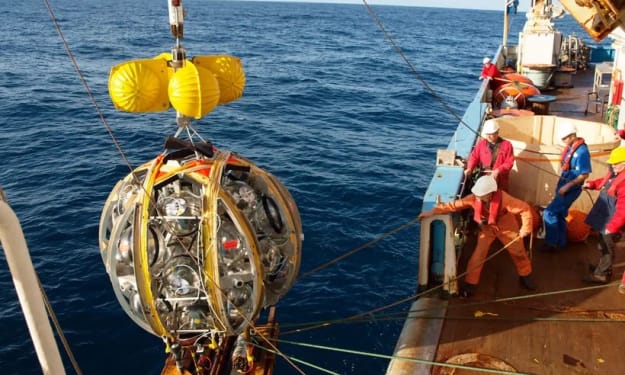
Telescopes Built At Bottom Of The Sea Across the world, telescopes are the best way for us to see what's out there in space. But did you know that there's actually one being built with a completely different purpose? It's a telescope at the bottom of the sea. [Music] The KM3NeT is a next-generation deep-sea research facility that's being built between 1.5 and 3 miles deep in the waters of the Mediterranean Sea. This research infrastructure will house telescopes that aren't designed to look at light, like the ones we're more familiar with, but instead will be looking through the water at neutrinos. There will be two telescopes: one known as ARCA, which will allow scientists to search for neutrinos that have been produced by distant astrophysical sources, such as gamma-ray bursts, colliding stars, and supernovae; and the other telescope, called ORCA, which is focused on learning more about the properties of neutrinos that have been formed in the Earth's atmosphere.
By Richchik Bardhan2 years ago in Earth
The Cracks Beneath the City
In the sprawling metropolis of Altagaz, a city perched on the eastern coast of Turkey, the skyline had changed dramatically over the past few decades. What was once a sleepy coastal town had transformed into a bustling urban hub, its silhouette dominated by towering skyscrapers and densely packed apartment blocks. The city’s rapid growth was fueled by an influx of people from rural areas, all seeking better opportunities, a brighter future, and a piece of the city's promise.
By Aminu Muhammad2 years ago in Earth
Protests as a Beacon of Hope
Introduction In a small town nestled in the heart of a country plagued by economic hardship and social injustice, lived a young woman named Amina. Her town, once bustling with activity and joy, had fallen into a deep state of despair. Factories had closed, unemployment was rampant, and basic amenities were scarce. The once vibrant community was now shadowed by a sense of hopelessness that seemed insurmountable. But within this bleakness, Amina’s spirit burned brightly with a desire for change. Her journey from despair to hope, through the power of protest, became a beacon of transformation for her entire nation.
By Enewa Daniella Abu2 years ago in Earth
From the Shadow to the Olympic Fame
In the heart of a small village nestled within the rolling hills of Uganda, lived a young boy named Kato. His family, like many others in the village, toiled daily to make ends meet. Kato's father was a farmer, his mother a seamstress, and they worked tirelessly to provide for Kato and his two younger sisters. Despite their financial struggles, the family was rich in love and support, values that shaped Kato’s unwavering spirit.
By God'spower2 years ago in Earth
Health and Hope. AI-Generated.
John Bradley sat in the small, dimly lit room of his modest apartment, the hum of the old refrigerator the only sound breaking the silence. At seventy-two, his body felt every bit its age, and his recent diagnosis of cancer weighed heavily on his spirit. He had lived a simple life, working as a machinist for over forty years until retirement. His wife, Mary, had passed away a decade ago, leaving him alone with memories of their shared life and dreams.
By God'spower2 years ago in Earth
The New World Order
Navigating the Age of Disruption: A Turning Point in History In an era defined by unpredictability and rapid change, who could have foreseen the dramatic twists and turns of recent years? Eight years ago, the election of Donald Trump as President of the United States marked the beginning of a new and turbulent chapter in American politics. Trump's tenure was characterized by intense battles and media attention, captivating a nation divided by love and hate for the controversial figure. As the 2020 election approached, many were left wondering what would come next.
By Prapti Kantak2 years ago in Earth
Mysteries of the Lost Isles: Five Enigmatic Islands That Vanished
The ocean, vast and mysterious, covers over two-thirds of our planet's surface. It's a realm where many things can remain hidden, but the notion of an island disappearing from our maps altogether seems like a tale from ancient myth or an old sailor's yarn. Surprisingly, there are several accounts of so-called phantom islands, reported by numerous witnesses. Some of these islands were even thought to be inhabited, only to vanish without a trace when later expeditions sought them out. Whether due to human error or overactive imaginations, these stories are undeniably fascinating. Here are five such islands that seem to have disappeared from the face of the Earth.
By Nathan Talek2 years ago in Earth
Beat the Heat: Your Ultimate Survival Guide
Click and watch don't miss out :- hottrendingnews45.blogspot.com Beat the Heat: Your Ultimate Survival Guide Introduction As our planet warms, understanding how our bodies can adapt to heat becomes increasingly crucial. How our bodies can adapt to heat is a complex interplay of physiological mechanisms that allow us to maintain a stable internal temperature despite external challenges. This blog post will delve into the fascinating ways our bodies respond to heat, exploring the science behind these adaptations and providing practical tips for staying cool and comfortable. Understanding Heat Stress Before we dive into how our bodies can adapt to heat, it's important to grasp the concept of heat stress. This occurs when the body's cooling system is overwhelmed, leading to an increase in core body temperature. Several factors contribute to heat stress, including high ambient temperature, humidity, and physical exertion. How Our Bodies Can Adapt to Heat: Thermoregulation Our bodies possess an intricate system called thermoregulation, designed to maintain a core temperature of around 37°C (98.6°F). How our bodies can adapt to heat involves a complex interplay of physiological mechanisms that kick in when temperatures rise. One of the primary ways our bodies can adapt to heat is through sweating. Sweat glands produce moisture that evaporates from the skin's surface, cooling the body down. However, excessive sweating can lead to dehydration, so it's essential to replenish fluids regularly. Vasodilation: Expanding Blood Vessels Another key mechanism in how our bodies can adapt to heat is vasodilation. This process involves widening blood vessels near the skin's surface, allowing more blood to circulate and release heat into the environment. This is why your skin often appears flushed when you're hot. Acclimatization: Training Your Body for Heat How our bodies can adapt to heat also involves a process called acclimatization. This occurs when your body gradually adjusts to heat exposure over time. By spending increasing amounts of time in warmer conditions, your body becomes more efficient at sweating, regulating blood flow, and conserving energy. The Role of Hormones in How Our Bodies Can Adapt to Heat Hormones also play a crucial role in how our bodies can adapt to heat. For instance, the hormone aldosterone helps regulate sodium and water balance, preventing excessive fluid loss through sweat. Additionally, anti-diuretic hormone (ADH) helps retain water in the body to maintain hydration. How Our Bodies Can Adapt to Heat: Behavioral Adaptations While physiological adaptations are essential, how our bodies can adapt to heat also involves behavioral changes. Choosing lightweight, loose-fitting clothing made from breathable fabrics can help to dissipate heat. Scheduling outdoor activities during cooler parts of the day and seeking shade can also be effective strategies. Protecting Vulnerable Groups Certain individuals are more susceptible to heat-related illnesses, including the elderly, young children, and those with chronic health conditions. How our bodies can adapt to heat varies from person to person, and it's crucial to take extra precautions to protect these vulnerable groups. The Impact of Climate Change on How Our Bodies Can Adapt to Heat Climate change is exacerbating heat-related challenges. As temperatures continue to rise, understanding how our bodies can adapt to heat becomes even more important. While our bodies have remarkable adaptive capabilities, it's essential to implement measures to mitigate the effects of climate change and protect public health. Conclusion How our bodies can adapt to heat is a testament to the human body's resilience. By understanding the physiological mechanisms involved in thermoregulation and adopting appropriate strategies, we can better protect ourselves from heat-related illnesses. As our climate continues to change, it's crucial to stay informed and take steps to safeguard our health and well-being.
By Mohamed sha2 years ago in Earth