Science
Materials, Waste & Recycling.
The management of materials, waste, and recycling is an essential aspect of sustainable development. The production, consumption, and disposal of goods have significant impacts on the environment, including resource depletion, pollution, and climate change. Therefore, it is crucial to adopt policies and practices that promote sustainable materials management and reduce waste.
By Love The Green4 years ago in Earth
covid-19
In December 2019, the coronavirus disease 2019 (COVID-19) broke out in China.1 It was declared a global pandemic by the World Health Organization (WHO) in March 2020.2 The high infectivity rate forced the governments to take strict actions in socioeconomic measures such as confinement, suspension of business operations, and reallocation of resources. Virtual ways of communication appeared reasonable alternative channels offering contactless media and meeting social distancing requirements. Online solutions were heavily present in education and health care.
By Abubakar Imran4 years ago in Earth
Beyond Civilization: A Tale of Survival in the Wilderness
The sun had already set, casting a pale blue hue across the vast wilderness. John, an experienced hiker, trekked deeper into the untamed forest. His backpack weighed heavily on his shoulders, filled with provisions and gear for a week-long solo adventure in the wild. He had always been drawn to nature's rugged beauty, and this trip was his ultimate survival test.
By Cyprain SUH CHEO 4 years ago in Earth
Tissue culture
Tissue Culture Advantages. Tissue culture is a technique used to cultivate and propagate cells or tissues outside of their natural environment, under controlled laboratory conditions. This technology has revolutionized the fields of biology, medicine, agriculture, and biotechnology by providing researchers with an opportunity to manipulate and study biological systems in a controlled setting.
By Hasna Shahreen4 years ago in Earth
Surviving Climate Change:
Climate change has been a topic of concern for decades, and its impact on our planet is becoming increasingly evident. From melting glaciers to rising sea levels, the effects of climate change are being felt around the world. However, it's not just humans that are being affected; wildlife and ecosystems are also feeling the heat. As temperatures rise, ecosystems are being disrupted, and wildlife is struggling to adapt. This blog post will explore the impact of climate change on wildlife and ecosystems, and what we can do to help mitigate the effects. We'll take a look at some of the species that are most at risk and discuss the ways in which climate change is altering their habitats. By the end of this post, you'll have a better understanding of the challenges facing our planet and the steps we can take to protect it.
By Wilson Igbasi4 years ago in Earth
The most mysterious dinosaur
Dinosaurs are one of the greatest mysteries of all time. They ruled the Earth for over 160 million years before suddenly becoming extinct around 66 million years ago. Scientists have spent decades studying these prehistoric creatures to try and uncover the secrets of their lives and their sudden disappearance.
By Umar Aamir4 years ago in Earth
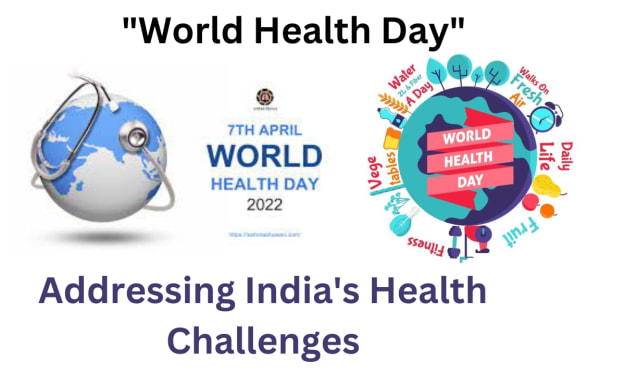
"World Health Day"
India health April 7th every year is a Global Health issues and promoting living , with its vast population and diverse healthcare challenges, is a country that has been at the forefront of discussions on global health issues. Despite significant progress in recent years, India still faces numerous health challenges, including high rates of maternal and infant mortality, malnutrition, and infectious diseases such as tuberculosis and malaria.
By PREMANANDA TANDI4 years ago in Earth