Science
Submarines
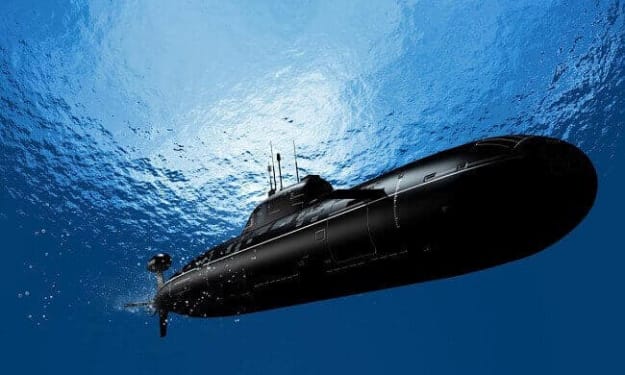
From Jules Verne's "20,000 Leagues Under the Sea" to modern-day naval operations, submarines have captured the human imagination and played a vital role in maritime exploration, military strategies, and scientific research. These remarkable vessels, capable of operating underwater for extended periods, have revolutionized the way we understand and interact with the world's oceans. In this article, we delve into the fascinating world of submarines and discover the incredible technology and capabilities that make them so unique.
By Omar Karasin3 years ago in Earth
The Battle of Ideas: Exploring the Most Controversial Scientific Debates
Introduction Climate change is a pressing issue that has been at the forefront of global discussions for several years. It refers to long-term shifts in weather patterns and global temperatures, resulting in a wide range of impacts on ecosystems, economies, and human well-being. The debate surrounding its cause has been ongoing, with some arguing that it is a natural occurrence, while others believe that human activity is primarily responsible.
By Dr. Fred Domezah3 years ago in Earth
Earthquake Resilience in Kashmir Depends on Traditional Architecture.
Introduction Earthquakes pose significant threats to communities around the world, often resulting in devastating loss of life and infrastructure. In the scenic region of Kashmir, located in the Himalayan mountain range, earthquakes are a frequent occurrence due to its tectonic location. However, the traditional architecture of Kashmiri dwellings has remarkable resilience against seismic activity for centuries. This essay explores the key features of traditional Kashmiri architecture that contribute toIntroduction :
By Mariega Efe3 years ago in Earth
Weaire-Phelan Structure
The Weaire-Phelan structure has 0.3 percent less surface area than the Kelvin structure, which was thought to be the solution to the Kelvin problem since 1887 until a better solution (the Weaire-Phelan structure) was discovered by Denis Weaire at Trinity College Dublin using software which was modern in the early nineties. As part of his "experimentation", Denis Weaire visited the local bar with some bubble making instruments and investigated the bubble foam at the top glasses of beer. The software he used to make the calculations is called Surface Evolver. Designs using the Weaire-Phelan structure include a sculpture at Trinity College and the Beijing Water Cube. The insulation caused by the shape of the plastic cells helps to keep heat in the building. [1]
By Sabine Lucile Scott3 years ago in Earth