Science
Heat Wave Health Risks
Individuals all over the planet are feeling the unmistakable proof of climate change. The outrageous intensity occasions in the UK, Pakistan, and China in July are one more update that climate change is genuine and devastatingly affects the worldwide populace. The 2021 IPCC report has clarified that without critical mediation from state government and the populace, the Earth is on course to surpass 1.5 degrees Celsius in the following 10 years. As the planet keeps on warming, we can expect an expanded recurrence of intensity waves — alongside sea level rise, drought, and different outcomes of climate change.
By Blessing Morka3 years ago in Earth
Resilient Roots.
Maya's Memories:The memories of Maya's childhood were colored by a haze of pollution. The air was thick with smog, stinging her eyes and making it difficult to breathe. The waterways that once sparkled with life were now choked with plastic waste, a grim reminder of the careless disregard for the environment. Green spaces had become a rarity, replaced by concrete and asphalt.But amidst the gloom, a glimmer of hope emerged. Innovative minds, like Maya's, saw beyond the desolation and envisioned a better future. These pioneers, aptly named "Green Pioneers," set out to revolutionize their city and restore its natural beauty.Joining the Movement:Maya, armed with her passion for sustainable solutions, joined forces with a diverse group of experts. Scientists, architects, and community leaders united under a common goal: to breathe life back into their city. With unwavering determination, they embarked on a journey that would change the course of their city's history.Renewable Renaissance:Fossil fuels were cast aside as renewable energy sources took center stage. Solar panels adorned rooftops, harnessing the power of the sun to generate clean electricity. Wind turbines gracefully spun in the breeze, contributing to the city's energy needs without harming the environment. The transformation was not just technological; it was a mindset shift that permeated every corner of society.Vertical Gardens and Urban Havens:Abandoned buildings that once stood as reminders of neglect were repurposed into thriving vertical gardens. These lush oases served as habitats for both native plants and wildlife, injecting pockets of green into the urban landscape. Maya's team meticulously designed these gardens, ensuring they were not just visually pleasing but also ecologically functional.The Renewal Corridor:Maya's visionary idea, the "Renewal Corridor," emerged as the heart of their endeavor. This urban oasis showcased a symphony of sustainable practices and innovations. Rainwater harvesting systems collected and purified water, reducing strain on the city's resources. Vertical farms grew an abundance of fresh produce, nourishing both body and soul. Smart waste management systems ensured that waste was recycled, composted, or repurposed, minimizing the city's environmental footprint.A Beacon of Education:The Renewal Corridor became more than just a physical space; it became a beacon of education and empowerment. Citizens and tourists flocked to the corridor to learn about the power of collective action. Workshops, seminars, and interactive exhibits inspired people to embrace sustainable practices in their own lives. The corridor was a testament to what could be achieved when a community came together for a shared purpose.Challenges and Perseverance:As the transformation unfolded, tensions simmered beneath the surface. While many embraced the change, some clung to the familiarity of old ways. The story delved into the complexities of societal shifts, capturing the challenges of breaking free from established norms. Maya herself faced moments of doubt and exhaustion, questioning whether their efforts were truly making a difference.The Crucial Decision:The climax of the story arrived as Maya and her team faced a critical decision. A powerful corporation sought to exploit the Renewal Corridor for profit, threatening to undo years of progress. Maya found herself at a crossroads, torn between safeguarding the city's future and succumbing to the allure of short-term gains. It was a moment of reckoning that tested Maya's resolve and the strength of their collective purpose.Triumph of Resilience:In the end, Maya's unwavering commitment prevailed. The city's transformation reached a crescendo, and a Green Renaissance unfolded beyond imagination. Streets once clogged with traffic now bustled with pedestrians and cyclists, reflecting a shift towards sustainable modes of transportation. Clean air filled lungs, and waterways flowed freely once more, teeming with life. The city's revival was more than just physical; it was a testament to the indomitable spirit of its inhabitants.An Emblem of Resilience:The once-degraded environment became a symbol of resilience and hope. The city's journey from despair to rejuvenation was a testament to the power of sustainable practices and innovation. Maya's story, interwoven with personal and societal challenges, exemplified the human spirit's ability to flourish in the face of adversity. "Resilient Roots" celebrated not just a Green Renaissance, but the enduring legacy of a generation determined to leave a better world for future generations.
By Chikezie philip3 years ago in Earth
The Strangest Water Phenomena from Around the World
Water, the life-giving force that sustains us, often holds fascinating secrets and surprises. From mystical underwater bubbles to eerie frozen landscapes, the world is filled with unique and bewildering water phenomena that defy expectations.
By elias johan3 years ago in Earth
Seaweed Fertilizer.. Content Warning.
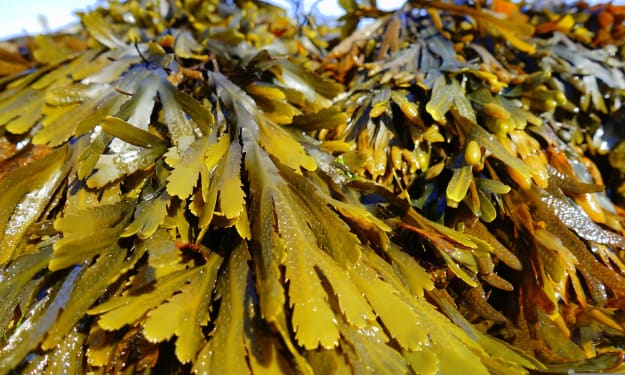
In the realm of organic gardening and sustainable agriculture, seaweed fertilizer has emerged as a remarkable solution that harnesses the power of the ocean to enhance plant growth and soil health. This nutrient-rich elixir, often referred to as "nature's green gold," has been utilized for centuries by coastal communities to cultivate robust crops and lush gardens. Its popularity has surged in recent years as more gardeners and farmers seek eco-friendly alternatives to synthetic fertilizers. In this article, we delve into the art of making and using seaweed fertilizer, exploring its benefits, preparation methods, and application techniques.
By Michael Rama3 years ago in Earth
Debunking the Flat Earth Myth: Embracing the Beauty of a Spherical World
In a time when scientific knowledge has soared to new heights, it may seem incredulous that there are still individuals who adhere to the belief that the Earth is flat. As an astronomer deeply immersed in the mysteries of the cosmos, I am both fascinated and puzzled by the persistence of the Flat Earth myth. Despite overwhelming evidence supporting the spherical nature of our planet, there remains a small group of people who refuse to accept this fundamental truth. In this blog, we will delve deeper into the reasons behind the persistence of the Flat Earth belief and unravel the scientific evidence that confirms the Earth's spherical form.
By Rohit Singh3 years ago in Earth
Government policy to global warming reduction.
Government policies are essential for effectively addressing global warming and reducing greenhouse gas emissions on a larger scale. Here are some key policy approaches that governments can adopt to mitigate climate change:
By emily omoruyi3 years ago in Earth
Human health risk posed by global warming.
Global warming, primarily driven by the increase in greenhouse gas emissions from human activities, has significant implications for human health. Here are some of the key ways in which global warming poses risks to human health:
By emily omoruyi3 years ago in Earth
Discovered planets
foreign of all the planets in the universe Earth is clearly the best for life right wrong Earth may be great but scientists have discovered a few worlds that could be even better for life behold koi 5715.01 most of the contenders on our super habitable planet list aren't the ones you could visit anytime soon they are very far away the top spot is held by one 3 000 light years away from our solar system koi 575.01 would appear to satisfy the most basic requirement for supporting life it exists in the Goldilocks zone of its star so conditions wouldn't be too hot or too cold for a key life supporting ingredient to exist on its surface liquid water but it would also check off many boxes to be considered super habitable the planetary system it belongs to could be five and a half billion years old which would make it around 1 billion years older than our own solar system and the planet would almost fit the size requirement when looking for super habitable worlds scientists keep their eyes peeled for planets that have a mass up to one and a half times of our planet and they should be about 10 percent larger too this size difference would help the planet retain heat and if its average temperature was about 5 degrees Celsius higher than Earth's well this planet could have even richer biodiversity now being almost double the size of Earth koi 571 5.01 might overshoot this condition a bit besides studies indicate that this planet is actually colder than Earth but there's still hope with the right atmospheric composition a strong greenhouse effect could raise temperatures to the desired level and as far as super habitable worlds go well we're just getting started when it comes to making this planet habitable at this time of year we fall back on what makes us and others feel better shopping you know holiday shopping may give you a rush but it can also sustain the corporate world's Stranglehold on small businesses how do they do that well when you shop online like on Amazon or Walmart well these companies use their sales platforms to promote their products over smaller businesses with competing products unfairly this practice is called self-preferencing because it puts the company's interests ahead of anything or anyone else so how can you help well buy locally you know small business owners account for more than 64 percent of new jobs in the United States so work for the anti-monopoly shift power away from major corporations and help provide more opportunities for your community keeping each other fed and our community is thriving that's how we make a planet habitable approximately 2 700 light years away is Kepler 69c this super Earth could be around 7 billion years old this puts it perfectly in the estimated five to eight billion year old age range for super habitable planets this range is based on the three and a half billion years it took for a complex life to appear on Earth so the best chance for finding life could be on a planet a little older than us only this exoplanet could be a little too big to be super habitable it has a mass almost four times that of Earth a rocky planet this big could have a single colossal continent that would have huge deserts in its Center but the coastline Washed by Kepler's ocean could be your perfect spot to move to our next Super Earth shares a similar name Kepler 1126b except it would be located ever so slightly closer to home yeah this planet is about 2073 light years away and it belongs to a system that is seven and a half billion years old it also orbits a yellow dwarf star much like our own only Kepler 1126b is two and a half times closer to its star than Earth is to the Sun but that's no big deal because the star Kepler 1126b orbits is cooler than ours so the habitable zone would exist in a Range much closer in proximity to it if you aren't feeling this nearness to a scorching hot star there's another Super Earth on our list and it's at a reasonable distance from home speculos 2C is located only 106 light years away not that its proximity gives it any kind of advantage it would still take you well over 200,000 years to travel to this super Earth and that's if you moved at the speed of NASA's Parker solar probe the fastest probe ever launched speculos 2C does look promising though it's about 40 percent larger than Earth there's also the potential for it being a rocky planet just like ours now despite the fact that it also exists in a habitable zone it's red dwarf star is still very small it's only about 15 percent the size of our sun so this planet orbits around its star at a very close distance and this close distance could mean that speculos 2C is tidally locked to its star this super Earth takes eight and a half days to make one full rotation on its axis as well as one orbit around its star that would leave one side of the planet in constant daylight and the other in Endless Night this means that life could be possible in The Terminator Zone the thin strip of land between the two sides we just need to get a better look to find out for sure but with all these candidates so far away wouldn't it be nicer if the planets in our own solar system were a little more habitable well that's a story for another.
By Javel samuels3 years ago in Earth
Cybersecurity and Online Banking
The Dark Web, a hidden section of the internet that is accessed through specific software and encryption methods, has gained notoriety for its involvement in cybercrime activities. It serves as a platform for illegal marketplaces, hacking, and the sale of stolen data. While exploring the Dark Web may provide valuable insights into the methods and motivations of cybercriminals, it is important to recognize the risks associated with such endeavors.
By Joseph Micheal Nnamdi3 years ago in Earth