Science
Community Resilience
In the heart of the Appalachian Mountains, nestled between rolling hills and a winding river, lay the picturesque town of Pinebrook. For generations, the people of Pinebrook had thrived on their connection to the land, the seasons, and one another. But as the world changed, they faced an unprecedented challenge—the relentless march of climate change.
By amina boubakr3 years ago in Earth
"Whispers of Desolation". Content Warning.
The coastal town of Havenbrook had always been a tranquil haven for its residents, nestled between the azure waves of the Atlantic and the lush, verdant hills that cradled it protectively. For generations, its people had lived in harmony with the sea, their lives intertwined with the ebb and flow of the tides. But on a fateful August day, the town's idyllic existence was shattered by an unrelenting force of nature.
By Asha Veronica3 years ago in Earth
Trace the legacy of an environmentalist .
In a small coastal town nestled between rolling hills and a pristine shoreline, there lived a man named Samuel. Samuel was an unassuming figure in life, but his legacy would shape the destiny of generations to come. He was an environmentalist, a visionary, and a man deeply in love with the natural world.
By Christine Jeruto3 years ago in Earth
Earth: Our Precious Blue Planet
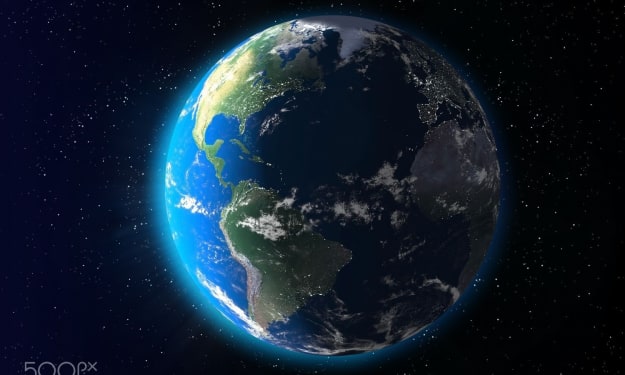
Our Precious Blue Planet introduction Earth, her third planet from the Sun in the solar system, is a marvel of natural beauty and complexity. The Earth is also called the "blue planet" because it looks amazingly blue when viewed from space. As we know it, it is the only celestial body known to have life. This article explores different aspects of our planet, from diverse ecosystems to geological wonders, and highlights the importance of preserving and protecting this amazing world. 1. Planet of Diversity Earth is an incredibly diverse planet. Its surface is an ecological tapestry, each with its own inhabitants and environmental conditions. From the polar ice expanses to the lush rainforests of the tropics, our planet is home to a myriad of diverse plant and animal habitats. This biodiversity not only enriches our world, but also maintains the delicate balance of life. 2. Water Planet Earth's nickname "the blue planet" is well-deserved. More than 70% of the earth's surface is covered by water, most of which is vast oceans. These oceans are not only essential in regulating the Earth's climate, but they are also home to an amazing diversity of marine life. They provide us with nourishment and oxygen and are a source of inspiration and relaxation. 3. Green Lung Also known as the Earth's "green lungs," forests are essential for maintaining a stable climate and providing oxygen for all living things. Forests act as carbon sinks, absorbing carbon dioxide from the atmosphere and mitigating the effects of climate change. Unfortunately, deforestation is threatening these important ecosystems, making forest conservation a global priority. 4. Geological Wonders Earth's geology is evidence of its dynamic nature. Mountains, volcanoes, and earthquakes are just a few of the tectonic effects at work below the surface. These geological features not only shape our landscape, but also influence our culture and civilization. 5. Challenge to climate change The Earth's climate is undergoing unprecedented changes due to human activity. Burning fossil fuels, deforestation, and industrial processes release greenhouse gases into the atmosphere, leading to global warming and climate instability. Addressing this challenge is vital to the well-being of our planet and future generations. 6. Saving and saving Maintaining the beauty and biodiversity of our planet is the responsibility of each of us. Conservation activities such as the creation of protected areas and sustainable resource management are essential to protect natural heritage. Additionally, reducing our carbon footprint through sustainable practices and transitioning to renewable energy sources will help combat climate change. 7. the power of education Education plays an important role in raising awareness of the importance of our planet and in protecting it. By educating future generations about the wonders of our planet and the threats it faces, they will become responsible environmental activists. Diploma Our home in the vast universe, Earth, is a planet like no other. Its astonishing beauty, astonishing diversity and intricate interconnectedness remind us of the importance of protecting and preserving this amazing world. In the face of environmental challenges and climate change, it is vital that we take action to ensure our planet continues to thrive for generations to come. It is our shared responsibility to be stewards of this precious blue planet and work together to create a sustainable and harmonious future for all life on Earth.
By MANI PLAYZ3 years ago in Earth
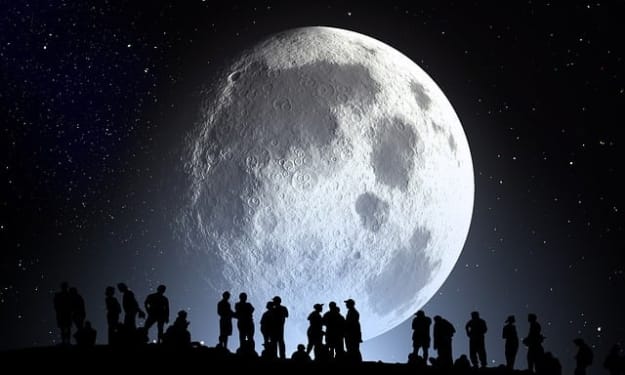
Why Nobody Has Visited the Moon in 50 Years
"It's been decades since the last manned moon landing, Apollo 17, which occurred in December 1972. Isn't it time we considered returning to our dusty satellite, maybe even establishing a more permanent presence there? NASA has made a commitment to this endeavor, as they are currently preparing to send astronauts back to the moon, possibly by 2025, under a program called Artemis. Notably, this mission will include the first woman to set foot on the lunar surface.
By Рамадан Муталиб3 years ago in Earth
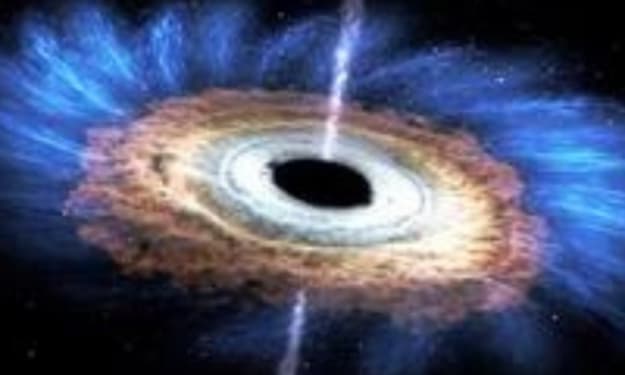
Black holes mysteriously burp up relics of stars they destroyed years earlier, and Astronomers have no idea why, a study has revealed.
Star relics are being spewed out by black holes, years after they swallowed them. Astronomers are perplexed by the discovery since it contradicts what is known about black holes. This could alter our perception of what occurs when a star gets sucked up by a black hole. The phenomenon known as a tidal disruption event (TDE), which occurs when a black hole rips apart an unhappy star, has long been known to astronomers. However, it was anticipated that these aircraft would appear within months after the first TDE. The latest research, which has not yet undergone peer review, discovered that 10 of the 24 black holes that were identified began ejecting matter two to six years after the TDE. According to Yvette Cendes, a primary author on the study from the Harvard and Smithsonian Center for Astrophysics, the result, which has perplexed astronomers, may indicate that we have an incorrect understanding of what occurs when black holes consume stars. "We don't really know, but no one was predicting it," she remarked in reference to the actual quick answer to the question of what's causing this. No one was looking, therefore, nobody saw it coming. There's a solid reason why this hasn't happened before: nobody anticipated it. When a star approaches a supermassive black hole too closely, a TDE occurs. The star will be destroyed in a few hours. Astronomers often predict that at this stage, around half of the star's mass will begin to orbit the black hole, forming an "accretion disk." Theoretically, the remaining half of the matter will subsequently be released in a single energy jet that can be retrieved from Earth.
By Cyril Lord3 years ago in Earth
Unearthly Lunar Wonders: The Fascinating and Unbelievable Secrets of the Moon
The call center is buzzing with activity as reports flood in about a strange phenomenon on the moon. Amateur astronomers from around the world have witnessed an unexpected bright light on the lunar surface, reminiscent of a powerful spotlight. Scientists are baffled and working diligently to uncover the cause.
By Siren Gale3 years ago in Earth
How Old is the EARTH
Can you ask yourself that question? how old is the earth? that's a great question before we tackle the hard challenge of figuring out how old our entire planet is think of something more familiar first how do you know how old you are well you know your birthday and you use a calendar to count each year as it goes by the problem is this doesn't work for counting how many years old the earth is because the idea of counting years on a calendar isn't something we've always done the calendar is something we invented and we only started counting years once we invented it in fact looking at our calendar you can see almost exactly how long we've been counting years about 2 000 years of counting that means there were lots of years before the invention of the calendar years that nobody kept track of but what if i told you you don't need a calendar to keep track of years, there are other things you can find out in nature that keep track of years for us you probably already even know about one of these things can you think of anything in nature that keeps track of years. Do you know the rings inside a tree maybe you've heard about this before. Each ring inside a tree equals one year. You can count the rings inside a tree and find out how old that tree is. This works because as a tree grows it creates a dark layer during late summer every year Unfortunately trees only create rings as long as they're alive the oldest living trees called bristlecone pines have around 4,000 rings so that means Earth is at least 4,000 years old but what if t earth is older than the oldest tree and surely it is right is there anything besides trees that leaves behind some kind of layer every year? something we could count there is in rock it's not quite as obvious as tree rings but scientists realize that the solid ground under our feet contains layers of rock like this big section of sandstone that started out as sand that got carried by a stream and laid down in layers slowly one layer at a time it doesn't always make nice neat light and dark layers the way a tree does but by figuring out how long it takes for a layer of sandstone to form, scientists can measure how thick this rock is and then get a sense of how long ago this section of rock started to form for example say that it takes 100 years for this little one-inch section of sandstone to get laid down by a river if there's 100 feet of rock here then scientists can do some simple math and realize it took over 100 000 years just for this section of rock to form by adding up all the different layers of rock on earth. Scientists started to realize that the earth is much much older than just thousands of years old just by looking at layers of rock Scientists became convinced that the earth must be at least millions of years old maybe even more recently scientists have discovered an even better way of figuring out how old the earth might be using microscopes and advanced knowledge of something called radioactivity scientists can break open rocks and find evidence that the earth is even older than millions of years old it's thousands of millions of years old or in other words billions if you ask a scientist today their current best estimate for the age of the earth is 4500 million years old or 4.5 billion years. The subject of radioactivity is something you can choose to study in high school science so in summary we think that the earth has been around for at least 4 500 million years.
By samuel olakehinde3 years ago in Earth
Threat to Future Generations
Once upon a time, in a quiet corner of the world, there lived a woman named Sarah. She was a mother, grandmother, and an ardent lover of nature. Her days were filled with the laughter of her grandchildren, Mia and Liam, and the vibrant colors of her garden. But beneath the surface, a heavy burden weighed on her heart—a deep concern for the world she would one day leave to Mia and Liam.
By Percy Laryea3 years ago in Earth
Pakistan. Content Warning.
Pakistan is a country in South Asia. It is located between India to the east, Afghanistan to the northwest, Iran to the west, and China to the northeast. It has a coastline along the Arabian Sea in the south. Pakistan is the sixth most populous country in the world, with a population of over 220 million people. The official language of Pakistan is Urdu, but English is also widely spoken.
By Nouman Yousaf3 years ago in Earth