Science
Five Animals with Superpowers
The Red Squirrel: The Genius of Spatial Memory The red squirrel is a captivating rodent that inhabits our forests. Contrary to popular belief, it does not hibernate during winter. To survive this period, it accumulates food reserves, including hazelnuts, acorns, insects, and fungi. What is truly remarkable is its ability to memorize the locations of these reserves, which can number up to 3,000 different hiding spots. Initially, it was believed that this feat was due to an exceptionally developed sense of smell. However, studies have shown that the red squirrel actually possesses extraordinary spatial memory. It employs a technique known as "chunking" to remember the locations of its reserves. It starts by gathering all its provisions in one place, then distributes them to different locations based on their type: hazelnuts in one area, fungi in another, and so on. Even more impressively, the red squirrel stores high-nutritional-value foods as far away as possible from the food source, thereby minimizing the chances of theft. This small animal is a true genius of spatial memory, capable of creating a complex mental map of its hiding spots to survive the winter months. Truly a feat of panache!
By Massinissa Amrane2 years ago in Earth
Vanishing Canopies: The Perils of Accelerated Deforestation in 2050. AI-Generated.
In the year 2050, the world is grappling with the catastrophic consequences of accelerated deforestation, a relentless assault on our planet's vital forests that has irreversibly altered the Earth's landscape and ecosystems. What began centuries ago as a gradual depletion of woodlands for sustenance and industrial needs has morphed into a frenzied race to clear forests for agriculture, urbanization, and economic gain. This insatiable appetite for land and resources has unleashed a cascade of environmental, social, and economic challenges that threaten the very foundation of life on Earth.
By Debabrata Kumar Mondol2 years ago in Earth
LOTUS FLOWER
The lotus flower, revered across cultures and centuries, stands as a potent symbol of purity, enlightenment, and rebirth. Its journey from the murky depths of water to its radiant bloom on the surface is a metaphor for spiritual ascent and resilience, resonating deeply in various philosophical, religious, and artistic traditions. This essay explores the botanical characteristics, cultural significance, and symbolic meanings of the lotus flower, illuminating why it remains a timeless icon of beauty and transcendence. Botanical Characteristics The lotus flower, primarily represented by two species, Nelumbo nucifera (sacred lotus) and Nelumbo lutea (American lotus), is an aquatic perennial. These species share similar characteristics and are often found in still or slow-moving water bodies such as ponds, lakes, and marshes. Physical Description Leaves: Lotus leaves are large, circular, and hydrophobic, meaning they repel water, causing droplets to bead and roll off, keeping the surface clean. This self-cleaning property is known as the "lotus effect." Flowers: The flowers are distinguished by their symmetrical petals, which can be white, pink, yellow, or a combination of colors. Each flower typically blooms for three days, opening in the morning and closing at night. Roots: The lotus has a unique root system anchored in the mud at the bottom of water bodies, with long stems (rhizomes) that extend up to the water's surface. Growth Cycle The lotus undergoes a fascinating growth cycle. Seeds can remain dormant for years, even centuries, and still germinate when conditions are favorable. Once they sprout, the plant's roots anchor in the muddy substrate, and leaves and stems rise to the surface, culminating in the emergence of the flower. This cycle from mud to bloom symbolizes purity and spiritual awakening, a theme prevalent in many cultures. Cultural Significance The lotus holds a revered place in various cultural and religious traditions, particularly in Asia. Its journey from the murky waters to a pristine bloom is a powerful metaphor for human potential and spiritual enlightenment. Buddhism In Buddhism, the lotus is a symbol of purity, enlightenment, and rebirth. It is associated with the life of Buddha, who is often depicted seated on a lotus flower. The different colors of lotus flowers in Buddhism have specific meanings: White Lotus: Represents mental purity and spiritual perfection. Red Lotus: Symbolizes love, compassion, and the heart. Blue Lotus: Denotes wisdom and knowledge. Pink Lotus: The supreme lotus, associated with Buddha himself. Purple Lotus: Often used to represent mysticism and spiritual power. The lotus is also significant in Buddhist teachings, symbolizing the potential for all beings to rise above their conditions and attain enlightenment. Hinduism In Hinduism, the lotus is a symbol of beauty, fertility, prosperity, and spirituality. It is associated with several deities: Lakshmi: The goddess of wealth and prosperity, is often depicted sitting or standing on a lotus. Brahma: The god of creation, is believed to have emerged from a lotus that sprang from the navel of Vishnu. Saraswati: The goddess of wisdom and learning, is also often depicted with a lotus. The lotus represents divine beauty and purity, and its unfolding petals suggest the expansion of the soul and the realization of inner potential. Ancient Egypt In ancient Egyptian culture, the lotus (often the blue lotus, Nymphaea caerulea) symbolized the sun, creation, and rebirth. The flower's daily cycle of closing at night and opening in the morning mirrored the sun's journey, linking it to the concepts of death and rebirth. Lotus motifs are prevalent in Egyptian art and architecture, signifying regeneration and the eternal cycle of life. Symbolic Meanings The lotus's symbolism extends beyond religious contexts, encapsulating universal themes of growth, resilience, and purity. Purity and Resilience The lotus's ability to emerge pristine from muddy waters is a powerful symbol of purity and resilience. This quality is often invoked to represent the human ability to rise above challenges and remain untainted by negative influences. Enlightenment and Rebirth In spiritual traditions, the lotus symbolizes enlightenment and rebirth. Its journey from darkness to light is analogous to the soul's journey toward enlightenment, suggesting that true wisdom and purity are achieved through overcoming life's difficulties. Beauty and Transience The ephemeral nature of the lotus flower, blooming briefly before withering, highlights the transient beauty of life. This theme resonates in various art forms, emphasizing the importance of cherishing the present moment. The Lotus in Art and Literature The lotus has inspired countless works of art and literature, serving as a symbol of beauty, purity, and spiritual transcendence. In traditional Asian art, the lotus is a common motif, often depicted in paintings, sculptures, and architectural elements. Visual Art In Asian visual art, the lotus is frequently portrayed alongside deities and spiritual figures. Its symmetrical petals and graceful form make it a popular subject in both classical and contemporary art. In Hindu and Buddhist temples, lotus motifs are carved into stone, painted on walls, and incorporated into the design of sacred spaces, symbolizing the presence of the divine. Literature The lotus appears in various literary traditions, symbolizing purity, enlightenment, and the journey of the soul. In ancient Indian texts, such as the Rigveda and the Bhagavad Gita, the lotus is often used metaphorically to describe spiritual concepts. In Chinese poetry, the lotus is a symbol of noble character and moral integrity, representing a person who remains virtuous despite being surrounded by corruption. Horticultural Aspects Growing lotus flowers can be a rewarding endeavor, though it requires specific conditions and care. Here are some key considerations for cultivating lotus plants: Planting Lotus plants thrive in warm, sunny climates with long growing seasons. They require a water body with a muddy substrate where the roots can anchor. Lotus rhizomes should be planted horizontally in shallow water, with the growing tips just above the soil. Water and Soil Lotus plants need plenty of water and prefer nutrient-rich, muddy soil. The water should be at least 6 inches deep but can be deeper for larger varieties. It's essential to maintain consistent water levels and avoid allowing the water to become stagnant. Temperature and Light Lotus plants are heat-loving and require full sun to bloom. They need at least six hours of direct sunlight daily. In colder climates, lotus plants can be grown in containers and moved indoors during the winter months. Fertilization Lotus plants are heavy feeders and benefit from regular fertilization during the growing season. A balanced aquatic plant fertilizer can be used to promote healthy growth and abundant blooms. Maintenance Regular maintenance is essential to keep lotus plants healthy. This includes removing dead or yellowing leaves, thinning out overcrowded growth, and monitoring for pests and diseases. Proper care ensures that the plants remain vibrant and productive. Conclusion The lotus flower, with its captivating beauty and profound symbolism, continues to inspire and enchant people around the world. From its roots in ancient cultures to its presence in modern art and horticulture, the lotus embodies timeless themes of purity, enlightenment, and resilience. Its journey from the muddy depths to the sunlit surface serves as a powerful metaphor for the human spirit's capacity to rise above challenges and achieve greatness. As we appreciate and cultivate this remarkable flower, the lotus's legacy as a symbol of beauty and transcendence endures, reminding us of the enduring power of nature and the potential within each of us.
By Goleti thirumal 2 years ago in Earth
Rose
The rose, often referred to as the "queen of flowers," holds a place of unparalleled esteem in the world of horticulture and human culture alike. With its myriad colors, enchanting fragrance, and rich symbolism, the rose is more than just a flower; it is a testament to beauty, love, and the complexities of nature. This essay delves into the history, varieties, cultural significance, and horticultural aspects of the rose, exploring why it has captivated human hearts for centuries. Historical Significance The history of the rose dates back to ancient times, with fossil evidence suggesting that roses existed 35 million years ago. Cultivation of roses began around 5,000 years ago, likely in China, from where they spread to Persia and the Mediterranean. Roses held significant value in these early civilizations. In ancient Rome, roses were used as confetti at celebrations, for medicinal purposes, and as a source of perfume. The Greeks associated roses with their goddess of love, Aphrodite, signifying beauty and passion. During the Roman Empire, roses were symbols of opulence and were often used to decorate banquets and baths. The phrase "sub rosa," meaning "under the rose," originated from Roman practices where a rose was hung from the ceiling at gatherings to symbolize secrecy. In the Middle Ages, roses became closely associated with religious imagery, particularly within Christianity, where they were symbols of the Virgin Mary. Varieties and Species Roses belong to the genus Rosa, which comprises over 300 species and thousands of cultivars. These can be broadly categorized into three groups: wild roses, old garden roses, and modern roses. Wild Roses Wild roses, or species roses, are the progenitors of all garden roses. They typically have five petals and are often pink or white. Examples include Rosa canina (dog rose), Rosa rugosa (rugosa rose), and Rosa gallica (French rose). These roses are known for their hardiness and disease resistance, often found growing in the wild across Europe, Asia, and North America. Old Garden Roses Old garden roses are those varieties that existed before the introduction of the first modern rose, the hybrid tea, in 1867. These include several classes, such as Alba, Damask, Bourbon, and Gallica roses. Old garden roses are renowned for their fragrance, intricate petal arrangements, and historical significance. They often bloom once a year, in a spectacular display of color and scent. Modern Roses Modern roses are the result of extensive hybridization, aimed at achieving specific characteristics such as repeat blooming, diverse colors, and disease resistance. The most famous modern rose is the hybrid tea, known for its large, high-centered blooms and long stems, making it ideal for cut flowers. Other modern roses include floribundas, grandifloras, and miniatures, each offering unique qualities that cater to various gardening needs. Cultivation and Care Growing roses requires knowledge and attention to detail, as they can be prone to diseases and pests. Here are some key aspects of rose cultivation: Planting Roses thrive in well-drained soil rich in organic matter. They prefer a sunny location with at least six hours of direct sunlight daily. When planting roses, it's essential to dig a hole wide enough to accommodate the roots and deep enough so that the graft union (the swollen area where the rose was grafted onto rootstock) is just above the soil level. Watering Roses need regular watering, especially during dry periods. It's crucial to water the base of the plant rather than the foliage to prevent fungal diseases. Deep watering encourages deep root growth, making the plant more resilient. Pruning Pruning is vital for maintaining the health and shape of rose bushes. It involves removing dead or diseased wood, encouraging new growth, and shaping the plant. The best time to prune roses is in late winter or early spring before new growth starts. Different types of roses require specific pruning techniques, but generally, the goal is to open up the center of the plant to allow air circulation and sunlight penetration. Fertilizing Roses are heavy feeders and benefit from regular fertilization. A balanced fertilizer, applied in early spring and throughout the growing season, provides essential nutrients. Organic options like compost or well-rotted manure are excellent choices for enriching the soil and promoting healthy growth. Pest and Disease Management Roses can be susceptible to various pests, including aphids, spider mites, and Japanese beetles. Diseases such as black spot, powdery mildew, and rust are also common. Integrated pest management strategies, such as encouraging beneficial insects, using disease-resistant varieties, and applying appropriate treatments, can help keep these issues in check. Symbolism and Cultural Significance The rose's rich symbolism spans cultures and centuries, often representing love, beauty, and passion. Each color of the rose carries its own meaning: Red Roses: Symbolize love and romance, often given on Valentine's Day or anniversaries. White Roses: Represent purity, innocence, and new beginnings, making them popular at weddings and christenings. Yellow Roses: Convey friendship and joy, ideal for celebrating friendships or expressing congratulations. Pink Roses: Signify gratitude, admiration, and grace, suitable for expressing appreciation and recognition. Orange Roses: Reflect enthusiasm and desire, often used to express excitement or passion. Black Roses: While not truly black, dark red or purple roses symbolize mystery or farewells. Beyond their color-specific meanings, roses have also played significant roles in literature, art, and mythology. Shakespeare frequently referenced roses in his works, using them as metaphors for beauty and love. The War of the Roses, a series of English civil wars, was named after the emblems of the rival houses of Lancaster (red rose) and York (white rose). In art, roses have been depicted in countless paintings, often symbolizing themes of beauty, transience, and the divine. In mythology, roses are linked to various gods and goddesses, representing love, secrecy, and the intertwining of life and death. The Rose in Modern Times Today, the rose remains one of the most beloved flowers worldwide. Its versatility makes it a favorite in gardens, bouquets, and floral arrangements. Advances in hybridization continue to produce new varieties with unique colors, forms, and fragrances, ensuring that the rose's allure endures. Roses are celebrated in numerous festivals and events, such as the Rose Parade in Pasadena, California, which features elaborate floats adorned with thousands of roses. The Chelsea Flower Show in the United Kingdom often highlights new rose cultivars, showcasing the latest innovations in rose breeding. The rose's enduring appeal also finds expression in perfumes, cosmetics, and even culinary uses. Rose water and rose petals are integral to many cultural cuisines, particularly in Middle Eastern and South Asian dishes, adding a distinct flavor and aroma. Conclusion The rose, with its exquisite beauty, captivating fragrance, and rich symbolism, continues to enchant people around the world. From its ancient origins to its modern-day prominence, the rose has remained a symbol of love, beauty, and resilience. Whether in gardens, art, literature, or celebrations, the rose's presence is a testament to its enduring charm and significance. As we continue to cultivate and appreciate this remarkable flower, the rose's legacy as the "queen of flowers" is sure to endure for generations to come.
By Goleti thirumal 2 years ago in Earth
Animals
The Hippopotamus: The African Colossus The hippopotamus, a semi-aquatic mammal native to Africa, may appear harmless at first glance. However, it is responsible for nearly 500 human fatalities each year. An adult male can measure up to 5 meters in length and weigh over 3 tons, making it one of the heaviest mammals on the planet. Despite its poor eyesight, the hippopotamus compensates with extremely aggressive behavior, particularly if someone encroaches on its territory. Its jaw can open to nearly 180 degrees and is equipped with enormous teeth, with incisors measuring up to 40 centimeters and canines reaching nearly 60 centimeters. In water, it can charge at a speed of 30 km/h, and on land, it can reach speeds of 48 km/h over short distances.
By Massinissa Amrane2 years ago in Earth
Northern Lights
What is a Northern Light? Have you ever had the opportunity to witness a Northern Light? This natural phenomenon is a breathtaking spectacle that illuminates the night sky with vivid colors. Although it is a rare event in regions like Paris, it is far more common in northern countries such as Norway.
By Massinissa Amrane2 years ago in Earth
Summer solstice
The summer solstice, a celestial event of profound significance, marks the pinnacle of sunlight in the Northern Hemisphere. Falling around June 21st each year, it represents the longest day and shortest night as the Earth's axial tilt positions the sun directly over the Tropic of Cancer. This astronomical phenomenon has captivated humanity for centuries, shaping cultural traditions, spiritual practices, and scientific understanding.
By Somto hillary2 years ago in Earth
Natural Resources
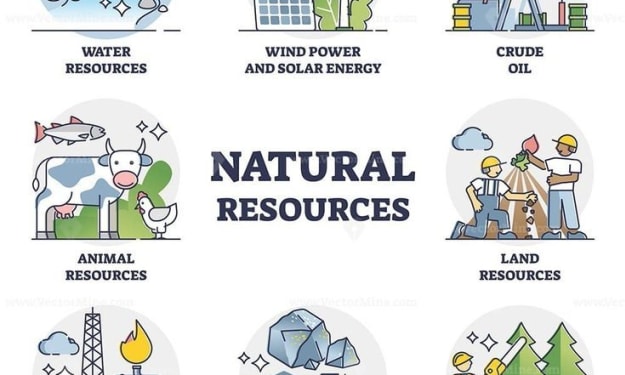
Natural resources are materials and substances that occur in nature and can be utilized for economic gain and human well-being. These resources include water, air, minerals, forests, wildlife, and fossil fuels. They are essential for the survival and development of human societies, providing the raw materials for food, shelter, energy, and industrial products. Understanding the types, uses, management, and challenges associated with natural resources is crucial for sustainable development. Types of Natural Resources Natural resources can be broadly categorized into renewable and non-renewable resources. 1. Renewable Resources: Renewable resources are those that can be replenished naturally over relatively short periods of time. They include: Water: Essential for all forms of life, water is used for drinking, agriculture, industry, and sanitation. It is replenished through the water cycle, involving evaporation, condensation, precipitation, and runoff. Forests: Forests provide timber, fuel, food, and medicinal plants. They play a critical role in regulating the climate, maintaining biodiversity, and protecting watersheds. Solar Energy: Derived from the Sun, solar energy is harnessed using photovoltaic cells and solar thermal systems for electricity generation and heating. Wind Energy: Wind energy is captured using wind turbines to produce electricity. It is a clean and renewable source of power. Biomass: Biomass includes plant and animal materials used for energy production, such as wood, crop residues, and manure. It is a renewable energy source when managed sustainably. Geothermal Energy: This energy is derived from the Earth’s internal heat and can be used for electricity generation and direct heating applications. 2. Non-Renewable Resources: Non-renewable resources are those that exist in finite quantities and cannot be replenished within a human timescale. They include: Fossil Fuels: Coal, oil, and natural gas are fossil fuels formed from the remains of ancient plants and animals. They are the primary sources of energy for transportation, electricity generation, and industrial processes. Minerals: Minerals such as iron, copper, gold, and aluminum are extracted from the Earth for use in construction, manufacturing, and technology. Once depleted, they cannot be replaced. Nuclear Fuels: Uranium and thorium are used in nuclear reactors to generate electricity. These resources are finite and require careful management due to their radioactive nature. Uses of Natural Resources Natural resources are utilized in various ways to support human activities and economic development. Key uses include: 1. Agriculture: Soil: Soil is a critical resource for agriculture, providing the medium for growing crops. Fertile soil supports food production and sustains livelihoods. Water: Irrigation is essential for agriculture, especially in arid and semi-arid regions. Water resources are used to cultivate crops and raise livestock. 2. Industry: Minerals: Minerals are fundamental to industrial activities. Iron and aluminum are used in construction and manufacturing, while rare earth elements are vital for electronics and renewable energy technologies. Energy: Fossil fuels, nuclear energy, and renewables power industries, driving economic growth and development. 3. Construction: Timber: Forests provide timber for construction, furniture, and paper products. Sustainable forestry practices ensure a continuous supply of wood. Sand and Gravel: These materials are used in construction for making concrete, roads, and buildings. 4. Transportation: Fossil Fuels: Oil is the primary energy source for transportation, fueling cars, trucks, ships, and airplanes. The transition to renewable energy sources is ongoing to reduce dependence on fossil fuels. 5. Energy Production: Fossil Fuels: Coal, oil, and natural gas are burned to generate electricity. They have been the dominant energy sources for decades but are being gradually replaced by cleaner alternatives. Renewables: Solar, wind, hydroelectric, and geothermal energy are increasingly used for electricity generation, reducing greenhouse gas emissions and environmental impacts. 6. Technology: Minerals: Rare earth elements, lithium, and other minerals are essential for the production of electronic devices, batteries, and renewable energy systems. The demand for these resources is growing with technological advancements. Management of Natural Resources Effective management of natural resources is crucial for ensuring their sustainability and minimizing environmental impacts. Key management practices include: 1. Conservation: Protected Areas: Establishing national parks, wildlife reserves, and marine protected areas helps conserve biodiversity and ecosystems. Sustainable Forestry: Practices such as selective logging, reforestation, and afforestation ensure that forests are managed sustainably. 2. Sustainable Agriculture: Soil Management: Techniques like crop rotation, cover cropping, and organic farming maintain soil fertility and prevent erosion. Water Management: Efficient irrigation systems, rainwater harvesting, and watershed management optimize water use in agriculture. 3. Renewable Energy Development: Investment: Investing in renewable energy infrastructure, research, and development reduces dependence on fossil fuels and promotes clean energy. Policy: Implementing policies and incentives for renewable energy adoption encourages the transition to sustainable energy sources. 4. Recycling and Reuse: Materials Recycling: Recycling metals, plastics, and paper reduces the demand for raw materials and minimizes waste. Circular Economy: Promoting a circular economy where products are designed for reuse, repair, and recycling enhances resource efficiency. 5. Pollution Control: Regulations: Enforcing environmental regulations and standards limits pollution from industrial activities, agriculture, and transportation. Technologies: Developing and adopting cleaner technologies and practices reduces emissions and environmental contamination. Challenges and Solutions The sustainable management of natural resources faces several challenges, including: 1. Overexploitation: Problem: Overexploitation of resources such as forests, fisheries, and minerals leads to depletion and environmental degradation. Solution: Implementing sustainable harvesting practices, quotas, and regulations ensures that resource use does not exceed regenerative capacities. 2. Climate Change: Problem: Climate change affects water availability, agriculture, and ecosystems, exacerbating resource scarcity. Solution: Mitigating climate change through reducing greenhouse gas emissions, transitioning to renewable energy, and enhancing carbon sequestration. 3. Pollution: Problem: Pollution from industrial activities, agriculture, and urbanization contaminates air, water, and soil, harming ecosystems and human health. Solution: Implementing pollution control measures, adopting cleaner technologies, and promoting sustainable practices. 4. Habitat Destruction: Problem: Deforestation, urban expansion, and infrastructure development lead to habitat loss and biodiversity decline. Solution: Protecting natural habitats, restoring degraded ecosystems, and promoting land-use planning that balances development and conservation. 5. Resource Inequity: Problem: Unequal access to resources leads to social and economic disparities, with marginalized communities often facing resource scarcity and environmental degradation. Solution: Promoting equitable resource distribution, community-based resource management, and policies that address social and environmental justice. 6. Governance: Problem: Weak governance and lack of enforcement of environmental laws lead to resource mismanagement and illegal exploitation. Solution: Strengthening governance frameworks, enhancing transparency and accountability, and involving local communities in resource management. Conclusion Natural resources are the foundation of human society, providing essential materials and services for survival and development. Effective management and conservation of these resources are crucial for ensuring their sustainability and minimizing environmental impacts. Addressing challenges such as overexploitation, climate change, pollution, habitat destruction, resource inequity, and governance requires coordinated efforts at local, national, and global levels. By adopting sustainable practices, investing in renewable energy, promoting conservation, and enhancing governance, we can ensure that natural resources continue to support human well-being and ecological balance for future generations.
By Goleti thirumal 2 years ago in Earth
Windward Islands Bracing for Potential Hurricane Hit on Monday. Content Warning. AI-Generated.
In conclusion, the Windward islets face a potentially significant rainfall event with the approach of Implicit Tropical Cyclone Two. By taking visionary way and remaining watchful, communities can more repel the storm’s impact and safeguard lives and property.e Windward islets are presently on high alert as they prepare for a implicit hurricane that could make landfall on Monday. The National Hurricane Center( NHC) has issued tropical storm warnings for several areas, motioning the possibility of severe rainfall conditions in the coming days. Current Situation A tropical surge, linked as Implicit Tropical Cyclone Two, is advancing towards the southern Windward islets. As of the rearmost updates, the system was located roughly 700 long hauls east- southeast of the islets and moving west at a speed of 15 to 20 mph. The NHC has projected a 70 chance of development within the coming 48 hours, adding to 90 over the coming five days. This surge is anticipated to bring heavy rains and winds of tropical storm force to the region late Tuesday into Wednesday. Areas Under trouble The tropical storm warning covers Trinidad and Tobago, Grenada, and their dependences . The storm's impact will probably include heavy downfall and strong winds, with the eventuality to beget significant dislocation. residers in these areas, as well as along the northern seacoast of Venezuela and the ABC islets, have been advised to cover the storm's progress nearly. Preparedness Measures Given the impending trouble, original authorities and residers are taking necessary preventives to alleviate the impact of the storm. These measures include Securing Property icing that homes and businesses are fortified against strong winds by securing doors, windows, and any loose objects that could come shells. Grazing inventories Accumulating essential inventories similar as food, water, specifics, and exigency accoutrements to sustain through implicit outages and dislocations. Evacuation Plans Reviewing and, if necessary, streamlining evacuation plans to insure a nippy and orderly move to safer areas if needed. Meteorological Factors The development of Implicit Tropical Cyclone Two is being nearly covered by meteorologists. crucial factors impacting the storm's progression include ocean face Temperatures Warm ocean face temperatures of around 82 °F are conducive to the storm's intensification. Wind Shear Light wind she
By Shuvra Dar2 years ago in Earth
The Dance of Earth
The Earth, our celestial home, is a marvel of motion and precision in the vast expanse of the universe. Its movements—both rotational and orbital—are fundamental to the rhythms of life, the passage of time, and the evolution of our planet's climate. In this exploration, we delve into the fascinating mechanisms behind why the Earth moves faster at certain times and in specific contexts.
By Jophiel williamson2 years ago in Earth
Today's World
The world is accelerating, and the paradigm has shifted. What once was science fiction is quickly becoming our present reality. As we face the tectonic shifts in our world, we must ask: How can society thrive amidst constant economic disruption? How do we keep pace with the rapid flow of information? There are cities ahead of the curve, creating tools for tomorrow. We aim to innovate with real-world impact. Imagine a self-sustained Singapore in food production, envisioning the city 40 years ahead. This could be a model for the future.
By Omokunmi Jemilat Yetunde 2 years ago in Earth
EARTH
The Earth is the third planet from the Sun and the only known place in the universe that supports life. It has a diverse environment composed of land, water, and air, creating a range of habitats and ecosystems. Structure and Composition Core: The Earth has a solid inner core made primarily of iron and nickel, surrounded by a liquid outer core that generates the planet's magnetic field. Mantle: Above the core is the mantle, a layer of semi-solid rock that slowly flows and moves, driving plate tectonics. Crust: The Earth's outermost layer is the crust, a thin, solid shell divided into continental and oceanic plates. Atmosphere and Climate The Earth’s atmosphere is a mixture of nitrogen (78%), oxygen (21%), and other gases. It plays a crucial role in regulating temperature, protecting life from harmful solar radiation, and enabling weather patterns and the water cycle. The climate varies from tropical to polar, driven by factors like solar radiation, ocean currents, and atmospheric circulation. Water and Life About 71% of the Earth's surface is covered by water, primarily in oceans, with smaller amounts in rivers, lakes, and glaciers. Water is essential for all known forms of life, influencing climate and supporting diverse ecosystems. Biosphere The biosphere encompasses all living organisms and their interactions with the environment. It includes ecosystems ranging from forests and grasslands to deserts and oceans. Biodiversity, the variety of life forms, is crucial for ecosystem stability and resilience. Geological Activity The Earth is geologically active, with processes like plate tectonics, volcanic eruptions, and earthquakes shaping its surface. These processes create mountains, valleys, and ocean basins and play a vital role in the carbon cycle and nutrient distribution. Human Impact Humans have significantly impacted the Earth’s environment through activities like deforestation, pollution, and greenhouse gas emissions, leading to climate change and biodiversity loss. Sustainable practices are essential to mitigate these effects and preserve the planet for future generations. In summary, the Earth is a dynamic and complex planet with a delicate balance of systems that support life. Understanding and protecting these systems is crucial for the well-being of all its inhabitants. About Earth 1000 words ChatGPT The Earth: A Comprehensive Overview The Earth, our home planet, is a unique and dynamic world teeming with life. It is the third planet from the Sun and the fifth largest in the solar system. Understanding Earth's structure, composition, climate, ecosystems, and human impact is crucial for appreciating its complexity and addressing the challenges it faces. Structure and Composition 1. Core: At the heart of the Earth lies the core, composed of two parts: a solid inner core and a liquid outer core. The inner core, with a radius of about 1,220 kilometers, is primarily made of iron and nickel and remains solid due to immense pressure despite its high temperature, estimated to be around 5,400°C. Surrounding the inner core is the liquid outer core, about 2,200 kilometers thick. The movement of molten metal in this layer generates the Earth's magnetic field, which shields the planet from solar wind and cosmic radiation. 2. Mantle: Above the core is the mantle, a thick layer of rock extending up to 2,900 kilometers from the Earth's surface. The mantle is composed of silicate minerals rich in magnesium and iron. While mostly solid, it behaves plastically over geological time scales, allowing for the slow, convective movement that drives plate tectonics. This process is responsible for the creation and destruction of the Earth's crustal plates. 3. Crust: The Earth's outermost layer is the crust, a thin, rigid shell divided into continental and oceanic regions. Continental crust is thicker (averaging about 35 kilometers) and composed primarily of granitic rocks, while oceanic crust is thinner (averaging about 7-10 kilometers) and primarily basaltic. The crust is broken into tectonic plates that float on the semi-fluid upper mantle (asthenosphere). Plate interactions cause earthquakes, volcanic activity, and the creation of mountain ranges. Atmosphere and Climate The Earth’s atmosphere is a vital layer of gases enveloping the planet, composed mainly of nitrogen (78%), oxygen (21%), and trace amounts of other gases such as argon, carbon dioxide, and water vapor. This mixture of gases supports life and regulates the planet's climate. 1. Layers of the Atmosphere: The atmosphere is divided into several layers based on temperature gradients: Troposphere: Extending up to about 12 kilometers above the Earth's surface, this layer contains most of the planet's weather, as it holds the majority of the atmosphere's water vapor and aerosols. Stratosphere: Ranging from 12 to 50 kilometers, it contains the ozone layer, which absorbs and scatters ultraviolet solar radiation. Mesosphere: Extending from 50 to 85 kilometers, this layer is where most meteorites burn up upon entering the Earth's atmosphere. Thermosphere: From 85 to 600 kilometers, temperatures rise significantly, and it is home to the ionosphere, which reflects radio waves and facilitates communication. Exosphere: Extending from the top of the thermosphere out into space, it is a thin, outermost layer where atmospheric particles escape into space. 2. Climate: Earth's climate is influenced by its position relative to the Sun, the tilt of its axis, and the movement of ocean currents and atmospheric circulation. The planet experiences diverse climatic zones: Tropical: Near the equator, characterized by warm temperatures and significant rainfall. Arid and Semi-Arid: Found in regions like deserts, with minimal precipitation and extreme temperatures. Temperate: Located in mid-latitudes, with moderate temperatures and distinct seasons. Polar: Near the poles, characterized by extremely cold temperatures and ice-covered landscapes. Water and Life Water covers about 71% of the Earth's surface, primarily in oceans, with smaller amounts in rivers, lakes, and glaciers. This vast presence of water plays a crucial role in shaping the planet's climate, supporting ecosystems, and sustaining life. 1. Hydrosphere: The hydrosphere encompasses all of Earth's water, including oceans, ice caps, glaciers, rivers, lakes, and underground aquifers. The water cycle, driven by solar energy, involves the processes of evaporation, condensation, precipitation, and runoff, distributing water across the planet and regulating climate. 2. Oceans: The Earth's oceans are vast bodies of saltwater that regulate climate by absorbing and storing solar energy, distributing heat through currents, and influencing weather patterns. They are home to diverse ecosystems, from coral reefs to deep-sea vents, supporting a wide range of marine life. 3. Freshwater Systems: Freshwater is vital for terrestrial life and is found in rivers, lakes, and groundwater. These systems provide drinking water, irrigation for agriculture, and habitats for numerous species. Wetlands, which include marshes, swamps, and bogs, are crucial for water purification, flood control, and supporting biodiversity. Biosphere The biosphere encompasses all living organisms on Earth and their interactions with the environment. It includes diverse ecosystems such as forests, grasslands, deserts, and oceans, each supporting unique communities of plants, animals, and microorganisms. 1. Ecosystems: Ecosystems are dynamic communities of living organisms interacting with their physical environment. Key ecosystems include: Forests: Vital for carbon sequestration, climate regulation, and habitat provision. They include tropical rainforests, temperate forests, and boreal forests. Grasslands: ChatGPT can make mistakes.
By Goleti thirumal 2 years ago in Earth