Science
Ozempic Explained: What You Need to Know About Pop Culture’s New Favorite Weight Loss Drug
Disclaimer: I am not a medical practitioner. This article is for entertainment and educational purposes only. If you are interested in semaglutide as a medical option, please consult a qualified health practitioner to determine if this option is right for you. Always approach online medical information with skepticism.
By Olivia L. Dobbs2 years ago in Earth
Impact on Biodiversity: How climate change affects various species and ecosystems.
In the heart of the Amazon rainforest, where the dense canopy of emerald leaves filters the sunlight into a mosaic of green and gold, life thrived in an intricate dance of interdependence. The air was thick with the hum of insects, the calls of birds, and the rustle of animals moving through the underbrush. This was a world teeming with biodiversity, a masterpiece of nature's design, where every creature, from the tiniest ant to the mightiest jaguar, played a vital role. But the harmony of the Amazon was under siege. The invisible enemy was climate change, a force so pervasive and relentless that it began to unravel the delicate web of life that had taken millions of years to weave. Marina, a biologist who had devoted her life to studying the rainforest, could feel the change deep in her bones. She had spent years trekking through the dense foliage, cataloging species, and marveling at the sheer diversity of life. But recently, her excitement had been replaced by a gnawing dread. The signs were everywhere. The first to suffer were the plants. Some species of trees, unable to cope with the rising temperatures and erratic rainfall patterns, began to wither. The once-thriving canopies turned patchy, creating gaps that let in more sunlight than the forest floor could bear. This sudden change in light and temperature disrupted the delicate balance that many plants and animals relied on. Marina noticed that the orchids, which had once bloomed in riotous colors, were becoming scarce. These delicate flowers, so sensitive to changes in their environment, were some of the first casualties. She remembered a specific species, the Amazonian Lady's Slipper, whose vibrant pink blossoms had once dotted the forest like jewels. Now, they were nowhere to be found. As the plants suffered, so did the animals that depended on them. The brilliant blue morpho butterflies, which relied on the orchids for nectar, became rare sightings. Marina recalled a time when she would see them fluttering through the trees in dazzling swarms. Now, they appeared only occasionally, their numbers dwindling. The changes in the forest also affected the food chain. With fewer plants to feed on, herbivores like the howler monkeys struggled to find enough sustenance. Marina had grown accustomed to the deep, resonant calls of the howler monkeys echoing through the trees each morning. But those calls grew fainter and less frequent, a haunting reminder of the forest's decline. Predators, too, were not immune. The jaguars, apex predators of the Amazon, found it increasingly difficult to hunt as their prey became scarcer. Marina had always considered herself fortunate to have witnessed these majestic cats in their natural habitat. She remembered the thrill of spotting a jaguar's sleek form moving silently through the underbrush, its golden eyes piercing through the foliage. But those encounters became rare, and the thought of a rainforest without its apex predator filled her with a profound sense of loss. Even the rivers that snaked through the forest were not spared. The changing climate altered rainfall patterns, leading to more frequent and severe droughts. The once mighty Amazon River, a lifeline for countless species, began to shrink. Fish populations declined, and with them, the animals that relied on them for food. The pink river dolphins, with their playful antics and curious nature, were among the victims. Marina remembered the first time she had seen these gentle creatures, their pink bodies gliding gracefully through the water. Now, their numbers were dwindling, and their future seemed uncertain. As the days turned into months, Marina's despair deepened. She felt like a witness to a slow-motion catastrophe, powerless to stop it. The forest, once a place of wonder and discovery, now felt like a graveyard. Every walk through the trees was a painful reminder of what had been lost. But amid the sorrow, there were glimmers of hope. Marina knew that nature had an incredible capacity for resilience. If given a chance, the forest could heal. She dedicated herself to conservation efforts, working tirelessly to protect the remaining fragments of the Amazon. She collaborated with local communities, raising awareness about the importance of preserving the rainforest and implementing sustainable practices. One day, while exploring a particularly remote part of the forest, Marina stumbled upon a small grove of Amazonian Lady's Slippers. The sight of the delicate pink flowers brought tears to her eyes. It was a sign that, despite everything, life persisted. The forest, though battered and bruised, still had the capacity for renewal. Marina's discovery rekindled her determination. She knew that the battle against climate change was far from over, but she also knew that giving up was not an option. The Amazon, with all its complexity and beauty, was worth fighting for. In the years that followed, Marina saw the fruits of her labor. Conservation efforts began to bear fruit, and some areas of the forest showed signs of recovery. The calls of the howler monkeys grew stronger, the blue morpho butterflies returned in greater numbers, and the rivers flowed with renewed vigor. The journey was far from easy, and the threat of climate change still loomed large. But Marina held on to the hope that, with continued effort and global cooperation, the Amazon and its incredible biodiversity could be preserved for future generations. The forest's silent cry had been heard, and there were those who were willing to answer.
By Goodness Mannese 2 years ago in Earth
NASA's Moon mission hits a tangle: $450 million wanderer dropped in the midst of financial plan misfortunes
NASA's ambitious plan to return to the Moon has encountered a significant hurdle. The agency recently announced the cancellation of a $450 million lunar rover project, a decision driven by escalating budgetary pressures and a reassessment of mission priorities. This development marks a noteworthy setback for NASA’s Artemis program, which aims to establish a sustainable human presence on the Moon by the end of the decade.
By Tammareddy Anuradha2 years ago in Earth
Unveiling the Mysteries of Our Enigmatic Planet: A Journey Through Twenty Unexplained Wonders
Our planet holds numerous enigmatic places that continue to mystify scientists and captivate our imagination. Let's delve into the mysteries surrounding twenty extraordinary locations around the world that challenge our understanding and leave us in awe.
By Pascal Francis2 years ago in Earth
what if the sun exploded
The Sun is about 10 billion years old but is expected to last only another 5 billion years. After that, it will expand into a red giant before shrinking to become a white dwarf, a dying star cooling for billions of years. We will all be long gone before any of this happens, but can you imagine watching the Sun blow up before your very eyes?
By Shinzou Wo sasageyo2 years ago in Earth
what if you fell into a black hole
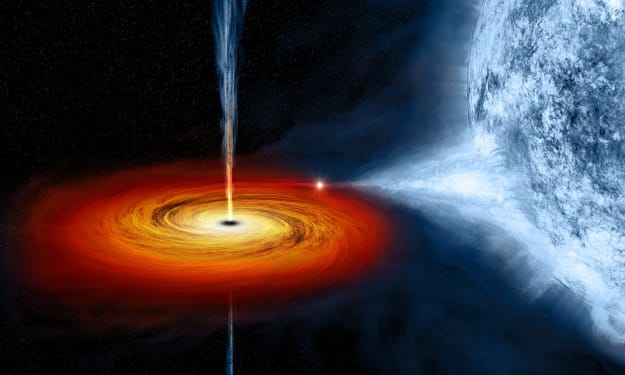
How much do you know about black holes? What would happen if you fell into one? Imagine you’re exploring space, searching for a new planet for humans to inhabit, and you come across a black hole. Curious, you decide to check it out. Would you have any chance of survival? How would you get out? Would there be a shortcut to another universe? This is “What If,” and here’s what would happen if you fell into a black hole.
By Shinzou Wo sasageyo2 years ago in Earth
How big is the Universe?
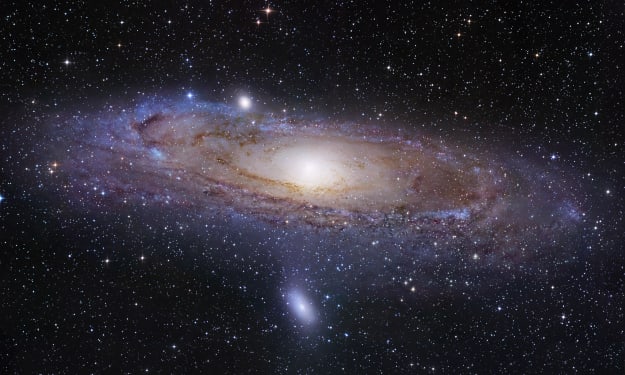
Earth, our home planet, is a tiny blue dot floating in the immense cosmic ocean. Here resides everyone you ever knew, every human who ever lived, and every story ever told. This is where our journey begins. As we zoom out beyond our atmosphere, past the Moon, beyond the familiar planets and the Sun, we embark on an epic quest—a quest to grasp the true scale of our universe.
By Shinzou Wo sasageyo2 years ago in Earth
Good morning Mr. Tojo
Hideki Tojo was born in Tokyo in 1884 to a prestigious Samurai family, which greatly influenced his upbringing and family dynamics. The resistance faced by Tokugawa Yamochi's policies from traditionalist daimyos and Samurai, particularly in regions like Satsuma and Choshu, led to the formation of the Sancho Alliance. The defeat of the Tokugawa shogunate in the Boshin War from 1868 to 1869 resulted in the restoration of Emperor Meiji to power. Japan's territorial expansion in the late 19th century, including the acquisition of the Ryukyu Islands and Taiwan, solidified its influence in East Asia. The Meiji Constitution established the emperor as a supreme leader with significant policy-making authority, contributing to the rise of powerful militarists due to the lack of government control. Hideki Tojo's strict and traditional education system upbringing shaped him into a disciplined and opinionated individual with a strong sense of duty towards the emperor. His military training in Germany and involvement in international organizations, such as the League of Nations, further molded his character and beliefs. Tojo's meticulous nature was evident in his detailed diaries, particularly regarding his children's health.
By Isaac Ekow Anyidoho2 years ago in Earth