Science
The Bermuda Triangle
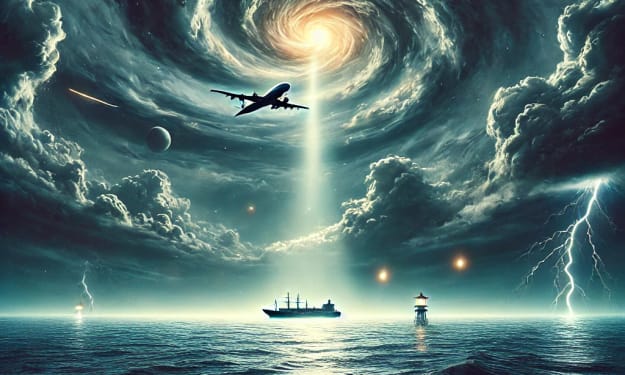
The Bermuda Triangle, also known as the Devil’s Triangle, is one of the world’s most enduring mysteries. Located in the western part of the North Atlantic Ocean, this loosely defined triangular region spans between Miami, Bermuda, and Puerto Rico. Over the years, countless ships and airplanes have reportedly disappeared under unexplained circumstances, sparking endless theories and speculation. Is it the work of supernatural forces, a portal to another dimension, or simply a misunderstood region plagued by natural phenomena? Let’s dive into the facts, myths, and scientific explanations surrounding the Bermuda Triangle.
By OWOYELE JEREMIAH2 years ago in Earth
A Groundbreaking Discovery on the Moon: The Presence of Subsurface Liquid Water and Its Implications
Abstract Recent lunar exploration missions have uncovered evidence of subsurface liquid water beneath the Moon’s surface, a discovery that challenges previous assumptions about the Moon’s dry nature. This paper explores the significance of this finding, including its implications for future lunar exploration, the search for extraterrestrial life, and its potential role in sustaining human presence beyond Earth.
By Amor Zella Gold2 years ago in Earth
Eco-Friendly Materials That Brands Are Loving Right Now
Hey, have you noticed? Sustainable Packaging Is Everywhere! Seriously, look all around. Your favorite coffee brand? Probably using recyclable cups. That fancy skincare line? Compostable jars. Even Amazon’s swapping out plastic for paper-based alternatives.
By Mahbub Murshed2 years ago in Earth
The Riches of the Amazon Rainforest: A History of Wealth and Mystery. AI-Generated.
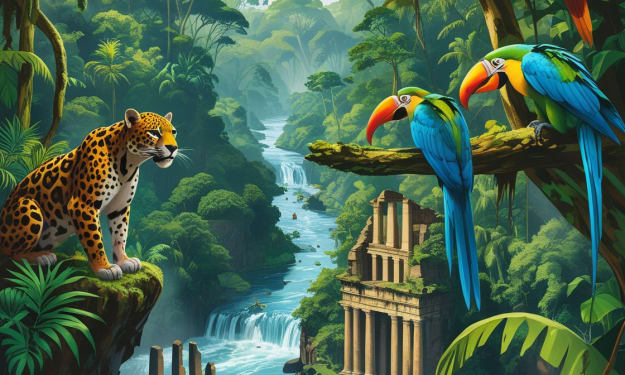
The History and Net Worth of the Amazon Rainforest Introduction The Amazon Rainforest, often referred to as the "lungs of the Earth," is one of the most significant natural ecosystems on the planet. Spanning over nine countries in South America, it covers approximately 5.5 million square kilometers. The Amazon's history dates back millions of years, evolving into a diverse and rich biome that sustains over 10% of the world’s known species. Beyond its ecological importance, the Amazon holds immense economic value, from timber and minerals to pharmaceutical and agricultural resources. Estimating the net worth of the Amazon Rainforest is challenging, but its contributions to global biodiversity, climate stability, and economic potential make it invaluable. Ancient History and Indigenous Inhabitants Long before European explorers arrived, the Amazon was home to advanced indigenous civilizations. Archaeological findings suggest that complex societies thrived in the region over 12,000 years ago, with settlements, roads, and even early forms of agriculture. The indigenous tribes utilized the rainforest’s vast resources sustainably, relying on hunting, fishing, and medicinal plants for survival. Even today, over 400 indigenous groups call the Amazon home, preserving their traditional knowledge and cultural heritage. European Exploration and Colonial Exploitation The first European explorer to traverse the Amazon was Francisco de Orellana in 1542. The Spanish expedition encountered vast landscapes, uncharted rivers, and indigenous warriors. With the colonization of South America, European powers began exploiting the Amazon’s resources. The rubber boom of the late 19th and early 20th centuries brought wealth to industrialists but devastated indigenous communities. Extractive industries, including gold mining and logging, further intensified during colonial rule, leading to large-scale deforestation and ecosystem damage. Economic Value of the Amazon Rainforest The Amazon Rainforest has an immense economic worth, with its resources spanning multiple industries:
By Say the truth 2 years ago in Earth
7 Enormous Animals That Went Extinct. Content Warning.
Friends.... If we go back in time, we find that almost every modern-day animal has a dangerous and large version, and moreover, 90% of the fossils in this world have not yet been discovered, so there must be many species of animals that we cannot even imagine.
By Mohammed thanvir2 years ago in Earth
Constipation in the Cosmos
1. The Stars Were Shaken by the Blockage The cosmos had ceased to move. Trade routes were shut down. The wormholes would not open. Like a tourist who has consumed too many dubious space burritos, the majestic arms of galaxies twitched in distress as the great spirals of galaxies halted. The cosmic energy was flowing naturally, but something, somehow, was obstructing it.
By MD HUMAYUN KABIR2 years ago in Earth
The Rise of AI in Everyday Life: How It’s Changing the Way We Live
Artificial Intelligence (AI) has rapidly transformed from a futuristic concept into an integral part of our everyday lives. Whether it's a voice assistant like Siri, personalized shopping recommendations, or the algorithms that power social media platforms, AI is everywhere. In this article, we will explore how AI is revolutionizing various aspects of our lives, from the home to the workplace, and its potential to shape the future.
By The Universal Pen2 years ago in Earth
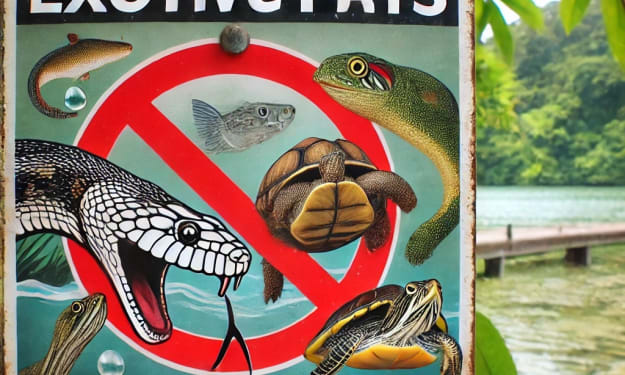
The Silent Invaders: How Invasive Species Threaten Ecosystems and Biodiversity
Introduction Nature thrives on balance, with ecosystems forming over thousands of years through intricate interactions between species. However, when an invasive species enters a new habitat, this delicate balance is disrupted. Invasive species—non-native organisms that spread rapidly and harm native ecosystems—are one of the biggest threats to biodiversity worldwide. Their impact extends beyond ecological damage, affecting economies, agriculture, and even human health.
By InkForChange2 years ago in Earth