Science
Scientists Just Solved the Loch Ness Monster Mystery
scientists have finally solved the loch nest monster mystery here's the spoiler you ready it's not a real monster it's probably a dinosaur that survived Through the Ages or just a bunch of debris floating on the water thanks to many findings on the loch nest creature we have proof of another story to tell you it was 1933 when a man named George Spicer and his wife were driving along the shores of Loch Ness that's when they saw something massive with a long neck moving across the road looked like a creature straight out of the prehistoric era a dinosaur like Beast unlike anything they'd ever seen that was the moment that loch nest monster theories started spreading around like wildfire one of the most famous Lock Des monster sightings came just a year later in 1934 when a man took a photograph that became the most well-known image of Nessie that's the nickname she was given she anyway the photo known as the surgeon's photograph showed a long neck creature rising out of the water and for years it convinced people that the monster was real but years later the truth came out one of the men who helped take the photo confessed it was all a hoax the photo had been staged after all when the photo was published it had been significantly cropped this made the animal in the picture look much bigger than in real life fueling the theories that the loch nest monster did in fact exist exist in the 1960s one of the first big scientific attempts to investigate the mystery of the loch nest monster happened a research team took sonar equipment to the lake and spent hours scanning the waters in search of evidence of large creatures what they found was puzzling they recorded several objects moving deep in the lock or lake with no clear explanation as to what it was though the team didn't manage to capture anything definitive this sighting helped fuel the belief that there was indeed something massive living in Loch Ness after that research about the mystery of the Loch Ness monster kept popping up in 1972 with the help of underwater photography some researchers managed to capture strange images which got people's hopes up for a minute but the truth is this early research about the Loch Ness monster was far from conclusive now of course not everyone bought into the mystical magical theories about The Lochness Monster Theory 1 from a professor of zoology at Oxford University has made it clear that the monster is a biological impossibility hey my pediatrician said that about me too meanwhile he says that no skeletal remains have ever been found in the region plus no fishermen have ever caught anything resembling the creature in their fishing nets for him this works as proof that it simply can't be real when it comes to the famous photos of the loch nest monster as evidence well that's pretty simple the professor offers a more downto Earth explanation he argues that these images are either showing floating debris or birds like corant which have long necks and often appear to be low in the water when people refute his suggestion he takes us back to human psychology and explains that people often make mistakes and misjudge the size of things especially when they just caught a glimpse of it and even more so when they are hoping to see something specific now many of those alleged photos depict an animal with a long neck and a small head which has led some to believe that what they're seeing is a placosa a giant Marine reptile that lived 215 million years ago and disappeared with a dinosaurs the idea of a plesiosaur surviving all these years is a theory that's been around since the first sightings of the creature but this researcher isn't buying it m he explains that no plesiosaur fossils have been found in the region dating to anything later than 66 million years ago the idea of a prehistoric creature still lurking in the waters of Loch Ness just doesn't hold up scientifically then there's Theory number two from a British naturalist who has spent over 50 years investigating the loch nest monster phenomenon his conclusion is a little less dramatic he believes that most people who report sightings of long neck creatures are misidentifying other animals He suggests people think they are seeing a sea serpent reports of sightings from the loch nest monster have been around since the 6th Century CE long before they were distilling Scotch whiskey or other explanations early reports of these SE serpents describe large creatures with long snake-like bodies and multiple humps some say the creatures were as big as boats and many swore they saw something swimming in the waters many of these early sea serpent sightings may have been misunderstandings or exaggerations of normal animals in the lock like large fish or even swimming Birds they could have been large eels which are known to live in loch nest these eels especially when they're moving might have given the impression of a long undulating creature in the water people who saw these eels from a distance particularly in low light or Misty conditions might have mistaken them for something much more mysterious Theory number three says something else Nessie is just a series of standing waves these happen when two boat wakes move in opposite directions creating a big hump in the water that could look like a Creature From a Distance Loch Ness enthusiasts even showed how it works with footage from Fort Augustus where a river meets Loch Ness these enthusiasts had big plans to use drones with infrared cameras and special underwater microphones to search the lock Now Loch Ness is massive stretching around 23 M long and more than 700 ft deep so they thought they needed drones and infrared cameras to put an end to this discussion but despite everything they haven't found Nessie but it's not only the loch net monster that lacks scientific explanation there have also been scores of sightings of Yetis and sat squatches that no one can really explain folks have made movies dreaming of finding the truth about these creatures but according to recent research and evidence it looks unlikely that we'll ever find definitive evidence of their existence science says they can explain Squatch sightings and this is how biologists who study Wildlife using camera traps which are set up in remote areas to capture images of passing animals have long attempted to find elusive species these cameras detect movement and snap pictures providing invaluable data on the biodiversity of different ecosystems as camera traps collect more photos over time the number of species recorded grows however after a while the number plateaus suggesting that no new species are being detected while it's impossible to claim 100% certainty researchers say that after significant camera deployment it's safe to say the likelihood of discovering new species especially large ones like Bigfoot or the yeti dropped significantly camera trap Studies have been running for years in regions where these creatures are rumored to live but so far no conclusive evidence has surfaced instead the supposed proof of bigfoot or the yeti often comes from blurry photos or shaky videos taken by individuals who claim to have encountered them the scientific understanding of biology also makes the existence of Bigfoot highly unlikely often described as a great ape Bigfoot would have had to evolve in North America however great apes evolved in Africa and the only great ape to make it to the Americas is homo sapiens whose ancestors crossed the bearing straight only about 16,000 years ago this is far too short a time for a new species like Bigfoot to have evolved while it may be disappointing for these mysterious creature enthusiasts the scientific evidence points firmly toward the conclusion that creatures like Bigfoot and the yeti are more fantasy than reality after Decades of extensive scientific research it's safe to say that yes science has solved the mystery of the Loch Ness monster and it's pure fiction so what do you think
By Riya singhabout a year ago in Earth
What is the average cost of solar installation in San Diego?
Are you considering solar installation in San Diego? You're not alone. With abundant sunshine and high electricity costs, many homeowners are turning to solar energy to reduce their bills and environmental impact. But one question looms large: What's the average cost of solar installation in America's Finest City?
By Sahil Bhavsarabout a year ago in Earth
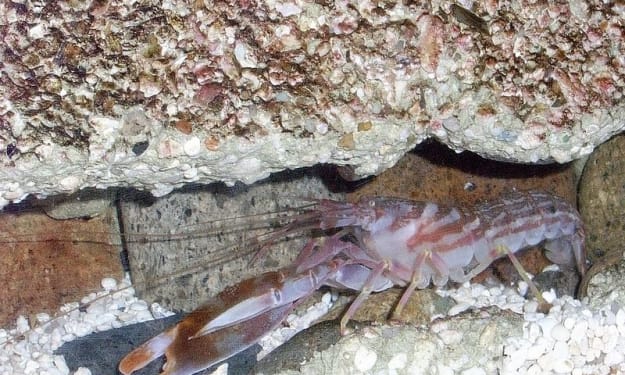
Pistol Shrimp: The Tiny Creature with a Loud, Lethal Snap
Hidden beneath the ocean’s surface is a tiny creature with a shocking power — one that rivals Goku’s Kamehameha. This isn’t anime, but real life. This small creature snaps its claw so fast that it generates an explosive burst of energy, similar to Goku’s iconic attack — just on a much smaller scale. The snap is so powerful that it briefly heats the surrounding water to the temperature of the Sun’s surface and even creates a flash of light. But what exactly is this incredible creature, and what makes it so unique?
By Shubham Mauryaabout a year ago in Earth
The Role of AI in Optimizing Solar Energy Production
Picture a world where the sun's energy is harnessed with unprecedented efficiency, powering our homes, businesses, and cities with clean, renewable power. Now imagine that this solar revolution is being driven not just by human ingenuity, but by the relentless computational power of artificial intelligence.
By Sahil Bhavsarabout a year ago in Earth
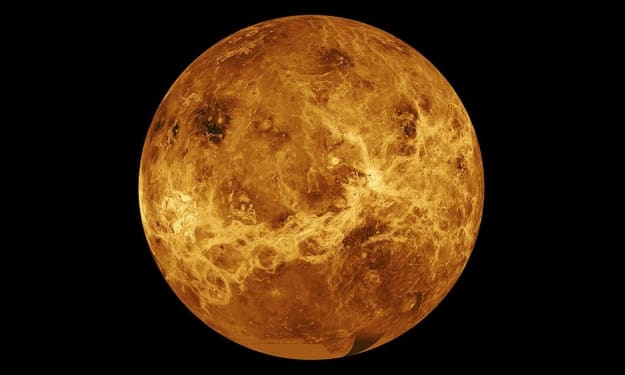
Future missions to the planet Venus
The international scientific community urges a study of the planet's atmosphere and surface in situ and a higher resolution mapping that allows us to better understand the surface and solve several unknowns of the planet's past and present. Models of the planet's formation and evolution suggest a more benign past, with the possible existence of oceans of water on the surface. On the other hand, we do not know if it currently has active volcanism or is a dead planet geologically speaking.
By Dima Prystupaabout a year ago in Earth
Water Stress: A Global Challenge
Over the next 20 years, there is a growing risk of water insecurity worldwide due to increased demand and depleting supply. Poor governance, insufficient resource management, unsustainable development methods, inefficient agriculture, and environmental degradation all contribute to this problem by reducing the amount and quality of water. Water insecurity will be worse in developing countries, although some industrialized countries will also have serious problems. If these concerns are not addressed, nations may face a variety of issues, such as political instability, slow economic growth, inequality, and sickness. Shared water resources are more prone to turning into flash points when global competition heats up and water security deteriorates.
By hailu misganawabout a year ago in Earth
The Oldest Trees in the World and What They Can Teach Us
The ancient trees that have withstood the test of time are not only impressive but also hold deep lessons for humanity. These trees have existed for centuries, some for millennia, and their resilience offers a glimpse into the wisdom of nature. Here is a closer look at some of the oldest trees on the planet and the valuable lessons they can teach us:
By AQUÁ PLANTASabout a year ago in Earth
Morning Sounds from a Different Era
When Emma woke up, the sun had just started to rise, and the gentle, golden glow of dawn seemed to last a little longer than normal. As though attempting to jog a buried memory, the morning light traced patterns on the wooden floor as it seeped through the drapes. The feeling that the morning carried something both distant and familiar, like the hum of an old song she could not quite recall the lyrics to yet knew all too well, was not the first time she had experienced it.
By MD SHAMIM RANAabout a year ago in Earth
The Invisible Revolution: How Quantum Computing Will Redefine Reality
# The Invisible Revolution: How Quantum Computing Will Redefine Reality In the quiet labs of tech giants, startups, and academic institutions, a revolution is brewing—one that promises to transform the very fabric of our reality. This revolution, in contrast to the flashy advancements in artificial intelligence and the rapid expansion of smartphones, is not visible to the naked eye. It operates at the subatomic level, harnessing the bizarre and counterintuitive laws of quantum mechanics. This is the era of quantum computing, and it is poised to redefine everything we know about computation, science, and the limits of human ingenuity.
By Taiyab Ahmedabout a year ago in Earth