Science
Oceans and Seas: The Blue Worlds That Pulse with Life
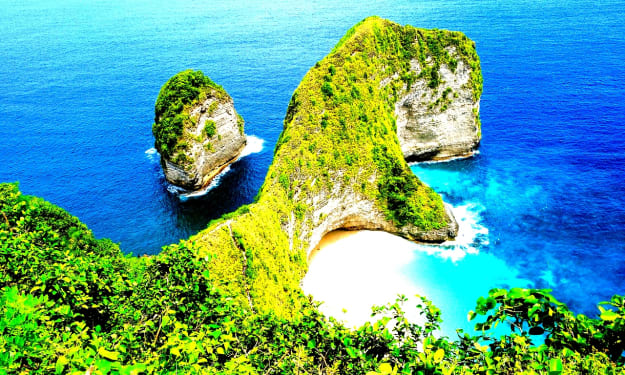
Oceans and Seas: The Blue Worlds That Pulse with Life Covering more than 70% of the Earth's surface, the oceans and seas are not just vast expanses of water; they are the heartbeats of our planet. These immense bodies of water play a crucial role in shaping the world as we know it, affecting everything from the climate and weather to the biodiversity of life forms that thrive in their depths. But despite their significance, we often overlook the ocean's profound influence on our daily lives.
By Omar Mohammed about a year ago in Earth
Humanity’s Rebirth
When the Earth went silent, it wasn’t sudden. It began with small things: fewer transmissions, patchy data, then entire satellite arrays that went dark. At first, the crew of the Aetheris—the last interstellar ark sent from Earth—chalked it up to solar interference or system malfunctions. But deep down, they knew something was wrong.
By Muhammad Sabeelabout a year ago in Earth
Echoes from Earth
The silence of space was absolute—until the day he heard it. Commander Reuben Kale floated alone aboard the Oasis-7, a deep-space research vessel that had long outlived its original mission. Earth had fallen silent seventy-two years ago, its last broadcast a garbled emergency transmission swallowed by static. No one knew what had truly happened—only that the blue marble that once brimmed with life now spun quietly in the darkness, its atmosphere choked and unstable, its surface abandoned.
By Muhammad Sabeelabout a year ago in Earth
Trump is sending his national security adviser Mike Waltz to the UN in a shakeup . AI-Generated.
Trump Sends National Security Adviser Mike Waltz to the UN: A Dramatic Shake-Up in the White House In a move that has stirred both surprise and criticism, President Donald Trump has removed National Security Adviser Mike Waltz from his post and nominated him as the United States Ambassador to the United Nations. This decision, coming just within the first 100 days of Trump’s second term, marks a significant reshuffling within the highest levels of the U.S. government.
By sayma farzana tamimaabout a year ago in Earth
The Giant That Waits
Deep in the steaming heart of the Sumatran rainforest, where mist clings to trees and every leaf seems alive, a secret lay hidden beneath the soil. It wasn’t a tree or a vine or a towering fern. It was something stranger, something quieter—a waiting giant.
By Basil Sargurohabout a year ago in Earth
The Sahara's Hidden Fortune: Calculating the True Net Worth of the World's Greatest Desert. AI-Generated.
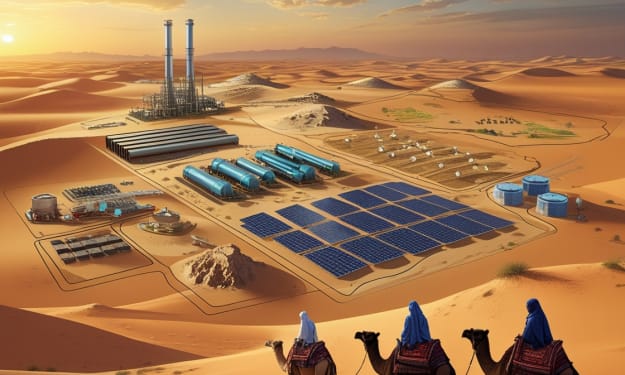
The Mongol War Machine: The Largest Imperial Army in History Summary: Under the leadership of Genghis Khan, the Mongol Empire rose from the steppes of Central Asia to forge the largest contiguous empire the world has ever seen. Central to this conquest was a massive and highly organized military force—estimated at over a million strong at its peak. This article explores the rise, structure, and tactics of the Mongol army, detailing how it conquered lands from China to Eastern Europe through speed, discipline, and revolutionary strategy. The Mongol army remains one of history’s most formidable and influential military forces. You said: Create a article about the networth of the sahara desert more than 700 words ChatGPT said: Title: The Wealth of Sand: Calculating the Net Worth of the Sahara Desert Summary: Stretching across 11 countries and over 9.2 million square kilometers, the Sahara Desert is often viewed as a barren wasteland. However, beneath its sands lie untapped riches—ranging from oil and gas reserves to rare minerals, solar energy potential, and even tourism opportunities. This article explores the hidden wealth of the Sahara Desert and attempts to estimate its staggering net worth, which could rival some of the world's richest regions. Introduction: More Than Just Sand The Sahara Desert, the largest hot desert in the world, spans across North Africa—covering countries like Algeria, Libya, Egypt, Sudan, Chad, Mali, Mauritania, Morocco, Niger, Tunisia, and Western Sahara. For most people, the Sahara conjures images of endless sand dunes, scorching heat, and lifeless terrain. Yet, this vast expanse is far from worthless. In fact, the Sahara is home to enormous natural resources that contribute significantly to the economies of several African nations—and it holds the key to a potential future of global energy and rare mineral wealth. 1. Oil and Natural Gas Reserves Some of the richest underground assets in the Sahara are petroleum and natural gas reserves. Countries like Algeria and Libya rely heavily on oil exports sourced from Saharan basins. For example: Algeria is the third-largest gas supplier to Europe and holds the 10th-largest natural gas reserves in the world. Its Hassi R'Mel field is one of the largest in Africa. Libya, before its civil unrest, held Africa’s largest proven oil reserves, most of which are found in the Sirte Basin, deep in the desert. Together, these Saharan oil and gas fields generate tens of billions of dollars annually. According to estimates, the proven oil reserves alone in the Sahara exceed 50 billion barrels, with current market prices suggesting a valuation of over $4 trillion USD. 2. Mineral Wealth Beneath the Sand Beyond hydrocarbons, the Sahara is home to critical minerals used in modern technologies. These include: Uranium: Niger is one of the world’s top producers, and its uranium mines in the Sahara power nuclear energy worldwide. Gold: Mali and Sudan have vast desert mining operations producing hundreds of tons of gold. Phosphate: Morocco’s Saharan region holds some of the richest phosphate deposits, essential for agriculture. These minerals play an essential role in industries from energy to electronics and food production. The collective estimated value of exploitable mineral wealth in the Sahara is easily in the hundreds of billions, if not trillions. 3. Solar Energy: A Powerhouse for the Future The Sahara receives over 4,000 hours of sunlight per year, making it one of the most solar-rich regions on Earth. Scientists and engineers have long imagined turning the Sahara into a solar power farm capable of generating electricity for entire continents. Projects like Desertec, though still in developmental stages, propose the installation of massive solar arrays across the desert to supply Europe and Africa with clean energy. If just 1% of the Sahara were covered with solar panels, it could generate over 20 times the electricity that the entire world uses today. The potential market value of such energy production is incalculable, but conservative projections place it in the range of several trillion dollars if fully developed. 4. Tourism and Cultural Heritage Though difficult to quantify compared to minerals or oil, the Sahara holds tourism and cultural value: Destinations like the Erg Chebbi dunes in Morocco, Siwa Oasis in Egypt, and the Tassili n’Ajjer rock formations in Algeria draw adventurous travelers. Archaeological sites, such as prehistoric rock art, ancient trade routes, and Berber and Tuareg cultural landmarks offer significant heritage appeal. Tourism revenue is modest now due to instability and harsh climate, but it could generate billions annually with improved infrastructure and political stability. 5. Strategic Geopolitical Value The Sahara is not just about resources—it also holds immense strategic value: It connects sub-Saharan Africa with the Mediterranean world. It houses key transnational pipelines, roads, and migration routes. Its vast open spaces are of military interest and influence regional security.
By Say the truth about a year ago in Earth
The Infinite Universe: We Cannot Be Alone
The universe is vast — so vast that it defies our comprehension. No matter how hard we try to grasp the true scale of the cosmos, we fall short because its size is so enormous, it borders on the infinite. Yet, within this incomprehensibly large space, one question continues to tantalize our imaginations: Are we truly alone in the universe? With hundreds of billions of galaxies, each containing billions or even trillions of stars, the idea that Earth is the only planet hosting life seems implausible. From the enormity of the universe to the probabilities of alien life, let’s explore why we may not be the only intelligent beings in existence.
By The Spotlightabout a year ago in Earth
Human Population is growing?. AI-Generated.
Have you ever taken a moment to really think about human civilization? What’s going on with us? I bet most people don’t. In this modern era, we’ve become consumers—not just of products, but of thoughts, trends, distractions. Nobody questions anymore. But let me show you something different, something you might not have considered.
By Syed Naimul Kamalabout a year ago in Earth
New Record! 6 Rockets Launch in Less Than 24 Hours. AI-Generated.
In a remarkable achievement that underscores the rapid advancement of global space capabilities, six rockets were successfully launched within a span of less than 24 hours—a new record in the history of space exploration. This extraordinary feat involved a combination of government space agencies and private companies, reflecting both international cooperation and healthy competition in the race to expand humanity’s reach into space. The launches, which took place between April 29 and April 30, 2025, were staggered across different continents and time zones, showcasing the global nature of modern space operations. The missions ranged from deploying satellites for communications and Earth observation to delivering critical supplies to the International Space Station (ISS). A Global Effort The first launch of the sequence was executed by SpaceX from Cape Canaveral, Florida. A Falcon 9 rocket carried a new batch of Starlink satellites, further expanding the company's growing constellation aimed at providing global broadband internet. Just three hours later, China’s Long March 6A took off from the Taiyuan Satellite Launch Center, delivering a set of Earth observation satellites to orbit. Russia followed suit with a Soyuz launch from Baikonur Cosmodrome, sending a Progress cargo ship loaded with supplies for the ISS. Meanwhile, India’s space agency, ISRO, launched its PSLV rocket from Sriharikota, successfully placing a weather monitoring satellite into a precise orbit. Not to be outdone, Europe’s Arianespace completed the fifth launch with a Vega rocket from French Guiana, which carried multiple small satellites for various international clients. The record-breaking streak concluded with a surprise entry: a Rocket Lab Electron launch from New Zealand, deploying a microsatellite designed for scientific research. Pushing the Boundaries This series of launches highlights how the space industry has evolved in recent years. The simultaneous advancement of reusable rocket technology, miniaturization of satellites, and the growth of private space companies have contributed to an unprecedented pace of launches. Experts point out that the surge in space activity is not merely a matter of breaking records. "Each launch contributes to critical infrastructure for communications, science, and security," noted Dr. Elena Martínez, a space policy analyst. "The fact that we can now see six launches in less than a day reflects both technological progress and the rising demand for space-based services." Challenges and Risks While the achievement is impressive, it also raises concerns about space traffic management and orbital debris. With thousands of satellites already in orbit and many more planned, experts warn that the risk of collisions is increasing. International efforts are underway to establish clearer regulations and improved tracking systems to keep space safe for future operations. Additionally, environmental groups have highlighted the growing carbon footprint of frequent rocket launches. Companies like SpaceX and Rocket Lab are already working on ways to make launches more sustainable, including reusability and cleaner fuels. Looking Ahead The success of these six launches marks a turning point for space exploration and utilization. With plans for lunar missions, Mars exploration, and even space tourism accelerating, the pace of activity is expected to grow even faster in the coming years. Governments and private enterprises alike are investing heavily in next-generation rockets and infrastructure. The dream of a multi-planetary species, once the stuff of science fiction, is inching closer to reality thanks to achievements like this. In the words of NASA Administrator Bill Nelson, “This record is not just a number—it’s a testament to human ingenuity, global collaboration, and our relentless curiosity about the universe.” As humanity continues to reach for the stars, milestones like this remind us of how far we’ve come—and how much farther we can still go.
By Dhananjay Sikdarabout a year ago in Earth
World history or global history as a field of historical study examines history from a global perspective. It emerged centuries ago; some leading practitioners are Voltaire, Hegel, Karl Marx, Oswald Spengler, and Arnold J. Toynbee. The field became much more active in the late 20th
The study of human societies from ancient times to the present day is the subject of the vast and intricate field of world history. It encompasses political, economic, social, cultural, and technological developments, exploring interactions between civilizations, empires, nations, and peoples.
By Md.Abdur Roufabout a year ago in Earth
Neon Skies of Arcturon
The city of Arcturon gleamed like a monument to perfection—skybridges coiling between diamond towers, airborne trains whispering past the clouds, and a sky so full of neon that stars had been forgotten. Beneath it all, millions of citizens existed under a perfect algorithm, breathing engineered air and thinking thoughts pre-approved by the city’s Central Intelligence Grid.
By muqaddas shuraabout a year ago in Earth