Nature
Electric Vehicles and the Period of Clean Energy. Content Warning.
As the world wrestles with the need to decrease fossil fuel byproducts and battle environmental change, the reception of electric vehicles (EVs) and clean energy has become basic. Electric vehicles offer a manageable and effective option in contrast to customary burning motors, while clean energy sources, for example, sunlight based and wind power, give the vital fuel to their activity. This article investigates the groundbreaking capability of electric vehicles and clean energy in guiding a greener and more supportable future.
By Unathi Matshanda3 years ago in Earth
The Last Wilderness. Content Warning.
Starting from the beginning of humankind, we have focused on the stars with amazement and interest. In ongoing many years, space investigation has advanced at an extraordinary speed, prompting surprising revelations and pushing the limits of human accomplishment. This article dives into the entrancing domain of room investigation and analyzes the possibilities of room colonization, examining the likely advantages, challenges, and moral contemplations related with wandering past Earth.
By Unathi Matshanda3 years ago in Earth
Embracing Possible Living. Content Warning.
In a world wrestling with natural difficulties, the requirement for feasible living and eco-accommodating practices has become more basic than any time in recent memory. Taking on a reasonable way of life includes settling on cognizant decisions to limit our ecological effect and save the planet for people in the future. This article investigates the significance of feasible living and gives reasonable tips to consolidating eco-accommodating practices into our day to day routines.
By Unathi Matshanda3 years ago in Earth
The weather and the climate
Weather refers to state of the atmosphere at a specific time and place, including temperature, humidity, precipitation, wind speed and direction, and atmospheric pressure. It describes the day-to-day and short-term variations in atmospheric conditions. Weather conditions can change rapidly and are influenced by various factors such as air masses, fronts, solar radiation, and local geography. Weather forecasts are predictions of future weather conditions based on current observations and computer models.sClimate, on the other hand, refers to the long-term patterns of weather in a particular region over a period of several decades or more. It is the average weather conditions, including temperature, precipitation, humidity, and wind patterns, observed over a prolonged period. Climate is influenced by factors such as latitude, elevation, ocean currents, land surface features, and atmospheric composition. Climate change refers to long-term shifts in these patterns due to natural variability or human activities, such as the emission of greenhouse gases.While weather can vary significantly from day to day and place to place, climate provides a broader perspective and describes the typical conditions expected in a region. Weather is the short-term variation we experience on a daily basis, while climate represents the long-term average of those variations. Studying weather helps us understand immediate atmospheric conditions, while studying climate helps us comprehend long-term trends and potential changes in weather patterned Humans and technology have significant impacts on weather and climate through various mechanisms. Here are some of the key ways in which human activities and technological advancements influence weather and climate:Greenhouse Gas Emissions: The burning of fossil fuels (coal, oil, and natural gas) for energy production, transportation, and industrial processes releases large amounts of carbon dioxide (CO2) and other greenhouse gases into the atmosphere. These gases trap heat from the sun, leading to the greenhouse effect and causing global warming. The increase in greenhouse gas concentrations is the primary driver of anthropogenic climate change.Deforestation: Deforestation, primarily for agriculture, urbanization, and timber extraction, contributes to climate change. Trees absorb CO2 through photosynthesis, acting as carbon sinks. Removing forests reduces the Earth's capacity to absorb CO2, leading to higher concentrations of greenhouse gases in the atmosphere.Land Use Changes: Altering land surfaces through urbanization, agriculture, and deforestation can affect local and regional weather patterns. Urban areas, for example, generate heat islands, where temperatures are higher than surrounding rural areas due to the absorption and release of heat by buildings and pavement.Aerosol Emissions: Human activities, such as the burning of fossil fuels and biomass, also release aerosols (tiny solid or liquid particles) into the atmosphere. These aerosols can directly influence weather and climate by scattering and absorbing sunlight, affecting cloud formation and properties. They can also act as cloud condensation nuclei, altering cloud formation and precipitation patterns.Air Pollution: Industrial activities and vehicle emissions release pollutants, including sulfur dioxide (SO2), nitrogen oxides (NOx), and particulate matter, into the atmosphere. These pollutants can affect weather and climate by altering the reflectivity of clouds, reducing solar radiation reaching the Earth's surface, and impacting atmospheric stability and the formation of weather systems.Weather Modification: Humans have developed technologies to modify weather patterns artificially. Cloud seeding, for example, involves introducing substances such as silver iodide into clouds to enhance precipitation. While the effectiveness and long-term impacts of weather modification techniques are still debated, they can locally influence weather patterns.Technological Advances: Technological advancements in weather monitoring and prediction have significantly improved our understanding of weather patterns and our ability to forecast them. Sophisticated weather satellites, radar systems, weather models, and data collection networks provide valuable information for forecasting and studying weather and climate.It's important to note that while humans and technology influence weather and climate, the Earth's natural systems also play a crucial role. Natural climate variability, such as volcanic eruptions and solar radiation changes, can temporarily influence weather and climate patterns. However, the current trend of anthropogenic climate change indicates that human activities are the dominant drivers of long-term climate change.
By Felix Teye Kofi3 years ago in Earth
Journey Through the Cosmos:
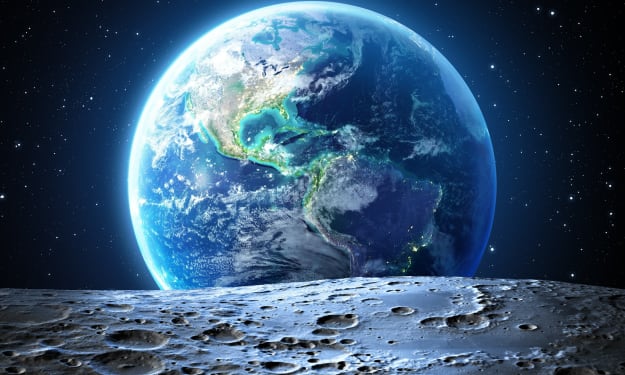
Have you ever gazed up at the night sky, wondering about the vastness of the universe and our place within it? Join me on an incredible journey as we embark on a captivating exploration of our home planet, the Moon, and the wonders of our solar system. In this article, we'll delve into the mysteries of space in a way that's both fascinating and easy to understand. So, fasten your seatbelts and let's begin our cosmic adventure!
By ZHEMING XING3 years ago in Earth
Heart Transplantation
The human heart, beating over 100,000 times a day, tirelessly pumps five liters of blood throughout the body every minute. However, unlike resilient skin and bones, the heart has limited regenerative capabilities. Thus, severe damage to this vital organ often necessitates its replacement, leaving medical professionals with a sole solution: heart transplantation.
By Henrik Leandro Laukholm Solli3 years ago in Earth
The Scribe's Legacy: Unearthing the Secrets of Ancient Egypt
Chapter 1: The Enigmatic Scribe In the heart of Cairo, amidst the bustling streets and the whispers of ancient tales, a young historian named Amelia Collins embarked on a life-changing adventure. She had dedicated her entire life to the study of ancient Egypt, and her dream was to uncover the secrets buried within the tombs and artifacts of this enigmatic civilization.
By Anthony Gatimu3 years ago in Earth
Unveiling the Wonders of the Moon: A Journey into Earth's Mysterious Satellite
The Moon is Earth's only natural satellite and is the fifth-largest moon in the Solar System. It is about 1/6th the size of Earth, with a diameter of approximately 3,474 kilometers (2,159 miles). The Moon is about 384,400 kilometers (238,900 miles) away from Earth, on average. It takes the Moon approximately 27.3 days to complete one orbit around the Earth. This period is known as the sidereal month. The Moon's gravity is about 1/6th of Earth's gravity, which means a person weighing 60 kilograms (132 pounds) on Earth would weigh approximately 10 kilograms (22 pounds) on the Moon. The Moon does not have an atmosphere, which means it lacks weather, wind, and erosion. It also means there is no sound on the Moon, as sound requires a medium to travel through. The Moon's surface is covered in craters, mountains, valleys, and basins. The large round depressions, called impact craters, were formed by collisions with asteroids and comets over billions of years. The Moon has no liquid water on its surface, but scientists have found evidence of water ice in permanently shadowed regions near the lunar poles. The Moon experiences phases due to its position relative to the Sun and Earth. The phases include new moon, crescent, first quarter, gibbous, full moon, and waning phases. The Moon has been visited by humans. The first crewed mission to the Moon was Apollo 11 in 1969, and a total of six Apollo missions landed astronauts on the Moon between 1969 and 1972.The Moon has a relatively low density compared to Earth, indicating that it has a smaller iron core. Its composition is primarily made up of rocks, such as basalt and anorthosite. The Moon's surface is covered in a layer of fine, powdery soil called regolith, which is the result of billions of years of meteorite impacts breaking down the rocks. The Moon's rotation is synchronized with its orbit around Earth, which means it always shows the same face to us. This phenomenon is known as "tidal locking." The Moon has no magnetic field of its own. However, small pockets of magnetism have been detected on its surface, likely remnants from when the Moon had a magnetic field in the past. The temperature on the Moon's surface can vary significantly. During the day, temperatures can reach about 127 degrees Celsius (261 degrees Fahrenheit), while at night, they can drop to around -173 degrees Celsius (-280 degrees Fahrenheit). The Moon has been instrumental in shaping Earth's tides. Its gravitational pull causes the oceans to bulge, creating high and low tides as Earth rotates on its axis. The Moon has a very thin atmosphere called an exosphere. It is composed of extremely low-density gases, including helium, neon, and hydrogen, but it is so thin that individual molecules can escape into space. Moonquakes, similar to earthquakes on Earth, have been detected on the Moon. They are generally much weaker but can last longer due to the Moon's rigid structure. The Moon's surface is heavily cratered, but it also has large flat areas known as maria (Latin for "seas"). These regions were once thought to be filled with water but are actually ancient basaltic lava flows. The Moon has been a source of inspiration for art, literature, and mythology throughout history. It has been a symbol of beauty, romance, and mystery in various cultures worldwide.The Moon's gravity affects Earth's axial tilt, which is responsible for the stability of our planet's climate. Without the Moon's stabilizing influence, Earth's tilt could vary significantly over time, leading to extreme climate changes. The Moon has been used as a calibration target for telescopes and cameras. By capturing images of the Moon, astronomers can assess the resolution and performance of their instruments. Lunar eclipses occur when the Earth passes between the Sun and the Moon, casting a shadow on the Moon's surface. There are three types of lunar eclipses: total, partial, and penumbral. The Moon has been visited by unmanned spacecraft from various countries. Apart from the Apollo missions, robotic missions such as the Soviet Union's Luna program and NASA's Lunar Reconnaissance Orbiter have provided valuable data about the Moon's surface and environment. The Moon's formation is believed to have resulted from a collision between early Earth and a Mars-sized object called Theia. This impact is thought to have ejected material that eventually coalesced to form the Moon.
By Ajith Kumar3 years ago in Earth