Nature
Unravelling the Enigma: The Quantum Double-Slit Experiment
The quantum double-slit experiment is one of the most famous and fascinating experiments in the field of quantum mechanics. It highlights the peculiar nature of particles at the quantum level, where they can exhibit both particle-like and wave-like properties simultaneously. In this experiment, particles such as electrons or photons are passed through a barrier containing two parallel slits, and their behavior is observed on a screen behind the barrier. Surprisingly, the particles exhibit an interference pattern, indicating wave-like behavior, even when they are sent through the slits one at a time. This phenomenon challenges our classical intuition and has profound implications for our understanding of the fundamental nature of reality.
By Jacqueline Leigh3 years ago in Earth
Footprints in the Sand. Content Warning.
In the small coastal village of Xanadu, the winds whispered tales of change, carrying with them the scent of salt and uncertainty. Here, amidst a community bonded by generations of shared experiences, lived a young woman named Layla. Her world was a delicate balance between land and sea, but as the effects of climate change took hold, her home began to crumble beneath the weight of rising tides.
By Kade Quervo3 years ago in Earth
Bee Population Decline and Paul Stamet's Solution
The decline of bee populations has become a global concern with significant implications for pollination and ecosystem health. As crucial pollinators, bees play a vital role in plant reproduction, supporting biodiversity and ensuring food security. To address this pressing issue, Paul Stamets, a renowned mycologist and environmentalist, has proposed an innovative solution that harnesses the power of fungi. This report explores the causes of bee population decline, highlights the importance of bees, and delves into Stamets' ground-breaking approach using fungi to restore and protect bee populations.
By Jacqueline Leigh3 years ago in Earth
The Healing Power of Nature
Nature has long been recognized as a source of solace and tranquillity, offering respite from the fast-paced modern world. Beyond subjective experiences, there is growing scientific evidence supporting the notion that a walk in nature can have profound effects on both the mind and body. Moreover, this connection with nature is often described as deep, vibrational, and spiritual, fostering a sense of harmony with the Earth. This report delves into the scientific understanding of how a walk in nature can induce relaxation, reduce stress, and establish a profound connection with the natural world.
By Jacqueline Leigh3 years ago in Earth
Shadow of the Green
The scorching sun bore down on the cracked earth, its relentless heat suffocating the air. Adanma stood on a hill overlooking the once lush landscape of her homeland, Nigeria. Tears welled in her eyes as she surveyed the desolation before her, where shadows of green seemed to fade into a distant memory.
By King yakzon3 years ago in Earth
Community Unites
ChatGPT In the heartland of Colorado, a small town called Meadowbrook rested peacefully beneath the vast expanse of the sky. It was a place where the community thrived on the simplicity of life and found solace in the embrace of nature. But on one fateful day, the tranquility was shattered by an impending storm that would test the resilience of its inhabitants.
By karena wood3 years ago in Earth
Building a Sustainable Future Say No To Food Shortages
Throughout history, humanity has faced the devastating consequences of poverty, food shortages, and famine. The neglect of agricultural practices and reliance on unpredictable weather patterns have often resulted in widespread hunger and suffering. However, with modern technology and innovative farming methods, we have the opportunity to revolutionize the way we produce food. By embracing futuristic and advanced under-glass high-tech farming, both on a large scale and within local communities, we can ensure a consistent food supply, reduce our carbon footprint, and empower individuals to take control of their own food production. This article explores the historical context of famines, the potential of high-tech farming inspired by Holland's flower industry, and how each of us can contribute by transforming our gardens into flourishing allotments.
By Jacqueline Leigh3 years ago in Earth
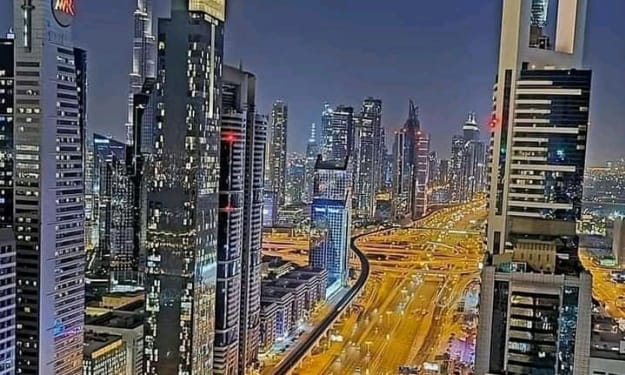
Essay About Dubai. Content Warning.
Dubai is one of the most famous cities in the United Arab Emirates. It has become a global hub for tourism, business, and culture. The city has experienced rapid growth and development over the past few decades, transforming from a small fishing village into a modern metropolis. Dubai is located on the coast of the Persian Gulf on the Arabian Peninsula. The city has a hot desert climate with little rainfall and high humidity, especially in the summer months. However, the city's infrastructure has found ways to combat this climate through air conditioning, water management, and greenery. The city's economy is primarily based on tourism, trade, and financial services. Dubai has become a popular travel destination due to its beautiful beaches, luxury hotels, shopping malls, and other attractions. The city also has a massive port that handles large amounts of trade between Europe, Asia, and Africa. Additionally, Dubai has developed into a financial center, especially for Islamic finance. Oil reserves also played an important role in Dubai's initial development but have since declined. Some of Dubai's most famous attractions include the world's tallest building, the Burj Khalifa; the palm-shaped artificial islands; the Dubai Mall, one of the world's largest shopping malls; and the Dubai Fountain, a choreographed water, music and light show. The city also hosts world-class events and exhibitions at venues like the Dubai World Trade Center. Dubai's rapid transformation has mainly been possible due to the vision and leadership of Sheikh Mohammed bin Rashid Al Maktoum, the current ruler of Dubai. Under his leadership, the city has invested heavily in infrastructure, tourism projects, and economic diversification. However, Dubai has also faced some criticisms for its reliance on migrant workers, lack of political freedom, and economic volatility. Despite its rapid growth, Dubai still faces a number of challenges. The city's economy remains heavily dependent on oil, tourism and real estate, making it vulnerable to global economic downturns. There are also concerns about overbuilding and a real estate bubble. Additionally, Dubai's population is primarily made up of migrant workers from South Asia and the Middle East who face issues related to low pay, unsafe working conditions and lack of rights. However, Dubai's leaders continue to pursue an ambitious vision of transforming the city into a global hub and center of innovation. The government has introduced initiatives aimed at economic diversification, developing knowledge-based industries and improving sustainability. Dubai has also hosted major international events like Expo 2020, which was postponed to 2021 due to the COVID-19 pandemic. In conclusion, Dubai has become an iconic example of rapid urban transformation through vision, planning and investment. The city has built world-class infrastructure, developed a diverse economy and established itself as a global tourism and business hub. However, Dubai also faces challenges related to sustainability, inequality and overreliance on specific industries. With continued leadership and adaptation, Dubai has the potential to build upon its successes while working to address its shortcomings as it moves into the future. Dubai is one of the seven emirates that make up the United Arab Emirates. It is located on the southeast coast of the Persian Gulf and has emerged as a global city and business hub of the Middle East. Dubai is known for its shopping malls, luxury resorts and man-made islands. The city has a high standard of living and is the most populous city in the UAE. It has a diverse population with more than 200 nationalities living there. Dubai's recorded history began in the early 18th century. It started as a small fishing village and pearl diving center. In the early 1900s, Dubai discovered large amounts of oil on its territory which led to a boom in population and infrastructure development. By the 1950s, Dubai's economy was thriving due to revenues from trade, tourism and its oil industry. However, the oil reserves were limited and depleted quickly. In the 1960s and 1970s, Dubai's ruler Sheikh Rashid bin Saeed Al Maktoum began an aggressive development strategy to diversify Dubai's economy beyond oil. He invested heavily in infrastructure projects including ports, airports, roads and telecommunications. He also introduced policies to attract foreign investment and talent. These initiatives laid the foundation for Dubai's meteoric rise in the decades that followed. By the 1980s, Dubai had established itself as a regional center for re-export trade. In the 1990s, the government began investing heavily in the tourism industry. Dubai received a major boost in 2000 when it won the bid to host the annual 'Dubai Shopping Festival'. This led to a tourism and real estate boom in the emirate. In the 2000s, Dubai launched several major infrastructure projects including the Palm Islands, the Burj Khalifa, Dubai Mall and many more. These projects transformed the city into a major tourist destination and global business hub. However, the global financial crisis of 2008 hit Dubai hard due to its over-reliance on real estate and tourism. The emirate was forced to seek financial assistance from Abu Dhabi to avoid defaulting on its debt obligations. Despite the crisis, Dubai's economy has rebounded strongly in recent years due to government initiatives to diversify the economy and attract foreign investment. Today, Dubai is a major destination for business, tourism, retail, media and aviation. It is home to the world's busiest airport for international passenger traffic and the Middle East's largest port. The emirate also has a rapidly growing knowledge-based economy focusing on sectors like technology, media, education and healthcare. In summary, Dubai's transformation from a small fishing village to a major global city in just a few decades is nothing short of astounding. Visionary leadership, aggressive infrastructure development, policies to attract foreign investment and talent, and world-class tourism and retail offerings have powered Dubai's rise. While still heavily reliant on its service sectors, the emirate is making progress in diversifying its economy through initiatives in sectors like technology, education and healthcare. With a young and ambitious population, Dubai looks set to remain a major force in the Middle East for years to come.Dubai has a very high standard of living with plenty of luxuries and amenities. The city is known for its flashy architecture, opulent hotels, shopping malls and more.
By OSITA EZEMA3 years ago in Earth