Nature
Get a Human at Suddenlink Customer Service | Suddenlink Account Recovery
Get a Human at Suddenlink Customer Service | Suddenlink Account Recovery Introduction In today's digital age, email has become an indispensable tool for communication and staying connected. Suddenlink is a popular email service that offers a wide range of features and benefits to its users. However, like any other service, there may be times when you encounter issues or need assistance with your Suddenlink account. In such cases, it can be frustrating to navigate automated phone systems or wait endlessly for a human representative. That's why we're here to help! In this blog, we'll guide you on how to get a human at Suddenlink Customer Service, particularly when it comes to account recovery. You can reach out to Suddenlink Customer Service at 1-888-927-0775 for immediate assistance.
By Bob Marlin3 years ago in Earth
Get a Human at Cox Email Customer Service | Cox Email Account Recovery
Get a Human at Cox Email Customer Service | Cox Email Account Recovery Introduction In today's digital age, email has become an indispensable tool for communication and staying connected. Cox Email is a popular email service that offers a wide range of features and benefits to its users. However, like any other service, there may be times when you encounter issues or need assistance with your Cox Email account. In such cases, it can be frustrating to navigate automated phone systems or wait endlessly for a human representative. That's why we're here to help! In this blog, we'll guide you on how to get a human at Cox Email Customer Service, particularly when it comes to account recovery. You can reach out to Cox Email Customer Service at 1-888-927-0775 for immediate assistance.
By Bob Marlin3 years ago in Earth
Human-Incited Environmental Change Modifying Shade of More than 56% of the World's Seas, Implying Biological system Movements. Content Warning.
Human-prompted environmental change has modified the shade of more than 56% of the world's seas over the most recent 20 years, as per a disturbing report. The review, distributed in the diary Nature, uncovers that tropical sea areas close to the equator have reliably become greener over the long haul. This adjustment of sea tone proposes that biological systems inside the surface sea are likewise going through changes, as the shade of the sea mirrors the creatures and materials present in its waters.
By Shirin Ali3 years ago in Earth
Love for Nature
Once upon a time, in a small coastal town nestled between the cliffs and the sea, there lived a young woman named Ava. From a tender age, Ava had felt a deep and profound connection to the natural world around her. The rhythmic crashing of the waves, the salty breeze that caressed her cheeks, and the vibrant hues of the sunset painted a symphony of emotions within her heart.
By Noah Starray3 years ago in Earth
Surviving the Harsh Conditions: Wildlife Adaptations in Namib Desert
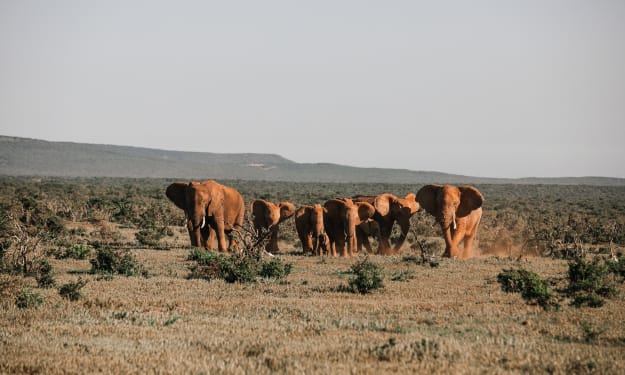
Spanning vast stretches along the coast, the Namib Desert stands as a testament to resilience, boasting the distinction of being the world's oldest desert. Its unforgiving environment, characterized by extreme aridity and formidable conditions, challenges life in profound ways. However, contrary to desolation, the Namib Desert teems with diverse and remarkable wildlife, including the enigmatic desert elephants. With a meager annual rainfall of a mere 20 millimeters and its juxtaposition to the sea, the Namib Desert poses extraordinary obstacles for survival. This article unveils the extraordinary strategies and adaptations harnessed by the denizens of the Namib Desert, enabling them to thrive amidst the harshest of circumstances.
By Anu Preethi Danila D3 years ago in Earth
Silent Sorrows
Introduction: In the vast expanse of time, Earth has been a witness to the ebb and flow of life, an orchestra of diversity that harmoniously played for millions of years. But today, we stand amidst the heart-wrenching symphony of loss, as the ravages of climate change have inflicted irreversible damage on our precious ecosystems and species. The disappearance of coral reefs, the melting of glaciers, and the extinction of countless organisms have left behind a void that cannot be filled. This poignant tale explores the emotional toll of witnessing the unravelling of our world, a lament for the beauty and diversity that once flourished but now exists only in our memories.
By Jonathan Bayoh3 years ago in Earth
Yamuna water level
Once upon a time, in a quaint little town nestled by the banks of the mighty Yamuna River, there lived a community that relied on the river's life-giving waters for their livelihoods. For generations, they had seen the Yamuna flow gracefully through their village, providing sustenance and joy to all who dwelled there. However, in recent times, the townspeople had become anxious as the river's water level began to rise consistently, causing widespread concern and fear. It all started four days ago when the first signs of the river's unusual behavior were noticed. The waters began to surge and swell, creeping closer to the village's humble dwellings. As the days progressed, the villagers watched with trepidation as the water level continued to rise, affecting their farms, homes, and even their beloved temple, which stood proudly on the riverbank. The town's elders convened a meeting to discuss the situation and devise a plan to safeguard their homes and protect their families from the impending danger. Among them was a wise old man named Keshav, known for his deep connection with nature and his ability to read the signs of the environment. Keshav had witnessed the Yamuna's moods for many years and had a profound understanding of its ebbs and flows. Addressing the gathering, Keshav shared his observations, "My friends, we must not lose hope. The Yamuna has sustained us through the years, and I believe it will guide us through this trial as well. Let us come together as a community and face this challenge with resilience and unity." Inspired by Keshav's words, the villagers joined forces to fortify their homes with sandbags, creating makeshift barriers to hold back the surging waters. They toiled day and night, working tirelessly to safeguard their belongings and ensure the safety of their loved ones. Despite their efforts, anxiety lingered in the air as the river showed no signs of relenting. Three days passed, and the water level continued its relentless ascent. The villagers grew weary, their spirits dampened by the seemingly insurmountable challenge before them. But in the face of adversity, they refused to give in to despair. They found solace in each other's company, supporting and encouraging one another, drawing strength from the collective determination that bound them together. As the fourth day dawned, a sense of anticipation filled the air. The villagers watched the river anxiously, hoping for a change in its behavior. And to their amazement and relief, they noticed a subtle shift. The Yamuna, once a relentless force of nature, began to stabilize. The water level remained constant, as if acknowledging the perseverance and resilience of the townspeople. Word spread quickly through the village, and a wave of jubilation washed over the community. It was a moment of triumph, a testament to the power of unity and unwavering faith. The villagers celebrated their victory, grateful for the Yamuna's unwavering support and humbled by the strength they had discovered within themselves. In the weeks that followed, life in the village gradually returned to normal. The river, having found its equilibrium, continued to flow peacefully, blessing the land with its life-sustaining waters. The villagers, forever grateful for the Yamuna's benevolence, established a tradition of honoring the river's resilience and their own strength in the face of adversity. Every year, on the anniversary of the stabilizing of the Yamuna's water level, the townspeople gathered by the riverbank to express their gratitude. They adorned small boats with vibrant flowers and released them onto the water, symbolizing their hopes and dreams floating downstream. With each passing year, the ceremony grew in significance, a testament to the power of collective spirit and the unwavering resilience that had carried them through their darkest days. And so, the story of the Yamuna River and its unwavering stability for three hours after four days of constant increase became a timeless legend, reminding the villagers and generations to come of the indomitable human spirit and the remarkable resilience found in the face of diversity adverdiversity Once upon a time, in a quaint little town nestled by the banks of the mighty Yamuna River, there lived a community that relied on the river's life-giving waters for their livelihoods. For generations, they had seen the Yamuna flow gracefully through their village, providing sustenance and joy to all who dwelled there. However, in recent times, the townspeople had become anxious as the river's water level began to rise consistently, causing widespread concern and fear. It all started four days ago when the first signs of the river's unusual behavior were noticed. The waters began to surge and swell, creeping closer to the village's humble dwellings. As the days progressed, the villagers watched with trepidation as the water level continued to rise, affecting their farms, homes, and even their beloved temple, which stood proudly on the riverbank. The town's elders convened a meeting to discuss the situation and devise a plan to safeguard their homes and protect their families from the impending danger. Among them was a wise old man named Keshav, known for his deep connection with nature and his ability to read the signs of the environment. Keshav had witnessed the Yamuna's moods for many years and had a profound understanding of its ebbs and flows. Addressing the gathering, Keshav shared his observations, "My friends, we must not lose hope. The Yamuna has sustained us through the years, and I believe it will guide us through this trial as well. Let us come together as a community and face this challenge with resilience and unity." Inspired by Keshav's words, the villagers joined forces to fortify their homes with sandbags, creating makeshift barriers to hold back the surging waters. They toiled day and night, working tirelessly to safeguard their belongings and ensure the safety of their loved ones. Despite their efforts, anxiety lingered in the air as the river showed no signs of relenting. Three days passed, and the water level continued its relentless ascent. The villagers grew weary, their spirits dampened by the seemingly insurmountable challenge before them. But in the face of adversity, they refused to give in to despair. They found solace in each other's company, supporting and encouraging one another, drawing strength from the collective determination that bound them together. As the fourth day dawned, a sense of anticipation filled the air. The villagers watched the river anxiously, hoping for a change in its behavior. And to their amazement and relief, they noticed a subtle shift. The Yamuna, once a relentless force of nature, began to stabilize. The water level remained constant, as if acknowledging the perseverance and resilience of the townspeople. Word spread quickly through the village, and a wave of jubilation washed over the community. It was a moment of triumph, a testament to the power of unity and unwavering faith. The villagers celebrated their victory, grateful for the Yamuna's unwavering support and humbled by the strength they had discovered within themselves. In the weeks that followed, life in the village gradually returned to normal. The river, having found its equilibrium, continued to flow peacefully, blessing the land with its life-sustaining waters. The villagers, forever grateful for the Yamuna's benevolence, established a tradition of honoring the river's resilience and their own strength in the face of adversity. Every year, on the anniversary of the stabilizing of the Yamuna's water level, the townspeople gathered by the riverbank to express their gratitude. They adorned small boats with vibrant flowers and released them onto the water, symbolizing their hopes and dreams floating downstream. With each passing year, the ceremony grew in significance, a testament to the power of collective spirit and the unwavering resilience that had carried them through their darkest days. As time went on, the legend of the Yamuna River's stability for three hours after four days of constant increase spread far and wide. People from neighboring towns and villages traveled to witness the remarkable resilience of both the river and its people. The village, once known only for its picturesque surroundings, became renowned as a symbol of unwavering strength and unity. And so, the tale of the Yamuna River and its unwavering stability for three hours after four days of constant increase became a timeless legend, reminding people of the indomitable human spirit and the remarkable resilience found in the face of adversity. The villagers continued to honor the Yamuna, grateful for its unwavering presence and the lessons it had bestowed upon them. And the river, in return, continued to flow serenely, a living testament to the strength and resilience that lay within its waters.
By B.Mubeen ali3 years ago in Earth
The Enchanting Blossom
Once upon a time, nestled deep within the dense jungles of an uncharted land, there bloomed a flower that held an ethereal beauty like no other. Its petals glistened with an otherworldly luminescence, emitting a gentle glow that illuminated the surrounding darkness. This enigmatic bloom was known as the Midnight Lily.
By Tomáš Čáslava3 years ago in Earth
Farming against the odds
Introduction Climate change has emerged as one of the greatest challenges of our time, profoundly impacting various sectors, including agriculture. Rising temperatures, unpredictable weather patterns, and extreme events have transformed the agricultural landscape, compelling farmers to adapt and innovate. This article explores how climate change is reshaping agriculture, highlighting the challenges faced by farmers and the innovative strategies they employ to sustain food production in an increasingly unpredictable environment.
By Sunday Israel 3 years ago in Earth