Nature
Creating the Perfect Home: A Step-by-Step Guide to Setting up a Guppy Aquarium
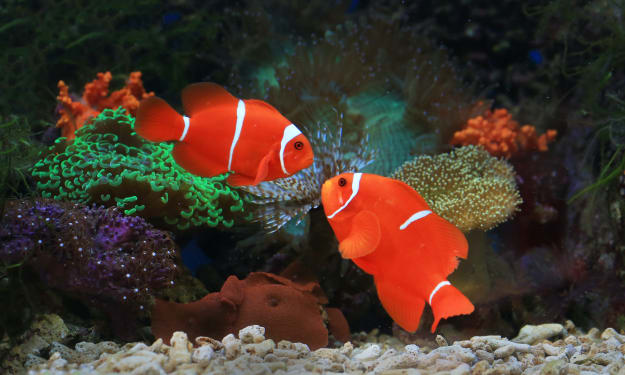
Setting up an aquarium for guppies is a fascinating and fulfilling endeavor that allows you to create a captivating underwater world in your own home. Guppies, with their vibrant colors and playful nature, make for a popular choice among both novice and experienced fishkeepers. In this step-by-step guide, we'll walk you through the process of creating the perfect home for your guppies, including the essential considerations for choosing the best substrate for guppies that suits their needs.
By Bonnie Cronin3 years ago in Earth
The Sanctuary Within
Chapter 1: The Seed of Inspiration Once upon a time, in a bustling city full of high-rise buildings, lived a young woman named Lily. Lily had always admired the beauty of nature but found it challenging to have a garden of her own due to her limited living space. However, her passion for plants never wavered, and she decided to explore the world of indoor gardening. Chapter 2: Researching the Possibilities Lily began her indoor gardening journey by researching different houseplants suitable for her small apartment. She learned about plants that thrived in low-light conditions and required minimal care. With a list in hand, she visited a local nursery and eagerly selected an assortment of greenery to brighten up her living space. Chapter 3: Creating a Tranquil Oasis Setting up her indoor garden was an exciting endeavor. She arranged the plants strategically, considering their lighting needs and aesthetic appeal. Some plants went onto floating shelves attached to the walls, while others found their place on well-lit window sills. Soon, her apartment transformed into an oasis of green, a sanctuary from the concrete jungle outside. Chapter 4: Exploring Herbs and Culinary Adventures Next, Lily focused on growing her herbs, a dream she had nurtured for a long time. Although her kitchen lacked ample sunlight, Lily discovered the art of container gardening. She gathered small pots and filled them with nutrient-rich soil, ready to accommodate her chosen herbs. Chapter 5: Cultivating Aromas and Flavors Lily planted basil, mint, rosemary, and thyme, each in a separate pot. She positioned them near her kitchen window, where they would receive a few hours of sunlight each day. She diligently cared for her herb garden, ensuring they had sufficient water, proper drainage, and occasional feedings of organic fertilizer. Chapter 6: From Garden to Plate As time passed, the fragrance of the herbs filled Lily's apartment, turning her cooking experiences into delightful adventures. She joyfully plucked fresh basil leaves to enhance her pasta dishes, enjoyed the invigorating scent of rosemary while roasting vegetables, and steeped mint leaves in boiling water to create soothing herbal teas. Chapter 7: Finding Joy in Nurturing Not only did Lily's indoor garden provide her with fresh herbs, but it also brought a sense of calm and tranquility to her home. She found solace in nurturing her plants, tending to them with care, and observing their growth day by day. The sight of vibrant green leaves and delicate flowers never failed to uplift her mood. Chapter 8: Spreading the Green Thumb Inspired by her success, Lily began embracing small-scale gardening techniques suitable for limited spaces. She experimented with vertical gardening using hanging planters and vertical plant walls. She even crafted a miniature terrarium, bringing a tiny ecosystem of moss, ferns, and air plants into her living room. Chapter 9: Cultivating a Community Word of Lily's indoor garden spread throughout her building, and soon her neighbors sought her guidance. She organized workshops, sharing her knowledge and experiences, encouraging others to embark on their own indoor gardening adventures. Together, they transformed the concrete jungle into a haven of lush foliage, blossoming flowers, and aromatic herbs. Chapter 10: A City Awakens to Nature The cityscape gradually changed as more and more people embraced indoor gardening. Balconies were adorned with hanging baskets, rooftops transformed into rooftop gardens, and windowsills bloomed with colorful floral displays. The love for plants spread like wildfire, bringing a slice of nature into everyone's lives. Chapter 11: The Legacy of Lily's Garden And so, through her passion for indoor gardening, Lily not only filled her own life with joy but also inspired an entire community. She proved that even in the midst of a bustling city, limited space was never a barrier to cultivating the beauty of nature. With a little creativity, anyone could create their very own piece of paradise, right inside their own homes. Epilogue: A Story of Growth and Transformation The city continued to transform as people discovered the joys of indoor gardening. Parks and public spaces were adorned with plant-filled structures, creating green oases within the urban landscape. Lily's journey had sparked a movement, reminding people of the powerful connection between humans and nature. And so, the concrete jungle slowly turned into a vibrant fusion of nature and modernity. People found solace and inspiration amidst the greenery that surrounded them. Lily's legacy lived on through the thriving indoor gardens and the sense of peace they brought to all who experienced them. The story of indoor gardening had become a tale of growth, transformation, and the enduring power of nature within the heart of a bustling city.
By Stanley Solomon3 years ago in Earth
Understanding Pool Pump Efficiency
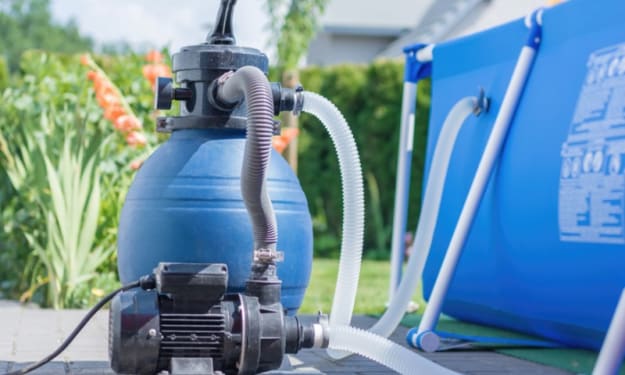
When it comes to owning a swimming pool, maintaining proper water circulation and filtration is essential. A pool pump plays a vital role in this process, but it can also contribute significantly to your energy consumption and costs. Understanding pool pump efficiency is key to saving energy and money in the long run while considering the initial cost to install a pool pump. In this article, we will delve into the concept of pool pump efficiency, explore ways to optimize it for maximum energy savings, and provide practical tips for achieving long-term cost-effectiveness.
By Kevin Smith3 years ago in Earth
Reason why Earth is suitable
Hop on i have prepared a excursion around Earth's fellow planets permit's begin with Mercury the smallest planet inside the solar system during the day the temperature on the floor of this planet can attain 800 levels Fahrenheit and all through the night time it is able to drop to negative 290 ranges Fahrenheit the temperatures here are so severe due to the fact the planet has no environment rather than it mercury has a thin exosphere it's one of the motives why Mercury isn't liveable the temperatures and sun radiation are too intense for any organism to live to tell the tale there now we could say there is a manner to live on Mercury then what would existence there appear like Mercury surface resembles that of the Moon through the years meteorites left masses of marks on it in contrast to the moon's floor Mercury is grayish Brown Now look up the solar on Mercury would appear nearly three times as massive because it does in the world the daylight would be nearly seven instances brighter i ponder what sort of shades humans could put on if we lived there can existence appear on the planet within the future don't get your hopes up it is impossible now how approximately landing on Venus you would possibly assume the most up to date planet in our sun device is mercury on account that it's the nearest to the sun but in fact this title goes to Venus what is it that makes Venus boil the most important reason is its atmosphere it's made up nearly completely of carbon dioxide the surroundings is so thick that it results in the planet warming up non-stop basically the gases in the atmosphere prevent thermal radiation from leaving Venus so the planet really cannot quiet down the water on its surface continuously will become vapor if the floor of Venus was meals then its ecosystem will be the microwave that's why the temperatures in this international can cross up to 870 degrees Fahrenheit what wouldn't it be like to live on Venus in the world seasons change because of the planet's tilt however Venus would not enjoy any good sized changes throughout the year matters are pretty steady at night and all through the day too and what about the view of the sky the clouds on Venus appear yellow or bright white they may be in most cases fabricated from toxic sulfuric acid but then why does Venus seem reddish orange while you have a look at it from Earth speakme approximately the proper shades of planets can be a complicated business the Hue of a space body might be unique while you examine it from any other planet if we traveled all the manner to Venus a reddish-brown surface could welcome us the molecules of carbon dioxide and sulfuric acid block daylight coming into Venus's floor subsequently the reddish orange color of the planet oh and did you already know that Venus is frequently called Earth's dual both planets are nearly same in length each have exceptionally young surfaces and thick atmospheres with clouds plus the orbit of Venus is likewise the closest to Earth that could increase a question about the opportunity of existence on Venus i am sorry to break the information but nope Venus isn't always liveable the subsequent destination is Mars not like Venus Mars has Seasons due to the planet's tilt on its axis it additionally has a secondary seasonal effect due to its fantastically elliptical orbit the southern hemisphere has colder Winters and hotter Summers than the ones inside the northern hemisphere the common temperature on Mars is bad eighty levels Fahrenheit however temperatures can also variety from the poles to the equator and they can alternate very dramatically within a unmarried week still no longer that terrible as compared to the previous planets huh is Mars habitable the primary issue a living organism ought to worry about right here is area radiation Earth has a magnetic subject and a thick surroundings to guard its floor from radiation Mars has neither the planet's gravity is one 0.33 of Earth's so weaker gravity and a thinner atmosphere make it harder for any living being to live to tell the tale on the pink planet in 2013 NASA reported an historic freshwater lake that might have been a hospitable surroundings for microbial existence that is proof now that liquid water once flowed on Mars This confirmation shows that Mars could have had the vital environment to aid lifestyles but what befell to the water on Mars the maximum popular clarification is that the planet's environment became too thin and cold to maintain liquid water on Mars surface The Disappearance of water may additionally be associated with the loss of early magnetic fields or the reason is probably the crimson planet's length Mars might be too small to keep water so for now Mars isn't always habitable however you realize scientists keep sending missions to Mars perhaps they may find some new records allows wait and see now Jupiter have you ever questioned what it is probably want to stay on the biggest planet in our solar machine Jupiter's environment is an unlikely region to aid existence the temperatures on the planet and its composition are too extreme for any organisms to appear there Jupiter has layers of gas normally hydrogen and helium these gases fill the whole planet quite actually there is no strong surface in the world gases pass all of the manner to the middle beneath the surface they emerge as liquid and turn into plasma because the atmospheric stress there's manner more severe than any location in the world to position it into attitude an organism on Jupiter has to face up to a thousand times extra atmospheric strain than it would on the planet can a living being survive in such conditions unlikely Jupiter is absolutely uninhabitable however hi there have you heard that it is Moon Europa is probably a probable liveable quarter trade of surroundings Saturn it's the second one biggest planet in our solar system like Jupiter Saturn is a gasoline massive ball mainly together with hydrogen and helium what approximately temperatures on Saturn it's freezing plus there are extraordinarily effective winds there the winds in Saturn's upper environment reach the rate of one six hundred ft consistent with second let's examine them to storms on earth to have a higher know-how the strongest storm ever recorded on this planet became moving at 350 ft per second so the answer to the question is there lifestyles on Saturn seems pretty obvious existence as we understand it doesn't exist there the next stop is Uranus one in every of the largest ice giants Uranus's atmosphere is dominated via ice however it's no longer the best reason that causes the planet's blue shade it is also the methane within the surroundings it absorbs red light and reflects blue the same is going for Neptune Uranus is the coldest planet in the sun system the temperatures there can be as little as poor 371 levels Fahrenheit life on the planet wishes sunlight to get power however there's not anything on Uranus which can produce any electricity for life bureaucracy to thrive the lowest line is Uranus it doesn't have the surroundings to sustain lifestyles heading for Neptune the second one ice massive what is there on the earth furthest from the solar obviously it is quite chilly there's neither a source of strength that bacterial lifestyles can exploit nor a supply of liquid water presently scientists trust it's not going to discover lifestyles on Neptune due to such unfriendly conditions so what makes our planet so livable and i'm not just speakme approximately human existence I mean any living organisms even microbes life requires very unique conditions to exist all dwelling beings need some kind of meals water and the right temperature to expand the surroundings is a essential element human beings as an instance need oxygen to breathe and they are able to handiest survive in temperatures that aren't extraordinarily hot or bloodless every other component is gravity all of the other planets i have mentioned don't have precisely the identical conditions as Earth lifestyles there could probable be distinctive than what we have here all residing beings in the world have tailored to our atmosphere and life bureaucracy someplace else would want that allows you to live to tell the tale in that planet's conditions.
By Sabelo Ngcongo3 years ago in Earth
The Enigmatic Symphony: Unveiling the Rich Cultural Tapestry of Whale Song
**The Enigmatic Symphony: Unveiling the Rich Cultural Tapestry of Whale Song** Whales, the majestic giants of the deep, have a secret language that has intrigued scientists and enthusiasts alike for centuries. Their enchanting vocalizations, known as whale songs, are not just beautiful melodies echoing through the oceans; they represent a rich cultural tapestry that speaks of social bonds, shared traditions, and a profound understanding of the world they inhabit.
By Erik Velazco3 years ago in Earth
5 Tips for Cooking with and Preserving Caper Berries
Caper berries, the less-known but equally delightful sibling of capers, are small, olive-like fruits that add a burst of tangy and briny flavor to various dishes. These berries have been a staple ingredient in Mediterranean cuisine for centuries and are becoming increasingly popular in other parts of the world. In this blog, we'll provide you with five valuable tips for cooking with and preserving caper berries, allowing you to make the most of these delicious little treats.
By ishkafarms3 years ago in Earth
Nature
Nature, oh nature! What a tapestry of beauty and wonder you weave. From the towering mountains that touch the sky, to the smallest flower that blooms beneath our feet, you captivate and inspire us in ways that words struggle to describe. In every corner of the world, from the deserts to the oceans, nature paints a masterpiece that fills our hearts with awe.
By Arsha writer3 years ago in Earth