Nature
Cry of the Earth
In a world teetering on the brink of environmental collapse, the Earth's cries echoed through the hearts of those who bore witness to its plight. This is the emotional story of individuals and communities grappling with the devastating consequences of climate change and striving to heal the wounds inflicted upon their precious home. From despair to determination, this tale weaves together the raw emotions experienced in the face of the ongoing environmental crisis.
By Zeeshan May3 years ago in Earth
The Call to Action On a Significant Impact on the Planet's Health.. Content Warning.
In a remote village nestled deep within the heart of a lush, ancient forest, there lived a young girl named Amara. With eyes that sparkled like emerald leaves and a spirit as wild and free as the wind that danced through the trees, she had always felt a deep connection with the natural world around her. Her days were spent exploring the forest, listening to its whispers, and learning its secrets.
By Rev Dr. Alexander Fenning-Sencherey3 years ago in Earth
Refractory Garbage and the Long-Term Harm of Environmental Pollution
Plastic pollution has become an increasingly pervasive environmental crisis, inflicting long-term harm on our planet's delicate ecosystems. Plastic, once hailed as a revolutionary material for its versatility and convenience, has now turned into a relentless adversary. Its widespread use and improper disposal have led to an accumulation of refractory garbage, leaving a lasting imprint on land, water, and air. In this article, we will delve into the profound implications of plastic pollution, exploring its refractory nature and the far-reaching consequences of environmental contamination.
By Reynol Brennan3 years ago in Earth
Pyramids of Gisa
In the heart of Cairo, a young archaeologist named Dr. Amelia Carter was preparing for the excavation of a lifetime. Her passion for history and archaeology had led her to pursue the study of ancient Egyptian culture, and the Pyramids of Giza had always been her dream destination.
By jane smith3 years ago in Earth
Summit of the World
Once upon a time, amidst the majestic peaks of the Himalayas, stood the towering Mount Everest, the highest mountain on Earth. Its snow-capped summit soared into the heavens, captivating the hearts of adventurers and mountaineers alike. Among them was a young woman named Maya, who had dreamt of conquering the mighty Everest ever since she was a child.
By jane smith3 years ago in Earth
Roof of the earth and why people love it?. Content Warning.
The vast expanse of the sky has captivated human imagination for millennia. From its ever-changing canvas of colors during sunrises and sunsets to the twinkling beauty of stars in the night, the sky offers a mesmerizing spectacle that can have profound therapeutic effects on people. Sky gazing, the act of contemplatively observing the sky, has proven to be of immense importance for people's mental, emotional, and even physical well-being. This essay explores the therapeutic benefits and significance of sky gazing in our modern, fast-paced world.
By Ibaad Ullah Khan3 years ago in Earth
CLIMATE AND ENVIRONMENT . Content Warning.
Deforestation has significant impacts on biodiversity and ecosystems. Some of these impacts include: Loss of habitat: Deforestation results in the destruction and fragmentation of natural habitats, leading to the displacement and extinction of many plant and animal species. This loss of habitat disrupts the delicate balance of ecosystems and reduces overall biodiversity.
By Olushola Awolola3 years ago in Earth
Unraveling the Mysteries of Our Galactic Home
Introduction The Milky Way, our home galaxy, has always been a source of wonder and fascination for astronomers and stargazers alike. Shaping our perception of a vast pinwheel rotating gracefully in space, this spiral galaxy has existed for approximately 14 billion years and is teeming with a plethora of celestial wonders, including stars, nebulae, planets, asteroids, and even life forms like you and me. However, despite centuries of observation and exploration, the Milky Way continues to surprise us with its hidden enigmas. In recent times, international teams of scientists have stumbled upon remarkable discoveries hidden within the galactic center, igniting new speculations and shedding light on the complexities of our cosmic abode. A Celestial Morse Code Among the most intriguing findings are the unique filamentary structures that grace the Milky Way's core. First observed in the early 1980s, these giant one-dimensional filaments, near Sagittarius A*, the central supermassive black hole, have captured the imagination of researchers. More recently, a new type of filament has been discovered, lying horizontally or radially, resembling the dashes and dots of Morse code. Although the vertical and horizontal filaments share certain similarities, they likely have different origins and roles within the galactic center. The Vertical Filaments: Stretching impressively up to 150 light years in height, the vertical filaments stand tall and magnetic, acting as harp-like strings clustered in pairs and groups. Researchers have connected these filaments to the outflow of the central black hole, enabling them to study the black hole's spin and the orientation of its accretion disk. Their majestic presence and behavior make them a critical piece in understanding the dynamics of the galactic center. The Horizontal Filaments: In stark contrast, the horizontal filaments emit thermal radiation and have a more radial orientation, pointing towards the center of the Milky Way and its black hole. These filaments are younger, clocking in at approximately 6 million years old, and are significantly smaller, spanning 5 to 10 light years at most. Although less numerous than their vertical counterparts, the horizontal filaments still captivate researchers with their unique characteristics and potential insights into the galactic center's mysteries. The Spooky Radio Energy Object: Beyond the enigmatic filaments, another cosmic mystery lurks in the Milky Way. Australian researchers made a perplexing discovery of a spinning object unlike anything seen before. This celestial entity releases massive bursts of radio energy every 20 minutes, a frequency never observed in any known object. Theories about its origin range from the possibility of an ultra-long period magnetar, a white dwarf, or even an entirely new type of celestial body. While the source remains enigmatic, astronomers are certain of its natural origin, ruling out artificial interference. The Glowing Center: One of the most confounding puzzles in the Milky Way revolves around its gamma-ray emissions. The center of the galaxy emits far more gamma radiation than its outskirts, leaving scientists baffled for nearly a decade. While some speculated the glow resulted from the annihilation of dark matter, the clumpy distribution of gamma-ray particles contradicted this theory. An alternative explanation involves millisecond pulsars, neutron stars spinning at astonishing speeds, which could explain the clumpy nature of the light. Yet, this theory has not convinced all scientists, and further research is needed to unlock the truth behind this extraordinary glow. Conclusion: The Milky Way, our cosmic abode, continues to astound and challenge our understanding of the universe. From its mesmerizing spiral structure to the enigmatic filaments and peculiar celestial objects hidden within its core, our galaxy holds secrets yet to be fully unraveled. As astronomers and researchers delve deeper into these mysteries, humanity's understanding of the cosmos is certain to expand, providing us with a more profound appreciation of the vast and captivating universe we call home. As we peer into the night sky, let us remember that our galactic journey is far from over, and there is still so much left to explore, discover, and marvel at in this vast and mysterious Milky Way.
By GRACE OKEDIJI3 years ago in Earth
Escape from the Inferno: Tourists Flee Rhodes Wildfires in Greece's Largest-Ever Evacuation
Paradise Turned to Peril On a serene summer day, the Greek island of Rhodes boasted its usual postcard-perfect beauty. The azure sea gently caressed the golden shores, and the scent of olive trees permeated the air. Tourists from around the globe had flocked to this idyllic paradise to bask in the Mediterranean sun and immerse themselves in the island's rich history.
By Zeeshan May3 years ago in Earth
Discovering the Wonders of the Milky Way Galaxy
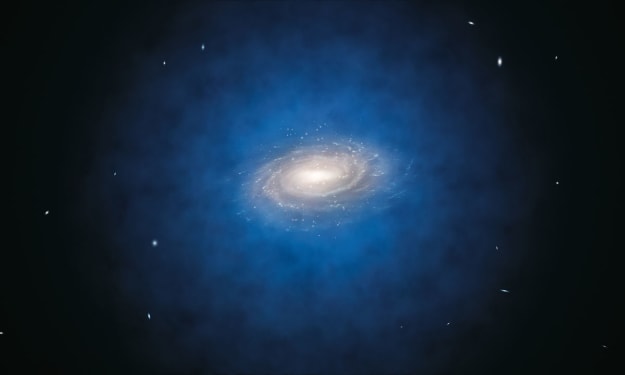
The Milky Way, our celestial home, showcases a breathtaking spectacle resembling an enormous pinwheel gracefully spinning through space. Classified as a spiral galaxy, it came into existence approximately 14 billion years ago and is a thriving habitat filled with an array of celestial marvels. Stars, nebulae (clouds of dust and gas), planets, asteroids, and even beings like ourselves, alongside the quirky neighbors down the street, form a vibrant tapestry that radiates outward from the heart of the Galaxy in its long, spiraling arms – an awe-inspiring view indeed.
By Harindra Abeysinghe3 years ago in Earth
Most Dangerous Holes on Planet Earth
Unveiling the Most Treacherous Pits on Earth From abandoned man-made mines to natural sinkholes and underwater pits, this article reveals the deepest and most dangerous holes that will make you think twice before taking that stroll, as they have swallowed machines, animals, and even people. Welcome to another episode of Forevergreen, where we explore the 10 most hazardous holes on our planet. Stick around for number one, as some of these places hold stories as dark as their depths.
By Harindra Abeysinghe3 years ago in Earth