Nature
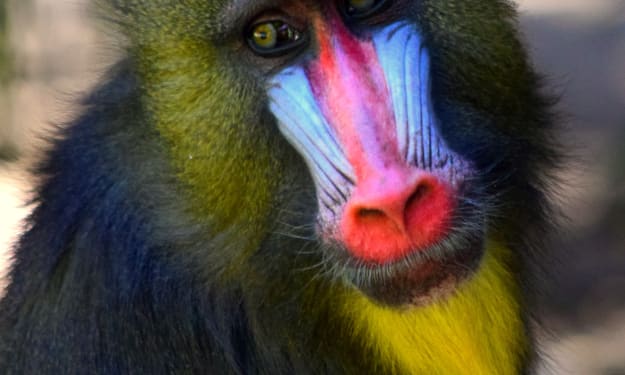
Rafiki and the baboons
In the heart of the African savanna, a vibrant community of baboons thrived under the watchful eye of their wise leader, Rafiki. These baboons were an extraordinary bunch, living in harmony and sharing a bond that was stronger than any other. Rafiki, with his silver mane and gentle eyes, was not only their leader but also a revered elder, passing down his wisdom to the younger generations.
By World Writer3 years ago in Earth
Mindful Travel
Traveling the world is an enriching experience that opens our hearts and minds to diverse cultures, landscapes, and people. However, as the impact of tourism on the environment and local communities becomes more apparent, the need for mindful travel has never been greater. Mindful travel is about experiencing the world responsibly and sustainably, ensuring that our journeys leave a positive footprint on the destinations we visit. In this article, we explore the essence of mindful travel, its significance, and how we can embrace this transformative approach to travel. Through inspiring real-life examples, we discover how mindful travel can create a harmonious connection between travelers and the world.
By Juliet Wairimu3 years ago in Earth
10 Astonishing Natural Wonders
Nature has a way of captivating us with its awe-inspiring beauty and breathtaking wonders. From majestic mountains to cascading waterfalls, our planet is adorned with extraordinary natural phenomena that leave us in wonder and amazement. In this article, we embark on a journey to explore ten astonishing natural wonders that will take your breath away. From the mesmerizing Northern Lights to the grandeur of the Grand Canyon, these remarkable marvels of nature showcase the power and magnificence of our planet.
By Juliet Wairimu3 years ago in Earth
Guardians of Life and Inspiration for a Better World
In the bustling cacophony of modern life, we often overlook the silent sentinels that stand tall and steadfast, nurturing the very essence of our existence - trees. These majestic beings, more than mere flora, play an indispensable role in sustaining life on Earth. In this article, we embark on a journey to explore the incredible power of trees, drawing inspiration from their remarkable qualities and real-life examples of their impact. From the breath of life they provide to the untiring service as protectors of the environment, let us discover how trees are true guardians of life and a source of hope for a better world.
By Juliet Wairimu3 years ago in Earth
Seeds of Hope.
Amidst the concrete jungle of a bustling city, where people hurriedly passed each other with barely a glance, there was an empty lot. The lot had been abandoned for years, left barren and desolate. But within the heart of this neglected space, there lay the potential for something beautiful: a community garden. It was an idea that sprouted in the mind of a young woman named Maya, whose heart ached for connection and unity in a world that seemed so divided.
By Henry Henshaw 3 years ago in Earth
Safeguarding Earth for a Sustainable Future: Actions to Preserve Our Planet
Introduction: As we look to the future, it is crucial that we take proactive steps to protect our planet and ensure a sustainable existence for generations to come. The health of our Earth is threatened by pollution, climate change, deforestation, and other human-induced activities. However, we can make a positive impact by adopting sustainable practices and collectively working towards a cleaner, greener, and healthier planet. In this article, we will explore various strategies and actions to safe and clean Earth for a brighter future.
By Muhammad Shahzaib Qureshi3 years ago in Earth
The Urgency of Action.
In a quaint coastal town named Havenbrook, nestled between rolling hills and the vast ocean, lived a young girl named Lily. With her unruly curls and eyes that sparkled like the ocean's waves, Lily was a symbol of hope and innocence in a world plagued by climate change.
By Henry Henshaw 3 years ago in Earth
DO YOU KNOW WHY OCEAN BLUE.!
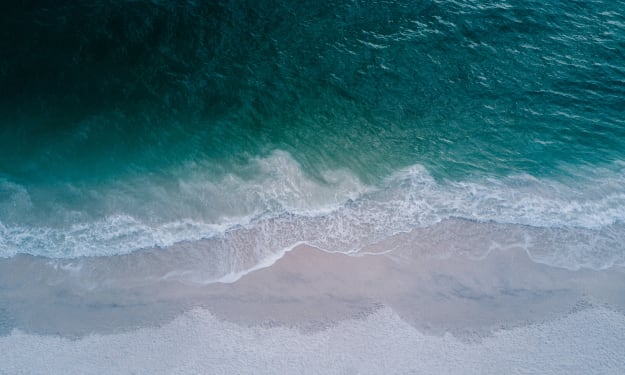
Introduction:As I stand on the shores of the ocean, gazing out at the vast expanse of shimmering blue waters, I am filled with a sense of wonder and curiosity. Why is the ocean blue? This age-old question has intrigued scientists, poets, and philosophers for centuries. The answer lies in the fascinating physics of light and reflection, which we shall explore in this article.
By kavindu vidushan karunathilaka3 years ago in Earth
Black Hole Singing
Scientists have recently discovered an unsettling Echo emanating from the main black hole in our galaxy. It has high and low notes and sounds fairly unearthly, but it turns out that's not always the case. Should we sound the alarm? Whatever the bell siren Sagittarius Black holes are the true Monsters of our universe, devouring anything foolish enough to approach one. If a massive black star runs out of star fuel, it may become extremely dense and buckle under its own weight, collapsing inward and accelerating space time. A star is our own supermassive black hole, sitting right in the center of the Milky Way galaxy where we live . We really can't see black holes since they devour everything even light, but we can still determine where they are thanks to the existence of accretion discs. Want an explanation? Well picture a black hole the starving thing consumes all the matter that Strays Too Close. As a result, the gravitational field of this new thing becomes so strong that nothing can escape it not even light, and so goes a black hole. We cannot see a black hole itself, but we can see the accretion disc surrounding it. It happens as follows: first the material is superheated, and then the black hole squeezes it into a superheated disc of blazing gas. The black hole also bends light around it, creating a circular shadow . The most massive black holes have bright bands that can outshine millions of galaxies inside this disc of glowing material, which energizes it and causes the material to glow intensely. When particles rub against one another inside this disc of glowing material, it slows them down and sends them directly toward the black holes. Horizon Event Let's return to Sagittarius now. If there was no friction, the material would have been encircling the black hole for billions of years like planets were around their stars. Since our Central black hole is now much less bright than other black holes in the centers of galaxies that astronomers have discovered . There isn't any active chewing going on around hole. It's unclear what it is, but it appears to be catching some z's. NASA's ixb telescope hasn't found any evidence to support this claim. Instead, it suggests that the supposedly sleeping giant woke up relatively recently, about 200 years ago. Sagittarius It sounds oppressive, but the closest thing to a supermassive black hole is a star, and it's only around 25 000 light years from Earth. So when researchers discovered relatively recent x-ray emissions from enormous clouds of gas nearby, they were pleasantly surprised The most intriguing aspect of this discovery was how bright these clouds were. Most cosmic clouds, known as molecular clouds, are dark and cold with very faint x-ray signatures, but that wasn't the case with this discovery. Of course, there are a few theories regarding this phenomenon, one of which is that these giant molecular clouds are shining so brightly because they just echo the black hole . This light must have been a short-lived, incredibly bright flare that occurred either directly at or very close to the constellation Sagittarius. It happened in the beginning of the 19th century, and the most plausible reason for it is the black hole suddenly consuming a significant portion of the material surrounding it. It was probably an amazing sight to witness because whirlpools of particles were driven toward the black holes. The black hole began consuming all of this material at the Event Horizon, also known as the point of no return, which produced spectacular bursts of X-ray light and Echoes that we were able to translate into sound waves here on Earth. This discovery is essential for comprehending the processes taking place to and inside the black hole . In the vicinity of our supermassive black hole, we might also determine what physical processes might emerge. Sagittarius Supermassive black holes are the biggest black holes in the universe; their mass can range from thousands to millions to billions of times that of our sun. Thankfully, two such giants have recently been discovered with the aid of the Atacama Large Millimeter Submillimeter Array of Telescopes, also known as Alma. Near the heart of the coalescing galaxy, two enormous black holes were growing side by side. It appears that these black holes encountered one another when their host galaxies collided; one of the black holes is around 200 million times larger than the other . As time passes, these black holes will start to circle each other and eventually they will collide creating one probably even bigger black hole interestingly such immense merges are more common for distant galaxies that make up the universe. This discovery may mean that black hole binaries like this one are much more common than we previously thought. If pairs of black holes are so common, it can make it easier for us to study gravitational waves, also known as ripples in space-time, which occur when black holes merge. Before, experts believed that such Galaxy mergers didn't really happen in our neighborhood. Collide Even though it may take the freshly discovered pair of black holes several hundred million years to collide, by watching their behavior, scientists can determine how many binary black holes are on the verge of doing so. Have you heard that we might be living in a black hole? This may help us understand what will happen when our home galaxy, the Milky Way, collides with the Andromeda galaxy in around 4.5 billion years. Oh, I can't wait. I'm not joking, it's really scary. However, what if one black hole has already swallowed us long ago? Surprisingly, some physicists find this theory to be somewhat plausible. For instance, Dr. Nicodem Poplovsky, a theoretical physicist from Indiana University, claims that everything a black hole swallows may turn into a new universe either inside the hole or on the other side of it. Who knows, maybe before it was sucked into a black hole, our universe was quite a different place. The theory of white holes is closely related to the previous hypothesis, however black holes consume everything in its path, preventing even light from escaping. A white hole is a hypothetical region of space-time that nothing can enter from the outside but light and matter can escape from, in contrast to a black hole, which is a hypothetical area of space-time that you can only enter from the outside but can't escape from afterward. ....,..
By Nada Al-sana'ani3 years ago in Earth
climate effect on marine life
Lila was a coral polyp living in a reef in the Indian Ocean. She was part of a large and diverse community of marine life, including fish, crustaceans, mollusks, algae, and other corals. She enjoyed her life, filtering plankton from the water, exchanging nutrients with her symbiotic algae, and communicating with her neighbors through chemical signals.
By Hilda Mwangi3 years ago in Earth
climate change
Mary was a nurse working at a hospital in Nairobi, Kenya. She loved her job and cared deeply for her patients, especially the children. She had seen many cases of malaria, diarrhea, malnutrition, and respiratory infections, but she always tried to do her best to help them recover.
By Hilda Mwangi3 years ago in Earth