Nature
Amidst the Storm
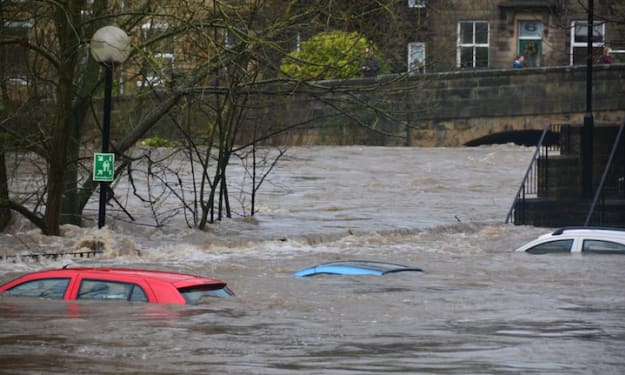
The winds howled fiercely as a devastating cyclone bore down upon the coastal village of Serenity Bay. The villagers, whose lives revolved around fishing and peaceful routines, were now thrust into chaos. Their homes were torn asunder, and the sea's fury swallowed their dreams in a relentless assault. News of this natural disaster quickly reached the nearby city, prompting the authorities to mobilize their disaster relief and response teams.
By Francis Anaele3 years ago in Earth
Breaking Chains
In a time not so long ago, in a world governed by tradition and inequality, there lived a young woman named Amelia. Born into a society where people were bound by rigid norms and societal expectations, Amelia found herself yearning for a life of freedom and self-discovery. She dreamed of breaking the chains that held her back and forging her own path.
By Agbezin Tosin Joshua3 years ago in Earth
Natural world
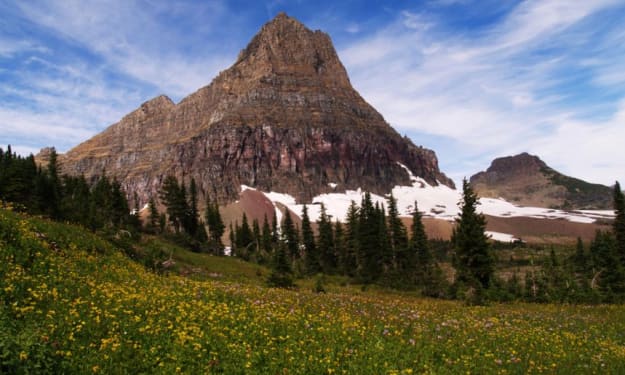
Once upon a time, amidst the hustle and bustle of urban life, there was a young man named Ethan. Born and raised in the heart of the city, he had spent his entire life surrounded by concrete jungles and the constant hum of traffic. However, deep within him, there was an unexplainable yearning for something more, a longing to experience the beauty of nature. One day, Ethan decided to embark on a journey to discover the wonders of the natural world. Armed with a backpack filled with supplies and a camera to capture the moments, he set off to explore undisturbed landscapes and untouched beauty. As Ethan ventured outside the city, he was immediately struck by the vastness and tranquility that enveloped him. The air was crisp and refreshing; he could feel it invigorating his lungs with each breath. Everywhere he looked, there were vibrant colors dancing across picturesque landscapes. The beauty of nature was far beyond what he had ever imagined. Ethan found himself hiking through towering forests, with sunlight filtering gently through the leaves, casting a warm glow on the forest floor. The symphony of bird songs filled his ears, as if welcoming him into their peaceful sanctuary. He marveled at the intricate patterns of delicate flowers growing at the foot of the trail, their petals gently swaying in harmony with the breeze. The beauty of nature lay in its ability to create such astounding wonders—each plant, each animal, and each landscape a testament to the intricate symphony of life. Further into his journey, Ethan stumbled upon a glistening waterfall cascading down towering cliffs. The sheer power and majesty of the water mesmerized him. As he stood there, awestruck, he realized that the beauty of nature lies not only in its delicate details but also in its grandeur and power. It was a humbling experience, reminding him of the vastness of the natural world and his own place within it. As Ethan continued his journey, he encountered an array of wildlife. He watched in awe as a family of deer gracefully leaped through a meadow, their movements so effortless and elegant. He saw a fox stealthily traversing the forest floor, blending seamlessly with its surroundings. Each creature he encountered reminded him of the intricate web of life that exists in nature, where every organism has a role to play and is interconnected. Days turned into weeks, and Ethan forged onward, as his admiration and respect for nature grew exponentially. He camped under a sky filled with stars, their brilliance accentuated by the absence of city lights. He witnessed a sunrise that painted the sky with a palette of vibrant hues, each color merging seamlessly into the next. He marveled at the harmony that existed within the natural world, where every moment was a work of art. In his journey, Ethan learned an important lesson – that the beauty of nature is more than just a visual experience. It awakens all the senses and nourishes the soul. The scent of blooming flowers, the feel of soft grass beneath your feet, the sound of a gentle stream meandering through the landscape – all of these elements contribute to the overall beauty that nature has to offer. As Ethan retraced his steps back to the city, he carried with him a newfound appreciation for the beauty of the natural world. The experiences he had accumulated were etched permanently in his memory and brought him a sense of peace and fulfillment. He realized that nature is not just a place to visit; it is a sanctuary that provides solace and inspiration to all who seek its extraordinary beauty. And so, Ethan returned to city life, forever changed by his encounter with the natural world. He became an advocate for conservation, spreading awareness about the fragile beauty that surrounds us. For he knew, deep within his heart, that the true beauty lies not within the concrete walls of the city but in the awe-inspiring, evergreen beauty of nature.
By Agada Faith3 years ago in Earth
7 Surprising Benefits of Coconut Water
Coconut water used to be exclusive to health stores, but now it has become so popular that you can find it in almost every grocery store. Discover why this delicious beverage is gaining worldwide popularity and how drinking it daily can improve your health and well-being.
By Ray Royell3 years ago in Earth
plants are the most common and important in life
plants are the most common and important in life .. plants are the most common and important in life form you see every day but if you think of the angiosperms with their fruits that range from the cuticles of wheat seeds to the bulky juicy watermelons to the gymnosperms like the conifers with their needle leaves and hard pine cones protecting their naked seeds to the simple bryophytes that bathe in the sun on the surfaces of rocks or the bark of trees you're so familiar with these organisms we often forget they play an important role in chemically changing our atmosphere and keeping us and our ecosystems running mainly because we are so fixated on the delicious flavor of their corn and watermelon and the fauna they raise so we simply see them as an anime as the rest of the scenery no different to the Rocks we simply toss aside as we hike and this is especially apparent when it comes to building fictional worlds as an example think of an alien world you are familiar with whether it's a fantasy world from pop culture like Avatar or the realistic takes on an alien world like bipolarians alien biospheres what kind of life forms do you think of typically the fauna like the human pterosaur or horse analogs of Avatar or the arachnid-like fun of biblardine's alien biospheres but do you ever consider the Flora but you might think the evolution of plants should be easy and boring first you start off with unicellular algae then it becomes multicellular algae and then it becomes terrestrial and diversifies into trees so the cell plants evolved and will evolve on alien planets right in actuality the evolution of embryo fight plants was much longer and complicated involving the Divergence of viridi plantae into strepto fighta and chlorophyta the evolution of a fragmoplast increasing multicellular complexity and streptophytes evolution of a vascular system and graphite-like ancestors Etc so for this series I will only focus on the evolution of alien plants or just algae in general using the evolutionary history of virida plantae on Earth hollar algae first originate I will lay diversify in our planet's oceans how they become multicellular will their percussion do land be gradual or sudden how will they affect the planet's climate before we explore everything else let's take small baby steps and answer each of these questions one at a time starting with the origin of algae or the planet in general a small disclaimer when I say only focus on plant Evolution I mean only on plant Evolution I won't put too much detail or attention on everything about the biosphere so anything involving the astronomy of the planet or the phone of the planet will be simplified or briefly touched upon at best if you want to see a speculative Evolution project that flushes out the astronomy or the final evolution of an alien planet go watch Project Rose's planet nescue or rubia project or any other biosphere for that matter I will only focus on plant Evolution for now so let's get started a star wheat orbit is a type G Star which lost about 10 billion years and that several Zone will be between 0.9 to 1.2 astronomical units our planet is located one astronomical unit away from the Sun just to keep things safe and to prevent things from becoming too convoluted this Alien Planet will also rotate around the type G Star the habitable zone in this solar system will also be between 0.9 to 1.2 astronomical units however our Alien Planet will be just near the star of The hateral Zone around 0.95 astronomical units the confrontational pull of our planet is about 10.70 meters per second squared and its axial tail is 24.2 degrees this planet's moon is about the same size as ours if not smaller being around 7.9 times 10 to the 19th power tons we'll call this planet La Tomas hortus a third for short now for the history of the planet a Thor and its moon were fully formed around 6.2 billion years ago at this time letharp mostly lacks an atmosphere only consisting of hydrogen and helium the most common gases in our galaxy but due to the plant's gravity most of the elements will dissipate into space however on this planet they're even higher concentrations of uranium and thorium almost double the amount but there being 92 trillion tons of uranium underneath this planet's surface compared to the 40 trillion on Earth however uranium and thorium release helium as it decays thus all hydrogen bubbles they dissipate helium a silver being slightly concentrated in this atmosphere thanks to radioactive decay at last helium will not be the only product released by volcanic activity other Gases such as ammonia hydrogen sulfide nitrogen and carbon dioxide will populate this planet's atmosphere but later on during this planet's chaotic beginning Millions upon millions of asteroids will crash into the planet's surface the asteroids carried water Frozen in its interior So eventually water vapor joined in as the dominant gases in the atmosphere chaos lasted until 4.7 billion years ago when the plant surfaced cooled water vapor condensed and later formed the planet's oceans the formation of the planet's oceans will cause an array of chemical reactions between atmospheric gases and water carbon dioxide will dissolve into carbonic acid increasing the ocean's pH it also reacted calcium at the sea floor forming calcium carbonate methane on the other hand will start forming methane clathrate in the ocean's deeper depths where pressures are high and temperatures are low but thanks to helium being more concentrated in the atmosphere than on Earth helium collaterates will also start forming with the methane Clefairy life itself came about not too long after its oceans formed the exact origins of life is still being debated as we don't have an entirely clear image as of now we do however have a clear image On the Origin of Species life around 4.6 billion years ago will mainly consist of prokaryotic life as there is no oxygen to support any mitochondria like prokaryotes to support eukaryotic cells so life will mainly be anaerobic however conditions will change rapidly as the evolution of photosynthetic prokaryotes cause the planet's first mass extinction event photosynthetic Life we'll use ficlobins for photosynthesis meaning they'll mostly be red or they can also be blue brown light green and pink similar to rotophytes on Earth initially oxygen will mostly be absorbed by Iron mostly by the planet's new continents but after all the iron has been oxidized oxygen started polluting the atmosphere it became reacting to methane in the atmosphere to produce the weaker greenhouse gases water and carbon dioxide this Ledger runaway greenhouse cooling event glaciers formed over the continents populations were reduced to the cold temperatures and most of the prokaryotic life being anaerobic was killed off by the oxygen however eventually conditions will stabilize as the glaciers melt away they leave behind Pits on the continents caused by their weight this will form great freshwater lakes fed by mountains at the center of the continent this is actually how our Lakes were formed by the tree of our last ice age 20 000 years ago after the mass extinction event passed around 4 billion years ago we see the appearance and diversification of eukaryotic organisms thanks to the oxygen in the atmosphere just like eukaryotes on Earth they most likely descended from prokaryotic cells involved a nucleus and membrane-bound organelles one of them being derived from an endosymbiotic relationship with an aerobic prokaryote that produces adenosine triphosphate for its host just like the prokaryotes include a wide array of heterotrophs chemotrophs and eventually autotrophs the clade we'll be focusing on is called rubrum fighta they most likely evolve from eukaryotic cells that formed an endosymbiotic relationship with prokaryotes that perform photosynthesis other synapomorphies of this clade are cell walls made of cellulose flagella valcol and starch vessels ancestral rubrum fighter would have had haploid genes and thrived at the uppermost part of the photic zone but thanks to the freshwater lakes formed by melting glaciers Rib Room fighter would diverge into two lineages the freshwater dwelling pre-terrophyta and the Marine dwelling tetariza these two lineages will form the most diverse algal lineages on this planet taking on a variety of unicellular multicellular aquatic and even terrestrial forms well I think that should do it for now thanks for watching in the next episode we dive into the synapomorphies and diversification of Tetris and compared to the evolution of chlorophytes on Earth well see you soon bye [Music]
By make life beautiful3 years ago in Earth
Why have some animals barely changed since the time of the dinosaurs?
Why have some animals barely changed since the time of the dinosaurs? The fossil record is full of animals that have changed very little over millions of years. These animals are sometimes called "living fossils," and they provide us with a fascinating glimpse into the past.
By Peter Chiron3 years ago in Earth
Unveiling South Africa’s Hidden Gems
Introduction South Africa's vast and diverse landscape is home to some hidden treasures that often go unnoticed by tourists. These unseen places, often referred to as hidden gems, offer a unique and captivating experience for adventurous travelers. In this article, we will delve into the depths of South Africa's lesser-known destinations, revealing hidden wonders that will leave you awe-inspired. Not only will we take you on a virtual journey to these incredible locations, but we will also ensure that our content is optimized for search engines, using viral keywords to make it easily discoverable. Get ready for a thrilling ride!
By Matsie Makwatsane3 years ago in Earth
What Was Earth Like Before the Dinosaurs
Step into a time machine and journey back nearly 300 million years ago, to a vastly different Earth during the Permian period. This ancient era was marked by a supercontinent called Pangea, surrounded by a vast world ocean known as Panthalassa. The Permian period witnessed a remarkable diversity of life, with giant creatures roaming the lush landscapes. However, this prehistoric paradise was also plagued by dramatic changes and culminated in a cataclysmic event known as the "Great Dying." Join us on this epic journey through time as we explore the fascinating creatures that ruled the Permian world and unravel the mysteries of this catastrophic extinction event.
By Daham Navodya3 years ago in Earth