Nature
Exploring the Future of Atomic Energy
In the heart of a bustling metropolis, a group of scientists and engineers gathered in a state-of-the-art laboratory, their eyes gleaming with anticipation. The air was charged with a sense of excitement and curiosity as they embarked on a journey to explore the future of atomic energy. Their mission: to unlock the potential of this incredible power source while ensuring its sustainability and minimizing its global impact.
By Pius Junior 3 years ago in Earth
The Symphony of Raindrops
In a lush valley nestled between rolling hills, there stood a vibrant and harmonious village named Aquilon. The villagers of Aquilon depended on a magical source for their water supply—a sparkling, enchanted well known as the "Well of Unity." This well was said to have been blessed by the spirits of nature, and its waters were the lifeline of the village, providing not just nourishment but also unity among its people.
By Aya Aathif Ali allooh3 years ago in Earth
Awe and wonder
In the heart of the Amazon rainforest, where the lush green canopy seemed to touch the heavens, a solitary figure stood in reverence. Her name was Isabella, a young biologist with an insatiable thirst for the mysteries of the natural world. She had ventured here with a purpose – to uncover the hidden wonders of a land untouched by human folly. As the morning mist lifted, Isabella found herself amidst an orchestra of life. The symphony of birdcalls echoed through the trees, each note a testament to the diversity that thrived in this fragile sanctuary. Butterflies of iridescent hues danced around her like fragments of forgotten dreams, and the air was alive with the sweet scent of blooming orchids. Isabella's heart swelled with emotion as she beheld a rare sight. A family of jaguars emerged from the undergrowth, their sinewy bodies moving with grace and power. She watched, breathless, as the mother led her cubs to a tranquil pool, their reflections mirroring a world of wild beauty that seemed untouched by time. With her camera in hand, Isabella captured every detail – the dappling of sunlight on the jaguars' fur, the shimmering ripples of the water, and the intensity in the mother's gaze as she guarded her offspring. It was a moment frozen in time, a glimpse into a world where the boundaries between human and nature blurred, and a deep sense of awe settled within Isabella's heart. Days turned into nights, and Isabella's journey took her deeper into the heart of the rainforest. She encountered tribes whose existence was harmoniously intertwined with the land – guardians of ancient wisdom, protectors of the delicate balance that sustained life. Their stories spoke of a time when humans and nature coexisted, when reverence for the Earth was woven into the fabric of daily life. One evening, Isabella found herself sitting around a campfire with the tribe's elders. The fire's flickering glow painted their faces with shadows that seemed to hold tales of generations past. They spoke of a prophecy – one that foretold of a time when outsiders would come to learn the secrets of the rainforest and carry them to the world beyond. As the elders shared their wisdom, Isabella felt a deep kinship with these guardians of the Earth. She realized that her mission extended beyond documentation; it was a sacred duty to protect and preserve the wonders she had witnessed. The rainforest's beauty was a fragile gem, vulnerable to the encroaching darkness of deforestation and pollution. With newfound determination, Isabella returned to her world, armed not only with photographs but also with a burning passion. She embarked on a global journey, sharing her experiences and the stories of the rainforest's guardians. Through exhibitions, lectures, and passionate advocacy, Isabella kindled a spark of awareness in hearts around the world. But her mission faced obstacles – skepticism, indifference, and the inertia of a world accustomed to convenience over conservation. Isabella's heart grew heavy as she witnessed the disconnect between humanity and the natural world. It was as if people had forgotten the profound sense of wonder that could be found in the simplest leaf or the most elusive creature. Undeterred, Isabella harnessed the power of technology to transport people to the heart of the rainforest. Virtual reality experiences allowed them to walk amidst towering trees, to feel the dampness of the earth beneath their feet, and to lock eyes with a jaguar whose gaze held the mysteries of time. Slowly but surely, the spark ignited by Isabella grew into a blazing fire of collective consciousness. The world began to awaken. People rekindled their relationship with nature, recognizing the importance of preserving its majesty for generations to come. Conservation efforts gained momentum, and governments, corporations, and individuals alike rallied to protect endangered habitats and species. Isabella's journey had come full circle. As she stood once again in the heart of the rainforest, a sense of profound gratitude washed over her. The jaguars still roamed, the orchids still bloomed, and the symphony of life still echoed through the trees. The prophecy of the elders had been fulfilled – the world had rediscovered its awe and wonder, and the rainforest's magic had cast its spell on humanity once more. And so, Isabella's story became a beacon of hope, a testament to the transformative power of reconnecting with Earth's majesty. Her journey had ignited a global movement, proving that the bonds between humanity and nature were unbreakable, and that the wonders of the world could be cherished, protected, and passed on like precious heirlooms of the heart.
By Bala Adamu 3 years ago in Earth
"Whispers of the Ancient Oak: A Tale of Resilience and Imagination"
In a small village nestled between rolling hills and meandering streams, there lived a young girl named Elara. She possessed a heart as vast as the sky and an imagination as boundless as the ocean. Elara's eyes were always dancing with curiosity, and her smile could brighten even the cloudiest day.
By Aya Aathif Ali allooh3 years ago in Earth
Too Close but Too Far
Assume you are residing four kilometers from your companion, so what will be the time in your companions house? You will express same as in mine, Right be that as it may, imagine a scenario where I let you know the distance of four kilometers can make a period distinction of 21 hours. You will say no it can not be possible In any case, hang on it is conceivable then where it is working out? We should see. There are two Islands situated in the Bering Strait between mainland and Siberia known as the Diomede Islands.also referred to in Russia as Gvozdev Islands The islands are named for the Greek Saint Diomedes; Danish guide Vitus Bering located the Diomede Islands on 16 August 1728 Despite the fact that the distance between them is just four kilometers, they are 21 hours separated because of nearby time regions. Thus, they were nicknamed Tomorrow Island (Big) and Yesterday Island (Little). The tomorrow island has a place with Russia as a matter of fact truth be told it is the easternmost point of Russia while yesterday island has a place with US of America.When the US bought Alaska from Russia in 1867, it included Little Diomede. Little island is otherwise called Krusenstern Island. Large Diomede known as Ratmanov Island was excluded from the buy and thusly has a place with Russia. The distance between them is 2.4 miles that is almost 4 km. The International Date Line, a nonexistent line running generally along the 180° meridian, decides the progress between schedule dates. As one goes too far from west to east, they basically "gain" a day, while crossing from east to west outcomes in "losing" a day. This progress is critical, as it influences the date as well as the time, possibly making a 24-hour distinction. Summer temperatures on the islands normal around 40 to 50 degrees Fahrenheit. Wintertime is considerably colder, averaging somewhere in the range of 6 and 10°F. The nearness of the Diomede Islands to the International Date Line has fascinating ramifications. Because of the time contrast among Russia and the US, Large Diomede lies in "tomorrow," while Little Diomede is in "today" or "yesterday" contingent upon the reference point. This situating makes them a living demonstration of the intricacies of time and worldwide limits, permitting guests to step into the future or the past in a real sense. The water between the two islands is separated by the oceanic line of the two nations. The section was generally nicknamed the "ice Curtain," which had more to do with Cold War strains than environment. Today, Little Diomede has a little long-lasting local area — around 115 individuals as indicated by the 2010 U.S. registration. The town is situated on a little ocean side on the island's western side, implying that Russia's Big Diomede and, surprisingly, the mainland area are noticeable from the homes. The island has approximately 30 structures, a school, a library, a church, and a heliport yet no streets. There are no eateries or lodgings around and just a single store that has a restricted determination of food, dress, weapons, and fuel conveyed via ocean typically from the town of Nome, The Alaska. Huge Diomede Island has no long-lasting local population after the army installation was laid out there in 1948, the Soviet government migrated the native population of the island to mainland Russia. Today it is the site of a Russian weather conditions station and a base of Russian Border Guard troops. During winter, an ice bridge usually spans the distance between these two islands; therefore during such times it is theoretically possible to walk between the United States and Russia. but it is forbidden owing to the relations between two countries.
By Nikhil Jadhav3 years ago in Earth
Survival and Resilience
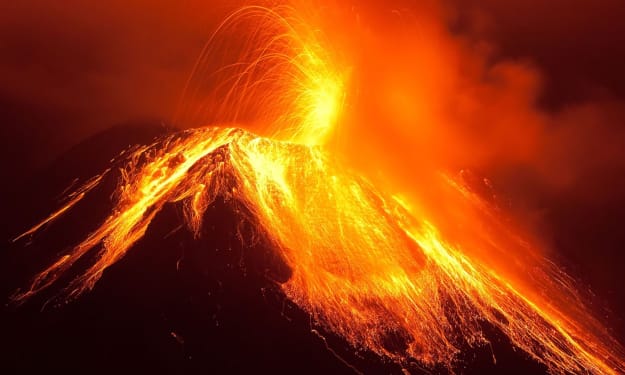
Amid the peaceful magnificence of the Sicilian field lay the town of Castellano, settled in the shadow of the powerful Mount Etna. The townspeople lived as one with the mountain, its presence a consistent indication of nature's highness. However, one critical day, the earth shuddered underneath their feet, and the once-sleeping goliath stirred with thunder that broke their peacefulness.
By Bello Abdulmalik3 years ago in Earth
Seeds of Hope. Content Warning.
the heart of a bustling city, where skyscrapers overshadowed the horizon, there was an oasis of hope that emerged from the most unexpected of places: a barren plot of land. This small piece of earth, nestled between concrete structures, became the canvas for an extraordinary story of personal growth and healing. The community garden that sprouted there was a testament to the resilience of the human spirit, proving that even in the harshest environments, seeds of hope could find purchase and thrive. It all began with a handful of determined individuals, each carrying their own burden of challenges and pain. There was Mia, a young woman battling anxiety and depression, searching for a way to reconnect with the world around her. Then there was Mr. Johnson, a retired war veteran haunted by memories of the past, seeking solace in the simplicity of nature. And let's not forget Maria, a single mother struggling to make ends meet, who hoped that tending to the soil would somehow ease her financial worries. Their stories were diverse, yet interconnected by a common yearning for healing. They came across a local initiative promoting community gardening, a project aimed at bringing people together through the act of nurturing life from the ground up. Intrigued and hopeful, Mia, Mr. Johnson, and Maria each took the first step and signed up. At the outset, the garden was nothing more than an empty canvas, devoid of color and life. But as the days turned into weeks, the small group of participants put their hearts and hands into the soil, sowing seeds and nurturing saplings with unwavering dedication. Each one brought their unique strengths and stories to the garden, and slowly, something magical began to take root. Mia, who had always struggled with connecting to others, found herself opening up as she shared gardening tips and stories with her fellow gardeners. The act of tending to the plants became a therapeutic practice, allowing her to channel her anxious energy into something productive. As she saw the seeds she planted transform into blooming flowers, Mia began to believe that growth and beauty were possible in her own life as well. Mr. Johnson, who had spent years isolating himself from society, discovered a newfound sense of purpose as he guided the younger gardeners with his wealth of knowledge about plants and nature. The act of nurturing living things helped him reconcile with the past and find a way to give back to the community that had given him a second chance at healing. The garden became a sanctuary where he could reflect on his experiences, both the good and the painful, and find a way to make peace with them. For Maria, the garden became more than just a place to grow plants; it became a lifeline for her family. The fresh produce they cultivated helped ease the financial strain on her household, providing nutritious meals for her children. But beyond that, the garden became a symbol of her resilience and determination to create a better life for her family. Through her hard work and the support of her fellow gardeners, Maria found the strength to overcome obstacles and believe in her ability to shape her own destiny. As the garden flourished, so did the emotional bonds between the participants. The gardeners became a tight-knit family, supporting one another through their triumphs and setbacks. Their stories of personal growth and healing became intertwined with the very plants they nurtured. Each flower, each vegetable, and every leaf held a piece of their journey, a testament to the power of collaboration and hope. The community garden also drew the attention of others in the city. As the garden's beauty blossomed, so did the interest of the community. Local schools started sending students for educational tours, families came to spend their weekends enjoying the serene space, and volunteers began pitching in to help maintain the garden's growth. What started as a small endeavor had now become a symbol of unity and rejuvenation for the entire city. Years passed, and the community garden continued to thrive. The initial struggles and challenges that the gardeners had faced were now distant memories. Mia, Mr. Johnson, and Maria had all found healing and growth within the garden's embrace. The garden had not only transformed their lives but had also become a beacon of hope for anyone seeking solace and connection. And so, the community garden stood as a testament to the incredible journey of its participants, a living reminder that even in the harshest of circumstances, life could find a way to bloom. The stories of Mia, Mr. Johnson, Maria, and countless others who had found their own seeds of hope within its borders were etched into every leaf, petal, and harvest. The garden had not only transformed a piece of land but had woven a tapestry of emotions, personal growth, and healing that would inspire generations to come.
By Emmanuel Pwol 3 years ago in Earth
Silent Storms of Injustice
In the heart of the city, nestled between towering skyscrapers and bustling highways, lay a neighborhood called Greenwood. A place rich in history, culture, and a sense of community that ran deeper than the concrete beneath their feet. However, as the years went by, Greenwood found itself entangled in a relentless struggle against environmental injustice, and the emotions that surged through its residents were as turbulent as the storms they faced.
By Daniel Ukpai3 years ago in Earth