Nature
Blossoming Resilience: Cultivating Hope from Desolation
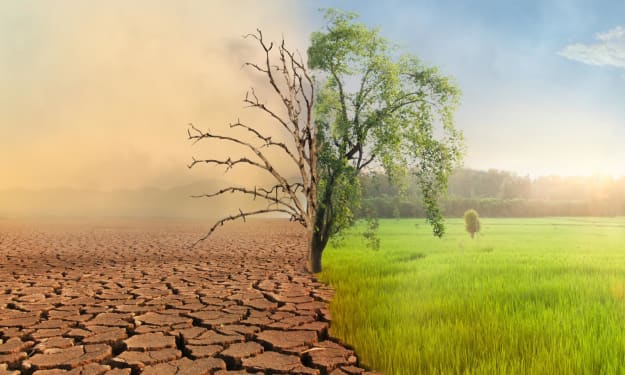
In the heart of an industrialized town stood a forgotten plot of land, a wasteland left behind by progress and pollution. Its soil was dry and lifeless, choked by the ashes of factories and the debris of neglect. Amidst the gray, lifeless landscape, there lived a woman named Sarah who held onto a vision of vibrant greenery and a renewed sense of life.
By lahcen laoumari3 years ago in Earth
Loss of Biodiversity
In the heart of a city once known for its towering skyscrapers and bustling streets, an eerie silence now settled. The city's past grandeur had been replaced by a dystopian reality—a reality where the very air was thick with pollution, and the once-blue skies were now tainted gray. The ruling government had imposed stringent environmental regulations, but they came at a price: personal freedoms were sacrificed in the name of restoring nature's balance. Amidst this bleak backdrop, a flicker of resistance sparked deep within the underbelly of the city. A group of individuals, fueled by an unwavering determination to restore their world, formed the "Green Revolution." They believed that while healing the environment was paramount, it couldn't come at the cost of human spirit and individual rights. At the heart of this movement was Maya, a young woman whose fiery spirit and unyielding resolve had earned her the admiration of her peers. Her journey began with a single seed, a seed that she clandestinely planted in a hidden corner of her apartment. As the lone sprout emerged, it symbolized the renewal of hope and the strength of nature's resilience. As Maya nurtured her small oasis in secret, she began to forge connections with others who shared her vision. Javier, an artist whose murals told stories of the city's forgotten beauty, joined the cause. Li Wei, a brilliant hacker, used her skills to spread the message of the Green Revolution across digital channels that the government couldn't control. Their movement grew, igniting the spirits of the oppressed city dwellers who longed for a better life. Meetings were held in abandoned buildings, where flickering candles illuminated faces brimming with hope. Maya spoke passionately about the importance of a balanced coexistence, where humanity thrived without compromising the environment. The government's response was swift and brutal. Crackdowns intensified, and Green Revolution members were hunted down like criminals. Yet, their resolve only deepened. Maya's heartache over the loss of friends was eclipsed by a burning desire for change. The sprout she had nurtured now stood tall as a symbol of defiance in her apartment window. As the movement gained momentum, the streets that once echoed with footsteps of despair now resonated with chants of freedom and the longing for a greener tomorrow. Murals adorned every wall, depicting vibrant landscapes that had once existed, serving as a testament to the city's potential for renewal. One fateful day, as the government prepared for a massive propaganda event to showcase their environmental successes, Maya and her companions hatched a plan. Li Wei, with her mastery of technology, hacked into the city's broadcasting system. As the propaganda broadcast began, the screens flickered to life with images of the city's current state—the smog-filled skies, the barren parks, and the downtrodden citizens. Maya's voice echoed through the city, recounting tales of a world before pollution, a world where life flourished. Tears welled in the eyes of those watching, and the government's narrative of progress crumbled before the power of truth and shared memories. The city's citizens, inspired by the truth they saw and the spirit of the Green Revolution, poured into the streets. Together, they confronted the oppressive regime with a demand for change—not just in the environment, but in their lives, their rights, and their dignity. The movement's success wasn't immediate, but its impact was profound. Over time, the government was compelled to rethink its policies, realizing that a true environmental transformation couldn't be achieved by suppressing humanity's spirit. The Green Revolution's message of unity, resilience, and balance had triumphed over fear and oppression. In the years that followed, the city began to heal. Skies slowly cleared, parks were restored, and the cityscape transformed into a living testament to the power of collective action. Maya stood in the midst of a thriving urban oasis, the sprout that had once stood alone now surrounded by lush greenery. The Green Revolution had achieved more than environmental change; it had rekindled the human spirit, proving that even in the darkest of times, hope could flourish and resilience could overcome adversity. Maya's journey, from a single seed to a city transformed, embodied the essence of a new era—an era where people and nature thrived side by side, nurturing one another in harmony.
By Fasinu Felix3 years ago in Earth
The Girl Who Could Control the Weather. Content Warning.
The Sky's the Limit: A Young Woman's Quest to Save the World. It was a hot summer day in Delhi, India, and 17-year-old Anya was feeling particularly miserable. The heat was stifling, and she could barely concentrate on her schoolwork. She kept getting up to go to the window, hoping for a breeze, but there was none.
By Punit kumar3 years ago in Earth
CLIMATE CHANGE
If one has spent any time discussing climate change on the internet, they may have come across comments that suggest that climate change is natural, citing the existence of Ice Ages and palm trees on Antarctica as evidence. However, it is important to recognize that each individual has their own unique level of education and experience, and misconceptions or failures of understanding are often the result of circumstances beyond their control. Therefore, it is important to approach these comments as a teaching moment, an opportunity to reduce ignorance and expand enlightenment.
By Austine Ochieng 3 years ago in Earth
The Last Garden (the story of a person who tends to the last surviving garden in a city ravaged by pollution).
In the heart of the city, where towering skyscrapers scraped the smog-filled sky and the cacophony of traffic drowned out all other sounds, there existed a hidden oasis. It was a place of respite, a haven that defied the odds – the last surviving garden. Amidst the concrete expanse, this sanctuary of life and beauty stood as a beacon of hope, tended to by a solitary figure who had taken on the role of its guardian.
By emmanuel segun Onijingin3 years ago in Earth
The Guardians of Blue Horizons
Once upon a time in a quaint coastal village named Azurehaven, the villagers' lives were intrinsically connected to the vibrant sea that hugged their shores. For generations, the azure waters had provided them with sustenance, inspiration, and boundless beauty.
By Jasper Hull3 years ago in Earth
Global Warming
Global warming, a pressing environmental issue of our time, refers to the long-term increase in Earth's average surface temperature due to the accumulation of greenhouse gases in the atmosphere. This phenomenon is primarily driven by human activities, such as burning fossil fuels, deforestation, and industrial processes, which release large amounts of carbon dioxide (CO2), methane (CH4), and other greenhouse gases into the air. The Earth's atmosphere acts like a blanket, allowing sunlight to enter but trapping heat that would otherwise escape into space. Greenhouse gases, including CO2, CH4, nitrous oxide (N2O), and fluorinated gases, amplify this natural greenhouse effect by preventing some of the heat from radiating back into space. While this natural greenhouse effect is essential for maintaining a habitable planet, the excessive accumulation of these gases is leading to an enhanced greenhouse effect, causing global temperatures to rise at an alarming rate. One of the primary contributors to global warming is the burning of fossil fuels, such as coal, oil, and natural gas, for energy production and transportation. These activities release vast amounts of CO2 into the atmosphere, which accumulates over time and forms a thick layer that traps heat. The widespread use of fossil fuels has led to a substantial increase in CO2 levels, from around 280 parts per million (ppm) in the pre-industrial era to over 415 ppm today. Deforestation, another significant factor in global warming, exacerbates the issue by reducing the Earth's capacity to absorb CO2. Trees act as carbon sinks, absorbing CO2 from the atmosphere during photosynthesis and storing it in their biomass. When forests are cleared for agriculture, urban development, or logging, this stored carbon is released back into the atmosphere, intensifying the greenhouse effect. Methane, though present in smaller quantities than CO2, is an even more potent greenhouse gas. It is released from various sources, including livestock digestion, rice paddies, and landfills. Additionally, the thawing of permafrost due to rising temperatures can release large amounts of methane previously trapped in the frozen ground, creating a feedback loop that further accelerates global warming. The consequences of global warming are far-reaching and have the potential to disrupt ecosystems, weather patterns, sea levels, and human societies. Rising temperatures can lead to more frequent and severe heatwaves, droughts, and wildfires, endangering both human and animal populations. Changing precipitation patterns can lead to altered agricultural yields, impacting food security. Furthermore, the melting of glaciers and polar ice caps contributes to rising sea levels, threatening coastal communities and ecosystems. To address global warming, international efforts such as the Paris Agreement have been established to mitigate its impacts. The Paris Agreement, adopted in 2015, aims to limit global warming to well below 2 degrees Celsius above pre-industrial levels and pursue efforts to limit it to 1.5 degrees Celsius. Countries that are party to the agreement commit to reducing their greenhouse gas emissions and enhancing their climate resilience. Transitioning to renewable energy sources, such as solar, wind, and hydroelectric power, is a crucial step in mitigating global warming. These sources produce little to no greenhouse gas emissions during operation, reducing the overall carbon footprint. In addition, energy efficiency measures, sustainable land management practices, and reforestation efforts play essential roles in curbing emissions. Individual actions also contribute to addressing global warming. Choices such as using energy-efficient appliances, reducing meat consumption, using public transportation or carpooling, and minimizing waste can collectively make a significant impact. Raising awareness and advocating for climate-friendly policies are vital steps toward inspiring change on a broader scale. In conclusion, global warming presents a formidable challenge to the planet's ecosystems, weather patterns, and human societies. Human activities, particularly the burning of fossil fuels and deforestation, have led to the accumulation of greenhouse gases in the atmosphere, causing temperatures to rise at an alarming rate. The consequences of global warming are already evident in the form of extreme weather events, rising sea levels, and ecological disruptions. Addressing this issue requires international cooperation, policy initiatives, and individual actions aimed at reducing greenhouse gas emissions and transitioning to sustainable energy sources. As we move forward, it is imperative that societies around the world take decisive steps to mitigate global warming's impacts and ensure a habitable planet for future generations.
By Krithik Sankar3 years ago in Earth
Top 10 Places to Visit in Mumbai
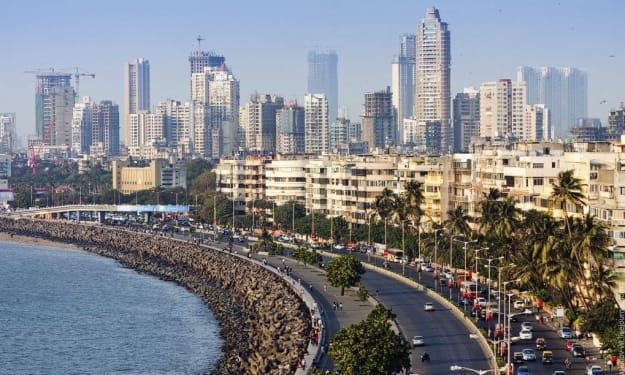
Mumbai, often referred to as the “City of Dreams,” is a vibrant metropolis that embodies the heart and soul of India. As the financial, cultural, and entertainment capital of the country, Mumbai offers a blend of history, modernity, and diverse experiences that captivate travelers from all around the world. From iconic landmarks to bustling markets and serene waterfronts, here are the top 10 places to visit in Mumbai.
By Skysafar Tourism3 years ago in Earth
A Symphony of Growth
In the heart of the bustling city of Havenbrook, nestled between towering skyscrapers and crowded streets, lived a woman named Eliza. Eliza was unlike most city dwellers; she had a deep yearning for greenery and a love for the simple act of planting a seed and watching it grow into a vibrant life. Despite the concrete jungle that surrounded her, she had transformed her small apartment balcony into a flourishing garden, a sanctuary of life amid the urban chaos.
By Tharinda Madhuwantha3 years ago in Earth