Nature
The Arctic once completely melted under a moderate environment is revealed in a hidden cave in Greenland.
The Arctic wasn't always dead and cold. Parts of northern Greenland were green, wet, and teeming with flowing water millions of years ago. Evidence of that lost warmth can now be found in a tunnel beneath its current ice.
By Francis Dami11 months ago in Earth
The Green Caterpillars – A Tale of Transformation and Hope
On a quiet morning, beneath the gentle shade of a leafy branch, two tiny green caterpillars rested upon a single leaf — nature’s humble stage. They were small, almost unnoticeable to a hurried eye. Yet, within their slow movements and silent existence, there lived a story far grander than words could tell — a story of patience, transformation, and the quiet power of becoming. Their bodies, soft and tender, gleamed under the faint light. Each tiny curve and line seemed to whisper a secret — that even the smallest creature has a destiny written deep within it. One could see the delicate texture of their green skin, the subtle spots resembling eyes, perhaps designed by nature to protect them from harm. They looked fragile, yet in their stillness was a hidden strength — the promise of wings yet to come. The leaf beneath them was more than just food; it was a foundation of life. With every small bite, they were gathering energy, not merely to survive, but to prepare — to build a future unseen. Isn’t that what life is, too? We all begin somewhere, small and unnoticed, feeding on the little experiences that shape us, preparing for a moment of transformation we might not even see coming. As the wind brushed gently across the surface, the leaf trembled, but the caterpillars held firm. Their connection to the leaf was deep — symbolic of our own connection to the world around us. Every leaf, every drop of dew, every living creature plays a part in this grand cycle. The caterpillars did not rush their journey; they moved slowly, deliberately, as if they already understood that true growth takes time. We often look at such creatures with little thought, perhaps even discomfort, forgetting that these very beings carry one of nature’s greatest miracles — metamorphosis. In time, these green bodies will wrap themselves in silence, hiding away from the world in a cocoon of their own making. Days will pass. They will seem still, lifeless even. But within, a transformation beyond imagination will unfold. From that stillness will emerge something magnificent — a butterfly, painted in colors of freedom. The crawling caterpillar will take to the sky, and what once fed upon leaves will now sip from flowers. Isn’t it astonishing how nature teaches us the art of change without saying a single word? We, too, go through our own seasons of becoming. There are moments when we feel small, unseen, stuck in the crawling phase of life. But those moments are not the end — they are the preparation. The caterpillar does not fear the cocoon; it trusts the process. It embraces the darkness because it knows that wings are waiting on the other side. If we could learn from this humble insect, perhaps we would learn to trust our own transformations. Growth is not always visible. It is slow, silent, and often uncomfortable. But within that stillness, magic is at work. Like the caterpillar, we are constantly evolving, preparing to take flight in our own unique ways. Look again at the photo — the two caterpillars side by side. One slightly ahead of the other, both sharing the same leaf, the same journey. They remind us that no transformation happens alone. We all have companions on this path — people who walk beside us, feed from the same source of hope, and move forward with us even when the way seems uncertain. Together, we create balance — a harmony of life’s rhythm. The leaf beneath them, too, plays its part. It gives, silently, selflessly. It reminds us of the importance of nurturing others while we can. In the great web of life, giving and growing are deeply intertwined. The caterpillar feeds, but one day, as a butterfly, it will pollinate flowers — giving life back to the world that once sustained it. The circle continues. This simple image — two green caterpillars on a leaf — holds the wisdom of a lifetime. It tells us to slow down and notice. To appreciate the small miracles that happen every day. To find beauty not only in the butterfly but in the quiet, crawling moments that lead to it. So, the next time you see a caterpillar, do not rush to move it away. Look closer. See the journey it represents. Remember that life, like this tiny creature, is always changing, always becoming something more. We are all caterpillars in some phase — learning, growing, waiting for our wings. The beauty of transformation begins in silence. It begins in trust. It begins, perhaps, just like this — on a simple green leaf, under the soft morning light, where two caterpillars dream of the sky.
By Hasbanullah12 months ago in Earth
Incredible Dry Tortugas National Park
Located in Florida west of Key West, Dry Tortugas National Park has an abundance of wildlife. It can only be reached by boat or seaplane. This is a favorite among snorkelers and divers. There is lots of wildlife to enjoy, from nesting seabirds to sea turtles to playful dolphins, among others.
By Rasma Raisters12 months ago in Earth
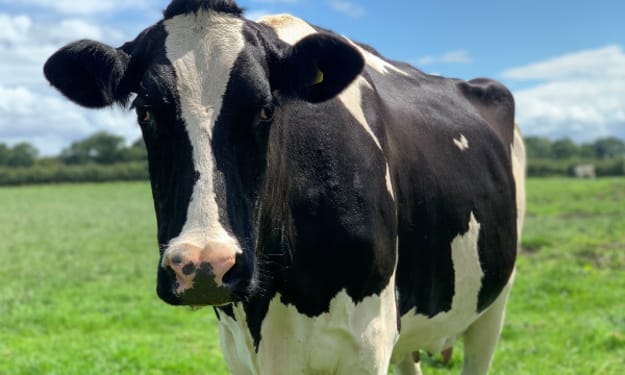
Mooving the Cattle Along
Angus cattle are strongly muscled and have pleasant temperaments. They are one of the top beef cattle breeds in the world, producing high-quality, well-marbled beef. The Black Angus and Red Angus cattle are regarded as two separate breeds of cattle in the USA. In the UK, however, they are both registered under the same herd book as Aberdeen Angus or Angus in either black or red colors. They are said to have been bred from the black cattle of Northeast Scotland, which were known as “hummlies” or “doddies.”
By Rasma Raisters12 months ago in Earth
The climate of Earth is shaped by the buried carbon carried by rivers.
Stories of land and life are carried by every river. It carries dissolved organic matter—bits of carbon from soil, plants, and human activity—into the sea. This material was followed by scientists from China's Nanjing Institute of Environment Sciences and the Institute of Science Tokyo through three rivers that met the Yellow Sea.
By Francis Dami12 months ago in Earth
The temperature of Earth is greatly influenced by tiny ocean shells.
Unbeknownst to us, marine life that forms microscopic calcium carbonate shells contributes to climate regulation. Researchers discovered that existing climate models under-represent the calcifying plankton, which includes coccolithophores, foraminifers, and pteropods, which are plankton-based shell builders.
By Francis Dami12 months ago in Earth
The threats posed by today's melting glaciers are warned about by ancient sea levels.
According to a recent study, the global mean sea level changed significantly during the last Ice Age, not just at its conclusion, which is a significant reexamination of Earth's past. The 4.5 million-year-old work reframes scientists' understanding of ice sheets and climate pace.
By Francis Dami12 months ago in Earth
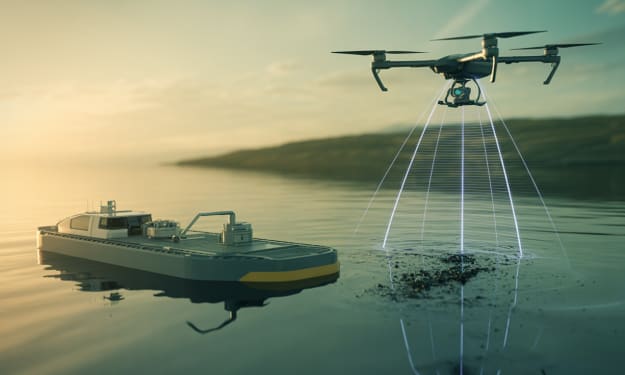
Oil Spill Solutions: Innovations in Prevention & Response. AI-Generated.
The global energy sector cannot afford the cost, the environmental destruction, or the negative public opinion that follows a major maritime disaster. While the memory of past spills remains a painful reminder, the technology and strategies used to prevent and respond to them have changed dramatically. The fact is, simply cleaning up oil with booms and skimmers is a decades-old concept. Today’s focus is on proactive Oil Spill Solutions, using advanced materials, AI, and even microbiology to manage risk. In 2024 alone, ten significant tanker spills occurred, resulting in approximately 10,000 tonnes of oil lost to the environment, confirming the continuing, acute need for better systems.
By Devin Rosario12 months ago in Earth
Steam, Not Smoke
by Futoshi Tachino In Kenya’s Rift Valley, the ground exhales. Around Naivasha, at a place called Olkaria, wells tap rock-hot water and steam that have already helped Kenya become Africa’s geothermal leader — and one of the few countries where clean, firm power anchors the grid. Recent analyses put geothermal’s share of Kenya’s electricity around the mid-40s, with some reports citing roughly 47 percent in 2024. That matters in a drought-prone region where hydropower is variable and diesel is expensive.
By Futoshi Tachino12 months ago in Earth
Tuvalu's Three-Layer Plan for Continuity
by Futoshi Tachino At high tide on Fogafale—the long, thin islet that holds Tuvalu’s capital—you can stand on the lagoon shore and see the ocean through the breadfruit trees behind you. There isn’t much “away” in a place only a couple of meters above sea level. So Tuvalu has done something extraordinary: it is building a future on three layers at once—physical, legal-human, and digital—so that Tuvaluans can keep being Tuvaluans, no matter what the water decides.
By Futoshi Tachino12 months ago in Earth
Burps, Bottles, and a Bay in Tasmania
by Futoshi Tachino On Tasmania’s east coast, the tides in Spring Bay don’t just bring boats to harbor; they feed a farm. Here, Sea Forest cultivates a native red seaweed, Asparagopsis, that—when fed in tiny amounts to cows—can throttle the methane produced in their stomachs. It’s a climate fix born of the shoreline and aimed squarely at one of Oceania’s knottiest problems: livestock emissions. In both Australia and New Zealand, agriculture is a top emitter, and enteric methane from ruminants is the elephant (really, the cow) in the room. What’s different in Tasmania is that the solution now has a retail label, not just a lab result.
By Futoshi Tachino12 months ago in Earth