Nature
The Unfathomable Plunge
In the realm of skydiving, the ordinary entails leaping from planes hovering at approximately 3.8 kilometers above Earth's surface. Now, picture a leap from a vantage point even higher – the International Space Station. This daring endeavor, however, is not for the faint-hearted, unless, of course, you possess a super suit akin to the fictional Tony Stark's. Brace yourself as we delve into this captivating thought experiment, exploring the astounding physics and scientific intricacies that would unfold during such an extraordinary jump.
By Japneet Kaur3 years ago in Earth
Tides of Farewell
In the quaint coastal village of Havenbrook, life unfolded like the rhythmic symphony of waves crashing against the shore. Generations of families had carved their stories into the sands of time, their homes nestled beside the tranquil embrace of the sea. For the villagers, the ocean was both a provider and a confidant—a silent witness to their joys and sorrows. But destiny had charted a new course, and the tides of change were rolling in, ushering a profound farewell that would forever linger in their hearts. Lena, an ardent daughter of the village fisherman, had grown up steeped in the cadence of the sea. Childhood days were woven with tales of maritime legends, and nights lulled by the whisper of the tide. The sea had been her cradle of dreams, nurturing aspirations that reached as far as the horizon. Yet, as time unfurled its tapestry, the sea that had long nurtured her seemed poised to reclaim its gifts. Rising sea levels painted a haunting truth—their beloved Havenbrook was slipping away. One somber evening, the village gathered beneath the canopy of a fading sun, where a town meeting unfurled a tableau of emotions. The village's leader, Mayor Carter, stood with a heart heavy as an anchor, his words trembling as they carried the weight of a shared destiny. The impending exodus hung heavy in the air, a decision as inevitable as the tides themselves. Lena's pulse quickened as the words sank in—Havenbrook was succumbing to the relentless advance of the ocean, and its embrace would forever alter the village's existence. As the villagers dispersed, Lena's steps led her to the shore—a place that had etched itself into the tapestry of her memories. Tears melded with the salt that clung to her cheeks, falling like raindrops into the abyss of the sea. A lone seagull soared overhead, its wings a stark reminder of the fragile line between freedom and captivity. The vastness of the ocean mirrored the expanse of her emotions—grief, resignation, and the unwavering spirit of her ancestors who had sailed these waters. In the weeks that followed, boxes were packed, and memories were carefully folded into layers of cloth and paper. Lena's father, a man of weathered hands and a heart etched with resilience, mended his fishing boat with unwavering determination. The same boat that had borne witness to storms and calm waters alike would now carry them away from the only home they had ever known. Lena watched him from a distance, her heart an intricate mosaic of pride and sorrow. Her mother's absence hung like a specter in the air, a memory of a time when the sea had claimed more than shoreline. The day of departure arrived, a tapestry of emotions woven from the threads of nostalgia and anticipation. The village bustled with the rhythm of final preparations, each face etched with a shared history that transcended spoken words. Lena and her best friend, Mateo, stood by the water's edge, a silent exchange of understanding passing between them. They had navigated the labyrinth of childhood together—their friendship a sanctuary amidst the changing tides. As they loaded their belongings onto Lena's father's mended boat, their eyes met, words unspoken yet profoundly understood. "It's hard to say goodbye," Lena whispered, her voice a fragile melody carried away by the sea breeze. Mateo nodded, his gaze fixed on the horizon where the sun dipped below the water's edge. "We carry Havenbrook with us, wherever we go. The sea might take our homes, but it can never erase the memories etched into our hearts." The boat set sail, a vessel carrying not just villagers, but the essence of Havenbrook itself—a mosaic of laughter, tears, and the indomitable spirit that had weathered countless storms. As they watched the village shrink into the distance, each heartbeat resonated with the collective ache of farewell. The sea shimmered with the weight of their shared history, its waves whispering secrets known only to those who had called it home. Years spun their threads into the fabric of time, and Lena found herself on distant shores—her gaze fixed on waves that mirrored the ones she had bid goodbye. By her side stood Mateo, their intertwined histories painted across the canvas of their lives. Their children laughed and played at the water's edge, their innocence a reminder of the continuity of life, even in the face of farewell. As the sun dipped below the horizon, casting a warm embrace over the water, Lena understood that the tides of farewell had ushered them into a new beginning. The village of Havenbrook might have slipped beneath the waves, but its spirit thrived in the stories whispered to children, in the traditions kept alive, and in the unbreakable bond between those who had once called it home. The sea held not just memories of what was lost, but a promise of what could be—a reminder that even amidst the deepest farewells, the currents of hope and resilience could chart a course to a brighter horizon.
By Michael Rimamchaten3 years ago in Earth
Unraveling the Enigmas
Welcome to the captivating world of enigmas and mysteries that have puzzled researchers and investigators for generations. While the truth may exist beyond our reach, the quest to unveil these riddles remains an enduring fascination. Join us as we explore ten perplexing conundrums that have resisted resolution, from ancient monuments to haunting disappearances.
By Japneet Kaur3 years ago in Earth
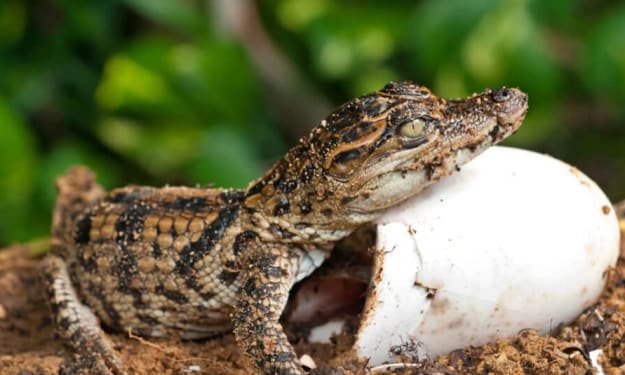
Ten interesting facts about crocodiles
Crocodiles inhabit the Tropics of Asia, Africa, Australia, and America. They belong to the order Crocodilia, which also includes alligators and caimans. Due to their swift movement in water, crocodiles can appear quite intimidating. In fact, they can swim at speeds of up to 22 miles per hour. Their muscular tails and webbed feet act as rudders, allowing them to achieve such velocity. Here are 10 interesting facts about crocodiles that you may not know: 1. Crocodiles are related to dinosaurs. While crocodiles are reptiles, they are more closely related to dinosaurs and birds than other reptiles. Crocodile-like creatures first appeared on Earth approximately 240 million years ago, around the same time as dinosaurs. The first crocodile was about three feet long and walked on two legs, with shorter front legs compared to their hind legs. 2. The term "crocodile tears" originated from the behavior of crocodiles. These tears are considered fake, as crocodiles produce them while eating. As they swallow their food, air from their sinuses enters the tear ducts and causes their eyes to overflow, creating the appearance of crying. Crocodiles also emit huffing and hissing sounds when fed, which may lead to watery eyes. 3. Crocodiles possess the most powerful bite among all animals on Earth. While a human jaw exerts only 100 pounds of pressure per inch, crocodile jaws can apply up to 3,700 pounds of pressure per inch. Their bite is ten times stronger than that of a great white shark. However, the muscles responsible for opening their jaws are relatively weak, allowing humans to easily close their mouths with a rubber band or hand. 4. Baby crocodiles make noises inside their eggs before hatching. A remarkable characteristic of crocodiles is that young ones communicate with their mothers from within the eggshell. The mother crocodile can hear the whispers of her offspring, even when the eggs are buried in sand. She retrieves the eggs, protects them until they hatch, carries them to rivers, and feeds them insects. 5. Crocodiles are the largest known reptiles on Earth. When measuring their full length, saltwater crocodiles take the title as the largest living reptiles. Adult saltwater crocodiles can exceed seven meters in length, making them the longest reptiles worldwide. They can weigh up to 5,000 kilograms or approximately 2,600 pounds. 6. Despite having 24 sharp teeth, crocodiles rarely use them for chewing. Instead, they employ their teeth to catch, grasp, and crush prey or food. Crocodiles swallow small stones, which aid in grinding food within their stomachs. Although their jaws exert considerable force when closing, minimal force is required to keep them closed. 7. The temperature of a crocodile egg determines the gender of the offspring. Male crocodile eggs hatch at a temperature of 88.8 degrees Fahrenheit. If the temperature deviates above or below this threshold, female crocodile eggs will hatch. 8. Crocodiles sometimes rest with their mouths wide open. If you encounter a crocodile in this posture, it is often just resting. While this may instill subconscious fear for personal safety, crocodiles open their jaws to facilitate ventilation. Since crocodiles cannot sweat, they use this method to dissipate body heat. 9. Crocodiles may swallow small stones to aid digestion. Crocodiles that consume prey with shells and bones, or those that swallow their prey whole, benefit from ingesting stones called gastroliths. These stones grind the food within their stomachs, and crocodiles can retain them for many years. 10. Sadly, 99% of baby crocodiles perish within their first year. Despite being fearsome predators, young crocodiles are highly vulnerable. The infant mortality rate is exceptionally high, with up to 99% of young crocodiles dying before reaching one year old. Various predators, including adult crocodiles, lizards, hyenas, and large fish, consume most of them. Unfortunately, some humans also indulge in consuming crocodile eggs. Crocodiles are incredible creatures, possessing not only a formidable bite and impressive size but also unique attributes. However, their skins are often harvested to create branded bags, shoes, and wallets, resulting in many crocodiles being killed. As humans, we can contribute by reducing the demand for these products, thus helping to save more crocodiles.
By Danny Cullum3 years ago in Earth
Sudden Surge: 500m Sea Rise?
Imagine chaos in the streets and news spreading like wildfire: sea levels jumping up by 500 meters out of the blue, and huge waves coming your way. The Earth is seized by an extraordinary and devastating event. Where could you hide to stay safe? Would your city be wrecked? What would make something this huge happen?
By Pourus Anklesaria3 years ago in Earth
Formula 1
The deafening roar of engines echoed through the concrete canyons of Monaco, a symphony of power and precision. The sun-kissed Mediterranean principality had come alive, transformed into a battleground where speed was the weapon of choice. The streets were lined with spectators, each hoping to catch a glimpse of the adrenaline-fueled drama that was Formula 1.
By Lawal Musa3 years ago in Earth
Why You Should Never Be Alone in the Amazon Forest
Within the heart of the Amazon rainforest lies a realm of unparalleled danger. The Amazon has always been one of nature's battlegrounds, where survival is an unending dance of life and death. In this environment, nature's warriors lurk in every shadow, waiting for the opportune moment to strike. From the cunning and agile to the venomous and fierce, the Amazon stands as a lush paradise that some of the deadliest creatures on our planet call home. Join us as we delve into the realm of the Amazon's 20 deadliest animals. These are no ordinary creatures; they are the Titans of the Amazon, relentlessly guarding their territories with unyielding determination.
By Pourus Anklesaria3 years ago in Earth
The Role of Air Purifiers in Mitigating Air Pollution
Air pollution is a pressing environmental issue that poses significant risks to human health and the planet. In recent decades, the rise of urbanization and industrialization has led to an increase in pollutants in the atmosphere, impacting both outdoor and indoor air quality. Among the solutions being explored to combat air pollution, air purifiers have emerged as a promising tool to mitigate the adverse effects of polluted air. This article delves into the broader environmental context of air purifiers, discussing their role in addressing urban air pollution and indoor pollution sources, while exploring their effectiveness in reducing pollutants like PM 2.5 and volatile organic compounds (VOCs).
By Wilson Igbasi3 years ago in Earth
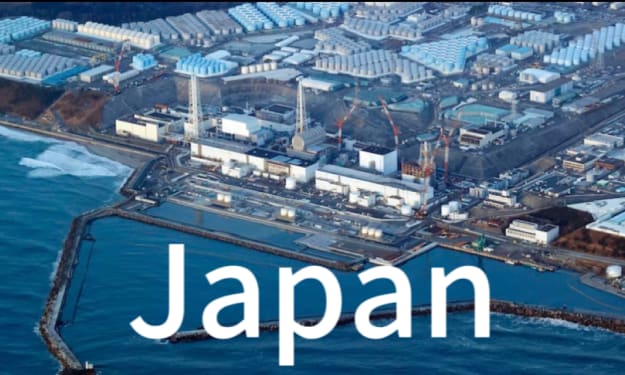
The Sinister Discharge of Nuclear Sewage in Japan
In the eerie depths of the Pacific Ocean, a chilling secret has emerged from the shadows, casting a long, sinister silhouette over Japan's shores. The recent revelation of a nuclear sewage discharge has ignited a storm of uncertainty, unraveling a suspenseful tale of secrecy, potential ecological disaster, and the haunting consequences of man's insatiable thirst for progress. As the world grapples with the implications of this revelation, an atmosphere of suspense and foreboding has enveloped the nation, leaving us to wonder what lies beneath the surface of this chilling narrative.
By Stone Chen3 years ago in Earth
The Impact of Climate Change on Vulnerable Communities
Once upon a time, in a remote coastal village nestled between rolling hills and the shimmering sea, lived a community of people who had always depended on the ocean for their livelihoods. The villagers, with their rich traditions and deep respect for the environment, had thrived for generations. But now, they faced an unprecedented challenge - the relentless impact of climate change.
By selena lam3 years ago in Earth
Eternal Summers
Chapter 1: A Meeting of Souls The scorching heat of summer bore down on the small town of Willow brook. The earth was cracked, and the once-lush meadows had withered to a golden hue. In the midst of this arid landscape, two souls, Mia and Ethan, found themselves drawn together by an unexplainable force.
By nimco haji3 years ago in Earth