Nature
The hidden language of nature
The natural world is a vast and complex ecosystem, with countless species of plants, animals, and microorganisms interacting in intricate ways. For centuries, humans have been fascinated by the mysteries of nature, seeking to understand the forces that shape our world and the creatures that inhabit it.One of the most intriguing aspects of the natural world is the hidden language that exists within it. From the songs of birds to the chemical signals emitted by plants, there are countless ways in which organisms communicate with one another, often in ways that are invisible to the human eye.One example of this hidden language is the way in which plants communicate with one another. Through a process known as allelopathy, plants release chemicals into the soil that can affect the growth and development of nearby plants. Some plants release chemicals that inhibit the growth of competitors, while others release chemicals that attract beneficial insects or repel pests.Another example of the hidden language of nature is the way in which animals communicate with one another. Birds use complex songs to attract mates and establish territories, while bees use dance to communicate the location of nectar-rich flowers to their hive mates. Even the way in which animals move can convey important information, such as the aggressive posturing of a lion or the submissive behavior of a submissive dog.Microorganisms also play a crucial role in the hidden language of nature. Bacteria and fungi communicate with one another through chemical signals, forming complex networks that can span entire ecosystems. These networks can help to regulate nutrient cycling, soil health, and other important ecological processes.Understanding the hidden language of nature can have important implications for conservation and sustainability efforts. By understanding how organisms communicate with one another, we can develop more effective strategies for managing ecosystems and protecting biodiversity. For example, by using natural plant-based pesticides that mimic the allelopathic chemicals released by certain plants, we can reduce our reliance on synthetic pesticides that can harm beneficial insects and other organisms.In addition to its practical applications, the hidden language of nature also has a profound aesthetic and spiritual value. Many people find solace and inspiration in nature, whether it's through the beauty of a sunset or the delicate intricacy of a flower. By understanding the hidden language of nature, we can deepen our appreciation for the natural world and develop a greater sense of connection to it.However, despite our fascination with the natural world and its hidden language, we must also recognize our role in shaping it. Human activities such as deforestation, pollution, and climate change have had a profound impact on ecosystems around the world, disrupting the delicate balance of nature and threatening countless species with extinction.To address these challenges, we must take action to protect and restore ecosystems around the world. This includes reducing our carbon footprint, promoting sustainable agriculture and forestry practices, and protecting key habitats for endangered species.By understanding and respecting the hidden language of nature, we can work together to create a more sustainable and harmonious relationship between humans and the natural world. Whether through scientific research or artistic expression, we can continue to explore the mysteries of nature and deepen our understanding of this beautiful and complex ecosystem in which we live.
By Fadda Rafisq3 years ago in Earth
Humanitarian Catastrophe
Jenny and her family awoke to the deafening roar of helicopters when the sun had barely risen over the horizon. They knew what this meant – another hurricane was fast approaching. This has been their experience for years, their coastal village had been thrashed by storms, leaving them emotionally scarred and displaced time and again. Jenny clutched her young son, Jose, to her chest as her husband, Carson, rushed around their small, makeshift shelter, gathering whatever belongings they had left. The emotional toll of their constant struggle for survival weighed heavily on their hearts, but they had no choice but to carry on. As the wind began to howl and the rain lashed down, Jenny recalled the countless times they had faced nature's fury. Each storm brought with it; despondency, destruction, and emotional turmoil. The scars on their village reflect the scars on their souls. Amidst the chaos, Jenny had found strength she never knew she possessed. She became a pillar of support for her family, she determined to protect them from the emotional turmoil that gripped their lives. Carson, too, had grown resilient, learning to gather and rebuild their lives each time disaster struck. As the hurricane raged on, Jenny thought about the emotional cost this constant upheaval had on Jose. He had been born into this world of uncertainty, where the sound of raindrops on the roof made him tremble in fear. But Jenny was determined to shield her son from the emotional scars that had marked her own life. Hours turned into days as the storm continued its relentless assault. When it finally passed, the devastation left behind was overwhelming. Their shelter was damaged, and the village lay in ruins. Jenny, Carson, and Jose joined their neighbors in the painful process of picking up the pieces, both physical and emotional. Despite the heartache, the community came together, offering each other support and strength. They knew that, in the face of these humanitarian calamities, they could only survive by standing united. As they worked side by side, rebuilding homes and lives, a glimmer of hope began to emerge amidst the emotional wreckage. Months turned into years, and although the scars of their past remained, so did their resilience. They learned to adapt, to prepare, and to cherish each moment of peace. Jose, too, grew stronger, his emotional scars slowly healing as he witnessed the unwavering love and determination of his parents and the resilient spirit of their community. One day, as the sun bathed their village in a warm glow, Jenny looked at her family and felt a profound sense of gratitude. They had witnessed countless storms together, emerging from each one stronger than before. Their emotional bonds had deepened, and their hope had been rekindled. In the face of humanitarian calamities, this small coastal village had shown the world the power of unity, resilience, and the unwavering human spirit to overcome emotional turmoil and rebuild lives from the ruins of the pastast.Their village became a beacon of hope and inspiration for neighboring communities. Their story of resilience amidst humanitarian calamities echoed far and wide, reminding people that even in the bleakest of circumstances, there is strength in unity, resilience and determination. The emotional scars that once marked their lives had transformed into badges of honor, symbols of the battles they had fought and won together. Their village had not only rebuilt homes but had also rebuilt lives, stronger and more connected than ever before. For Jose, he grew into a young man filled with a profound sense of purpose. He knew that he was part of a generation that could change the narrative of their village and the whole world at large. With his parents' guidance and the collective strength of their community, he dedicated himself to studying climate science and advocating for policies that could mitigate the impact of future disasters and storms.
By Grace Adeoye3 years ago in Earth
Harmony or Harm
The intricate relationship between human activities and the environment has been a defining aspect of our existence on this planet. Throughout history, humans have shaped their surroundings and have been shaped by them in return. In the modern age, as our footprint on Earth expands, the impact of our activities on the environment has become a matter of global concern. This article explores the complex interplay between human actions and the environment, shedding light on both the harm we've caused and the potential for a harmonious future.
By Godswill Dugbo3 years ago in Earth
A Tapestry of Beauty: Life in a Rajasthan Village. Content Warning.
Once upon a time, in the heart of Rajasthan, there lay a village that was as vibrant as a peacock's plume and as timeless as the desert sands. This village, aptly named "Sundar Nagar," was a place where beauty was not just a word but a way of life. The village was nestled amid the golden dunes of the Thar Desert, surrounded by an arid landscape that belied the richness of its culture. The people of Sundar Nagar were proud custodians of traditions passed down through generations. Their lives were a testament to the exquisite beauty that could be found in simplicity. Every morning, as the sun cast its first gentle rays over the village, women adorned in colorful ghagras and odhnis would gather at the village well. Their laughter echoed through the air as they filled their pots with water, chatting about the day's chores and sharing stories of their families. The well was not just a source of water but a hub of community life, a place where bonds were forged and stories were woven. The heart of Sundar Nagar was its marketplace. Bustling with activity from dawn till dusk, the market was a riot of colors and fragrances. Rows of stalls displayed handcrafted jewelry, intricate textiles, and pottery that told tales of a bygone era. The aroma of freshly cooked samosas and jalebis wafted through the air, enticing passersby to savor the flavors of Rajasthan. Amidst the vibrant marketplace, there was an elderly potter named Devdas. His hands, weathered by years of molding clay, had crafted some of the most exquisite pottery the village had ever seen. His designs were inspired by the intricate patterns of the havelis that adorned the nearby towns. Devdas often said that the beauty of the havelis should not be confined to walls but should be shared with the world. And so, his pottery became a canvas on which the village's architectural wonders came to life. Nights in Sundar Nagar were enchanting. As the stars glittered in the vast desert sky, the villagers gathered around a bonfire, their faces illuminated by its warm glow. They sang folk songs that had been passed down for centuries, the melodies weaving stories of love, valor, and the ever-changing sands of the Thar. The flames danced to the rhythm of the music, casting flickering shadows on the faces of the villagers, each with a story etched in their wrinkles. In Sundar Nagar, beauty wasn't just confined to the physical; it was an integral part of their spirits. The villagers found beauty in their traditions, in the bonds of family and community, and in the stark yet mesmerizing landscape that surrounded them. As time flowed like the sands of the Thar, Sundar Nagar remained a timeless testament to the enduring beauty of Rajasthan's village life. It was a place where the past and the present coexisted harmoniously, where simplicity was treasured, and where the vibrant tapestry of life was woven with threads of tradition, love, and togetherness. And so, the village of Sundar Nagar continued to thrive, a living masterpiece of beauty in the heart of Rajasthan, where life was a celebration, and every day was a reminder that beauty, in all its forms, could be found in the simplest of moments. Monsoon brought the gift of life. Raindrops kissed the parched earth, and the Thar Desert transformed into a sea of wildflowers. The villagers, their faces adorned with smiles as bright as the blooms, celebrated this life-giving season with folk dances. Dressed in vibrant costumes, they danced in the fields, their rhythmic steps and swirling skirts creating a mesmerizing spectacle. The beauty of nature's cycle, from the dry desert to a blossoming paradise, was a source of wonder and gratitude for all. Autumn, with its mild days and cool nights, was a time of harvest. The fields were ripe with golden grains, and the villagers worked together to bring in the bounty. Songs of gratitude filled the air as they thanked the gods for the abundance bestowed upon them. The beauty of this season lay in the unity and cooperation that bound the community, in the shared joy of a bountiful harvest. Winter arrived with crisp, chilly mornings. In Sundar Nagar, this meant the start of the festival season. Diwali, the Festival of Lights, was celebrated with unparalleled grandeur. The entire village sparkled with the warm glow of countless oil lamps, and the night sky was illuminated with bursts of fireworks. Families exchanged sweets and gifts, and the village temple was a place of serene beauty, filled with the fragrance of incense and the soft chanting of hymns. Spring awakened the desert once more. The sand dunes, previously monochromatic, now came alive with vibrant hues. The villagers celebrated Holi, the Festival of Colors, with exuberance. They joyously smeared each other with bright powders, their laughter echoing through the village. The beauty of this season was in the unabashed expression of joy and the vivid colors that adorned every corner of Sundar Nagar. Year after year, Sundar Nagar continued to thrive in its rustic beauty. The thatched huts, adorned with hand-painted frescoes, stood as a testament to the villagers' artistic talents. The intricate patterns, passed down through generations, told stories of their heritage and connected them to their ancestors. The village's most treasured beauty, however, was its people. The wisdom of the elderly, the innocence of the children, and the resilience of the adults formed the soul of Sundar Nagar. They had an unwavering faith in the beauty of their traditions and the simplicity of their lives. It was a place where everyone knew everyone else, where kindness and compassion were as abundant as the grains in the fields. In Sundar Nagar, life moved at a pace dictated by nature, not by the relentless march of time. The villagers found beauty in the rhythm of their days, in the changing seasons, and in the bonds that held their community together. It was a reminder that true beauty, whether in nature, traditions, or people, was not found in the grand and extravagant but in the pure and authentic. And so, Sundar Nagar remained a haven of beauty, a place where the timeless essence of Rajasthan's village life continued to enchant, captivate, and inspire all who were fortunate enough to experience its allure.
By shiv lakhara3 years ago in Earth
Unveiling the Enigmatic World of Rogue Planets
Introduction When envisioning planets, one often imagines them in orbit around a star, basking in its light. However, the universe holds surprises beyond our conventional assumptions. Enter rogue planets—enigmatic wanderers that drift through space without being bound to any star. Over the past decade, astronomers have begun to uncover the prevalence of these free-floating celestial bodies, fundamentally reshaping our understanding of planetary systems and our place in the cosmos.
By Japneet Kaur3 years ago in Earth
Why A few Trees Are Painted White + 11 Unobvious Why-s
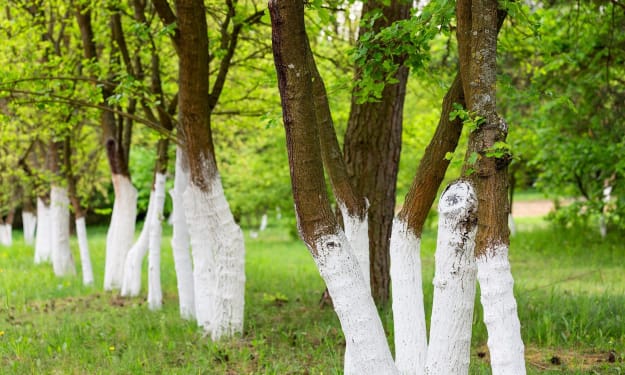
have you at any point sat in the restroom asking why tissue as extravagant examples on them well assuming you're in there long enough I suppose you would at long last find time for that turns out those prints truly fill a need they utilize the prints to cushion up the paper a little and make it more retentive the extraordinary examples assist with separating various organizations items available additionally reuse tissue is a thing yet it's not as famous or all around sold in the US all things considered in Europe and Latin America and that is all I need to say regarding that ah yes one of the best Secrets of the nibble World for what reason do wafers have openings in them wafers begin as hydrated mixture which implies that they have a ton of wet fixings in them contrasted with dry ones like flour and salt so when hydrated batter prepares it discharges steam as they get warmed through it brings about something many refer to as an open morsel a surface is brimming with little air pockets in the event that we want an entirely firm saltine the mixture needs to deliver the steam that is gathered in there and that is where the openings prove to be useful and all that fresh is thanks to them now this star a few old houses and horse shelters have isn't something we focus on yet it's exceptionally recognizable it's known as a horse shelter star paying little mind to where it's found put it on a palace it's as yet a stable beginning nobody is certain where precisely it takes its underlying foundations and what it initially implied yet they turned out to be especially normal for individuals to use toward the finish of the nineteenth century obviously individuals used to paint mathematical figures on their Outbuildings and every one would mean something the star was accepted to bring best of luck certain individuals additionally decipher it as connoting welcome and they began to put it on houses others simply say that they look cool and just fill an enhancing need currently I'm almost certain you've seen that electrical fittings have moles in their prongs yet what are they utilized for well 100 years back when the primary fittings were planned they had prongs with indents those indents would line up with knocks inside the attachments to get them there so it won't drop out later the indents were supplanted with openings and it was for similar reason cutting edge plugs needn't bother with openings to be gotten inside they're gotten with grinding and tension openings are so valuable however yet just during assembling some supplement a pole through the openings to keep them consistent while they envelop them by plastic other than that openings have no utilization and they are discretionary so the producers can choose if they have them or not I was driving two or three days prior and saw those trees that you paint wide at the base turns out it's something typical to do you see the lower lumps of trees are painted white to help the cycle called Sun singe Sun burning occurs in the colder time of year and is the interaction where outrageous vacillations in temperatures makes the bark of the tree split the layer of white paint fills in as a dependable tree sunscreen they additionally utilize this technique for painting the tree trunks in Plantations and nurseries to safeguard the youthful trees and provide them with the best chance of enduring their first years I've seen that in quite a while all in all a lot of characters wear white gloves I did a few examination and figured out that back when enlivened motion pictures were high contrast putting white gloves on characters was a method for making the hands stand apart from the dark bodies then movement developed yet the glove remained as a Disney custom yet there are different reasons too human hands make creature characters more refined and engaging likewise those gloves are way simpler to vivify which speeds up the interaction likewise many animation characters have four fingers and there are explanations behind that too first just drawing four fingers makes crafted by illustrators more straightforward while human figures were depicted all the more practically creatures and different characters could be fine with four fingers and the makers were making the most of that additionally there's a visual explanation Walt Disney himself told once that on the off chance that this renowned Mouse had five fingers his hands would seem to be a lot of bananas growing up and watching morning kid's shows before school I never truly comprehended the reason why a portion of the grown-up characters didn't show their countenances turns out I was most of the way to knowing the explanation the grown-ups weren't the principal focal point of the shows they were there doing their grown-up stuff while the primary characters frequently youthful age characters or creatures were doing all the tomfoolery stuff yet the grown-up characters were generally there to watch out for the fundamental characters and help them assuming they asked from a liveliness stance it was likewise less expensive simpler and way less tedious for the illustrators in those days to avoid the appearances this way they could not have possibly needed to do the appearances or synchronize the lips for each talking fragment the person could have had they could likewise reuse old livelinesss or change as little as could be expected on the off chance that the journalists changed the content without a second to spare it was saving organizations loads of time and cash presently we've all seen a house with two chimney stacks yet do they have a genuine reason or is it only for the tasteful turns out they truly had a reason some time ago in the more established houses that are situated in colder environments it was genuinely normal to have one chimney stack with at least two separate sicknesses sections for passing gases on to the outside some time ago houses weren't so sealed shut as nowadays so they required additional warming sources to remain warm individuals had chimneys and a few wood copying ovens having a few sicknesses permitted occupants to vent that large number of gases without a moment's delay current houses are constructed far more impermeable and segregated so they don't actually require more than one warming source to remain warm and comfortable even in colder environments so the two chimney stacks fill a greater amount of a stylish need additionally they're exorbitant to eliminate regardless of whether somebody lives in a more established house in some cases Vehicle guiding wheels are terribly tacky and here's the reason directing wheels are frequently covered with materials like vinyl or calfskin and the two of them are inclined to gather surface buildups like residue food oil and sweat from your palms regardless of whether you feel like your hands are messy when you contact the wheel there's continuously something on them and that material is glad to keep it sooner or later surface buildup collects to the point of giving you that tacky inclination you have two arrangements either wear driving gloves or wipe the controlling wheel on occasion and you're brilliant I couldn't say whether you've at any point seen that yet some school transports have white rooftops evidently rooftops are painted white to guarantee that within is cool on blistering days indeed dim varieties particularly dark retain light and intensity that is the reason black-top is particularly sweltering on sweltering days and that is the reason you feel sweltering in dull garments in summer a white variety then again mirrors the light and the Intensity and everything gets warmed less quick voyaged you might have seen that a similar temperature feels different in better places 80 degrees Fahrenheit in Nevada is substantially more decent yet similar 80 degrees Fahrenheit is something else altogether in The Frozen North or Florida and the key here is moistness how much water's contained in the air Nevada is the state with the most reduced stickiness 38% and The Frozen North has a dampness of 77% this is the carefully guarded secret one of the manners in which your body attempts to chill off during blistering weather conditions is by perspiring as the perspiration vanishes it removes the intensity too and it leaves in human settings the perspiration dissipates less remaining on your body and trickling down so besides the fact that you stay all wet yet the intensity additionally stays so you feel more smoking yet hello don't perspire it stay inside close to the cooling all mid year don't go out by any stretch of the imagination well that is bad that is all there is to it for now so hello on the off chance that you mollified your interest
By Shasha Sharma3 years ago in Earth
Adventures of Elara
Once upon a time, in a quaint little village nestled between rolling hills and a sparkling river, there lived a young girl named Elara. Elara had always been a curious child, her fiery red hair matching her spirited personality. But her village, while picturesque, was small and isolated, leaving her with a constant thirst for adventure beyond its borders.
By Cynthia Oma3 years ago in Earth