Nature
The Night the Borders Caught Fire
The Night the Borders Caught Fire Nobody expected war that night. The border was unusually quiet, the air still, the night sky stretching wide over the mountains like a sleeping giant. At 12:43 AM, only the crickets moved, whispering across the dark fields.
By Wings of Time 11 months ago in Earth
Winter Storm Warning: Northern U.S. Prepare for Severe Travel Disruptions, Heavy Snow, and Ice
The northern plains were abnormally calm by Sunday evening; it was one of those peaceful, pale-sky evenings that the residents are all too familiar with coming before anything more significant. Those who had been monitoring the projections were not fooled by that serene, almost unsettling silence. Meteorologists throughout the area had been warning all weekend that a big winter storm was on its way across Montana, North Dakota, Minnesota, Wisconsin, and Michigan, with the potential to transform the week ahead.
By Raviha Imran11 months ago in Earth
Severe storms sweep across Houston before Thanksgiving, creating a dramatic night of weather.
Houston seemed to be holding its breath by the end of Monday morning. The air was heavy and warm, the type that clings to your skin and warns you that something big is about to happen far away. Flags on the roads broke in the increasing air, and clouds floated overhead in erratic layers. Most Houstonians assumed it was just another steamy day—until the notifications started coming in.
By Raviha Imran11 months ago in Earth
Biological Age
Biological Age Scientific Mechanisms, Measurement, and Implications for Human Longevity** Abstract Biological age (BA) represents the functional and molecular state of an organism relative to its chronological age (CA). Unlike CA, which measures the passage of time, BA quantifies physiological integrity, reflecting cumulative cellular damage, epigenetic modifications, and organ-system performance. Recent breakthroughs in molecular biomarkers—especially epigenetic clocks—have transformed BA from a theoretical construct into a measurable indicator with predictive power for morbidity and mortality. This article reviews the mechanistic basis of BA, current measurement systems, and potential applications within preventive medicine, precision health, and longevity sciences.
By Abdelrahem1011 months ago in Earth
Sky of Glory - When Pakistan Stole the Dubai Airshow
Sky of Glory - When Pakistan Stole the Dubai Airshow Dubai Airshow has always been a place where the world gathers to witness the future of aviation. From commercial giants to military superpowers, every nation arrives hoping to impress. But the 2025 Airshow will be remembered not for new technology—but for a moment that shocked thousands and changed the spotlight instantly.
By Wings of Time 11 months ago in Earth
Rarest of Reptiles
Arakan forest turtles were rediscovered in Myanmar in the 1990s. These turtles thrive in dense forests. Their brown, camouflaged shells allow them to blend in with their surroundings on the forest floor. Arakan forest turtles feed on plants and small invertebrates. This turtle’s rediscovery highlights the need to protect biodiversity and safeguard lesser-known species from extinction.
By Rasma Raisters11 months ago in Earth
Why Early Global Health Giving Education Matters for Medical Students
Medical school is a time of intense learning, growth, and discovery. Students spend years studying the human body, diseases, and treatments. But to become truly effective doctors, they also need to understand how health works on a global scale. Learning about global health helps shape early-career health professionals' mindsets, skills, and sense of duty long before they begin practicing medicine. Today’s world is connected in many ways. Health problems in one place can quickly affect people in many other areas. When medical students learn about these global links early, they become more prepared, more aware, and more capable of serving diverse communities with compassion and respect.
By Dr. Seth Eidemiller11 months ago in Earth
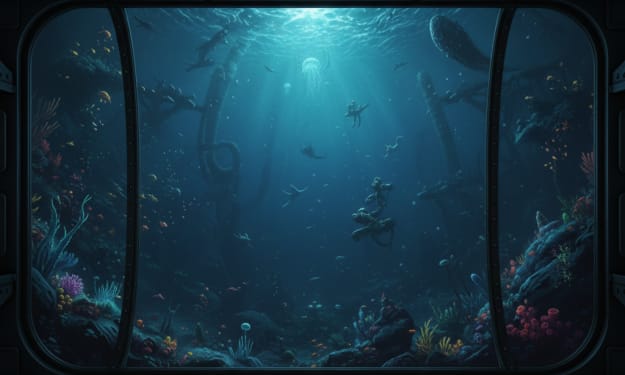
5 Unexplained Mysteries Under the Sea
It’s easy to get caught up in the idea of exploring distant planets and galaxies. The universe feels like the last great frontier. But here’s a wild thought: we still have a mind-blowing amount of things to understand and explore right here on Earth, specifically in our oceans, rivers, and lakes. Think about this: over 95% of our waters remain completely unexplored! We talk about space exploration, but maybe we need to start something like "Ocean Trek," because a lot of the discoveries we've made within these waters are truly baffling and simply can't be explained by current science.
By Areeba Umair11 months ago in Earth