Nature
Orcas Team Up With Dolphins to Hunt Salmon, Study Finds. AI-Generated.
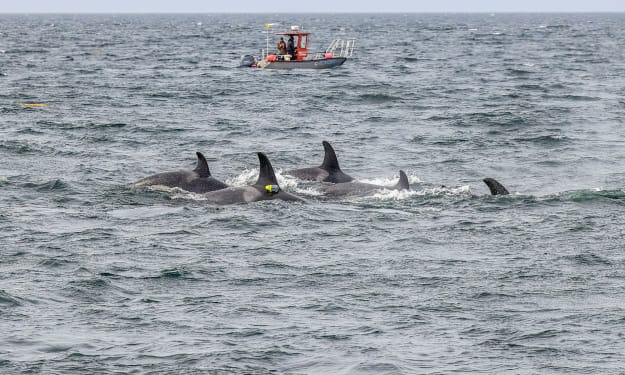
Ocean life continues to surprise us. A fascinating new study has found that orcas (killer whales) and bottlenose dolphins—two of the most socially complex and intelligent marine mammals—are engaging in previously undocumented cooperative hunting behavior to capture salmon. This discovery is reshaping our understanding of how different species in the ocean interact, communicate, and perhaps even share hunting strategies. For decades, scientists have documented remarkable hunting techniques among individual marine species. Orcas, for example, are known for their sophisticated pod tactics, from “wave washing” seals off ice floes to coordinated pursuit of fast prey. Dolphins, meanwhile, have been observed using bubble nets and herding techniques to corral fish. But the idea that two separate species might work together to hunt—especially for a shared food source like salmon—is new and extraordinary. ow Did Scientists Observe the Collaboration? Researchers studying the coastal waters of the North Pacific—especially areas rich in salmon runs such as British Columbia and Alaska—first noticed the phenomenon during long-term ecological surveys. Teams using drones, underwater microphones (hydrophones), and boat-based observation noticed two key patterns: 1. Frequent association: Orca pods and dolphin pods were appearing together more often than expected by chance. 2. Synchronized behavior: When salmon were present, dolphins and orcas appeared to coordinate their movement patterns in ways that increased the efficiency of the hunt. Scientists recorded sequences in which dolphins would chase salmon toward the surface or into shallower areas, where orcas could then intercept them with their powerful tail strikes or herding formations. In some footage, dolphins appear to signal with specific whistle patterns before the orcas execute a strategic push from another angle—suggesting communication or mutual understanding rather than random coincidence. Behavioral ecologist Dr. Laura Pearson (pseudonym, for explanation purposes) compared the interactions to a “marine version of a wolf–dog alliance on land,” noting that while cooperation across species is rare in mammals, it can occur when mutual benefit outweighs competition. If dolphins know that orcas are formidable hunters whose presence also stirs up fish schools, working together may increase overall catch success for both. Moreover, underwater sound recordings show a distinct change in vocalization patterns when both species are present, hinting at possible cross-species communication or at least recognition of each other’s hunting cues. hy Is This Discovery Important? This study fundamentally challenges several long-held assumptions: 1. Interspecies cooperation is rare in the ocean. Most scientific models treat different dolphin and whale species as competitors for food—especially when they inhabit similar ecosystems. Discovering cooperative hunting suggests that mutualistic relationships can emerge even among apex predators. 2. Intelligence across species might be more flexible than once thought. Both orcas and dolphins are known for their cognitive complexity, social structures, and cultural learning. This finding adds evidence that these animals can not only learn from their own kind, but perhaps also adapt behaviors based on interaction with another species. 3. Predator–prey dynamics are more complex than assumed. Salmon have evolved survival strategies to evade predators—including rapid schooling and sudden dives. That orcas and dolphins are responding to these challenges with shared strategies suggests a level of ecological adaptability that could reshape models of marine food webs. at Might Be Driving This Behavior? Scientists propose several reasons why orcas and dolphins might engage in cooperative hunting: Mutual benefit: Both predators get increased foraging success when salmon are driven into tighter, more predictable formations. Shared communication cues: While not speaking a common language, dolphins and orcas may be responding to each other’s movements and signals in ways that effectively coordinate actions. Habitat overlap: Rich salmon runs concentrate both predators in the same regions, increasing opportunities for interaction. Another explanation could lie in cultural transmission. Researchers have documented how orca pods pass hunting techniques down through generations. It’s possible that dolphins, known for social learning, might adopt or mimic strategies when in proximity—and vice versa. actions From the Scientific Community Marine biologists have reacted with excitement and cautious curiosity. The discovery has prompted calls for more targeted research, including: Satellite tagging of both species to map movement synchrony. Acoustic studies to decode potential interspecies communication. Controlled observation in regions with predictable salmon runs. Dr. Maria Salerno, a marine mammalogist, noted, “This doesn’t just deepen our understanding of orcas and dolphins; it forces us to rethink how we define cooperation in the animal kingdom.” plications for Conservation Understanding that diverse species might cooperate in critical survival behaviors adds urgency to marine protection efforts. Salmon populations globally face threats from climate change, overfishing, and habitat disruption. If predators like orcas and dolphins depend on abundant salmon—and potentially on interactions with each other to catch them—then protecting entire ecosystems becomes even more critical. Interventions that help salmon thrive could, in turn, support the broader health of marine mammal populations. Traditional conservation efforts often focus on single species, but this study suggests that community-wide ecological integrity is essential for maintaining complex behavioral networks. oking Ahead The discovery that orcas and dolphins may team up to hunt salmon invites both wonder and questions that could take years to answer. Are these behaviors recent adaptations to changing ecosystems? Or have they gone unnoticed for decades? Could other marine species be engaging in similar cooperation? What’s clear is that the ocean continues to hold mysteries—and that the more we learn, the more we appreciate the subtle sophistication of life beneath the waves.
By Zahid Hussain10 months ago in Earth
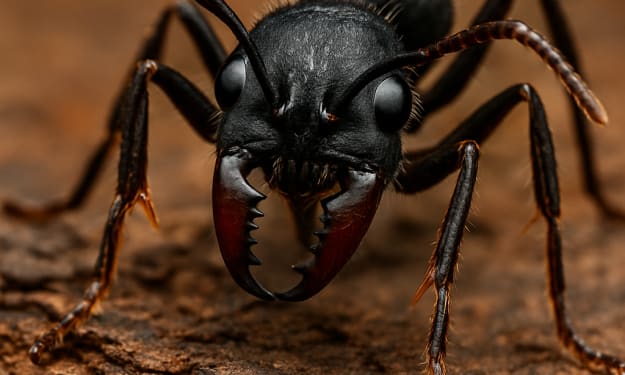
EPISODE V - Biologists’ Worst Nightmares: The Assassins Who Walk on Six Legs
Humanity loves to imagine its predators as massive things. Lions with crushing jaws, sharks with serrated rows of teeth, bears standing ten feet tall. Evolution, however, has no loyalty to size. Nature’s most efficient killers are often the ones you need a magnifying glass to see clearly.
By Veil of Shadows10 months ago in Earth
The Amazing Birds of Australia
Australian King parrots have striking red heads and vibrant green bodies. They inhabit the forests of eastern and southeastern Australia and are often seen in woodlands and rainforests. These birds dine on seeds and fruits. King parrots are shy and prefer blending in with the dense foliage.
By Rasma Raisters10 months ago in Earth
The Planet Is Breaking Records Every Week — Scientists Are Sounding the Alarm
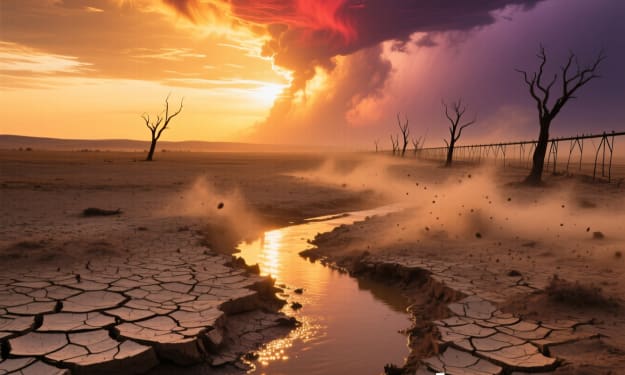
The Planet Is Breaking Records Every Week — Scientists Are Sounding the Alarm Heatwaves in winter. Snowstorms in tropical countries. Floods washing away entire towns. Wildfires turning forests into ashes. The world is experiencing weather events unlike anything in recorded history — and scientists warn that we are entering a dangerous new era of climate instability. The latest climate data shows that the last 12 months have been the hottest ever recorded on Earth, and each month seems to break a new temperature record. Weather events that once happened once per century are now happening every few years, sometimes even months apart. And the consequences are devastating. From Africa to Asia, Europe to the Americas, the signs are everywhere. In East Africa, heavy rains have caused catastrophic flooding, displacing thousands of families and destroying farmland. In West Africa, heatwaves are becoming more frequent and severe, killing livestock, drying rivers, and putting millions at risk of food shortages. Entire communities are struggling to adapt to conditions they’ve never experienced before. In Europe, scorching summers have become the new normal. Cities like Paris, Rome, and Madrid are reaching temperatures once thought impossible. Forests are drying up. Rivers like the Rhine and Danube have dropped to dangerously low levels, disrupting shipping and trade. Asia, home to some of the world’s largest populations, is facing its own climate nightmare. Record heatwaves in India and Pakistan have killed hundreds. China has battled massive floods and historic droughts in the same year. Meanwhile, Southeast Asia is experiencing unpredictable rainy seasons that threaten agriculture and fisheries. Even countries once considered safe from extreme weather are now vulnerable. Canada suffered one of its worst wildfire seasons in history. The United States saw record-breaking hurricanes, tornados, and heatwaves. Australia continues to struggle with fires and coral bleaching. Scientists say these events are not random — they are the direct result of human-caused climate change. Rising levels of carbon dioxide and methane in the atmosphere are trapping heat, altering global wind patterns, and changing ocean temperatures. This disrupts weather systems around the world. Droughts become longer. Rains become heavier. Storms become stronger. Seasons become unpredictable. One of the most frightening indicators is the warming of the oceans. Since the ocean absorbs about 90% of the planet’s heat, global warming has caused sea temperatures to rise sharply. This has triggered coral reef deaths, mass fish migration, and more dangerous cyclones. The melting of polar ice caps is another alarming sign. Greenland and Antarctica are losing ice at rates never seen before, contributing to rising sea levels. If this continues, millions living in coastal cities — from Lagos to New York to Mumbai — could face displacement. But beyond the scientific data lies the human suffering. Farmers are losing crops. Fishermen are losing their catch. Families are losing homes. Nations are losing billions in disaster damage. And the poorest communities, who contributed least to climate change, are often suffering the most. Despite the grim reality, there is still hope. Countries are investing in renewable energy, planting trees, building climate-resilient infrastructure, and reducing carbon emissions. Individuals are becoming more conscious of waste and consumption. Innovations like solar power, electric vehicles, and carbon capture technology are gaining momentum. Still, scientists warn that unless global emissions are drastically reduced, climate disasters will intensify. The window for action is closing. The planet is sending us a message — and it is getting louder. The question is: will humanity listen before it’s too late?
By Gideon Polycarp10 months ago in Earth
The Rise of Eco-Friendly Living: Why Sustainable Choices Are Becoming a Global Movement
Sustainable living is no longer just a trend—it has quietly grown into a global movement shaped by people who want cleaner homes, healthier lives, and a better planet for the next generation. Across the UK, the USA, and Europe, more families are choosing eco-friendly products, reducing waste, and making small lifestyle changes that are now creating a large global impact. What makes this shift powerful is how simple and practical it has become. Anyone, anywhere, can take part in it.
By Waqar Khan10 months ago in Earth
Deck Your Home with Christmas Plants
Amaryllis is a lovely flower used for Christmas décor. The plant is vibrant red or red and white mix, making the holiday bright. Amaryllis is a plant that grows from a bulb and can be bought with the bulb already planted in a pot. You can grow it on your own in the autumn in warm climates or in a greenhouse. The flower will be in full bloom six weeks after planting.
By Rasma Raisters10 months ago in Earth
The Mystery Circles: Were Ancient Giants Playing With Toys… or Were Humans Playing a Prank?
If you’ve heard of Stonehenge, you probably imagine massive stones arranged in a neat circle, full of mystery and maybe a dash of magic. But here’s a fun thought I once had: what if the stones were actually toys used by baby giants? I mean… who’s to say they weren’t stacking blocks while their parents weren’t looking?
By Areeba Umair10 months ago in Earth
Global Warming and the Coming Water Crisis
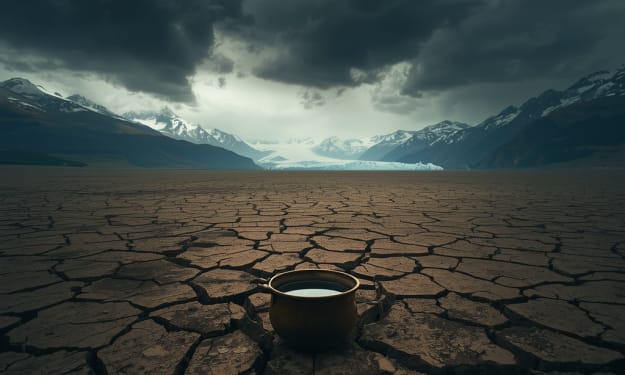
The Thirsting Earth: A Story of Global Warming and the Coming Water Crisis Global warming is no longer a distant threat—it is already reshaping our planet in silent but devastating ways. Among its most dangerous consequences is the growing global water crisis. What once seemed impossible—that the world could run out of fresh water—is now becoming reality. Rivers are shrinking, glaciers are melting, and communities are fighting over access to something more precious than gold: clean drinking water.
By Wings of Time 10 months ago in Earth
The Thirsting Earth
The Thirsting Earth The world once believed water was endless. Rivers flowed like veins across the planet, glaciers sat tall and unshaken, and rain fell with predictable grace. But humans forgot a simple truth—every resource can be exhausted. Today, global warming has turned the Earth into a thirsty planet, silently draining the water we once took for granted. What used to be a distant fear is now a living reality touching every corner of life.
By Wings of Time 10 months ago in Earth