Nature
Harmony in Concrete Jungles
The concrete jungles we call cities are not merely hubs of human activity; they are living, breathing entities that interlace humanity with nature, architecture with ecology, and innovation with tradition. As the world progresses into a future increasingly centered around urban landscapes, the conversation surrounding sustainable urbanism becomes more crucial than ever.
By ibrahim ayodeji3 years ago in Earth
Plastic waste is spiraling around the world. Content Warning.
Plastic waste is spiraling around the world In recent years, the world has been engulfed in an escalating crisis with dire implications for our environment and ecosystems. The culprit behind it all? The relentless proliferation of plastic waste, With its production skyrocketing to unprecedented levels and disposal mechanisms struggling to keep up, our planet is now grappling with a crisis that has spiraled out of control.
By Engr kawsar Ahmed3 years ago in Earth
11+ Unexplained Phenomena That Won't Let You Sleep Tonight
In the world of unexplained phenomena, where mysteries abound, one can find themselves at the edge of their comfort zone, intrigued and bewildered. Picture this: You're standing at the precipice of nature's fury, gazing upon a live volcano as it erupts. It's a terrifying spectacle by itself, but then, a curious phenomenon takes place. Ominous bright flashes of light pierce the night sky, taking the nightmarish experience to a whole new level.
By Sophia Hayes3 years ago in Earth
🤣🐾 The Funniest & Craziest Animals of The World
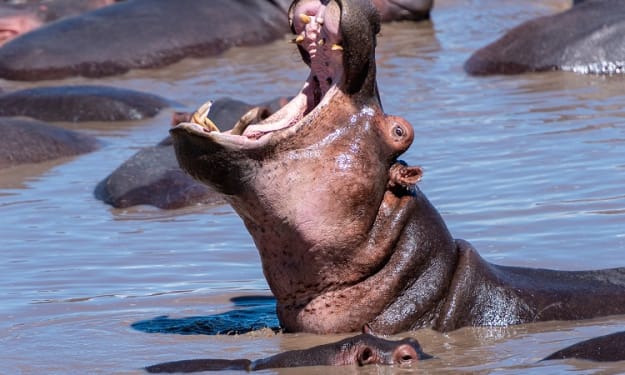
The animal kingdom is full of creatures that can make us laugh, from the playful antics of dogs and monkeys to the clumsy movements of sloths and anteaters. These animals bring joy and amusement into our lives, reminding us that even the simplest things can be entertaining.
By Global Education3 years ago in Earth
A Ray of Hope Amidst the Melting Ice.
In the peaceful, frozen wild of the Icy, the world was evolving. It was a position of crude magnificence, where the perpetual scope of snow and ice extended as should have been obvious. However, underneath the unblemished surface, a fight was being battled, one that would decide the eventual fate of our planet.
By Sheryl Niblock3 years ago in Earth
National park exploration
Title: Unveiling the Wonders of National Park Exploration Introduction The lure of the great outdoors, pristine wilderness, and breathtaking natural beauty has an irresistible appeal that transcends time and age. National Park exploration is a gateway to immersing oneself in the untouched splendors of our planet. For professionals seeking respite from the demands of modern life, these protected lands offer a refuge like no other. In this article, we'll delve into the world of National Park exploration, sharing real-life experiences that will ignite your passion for adventure and ignite the spirit of exploration within you.
By valentine jackson3 years ago in Earth
What if
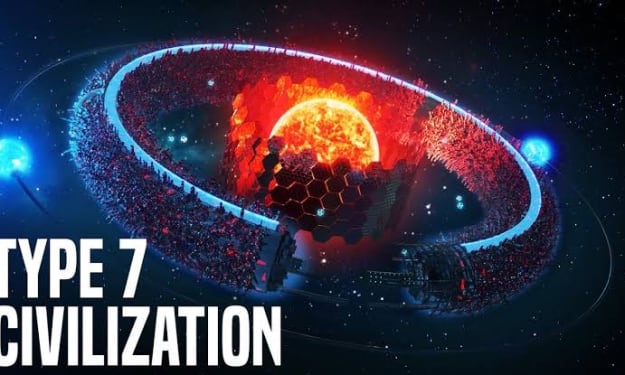
In a world where humanity evolves beyond imagination, progressing from a type one to a speculative type seven civilization, the journey is nothing short of mind-bending. We transition from controlling Earth's power to manipulating entire universes and beyond. Climate change poses challenges, but renewable energy advancements offer hope. A type six civilization takes the reins, granting us control over everything—creating or destroying universes at will, playing with time as a newfound toy. We may encounter diverse civilizations, ruling as gods or observing like caretakers. Our appearance could transcend biology, embracing Robo-human hybrids or limitless forms.
By Osigwe cynthia3 years ago in Earth
Exploring the Abyss: What If You Fell into a Black Hole?
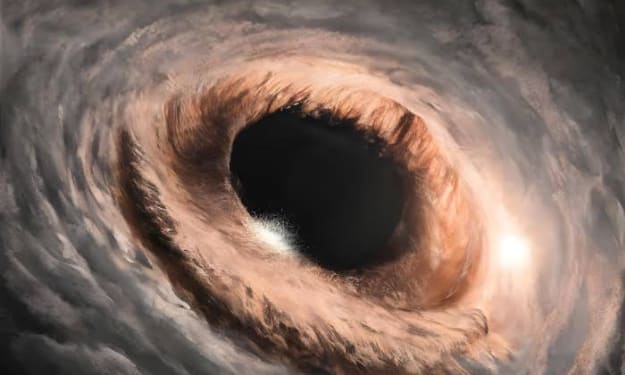
If you're exploring space and stumble upon a black hole, curiosity might lead you to wonder about survival and potential shortcuts to other universes. Despite their name, black holes aren't empty; they're dense concentrations of matter formed when massive stars collapse. Gravity overwhelms all forces, creating a small yet incredibly heavy object. Imagine squeezing four suns into a 15-mile diameter space – that's a black hole.
By Osigwe cynthia3 years ago in Earth
The Pantagonia Puma and Quanacos and The Enigmatic Marine Wonders and Unique Wildlife of Chile's Pacific Coast
In the heart of Patagonia, a land of stark contrasts, nature weaves a delicate balance, nurturing life amidst the frozen southern tundra and the arid northern plains. With a vast expanse of 4,500 kilometers, this region remains a treasure trove of diversity, harboring a plethora of unique flora and fauna. From the lofty peaks of the Andes to the refreshing embrace of the Pacific, a host of improbable creatures find their home here, many of which exist nowhere else on earth. In this rugged terrain, where the chill of autumn mingles with the silent footfalls of guanacos, life teems within the pristine landscapes of Torres Del Piney National Park. Though their numbers impress, the herds of guanacos are but a fraction of the multitude that once roamed these lands. Hunted by settlers for sustenance and their pelts, these graceful creatures faced an uncertain fate until finding sanctuary within the protective confines of the park. Yet, another predator roams these untamed expanses, the elusive and revered Puma. Seeking refuge within the safety of rocks and crevices, these majestic felines tread a precarious path, their existence threatened by human encroachment and dwindling prey. Amidst the sun-dappled rocks, the Puma mothers nurture a delicate balance between survival and nurturing, rearing their cubs to face the perils that await them beyond the sanctuary of the park. While the park provides a haven, the harsh realities of life await the young Pumas as they must eventually depart on their solitary journeys, braving the unknown territories, and learning to navigate a world fraught with danger and challenges. As the top predators of the region, their very presence dictates the delicate balance of the ecosystem, a vital force for maintaining the health and diversity of the entire food chain. However, the coexistence of these noble creatures with human settlements remains strained, as conflicts arise over the scarcity of natural prey, leading some Pumas to target domestic livestock. Despite legal protection, the Pumas often face persecution, their survival threatened by human intervention and the encroachment of civilization. In this juxtaposition of the wild and the human world, the lives of the Pumas and guanacos remain an intricate dance of survival, resilience, and the ongoing struggle for coexistence. As we delve deeper into the mysteries of this untamed terrain, we come to appreciate the delicate interplay of life and nature, recognizing the imperative of preserving these guardians of the Patagonian wilderness. Chile’s Pacific coast is a realm of natural marvels, where diverse landscapes, nutrient-rich waters, and elusive creatures interplay in an intricate dance. From the majestic blue whales to the mysterious vampire bats, the region is a treasure trove of unique biodiversity and captivating wildlife encounters. Let’s embark on a journey through the captivating tales and hidden wonders of Chile’s Pacific marine life and its remarkable terrestrial inhabitants. Beneath the Pacific waters, a distinct population of blue whales roams, distinguished not just by their colossal size but also by their exclusive vocalizations. Known as the Chilean blue whales, these creatures have developed their own dialect, a mesmerizing symphony reminiscent of a ship’s motor. Recent findings suggest they might even constitute a distinct subspecies, setting them apart from their counterparts across the oceans. In the midst of this marine extravaganza, a previously unknown avian wonder takes center stage. The pinkoya storm petrel, with its unparalleled olfactory senses, heralds the arrival of the microscopic marine life in these rich waters. Witnessing these delicate birds dance over the water surface, utilizing their unique colored toe web membranes to attract their prey, is truly a sight to behold. As the marine wonders unfold, the narrative shifts to the coastal rocky shores where the elusive southern marine otters thrive. These smallest marine mammals in the world are adept at navigating the cold, nutrient-rich waters, diving tirelessly in search of crustaceans nestled within the kelp forests. Observing their meticulous grooming rituals and nurturing behaviors unveils a heartwarming glimpse into their family dynamics. Beyond the marine realm, the isolated and uninhabited islands along Chile’s coast harbor a plethora of life, both familiar and enigmatic. Among them, the reclusive vampire bats, locally known as Putin, lead an existence that intertwines myth and scientific curiosity. Their unique feeding habits and social dynamics paint a complex picture, underscoring the importance of preserving their delicate habitat. Amidst the vibrant biodiversity, the common Degu emerges as a curious inhabitant of the arid Chilean ecosystem. With its diurnal habits and social colony life, this small rodent intricately navigates the challenges of its habitat, even showcasing unique foraging techniques, reflective of its adaptability and resourcefulness. Chile’s Pacific coast unravels a tapestry of natural wonders, from the grandeur of the blue whales to the intricate lives of the smallest marine mammals and terrestrial creatures. Nurturing this delicate balance of life calls for a deep understanding and appreciation of these diverse ecosystems, underscoring the urgency of preserving these enigmatic marvels for generations to come.
By Manasi Douglas3 years ago in Earth
Greenland's ice shelves, play a crucial role preventing sea level
Greenland's ice shelves, play a crucial role preventing sea level Greenland's ice shelves, which play a crucial role in preventing sea level rise by holding back massive amounts of ice, are undergoing significant deterioration, according to recent scientific research published in Nature Communications. Since 1978, the northern Greenland ice shelves have lost approximately 35 percent of their overall volume, equivalent to around 400 billion tons of floating ice. These ice shelves act as barriers, preventing glaciers from flowing into the sea and accelerating the rise in sea levels.
By Engr kawsar Ahmed3 years ago in Earth