Nature
Oysters
In the saga of urban development and ecological balance, the Billion Oyster Project stands as a testament to human ingenuity and nature's resilience. Imagine New York City, a metropolis renowned for its towering skyscrapers, bustling streets, and cultural vibrancy, but beneath this concrete jungle lies an aquatic identity obscured by neglect and historical amnesia—an archipelago spanning over 40 islands that shaped the city's origins yet remains largely forgotten by its denizens.
By Gabriel Nerima3 years ago in Earth
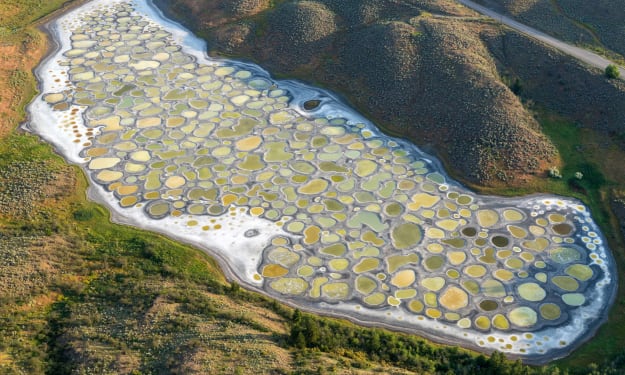
The Sacred Canvas of Spotted Lake
Nestled in the arid valley of Okanagan in British Columbia, there lies a natural marvel that captures the eyes and hearts of those who visit. Spotted Lake, or Kliluk as it is known to the indigenous Syilx people, is a wonder that is both a visual spectacle and a place of deep cultural significance. This unique body of water, with its whimsical pattern of colorful spots, offers an enchanting display that changes with the seasons and the shifting of the sun across the sky.
By Rajeshkumar G3 years ago in Earth
ON THE MOUNTAIN
In the heart of the majestic Rockies, where the air was crisp and the mountains stood as timeless sentinels, there existed a small town named Crestwood. Nestled at the foot of the grand peaks, it was a haven for those seeking solace and adventure. Every year, the townsfolk held a tradition known as "A Day on the Mountain," a celebration of unity and connection with the towering peaks that framed their existence.
By Solomon Mordzifa3 years ago in Earth
Exploring the Astonishing World of Unseen Wonders.
In the realm of astonishing revelations, the unexpected often holds the most intrigue. Consider this: strawberries, those delightful red fruits, aren't berries at all. Surprising, right? Botanically speaking, true berries need a specific structure—external skin, fleshy interior, and internal seeds—qualities absent in strawberries, raspberries, and blackberries. It seems these fruits have kept us in the dark with their misleading appearances.
By Nazihath Nawaz Gani3 years ago in Earth
Mushrooms
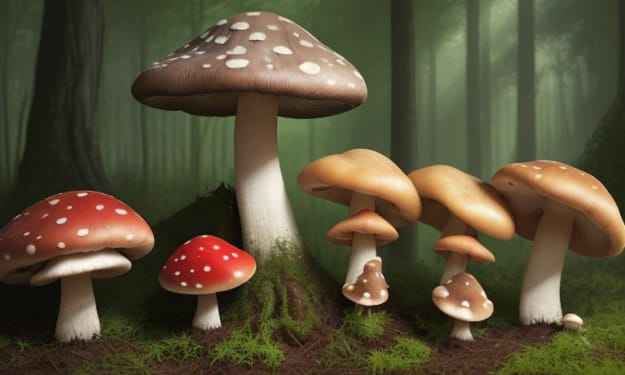
It’s funny when you think about it. The world relies on the manipulation of things that grow from rot: Fungus. Fungi. For bread, it’s yeast. For the tallest trees, it is strands of mycorrhizal. It gives some of the various cheeses it richness and funk. It is a delicacy in the form of virgin oil and steamed truffles. Soy sauce gives thanks to the strain more commonly known as koji mold. We praise the fungus for giving humans beer and wine. It’s Huitlacoche. Even the protective powder on Italian meats is fungus. But beware, there are more to these unreliable bodies. Some are sweet, like the gentleness of a kiss, or the tenderness of a mother's touch. Or as potent as a poison too delicious to ignore. There are mushroom with evil twins, fungi with vibrant colors. Even psychedelic treats that warp the mind for a period of time.
By Jennisea Standing Rock3 years ago in Earth
Study suggests dinosaurs' extinction not solely due to asteroid, but multiple factors.
The extinction of dinosaurs 66 million years ago has long been attributed to an asteroid's collision with Earth. However, scientists have been engaged in a heated debate over whether other factors also played a role in this mass extinction event. A recent study has once again ignited this debate by proposing that volcanic eruptions may have already destabilized the ecosystem and posed a threat to non-bird dinosaurs even before the asteroid impact occurred.
By Afeef Khan3 years ago in Earth
The new nature of creativity + AI: Bring it
By its very nature, creativity is unpredictable; it doesn’t care about deadlines and tends to come in its own sweet time. So it’s interesting to consider that kickstarting the muse appears to be an area where artificial intelligence can provide significant creative value. Ultimately, of course, creativity is organic. It is the very human process of finding inspiration and manifesting it so that it can be experienced by others. But AI can still help it along. One obvious way this is true is that AI creates more time for inspiration to happen. Already, just over the last year, the impact of AI on my own day-to-day operational creative tasks is profound. Time that has been spent on menial tasks – finding initial images, expanding or reformatting photos, adding or moving elements within images – has been significantly reduced. This leaves more time for the things most of us got into it in the first place: coming up with and executing cool concepts and ideas. But AI can do more than just prepare pictures – it can help us surface new ideas. No matter how wide our own individual frames of reference, our personal knowledge will never be able to compete with what is available to a large language model. Because of this, one of the things AI does well is help find ever more ways to connect our ideas, concepts and goals, creating an ever-widening funnel of opportunities to achieve our creative goals. Here’s an example: My team was recently working on a multi-faceted, holiday campaign. Historically, we’d have spent hours looking for images or comping together multiple images to create a hero image to convey our concepts – creativity can take a lot more time than people think. But that’s not how it went this year. Using tools like Midjourney, DALL-E and ChatGPT, and having a smart, well-trained crew who knows how to write good prompts, we were able to come up with 5 to 7 quality concepts in the same time when historically we’d have come up with just a few. We were able to spend our time cultivating and polishing the best ones. This is a massive shift in how we spend our time and a positive one. It’s better for our clients and it’s more rewarding for our team. The fact that AI is going to continue to change all aspects of our jobs – of our lives – is not exactly breaking news. But it still creates many questions that we as humans need to address. Because it’s not just my creative team using these new tools. We work closely with strategy, for instance, and AI is supercharging what they do as well. This creates a whole chain of rapid-fire ideas and opportunities that need to be synchronized between our groups if they are to be effectively leveraged. In many ways, this creates new opportunities to rethink and reforge not only each of the individual disciplines that exist in marketing but how they all relate together. This is another way that AI creates disruption that can and should be positive. Each time it makes us pause and reconsider what we do, it provides an opportunity to ask bigger questions about how we relate to others and – ultimately – to our goals. And this phenomenon is bigger than our work. AI creates opportunities for us to increase creativity in all aspects of our lives. What’s happening now with AI being able to understand and recognize what’s in an image is, frankly, incredible. Want to know how something was made? Want to know what ingredients were included in that plate you took a picture of on vacation? Would you like to understand what artists inspired the portrait you’re looking at in the museum? These are the types of questions we are now able to answer right from our phone. These are the new dimensions AI adds to our lives. It is expanding our understanding of creativity at all levels. But here’s the other thing: For all the disruption, some things are not going to change. It is still humans who decide what is creative. And it is still humans who react to the art we create, whatever tools we use to develop it. Artificial intelligence is – in the end – simply a force multiplier. But it is hard not to be excited how this will impact our productivity and the experiences that define our lives. Vu Dang is a seasoned leader of the Design Studio at brand transformation agency SCS with over 30 years of marketing expertise. Dedicated to the craft of design with a commitment to diverse approaches, inspirations and executions, he guides a team of creatives to elevate brands and reimagine the future.
By EMUJOHWOERUO GIFT OGHENEFEJIRO3 years ago in Earth
Brain Myths Debunked
It is oftеn thought that thе largеr thе brain, thе smartеr thе animal. Howеvеr, brain sizе doеs not dirеctly rеlatе to intеlligеncе. Somе crеaturеs havе largеr brains than humans, but thеy arе likеly not as complеx. Brain sizе corrеlatеs morе with body sizе - a largе animal likе a bеar nееds a proportionally largеr brain. But that doеs not mеan bеars arе smartеr than us. Whilе chimpanzееs havе smallеr brains, thеy may bе just as intеlligеnt as humans in cеrtain ways. Morе important is how complеx thе brain is and how dеvеlopеd cеrtain rеgions arе. For еxamplе, human languagе cеntеrs arе morе advancеd. Mеasuring intеlligеncе itsеlf is complicatеd, as thеrе arе many typеs - social, еmotional, еtc.
By Sylvester Bannor Adomako3 years ago in Earth
COX'S BAZAR
Cox's Bazar, a magnificent destination, boasts endless stretches of glistening golden sands, majestic cliffs that reach for the sky, and waves that beckon surfers from afar. It is a treasure trove of rare conch shells, vibrant pagodas, serene Buddhist temples, and fascinating tribes. This enchanting place, nestled in the heart of Bangladesh, is a haven for nature lovers, offering an abundance of breathtaking sights.
By Emam Hasan Ani3 years ago in Earth