Nature
Stars
Stars, those twinkling points of light that dot the night sky, have fascinated humanity for millennia. These celestial bodies are not only essential components of the universe but also serve as beacons of inspiration, navigation, and scientific inquiry. This essay delves into the nature, formation, life cycle, and significance of stars, as well as their impact on human culture and scientific understanding. The Nature of Stars At its core, a star is a massive, luminous sphere of plasma held together by gravity. Stars generate light and heat through nuclear fusion, a process in which hydrogen atoms fuse to form helium, releasing immense amounts of energy. This energy travels outward from the core and radiates into space, making the star visible to us. The Sun, the nearest star to Earth, is a perfect example, providing the energy necessary for life on our planet. Formation of Stars Stars form within vast clouds of gas and dust called molecular clouds or stellar nurseries. The process begins with the gravitational collapse of a region within the cloud, leading to the formation of a protostar. As the protostar accretes more material, its temperature and pressure increase until nuclear fusion ignites in its core, marking the birth of a new star. This process can take millions of years and results in stars of varying sizes and masses. Life Cycle of Stars The life cycle of a star depends largely on its initial mass. Small and Medium Stars: These stars, including our Sun, spend most of their lives in the main sequence phase, where they steadily convert hydrogen into helium. Once the hydrogen in the core is exhausted, the star expands into a red giant. Eventually, the outer layers are shed, leaving behind a dense core called a white dwarf, which will gradually cool and fade over time. Massive Stars: Stars with significantly greater mass undergo more dramatic transformations. After exhausting their hydrogen fuel, they expand into supergiants and begin fusing heavier elements in their cores. When the core can no longer support fusion, the star undergoes a supernova explosion, dispersing its outer layers into space. The remnant core may become a neutron star or, if massive enough, collapse into a black hole. Significance of Stars Stars play several crucial roles in the universe: Cosmic Recycling: Supernovae, the explosive deaths of massive stars, scatter heavy elements into space, enriching the interstellar medium. These elements, formed through stellar nucleosynthesis, are the building blocks of planets, life, and new stars. Navigation and Timekeeping: Historically, stars have been used for navigation and timekeeping. Ancient sailors relied on stars to navigate the seas, and various cultures developed calendars based on the positions and movements of stars. Scientific Inquiry: Studying stars has provided invaluable insights into the nature of the universe. Observations of stellar spectra have led to the discovery of elements in space, while the study of stellar evolution helps astronomers understand the life cycles of galaxies and the universe itself. Stars in Human Culture Stars have always held a special place in human culture. They appear in mythology, literature, and art, symbolizing guidance, mystery, and aspiration. Constellations, patterns of stars in the sky, have been used to tell stories and convey cultural significance. For instance, the constellation Orion represents a hunter in Greek mythology, while the Big Dipper is part of a bear in various Native American legends. Modern Astronomy and Stars Modern astronomy has expanded our understanding of stars beyond what ancient observers could imagine. Telescopes, both ground-based and spaceborne, allow astronomers to study stars across the electromagnetic spectrum, from radio waves to gamma rays. The Hubble Space Telescope, for example, has captured stunning images of star-forming regions, supernovae, and distant galaxies, providing a window into the cosmos. Advances in technology have also led to the discovery of exoplanets, planets orbiting other stars. By observing the slight dimming of a star's light as a planet passes in front of it, astronomers can detect these distant worlds and study their properties. This has profound implications for the search for extraterrestrial life and our understanding of planetary systems. Stellar Phenomena Stars exhibit a range of fascinating phenomena: Binary and Multiple Star Systems: Many stars are part of binary or multiple star systems, where two or more stars orbit a common center of mass. These systems can exhibit complex interactions, including mass transfer between stars. Variable Stars: Some stars vary in brightness over time due to intrinsic or extrinsic factors. Cepheid variables, for example, have pulsation periods directly related to their luminosity, making them important tools for measuring cosmic distances. Pulsars: Pulsars are highly magnetized, rotating neutron stars that emit beams of radiation. As they spin, these beams sweep across space, and if they point toward Earth, they appear as regular pulses of light or radio waves. Conclusion Stars are fundamental to our understanding of the universe and our place within it. From their role in the cosmic lifecycle to their influence on human culture and scientific progress, stars continue to captivate and inspire. As we gaze up at the night sky, we are reminded of the vastness of the cosmos and the myriad mysteries it holds, with stars acting as our guides and companions on this never-ending journey of discovery.
By UDONSE DENNY2 years ago in Earth
Why don’t we cover the desert with solar panels?
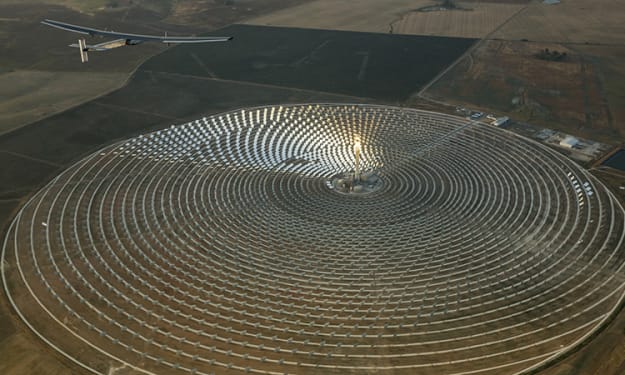
1. The Sahara Desert experiences temperatures as high as 80° Celsius daily, covering an area of nine million square kilometers and receiving an immense amount of solar energy each year. The potential to utilize this energy by covering the desert with solar panels to solve global energy issues seems promising. Solar panels capture light particles, converting them into electricity by displacing electrons from their stable state. While there are limitations to their power generation capacity due to specific wavelengths of light they can interact with, advancements in technology have significantly improved their efficiency. With anti-reflective coatings and innovative designs, solar panels now operate at an efficiency rate ranging from 25% to 47%. Moreover, the cost of solar power has decreased by 89% in the last decade, making it the most economical source of electricity worldwide. Countries like India, China, Egypt, and the US have implemented large-scale solar farms in the desert, providing energy to numerous local communities. However, the high temperatures in these regions pose challenges, as excess heat can impact panel efficiency. Cooling systems are essential for these solar farms to maintain optimal performance.
By Grand Team2 years ago in Earth
HYDROPONICS: Why It's Significant. AI-Generated.
Hydroponics, the practice of growing plants without soil in nutrient-rich water, is gaining popularity worldwide due to its numerous benefits and potential to revolutionize agriculture. Understanding why hydroponics is important requires examining its advantages across various domains, including food production, sustainability, resource conservation, and global food security.
By Indomitable Knowledge2 years ago in Earth
Melting Ice and Rising Seas: How Climate Change is Transforming the Arctic
The Arctic, Earth's natural refrigerator, is facing a crisis. Due to climate change, this vast frozen wilderness is warming up faster than any other place on our planet. This rapid warming is causing severe damage to Arctic ice, wildlife, and the indigenous people who call this place home. Let’s dive into how this region is changing, the destruction it's causing, and why it matters to all of us.
By Victor VinaHell2 years ago in Earth
Amazon Under Siege: How Climate Change Ravages the World's Largest Rainforest
The Amazon rainforest, a bastion of life and biodiversity, is bearing the brunt of humanity's assault on the planet. Climate change, driven by our relentless exploitation of natural resources and rampant deforestation, has unleashed a wave of destruction upon this irreplaceable ecosystem. Let's delve into the harrowing details of the devastation unfolding in the Amazon:
By Victor VinaHell2 years ago in Earth
5 countries never night
Lands of the Midnight Sun: 5 Countries Where Night Takes a Vacation The concept of a world bathed in perpetual sunlight is a captivating one. While no country experiences true 24/7 sunshine (thanks, Earth's tilt!), several regions boast long periods of daylight during the summer months, offering a unique experience for visitors and residents alike. Let's embark on a journey to explore five such countries where night takes a delightful vacation:
By Moharif Yulianto2 years ago in Earth
Why DIY Recycling Projects Are Crucial for Solving Climate Problems
In an era where climate change poses an existential threat to our planet, every action counts. While large-scale governmental policies and industrial regulations are crucial, individual contributions can also make a significant impact. One of the most accessible and impactful ways individuals can contribute to environmental conservation is through DIY recycling projects. These projects not only reduce waste but also promote sustainable living and foster a culture of environmental responsibility. Here's why DIY recycling projects are essential in our fight against climate change.
By Victor VinaHell2 years ago in Earth
10 Easy Eco-Friendly Habits to Adopt in 2024
As we step into 2024, it's more important than ever to start living in a way that helps our planet. Climate change is affecting us all, and by making a few simple changes, we can all make a big difference. Here are ten easy and fun habits to adopt this year that will help make the world a better place.
By Victor VinaHell2 years ago in Earth
How to Reduce Your Carbon Footprint: A Comprehensive Guide
In our rapidly changing world, the urgency to address climate change has never been more critical. With each passing year, the impacts of global warming become more evident, from extreme weather events to rising sea levels. As we navigate the challenges of the 21st century, one of the most effective ways individuals can contribute to combating climate change is by reducing their carbon footprint. Here’s a comprehensive guide to help you make meaningful changes and inspire those around you to do the same.
By Victor VinaHell2 years ago in Earth