Nature
Save Money While Saving the Planet
Welcome to the world of eco-friendly homes, where saving money and saving the planet go hand in hand. As more people become aware of the impact of their lifestyle choices on the environment, eco-conscious architecture trends are on the rise. These homes are designed with sustainability in mind.
By Yellow Woodpecker2 years ago in Earth
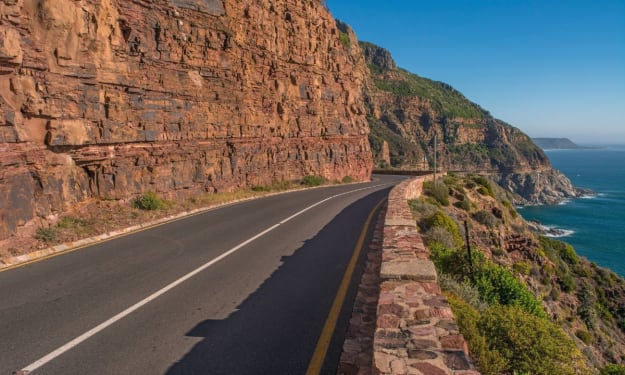
Exploring Nature and Cultural Differences in Africa:
Africa, a continent rich in biodiversity and cultural diversity, offers an unparalleled perspective on the interconnectedness of nature and human life. From vast deserts to lush rainforests, from ancient traditions to modern practices, Africa serves as a living testament to the delicate balance between people and the environment. This article explores the complex relationship between nature and cultural differences across Africa, illustrating how they shape and influence each other.
By Njabulo Magoswana2 years ago in Earth
Hurricane Milton: Essential Steps to Safeguard Your Home
Introduction: With Hurricane Milton approaching Florida’s coastline, residents are bracing for intense winds, heavy rainfall, and likely power outages. Hurricanes can bring unpredictable challenges, but being prepared can make all the difference. Whether it’s reinforcing your home or stocking up on supplies, taking proactive steps now can help keep your loved ones safe. Read on for essential guidance on preparing for Hurricane Milton and safeguarding your family, property, and peace of mind.
By Baltazard LLC2 years ago in Earth
Hurricane Milton Nears Florida: Major Evacuations Ordered as Storm Threatens Destruction
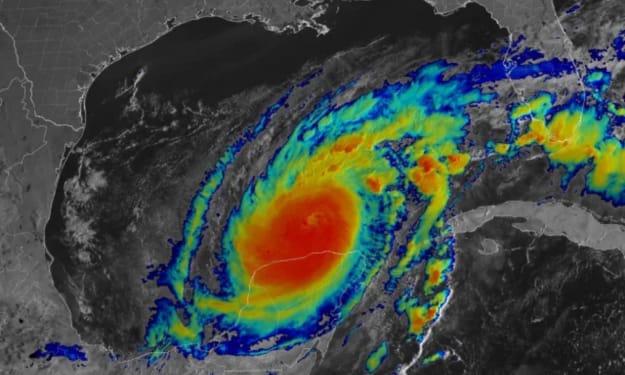
As Hurricane Milton barrels towards Florida's Gulf Coast, residents are bracing for a potentially devastating impact. Downgraded from a Category 5 storm, Milton remains a strong Category 4 hurricane. The storm is expected to make landfall on Wednesday evening near Tampa, and authorities are urging millions to evacuate in preparation for this life-threatening event. A State of Emergency Declared Currently, 51 counties in Florida are under a state of emergency. Governor Ron DeSantis has emphasized that despite a slight drop in wind speeds, Milton remains a dangerous storm. He highlighted that "even if the storm weakens, it will still bring major destruction." Authorities are preparing for significant impacts, and many areas are under evacuation orders. DeSantis urged residents to take the storm seriously. “You don’t have to travel far to be safe,” he said, encouraging people to seek refuge in nearby areas that are less susceptible to flooding. "You can go to a friend’s house, a hotel, or a shelter within your county," he added, trying to reassure Floridians that they can still stay relatively close to home. The Power of Hurricane Milton Milton is one of only 40 hurricanes ever recorded to have reached the intense Category 5 level in the Atlantic. It is also one of the fastest-growing storms in recent memory. According to the Federal Emergency Management Agency (FEMA), Milton developed into a Category 5 storm faster than most, ranking third in rapid intensification, just behind Hurricanes Wilma in 2005 and Felix in 2007. As of Tuesday morning, the storm was located approximately 520 miles southwest of Tampa, with maximum sustained winds of 145 mph. It is moving east-northeast at around 9 mph, and its path is expected to bring severe weather to many parts of Florida, including widespread heavy rainfall and powerful winds. Destructive Storm Surge and Flooding Risks One of the most dangerous aspects of Hurricane Milton is the predicted storm surge along Florida’s Gulf Coast. The National Hurricane Center (NHC) has warned that areas along the west coast of Florida could face a large, destructive storm surge. This means that the sea level could rise dramatically, causing flooding in coastal areas, which poses a serious risk to both people and property. In addition to the storm surge, heavy rainfall is expected to cause flash flooding across the state. Forecasts suggest that parts of the Florida Peninsula and the Florida Keys could see up to 15 inches of rain through Wednesday night. This level of rainfall increases the risk of major river flooding, as well as urban and flash flooding in several cities. Residents of the northern Yucatán Peninsula in Mexico have also been warned to expect between 2 and 4 inches of rain as the storm makes its way across the region. Warnings Issued Across Florida and Beyond As Hurricane Milton approaches, various warnings have been issued to prepare communities for the storm. Hurricane warnings are in place for Florida’s west coast from Bonita Beach to Suwannee River, and for the east coast from Indian River County northward to Ponte Vedra Beach. This means that hurricane conditions, including dangerously strong winds and torrential rain, are expected in these areas. Tropical storm warnings have also been issued for the Florida Keys and other regions, while watches are in place for parts of Georgia, South Carolina, and the Bahamas. The NHC is urging residents in affected areas to follow evacuation orders and make necessary preparations to protect their homes and loved ones. A storm surge warning has been issued for parts of the Florida coastline, including Tampa Bay, Charlotte Harbor, and the east coast near the St. Johns River. The NHC is warning of life-threatening flooding, and residents in these areas are being advised to evacuate as soon as possible. Evacuations Underway As of Tuesday morning, mandatory evacuations have been ordered in 11 Florida counties, including Hillsborough, Pinellas, and Lee Counties. Meanwhile, four additional counties, including Miami-Dade, have issued voluntary evacuation orders. Residents in these areas are being strongly encouraged to leave now before the storm hits. Local officials are advising people not to wait until the last minute, as the conditions will only worsen as the storm approaches. Milton Follows Hurricane Helene’s Destruction Just over a week ago, Florida was hit by another powerful storm, Hurricane Helene, which made landfall in the Big Bend region as a Category 4 hurricane. Helene caused widespread destruction, leaving at least 20 people dead and damaging many parts of the state’s infrastructure. Emergency services have been stretched thin in the wake of Helene, and now they are facing the additional challenge of preparing for Hurricane Milton. FEMA has stated that it will continue to support recovery efforts for areas affected by Helene, but the focus is now shifting to Milton’s path of destruction. With resources already strained, the state and federal governments are working to ensure that aid reaches those who need it most. An Active Hurricane Season The 2024 Atlantic hurricane season has been unusually active, with Milton being the 13th named storm of the season. According to the National Oceanic and Atmospheric Administration (NOAA), a typical hurricane season sees around 14 named storms, of which seven become hurricanes. So far, eight hurricanes have formed this year, with more than a month left in the season. With the increased frequency and intensity of storms, there is growing concern about the impact of climate change on hurricane activity. As storms become stronger and more destructive, communities are being urged to take long-term steps to prepare for these extreme weather events. Conclusion: Prepare and Stay Safe As Hurricane Milton approaches, Floridians are being reminded to stay informed and follow the advice of local authorities. Whether evacuating to safer areas or preparing to shelter in place, it is essential to take the necessary precautions to protect yourself and your family. With its powerful winds, heavy rainfall, and the potential for life-threatening storm surges, Milton is not a storm to be taken lightly. Stay safe, and listen to the experts as this dangerous hurricane nears landfall.
By Black Rose2 years ago in Earth
Life in Five-Minute Fixes
Since she could remember, Nina had ever only experienced mornings as a fracas — an mad dash from the instant her lids separated. Her alarm would ring so loudly and abruptly that it would scare her awake before she slammed shut the noise with an angrily swiped hand. She had all the times hit snooze, just to steal a few more minutes of sleep time — it had never worked. Too late she discovered that her body lay a bit more soundly than she imagined, and by the time she wrenched herself from bed, there was no shaking groggily through the morning routine on auto-pilot. She was rushing every step of the way, counting in her head how many things she must do before heading out the door.
By Raja Sumaria Khan2 years ago in Earth
The Sad Side of The Nature
Wren Nest Learning about nature is not always a happy experience. To learn how nature works it is necessary to know it is a balance and there is death as well as life. Nature always finds a way to maintain this balance, although it might not be in a way we would like. My daughter in law called crying about her bird house that was knocked over by the wind during a storm. The baby birds that it was housing had perished. I recently witnessed a baby wren die in my driveway after what I assume was from flying into something and sustaining an injury that it was not able to recover from. It was so heartbreaking. But in the same week I witnessed the wonder of 2 young hawks flying from their nest, found baby praying mantises while I was mulching, and watched countless other miracles of nature. I believe these negative aspects of nature make the positives even more wondrous. For each example of sad nature experiences I can think of at least two happy ones. It can be very challenging to refrain from interfering with natures process when we sense it will have a negative outcome. Sometimes assistance can offset some of the human interference already in place such as helping a turtle that is on the side of the road. Other times our “helping out” can have consequences we can’t imagine. An example of this is stopping a predator from catching it’s prey. It may be difficult and go against our instincts to help a creature in need, but realize that the predator has it’s place in nature as well and keeping it from catching it’s prey could result in starvation. Without predators, the prey species would become overpopulated. This would result in devastation of food sources and starvation of the prey species. This is just a very small part of natures process but I hope it helps to paint the bigger picture. Nature is a delicate balance that when interfered with can have consequences that are not intended. This being said, some simple acts can be helpful in overcoming other forms of human interference. It is important to be aware of this when becoming involved with or enjoying nature. In my experience the happy outweighs the sad and I hope when you become more aware of nature you will see this as well.
By Uzma Halepoto 2 years ago in Earth
Crescent Moon Lake: A Timeless Oasis in the Sands of the Gobi Desert
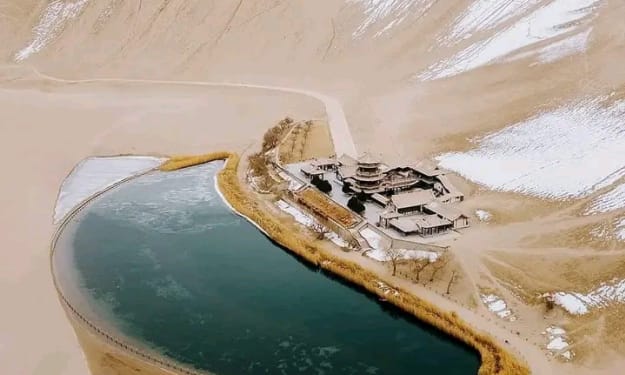
Crescent Moon Lake: A Timeless Oasis in the Sands of the Gobi Desert Nestled at the foot of the towering Mingsha Mountains in China’s Gobi Desert lies a breathtaking natural wonder that has captured the imagination of travelers for centuries—Crescent Moon Lake (月牙泉). This serene, crescent-shaped oasis, known for its crystal-clear waters and its contrasting backdrop of golden sand dunes, has served as a lifeline for Silk Road travelers and remains a symbol of nature’s resilience in the face of the harsh desert environment. Crescent Moon Lake, located approximately 6 kilometers south of Dunhuang in the Gansu Province, is not only a stunning natural landmark but also an enduring testament to the resourcefulness of ancient civilizations. For over 2,000 years, this oasis has been a vital stop along the ancient Silk Road, offering weary travelers and traders a much-needed respite from the relentless heat and arid conditions of the desert. Even today, Crescent Moon Lake stands as a living piece of history, as well as an ecological marvel that continues to defy the odds. A Natural Wonder Amidst the Desert One of the most striking features of Crescent Moon Lake is its unique crescent shape, which gives the oasis its name. The lake’s waters appear as a shimmering jewel against the backdrop of the sweeping sand dunes of the Mingsha Mountains, also known as the “Singing Sand Dunes” due to the melodic sound produced when the wind passes through them. The lake’s vivid contrast with the desert surroundings has earned it a reputation as one of China’s most beautiful and captivating landscapes. What makes Crescent Moon Lake even more remarkable is its ability to maintain its shape and water levels for centuries, despite being located in one of the driest regions of the world. The oasis is fed by underground springs, which replenish the lake’s waters and keep it from drying out, even as the surrounding desert seems to encroach on it. This delicate balance between the lake and the desert has fascinated geologists and environmentalists alike, as Crescent Moon Lake continues to survive in a region where water is scarce and the climate unforgiving. A Crucial Stop Along the Silk Road During the height of the Silk Road trade, Crescent Moon Lake played a vital role in the lives of those who traveled between China and the West. For merchants and explorers journeying across the vast and desolate Gobi Desert, this oasis was a crucial stop where they could rest, replenish their water supplies, and prepare for the next leg of their journey. Its location near Dunhuang, an important hub on the Silk Road, made it a key waypoint for traders carrying goods such as silk, spices, and precious metals. The importance of Crescent Moon Lake to Silk Road travelers was not just practical but spiritual as well. In ancient Chinese culture, water was considered a symbol of life and prosperity, and an oasis like Crescent Moon Lake represented hope in an otherwise inhospitable landscape. The lake’s enduring presence in the middle of the desert would have felt like a miracle to many travelers, and it became a symbol of endurance, survival, and the interplay between nature and humanity. The Mingsha Mountains: A Mystical Setting The Mingsha Mountains, which frame Crescent Moon Lake, are not only known for their awe-inspiring size and beauty but also for their unique “singing” quality. When the wind moves across the dunes, it produces a resonant hum or roar, a phenomenon that has fascinated both locals and visitors for centuries. This sound, which can range from a gentle whistle to a deep, thunderous rumble, adds a mystical element to the landscape, as if the desert itself were alive with the sounds of the earth. For centuries, the Mingsha Mountains and Crescent Moon Lake have been central to the folklore and mythology of the region. Ancient tales speak of how the dunes came to sing and how the oasis has remained a constant source of life in an otherwise barren land. Even today, visitors to Crescent Moon Lake often feel a deep sense of connection to the ancient past, as they walk among the dunes and reflect on the thousands of travelers who have passed through this very spot. A Modern-Day Destination Today, Crescent Moon Lake remains a popular tourist destination, drawing visitors from all over the world who are eager to witness the beauty and tranquility of this ancient oasis. The nearby city of Dunhuang, with its rich cultural history and famous Mogao Caves, adds to the allure of the region, making it a must-visit location for those interested in the history of the Silk Road and the natural wonders of China. Despite its popularity, Crescent Moon Lake faces the ongoing challenge of preserving its delicate ecosystem in the face of encroaching desertification and human activity. Conservation efforts have been implemented to protect the lake and ensure that it continues to thrive for generations to come. This includes maintaining the balance of underground water sources and managing tourism to prevent damage to the surrounding dunes and environment. Conclusion Crescent Moon Lake stands as a symbol of nature’s resilience and beauty, offering a peaceful oasis in the heart of the Gobi Desert. Its enduring presence as a stop on the Silk Road, combined with the mystical allure of the Mingsha Mountains, makes it a destination that continues to inspire wonder and admiration. As a natural wonder that has survived for millennia, Crescent Moon Lake is not only a testament to the power of the natural world but also a reminder of the enduring connection between humanity and the environment.
By Deji Akomolafe2 years ago in Earth
Are There Any Places on Earth Without Bugs?
When we think of extreme environments, images of scalding volcanoes, parched deserts, and frigid glaciers often come to mind. Surprisingly, these intense habitats are not devoid of life; in fact, certain insects have uniquely adapted to thrive in these challenging conditions. This article explores some of the most extreme environments on Earth and the remarkable insects that call them home. https://zireemilsoude.net/4/8149800
By DANIEL AKAM OKO2 years ago in Earth