Nature
European Animals Cyprus and the Czech Republic
Wildlife of Cyprus Cyprus is a European country located in the Mediterranean Sea. It is south of Turkey and east of Greece. The countries of Egypt and Israel are to the north. Cyprus is the third-largest island, after Sicily and Sardinia.
By Rasma Raisters2 years ago in Earth
"Rising Tides, Fading Hopes"
Ally spent her entire life on the coastline. Her family’s small fishing cottage, nestled against the beach, had stood for generations. Every sunrise over the ocean felt like an unspoken promise: that this life, built on salt air and steady waves, would last forever. But lately, things were changing. And for the first time, that promise felt fragile.
By Kibwe Kuwa2 years ago in Earth
“Huge 500-foot Asteroid Heading to Earth at Pervasive Velocity”
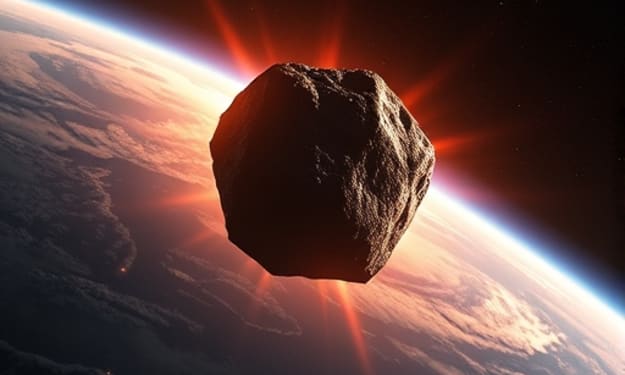
“Huge 500-foot Asteroid Heading to Earth at Pervasive Velocity” Meteor heading our way on space rock home (Delegate Picture, Canvas) In an electrifying glamour ride, NASA’s Stream Drive Lab (JPL) has been prophesying for 500-foot objects to skim past the Earth on twenty-four October 2024. Even if it looks like it is on a large scale, professionals assure us that there is no risk. Otherwise, such an occurrence presents a unique opportunity to concentrate on older space objects. They have been in existence since the formation of the solar system’s close neighbour planets. Astronomical items are little bodies in space that orbit the sun beyond our solar system. They are the coarse residues of the formation of the planetary group, which began approximately 4.6 quite a while ago. Unlike planets, which require climates, space rocks result in size and design fluctuations. Many of these celestial bodies remain unchanged for the simple reason that they once made.
By DHARMENDRA KUMAR BAIRWA2 years ago in Earth
Wildlife Extinction
Maya had always felt more at home in the wild than in the confines of her small town. The towering trees of Whispering Pines National Forest whispered secrets to her, and the rustle of leaves felt like a welcome embrace. As a child, she would often wander deep into the woods, her imagination ignited by the vibrant colors and the symphony of sounds around her. But now, as a young conservationist, those same woods held a heaviness she couldn't shake.
By Arman Singh2 years ago in Earth
Impossible Worlds: Planets That Shouldn't Exist But Do"
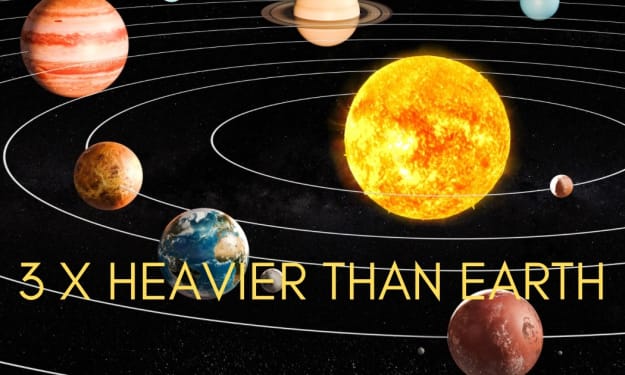
In the vastness of space, some planets defy the very rules of planet formation. Recently, astronomers discovered strange and seemingly impossible worlds that are making scientists question their understanding of how stars and planets form and evolve. Let’s dive into these mind-bending discoveries.
By Sciences and Wisdom2 years ago in Earth
Could Modern Mammals Survive in the Age of Dinosaurs?
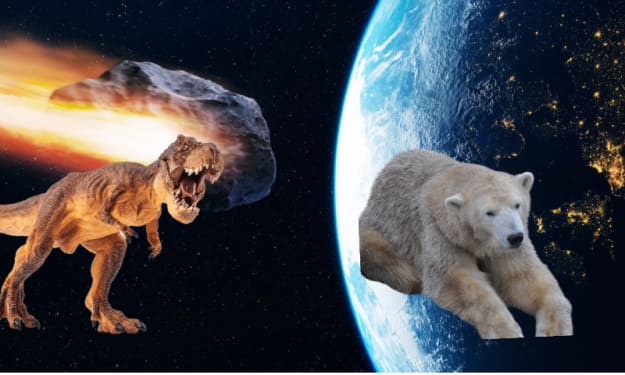
**Could Modern Mammals Survive Among Dinosaurs?** Millions of years ago, a massive asteroid struck Earth, wiping out the dinosaurs and giving mammals a chance to thrive. Their small size and ability to survive in difficult environments played a key role in their survival. But what if that asteroid had never hit? Would today’s mammals have what it takes to survive in a world still ruled by dinosaurs?
By Sciences and Wisdom2 years ago in Earth
"Seeds of Change"
Ally had always loved the smell of fresh coffee. Each morning, the rich aroma filled her small apartment, marking the start of her day. But as she stood in her kitchen, spooning coffee grounds into a paper filter, her eyes fell on the bin overflowing with single-use plastic packaging and food waste. Something felt off. The comforting routine was tainted by a nagging sense of guilt that had been building for months.
By Kibwe Kuwa2 years ago in Earth
Scientists discover planets more habitable than earth
About 30 years ago, we had no scientific evidence of a planet outside our solar system. Today, thanks to advances in technology and scientific research, we have discovered more than 5,300 exoplanets—alien worlds waiting to be explored. Initially, these discoveries mainly involved large gas giants, but as our capabilities expanded, we began to discover smaller, Earth-like exoplanets. Scientists have discovered more than 50 exoplanets with a mass similar to the Earth, and more than 800 worlds with a radius less than half the Earth. We don't know how many of these planets orbit within their parent star's habitable zone - where the conditions are just right for life.
By Athanasius2 years ago in Earth