Nature
Threshold Podcast
Threshold has officially launched its latest series, Season 5: Hark. The season premiered on November 19, and they're releasing episodes on Tuesdays through the end of the year. Then they'll take a mid-series break, returning in February with additional episodes.
By Frank Racioppi2 years ago in Earth
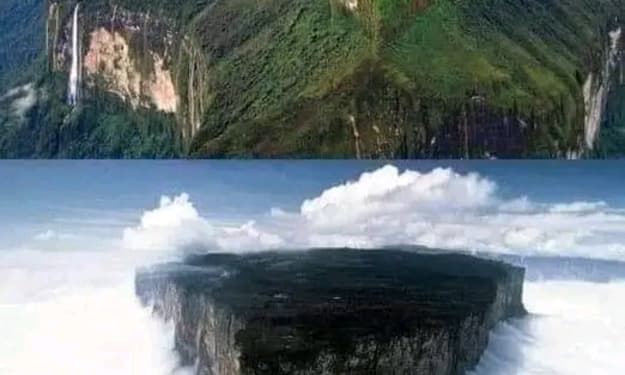
Monte Roraima: The Mysterious Oldest Place on Earth
Rising majestically above the dense forests of Venezuela, Monte Roraima is one of the world’s most enigmatic natural wonders. This awe-inspiring table-top mountain, or "tepui," is not only renowned for its striking appearance but also for its status as one of the oldest geological formations on Earth. Its flat summit, sheer cliffs, and otherworldly features have captivated explorers, scientists, and adventurers for centuries. Despite being studied for more than 500 years, Monte Roraima continues to guard its secrets, leaving geologists and biologists alike in awe of its unique beauty and mysterious origins. --- A Geological Marvel Monte Roraima is part of the Pakaraima mountain range in South America and straddles the borders of Venezuela, Guyana, and Brazil. It stands at nearly 3,000 meters (9,219 feet) above sea level, making it one of the highest tepuis in the region. Its most defining feature is its massive, flat summit, which spans over 30 square kilometers. Surrounded by sheer cliffs that drop nearly 400 meters, the mountain appears almost otherworldly, as though it was carved with surgical precision. Geologists believe Monte Roraima is composed of Precambrian quartzite and sandstone, dating back approximately 2 billion years. This makes it one of the oldest exposed rock formations on the planet. While many mountains owe their shapes to erosion, Monte Roraima’s peculiar flat-topped design defies conventional geological processes, adding to its intrigue. Some scientists speculate that it formed as a result of tectonic activity, possibly due to an ancient earthquake, though the precise cause remains unknown. Its unique morphology and incredible age set Monte Roraima apart as a geological anomaly. --- A Lost World Monte Roraima’s remote location and isolated nature have created a “lost world” ecosystem at its summit. This plateau is home to a stunning variety of plant and animal species, many of which are found nowhere else on Earth. Carnivorous plants, rare orchids, and mosses thrive in its unique environment, while animals like the Roraima black frog (Oreophrynella quelchii) and tiny lizards have adapted to the extreme conditions. The summit is often shrouded in mist, creating a humid and ethereal atmosphere that supports these endemic species. Some biologists believe that there are still undiscovered species hiding within the unexplored crevices and caves of the mountain. This biodiversity has made Monte Roraima a focal point for researchers studying evolution and adaptation in isolated ecosystems. --- Legends and Mysteries Monte Roraima has long been a source of fascination and wonder, not just for scientists but also for indigenous peoples and explorers. To the Pemon and Kapon tribes, the mountain is a sacred site, often referred to as the "House of the Gods." According to local legends, the mountain was once the trunk of a giant tree that contained all the fruits and vegetables of the world. The tree was cut down by a mythical hero, and its remnants formed the flat-topped mountains that dot the region, with Monte Roraima as the most prominent. These legends add an air of mysticism to the mountain, blending science with folklore in a way that captures the imagination. Monte Roraima’s mysterious aura was even immortalized in literature. Sir Arthur Conan Doyle’s 1912 novel The Lost World was inspired by its uncharted summit, envisioning it as a land where dinosaurs and prehistoric creatures still roamed. --- Exploration and Adventure Despite its challenging terrain, Monte Roraima has become a popular destination for adventurers and nature enthusiasts. The most common route to the summit begins on the Venezuelan side, with a trek that typically takes several days. Hikers traverse lush rainforests, cross rivers, and climb steep inclines before reaching the plateau, where breathtaking views and surreal landscapes await. The summit itself is a treasure trove of natural wonders. Its surface is dotted with unusual rock formations, some of which resemble sculptures shaped by time and wind. There are also deep sinkholes, crystal-clear pools, and waterfalls that plunge dramatically off the edge of the cliffs. One of the most famous waterfalls, the Roraima Falls, cascades into the dense forest below, creating a scene of unparalleled beauty. --- The Scientific Puzzle Despite centuries of study, Monte Roraima continues to puzzle geologists. While tectonic activity is believed to have played a role in its formation, no other geological features in the region share its distinct flat-topped structure. This has led some scientists to theorize that Monte Roraima’s origin might involve processes that are not yet fully understood. The mountain’s immense age also raises intriguing questions about the history of Earth itself. If Monte Roraima truly is the oldest exposed rock formation on the planet, it provides a unique window into the Precambrian era, a time when life was just beginning to emerge. Studying its rocks and fossils could reveal invaluable insights into the evolution of Earth’s crust and the forces that shaped our planet. --- Conclusion Monte Roraima is more than just a mountain—it is a natural wonder that embodies the mysteries of our planet’s ancient past. From its flat summit and sheer cliffs to its rich biodiversity and enigmatic origins, it stands as a testament to the power and beauty of nature. For scientists, it offers endless opportunities to explore and uncover new knowledge. For adventurers, it is a challenging yet rewarding journey into one of the world’s most stunning landscapes. And for all who encounter it, Monte Roraima is a reminder of the enduring wonder of Earth, a place where myths, science, and natural beauty converge in a timeless dance.
By Deji Akomolafe2 years ago in Earth
How to Take Care of Artificial Plants
If you’re living in Dubai, you already know the challenge of maintaining real plants in the UAE’s hot climate. That’s why many residents are turning to artificial plants for their homes and offices. They’re beautiful, low-maintenance, and ideal for busy lifestyles. But did you know artificial plants also need care to keep them looking fresh and vibrant?
By Jacob Smith2 years ago in Earth
Tsunami Warning Canceled After 7.0 Magnitude Earthquake in California
A tsunami warning for the U.S. West Coast was lifted on Thursday after a 7.0-magnitude earthquake struck near the small coastal city of Ferndale in Humboldt County, California. The earthquake, which occurred at 10:44 a.m., caused buildings to sway and created moments of panic as residents scrambled for safety. Although initially alarming, no major damage or injuries have been reported so far.
By Aman Vahora2 years ago in Earth
Echo of the Mountains . Content Warning. AI-Generated.
The early morning sun washed the barbed pinnacles of Murmuring Edge in brilliant light collectively of companions remained at its base. Serena, the gathering's chief, concentrated on the worn out map. Legend had it that profound inside the mountains lay an old soul, the Reverberation Watchman, who possibly seemed when an amicable melody consumed the space. The soul was said to concede a solitary wish to the individuals who could stir it.
By Ayesha Javed2 years ago in Earth
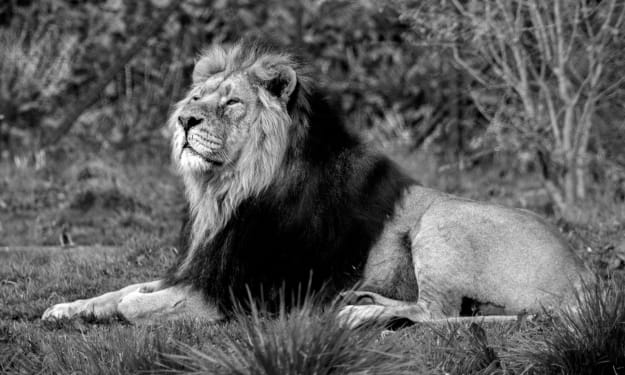
Lions: The Majestic Kings of the Animal Kingdom
Lions, often referred to as the "King of the Jungle," are among the most iconic and revered animals on the planet. These magnificent big cats have long been symbols of strength, courage, and royalty, inspiring cultures, art, and stories throughout human history. Found primarily in Africa and a small population in India, lions hold a unique place in the animal kingdom as apex predators and social creatures. This article delves into the world of lions, exploring their biology, behavior, habitat, cultural significance, and conservation challenges.
By Sanjay Sanjay2 years ago in Earth
The Transformative Power of Technology in the Modern World
Technology, the marvel of human innovation, has ushered humanity into an era of unprecedented progress and possibilities. From the dawn of the Industrial Revolution to the digital age we currently inhabit, technology has been the driving force behind the way we communicate, work, learn, and interact with the world around us. Its impact is profound, touching every aspect of our lives and reshaping the very fabric of society.
By Arslan Bashir2 years ago in Earth
Autumn
Pre-winter, a time of progress and change, arises nimbly after the intense intensity of summer, enclosing the world with its cool hug. Its appearance is proclaimed by fresh mornings, golden-toned daylight, and the delicate murmur of leaves brushing against each other in a fragile, resonant ensemble. This season, frequently celebrated as a painter's dream and a writer's enjoyment unwinds in layers of magnificence, feeling, and change, welcoming us to stop, reflect, and wonder about the miracles of nature.
By nadia khanom2 years ago in Earth
"A Diverse Portrait of Saudi Arabia's Beauty"
Saudi Arabia: A Land of Rich Heritage and Modern Ambitions Saudi Arabia, officially known as the Kingdom of Saudi Arabia (KSA), is a country located on the Arabian Peninsula. Known for its vast deserts, historical significance, and as the cradle of Islam, Saudi Arabia is a blend of ancient traditions and rapid modernization. Geography and Landscape Saudi Arabia is the largest country in the Middle East, covering approximately 2.15 million square kilometers. It is bordered by Jordan, Iraq, Kuwait, Qatar, Bahrain, the UAE, Oman, and Yemen. The country also boasts coastlines along the Red Sea and the Arabian Gulf, which have been crucial for trade and tourism. Key geographic features include: Rub' al Khali (Empty Quarter): The largest continuous sand desert in the world. Hijaz and Asir Mountains: Providing a contrasting landscape to the arid deserts. Red Sea Coral Reefs: Home to diverse marine life, making it a hotspot for divers. Historical and Cultural Heritage Saudi Arabia is home to two of the holiest cities in Islam: Mecca and Medina. These cities attract millions of Muslims annually for the Hajj pilgrimage, one of Islam's Five Pillars. The country also has a rich pre-Islamic history. Sites like AlUla, home to the ancient Nabatean city of Hegra (Madain Saleh), reflect the architectural and cultural brilliance of past civilizations. Saudi traditions are deeply rooted in Bedouin culture, with practices like hospitality, poetry recitation, and camel herding still celebrated today. Economy: From Oil to Vision 2030 Saudi Arabia has one of the largest economies in the Middle East, largely driven by its vast oil reserves. The discovery of oil in 1938 transformed the country into a global energy powerhouse, with the oil sector contributing a significant share of its GDP. However, recognizing the need to diversify its economy, the government launched Vision 2030, a strategic framework aimed at reducing dependence on oil and developing sectors like tourism, entertainment, technology, and renewable energy. Notable initiatives include:
By Say the truth 2 years ago in Earth
Mahlab Spice - A Timeless Treasure in Culinary Arts
The Essence of Mahlab: History, Comestible Uses, and Significance Mahlab, additionally accepted as mahleb or mahlepi, is a ambrosial balm acquired from the seeds of the St. Lucie blooming timberline (Prunus mahaleb). Accepted for its aerial balm and different flavor, mahlab has a affluent history and plays a axial role in Middle Eastern, Mediterranean, and Greek cuisines. Its versatility makes it a admired additive in both acceptable and avant-garde recipes. Historical Background of Mahlab The origins of mahlab can be traced aback bags of years to age-old civilizations in the Mediterranean and Middle East. The St. Lucie blooming timberline is built-in to regions including the Levant, Anatolia, and genitalia of Europe. Historically, mahlab was acclimated not alone as a comestible additive but additionally for its alleviative properties. In age-old times, mahlab was advised a attribute of affluence and sophistication, aloof for appropriate occasions and blithe recipes. It became an basic allotment of cultural traditions, decidedly in Middle Eastern and Greek households, area it was acclimated in celebratory foods like blithe aliment and desserts. What Makes Mahlab Unique?
By Say the truth 2 years ago in Earth